Tossing and Turning? Try an Audiobook!

I think we all have nights when sleep eludes us. Our brains start whirling and it’s hard to quiet our thoughts enough to fall asleep. Some people take a pill. I take a book, an audiobook, that is.

I have found that listening to audiobooks in bed at night is the best way to redirect my thoughts away from all the stuff that’s keeping me awake. I discovered this by accident when my children were young and would wake up from a nightmare. They would inevitably be too keyed up to fall back to sleep, and I would stay up with them, usually telling them a story to get their mind off the bad dream until they could drift back off to sleep.

Years later, I had trouble sleeping myself and decided to adapt the storytelling method that had worked with my kids. I started listening to audiobooks at bedtime. What a help they were! I would inevitably fall asleep faster with the audiobook than without, and I found a way to squeeze a little extra “reading” time in!

Now, not all audiobooks are suitable for relaxing bedtime listening. A gruesome crime novel or horror story kind of defeats the purpose – I reserve grittier fare for print reading. Likewise, I find most mysteries require too much attention to detail, so are not the best for my “bedtime stories”. Romance, humor, fantasy, and classics have become my nighttime listening go-tos.

Here are a few suggestions if you want to give my insomnia-cure a try (great for daytime listening, too!):

The Rosie Project by Graeme Simsion, read by Dan O’Grady. A perfect match of book and narrator, this quirky Aussie love story is a delight.

The Martian by Andy Weir, read by R.C. Bray. Terrific narration by Bray gets character Mark Watney’s nerdy genius and dry humor just right.

A Man Called Ove by Frederik Bachman, read by George Newbern. You’ll quickly embrace the prickly Ove, and the neighbors who invade his formerly well-ordered life.

The Harry Potter audiobooks by J.K. Rowling, read by Jim Dale. Jim Dale is a perfect example of how the right narrator can elevate even the best books. He’s won many awards for his narration of the Harry Potter series, and all the accolades are deserved.

The His Dark Materials audiobooks by Philip Pullman, performed by a full cast. Another series that absolutely blooms to life in audio, with this full cast performance pulled together by Pullman’s narration. It’s stunning.

The Hobbit by J.R.R. Tolkien, read by Rob Inglis. Even if you’ve read the book, you’ll get something new out of the audiobook. If you like Inglis’s narration of The Hobbit, you can listen to him read the Lord of the Rings trilogy as well.

The Outlander audiobooks by Diana Gabaldon, read by Davina Porter. Again, even if you’ve read the Outlander series before, you will find new things to love about it in Davina Porter’s skilled narration. And it’s nice to hear all the Gaelic words pronounced correctly!

Bossypants by Tina Fey, read by the author. This book is, quite frankly, hysterical, and Tina Fey’s narration will have you chuckling into your pillow.

Lolita by Vladimir Nabokov, read by Jeremy Irons. Sure, it’s the story of a middle-aged man’s unhealthy obsession with a teenager, but the prose is practically poetry and Jeremy Iron’s narration is mesmerizing.

Mysteries: Around the World in 80 Sleuths

I love mysteries that immerse the reader in another culture, so here is a short (won’t burden you with 80!) list of some of my favorites, all written by authors with a gift for conveying a strong sense of place. There is no Nordic noir on my list.  A dead body or two and a certain amount of violence are inevitable in all but the coziest of mysteries, but the Scandinavians tend to take it a little far for my taste. Plus I prefer that the majority of the characters in the books I read be people I would enjoy spending time with!  So make yourself a nice cup of tea and curl up with any one of these for a satisfying few hours of reading.

Tannie Maria mysteries by Sally Andrews.
Set in rural South Africa, Recipe for Love and Murder is the first in a series featuring Tannie Maria, a middle-aged widow who loves both to cook and eat and also writes a recipe and advice column for the Klein Karoo Gazette.  While assisting other people with their problems, Tannie Maria is forced to deal with her own–and with a murder to boot. Recipes included! The second novel in the series, The Satanic Mechanic, is due out at the end of March 2017.

Vish Puri, Most Private Investigator mysteries by Tarquin Hall.
Set in the colorful, crowded  metropolis of Delhi, this humorous series features the endearingly idiosyncratic detective Vish Puri (aka Chubby for reasons that will be obvious), India’s Most Private Investigator, and a boisterous cast of supporting characters including Puri’s irrepressible Mummi-ji and his operatives Tubelight, Facecream and Handbrake. Warning:  Do not read these books on an empty stomach, the descriptions of food are positively mouth-watering. No need to read in order.

Commissario Guido Brunetti mysteries by Donna Leon. 
Venice is the setting for this best-selling series, which has been running for 25 years and captures the beauty, character and seamy underbelly of  life in this glorious city.  Brunetti is a good and intelligent man working to keep crime and injustice at bay in his beloved Venice.  You read these books as much for his musings and observations about daily life, his beloved family, politics and government as you do for the mysteries. The books are also celebrated for their mouth-watering descriptions of the food,  so much so that Donna Leon co-wrote a cookbook featuring some of the fabulous Venetian recipes referenced in her novels.  For long-time fans, reading the latest Donna Leon book is like a visit with old friends. Pick up any one in the series and start reading!

Chief Inspector Armand Gamache mysteries by Louise Penny.
Set in Quebec, these books feature one of the most admirable men to ever command a police force. Or pretty much anything else.  Multilayered plots, a large and richly described cast of characters and lyrical writing characterize this series which is made even stronger by its incorporation of the complexities of bi-lingual and bi-cultural Quebec.  As one reviewer said, “few writers in any genre can match Penny’s ability to combine heartbreak and hope in the same scene.” Still Life is the first in the series of 12 books, which is best read in order.

The Highland Gazette Mystery Series by A. D. Scott.
Set in the northern Scottish Highlands in the 1950s, this series about a mystery-solving newspaper staff in a small town captures the changing world of post-war Scotland.  This series has everything I like–richly drawn characters, complicated relationships and well-developed backstories in a setting both beautiful and bleak.  Read this fine series in order–the first one is A Small Death in the Great Glen.  There are 6 books in all and the author is working on the seventh.  As a bonus, you will meet members of the Highland Travelers, an indigenous group similar to the Romani in Europe.

Bruno, Chief of Police mysteries by Martin Walker.
A small village in the Dordogne region of south-central France is the setting for this series, featuring Benoit “Bruno” Courreges, a soldier-turned-policeman who would rather tend his garden or whip up a gourmet meal than use his gun or arrest a suspect.  Part of the pleasure of these richly satisfying mysteries is the contrast between the traditional rhythms of life in a French village and the terrors of the modern world.  You may miss a few details if you read this series out of order, but it will not dampen your pleasure in the slightest.

Emily Dickinson said it best:  “There is no Frigate like a Book To take us Lands away…”

My Dad and the Library

National Library Week is April 9-15, 2017. To celebrate, I’d like to share a special story.

My dad wasn’t a reader.

I don’t mean he couldn’t read. He just didn’t read for pleasure. He read for information, to gain knowledge, to figure out how to do something. As far as I know, he never once borrowed a book from any library.

And yet he understood my love of books and the library. From the time I learned to read, I hungered for new books. I would bring home the little Scholastic book pamphlets from school and pour over them, checking off all the books I wanted and confidently handing them to him. He never said no, no matter how tight the budget was.

Then we moved to a lovely little town called Cheshire and I discovered the Cheshire Public Library.

I was nine years old. I couldn’t go to the library unless someone drove me. And there was Dad, driving me to the library after he got out of work, dropping me off while he ran to the store to pick up a few things, waiting in the parking lot while I scanned the shelves looking for a Nancy Drew that I hadn’t read yet. Like the Scholastic book pamphlets, he never said no when I asked to go to the library.

He almost never came inside. He told me I was responsible for keeping track of the books I borrowed and when they were due. He was responsible for getting me to the library so I could borrow and return materials.

Then came one cold night in October when I was twelve years old. Dad was waiting in the library parking lot for me while I selected some books. When I got back to the car, he was shaking. He told me he couldn’t seem to get warm. The next day he suffered his first stroke. He was thirty-nine.

He recovered, but it was six weeks before we could return to the library. I was apprehensive. For the first time in my life I had overdue library books. I had a little babysitting money but I had no idea how much I owed. I was truly afraid they wouldn’t let me borrow any more books.

To my surprise, my dad came into the library with me. He handed the overdue books to the librarian, took out his wallet and said, “I was sick and couldn’t bring these back.” He smiled at me. “It wasn’t her fault.”

The librarian asked what had happened and he told her about his stroke. She asked us to wait and vanished into a back room. She returned with a  smile.

“No charge,” she said. “The library has a heart.”

That was a big deal. My dad was now unemployed because of his health. We didn’t have a lot of spare money.

My father walked out of the library that day smiling. He said, “There are still good people in the world.”

I had already decided I wanted to be a librarian. I couldn’t imagine a career that didn’t somehow involve books. But that librarian’s kindness made me realize what a difference a librarian could make in someone’s day.

Three years later, I was hired as a library page at the Cheshire Library. The librarian who had been so kind to us was no longer there. I never even knew her name, and she never knew how much her action meant to me.

We all make a difference each day, even if we don’t know it.

In honor of National Library Week and the librarian who made a young girl happy a long time ago, here are some of my favorite children’s books about libraries and librarians:

lion-aspxThe Library Lion by Michele Knudsen.
A lion starts visiting the local library but runs into trouble as he tries to both obey the rules and help his librarian friend.


jacket-aspx The Librarian of Basra: A True Story from Iraq by Jeanette Winter.
When war comes, Alia Muhammad Baker, the librarian of Basra, fears the library will be destroyed, so she asks government officials for help, but they refuse, which means Alia must take matters into her own hands to protect the books that she loves.

jacket-aspxLibrary Lil by Suzanne Williams. Illustrated by Steven Kellogg.
A formidable librarian makes readers not only out of the once resistant residents of her small town, but out of a tough-talking, television-watching motorcycle gang as well.


jacket-aspxMrs. Roopy is Loopy by Dan Gutman.
A.J. and his classmates are convinced that the new school librarian, Mrs. Roopy, has multiple personality disorder because she keeps pretending to be famous people.


jacket-aspxThe Library by Sarah Stewart.
Elizabeth Brown loves to read more than anything else, but when her collection of books grows and grows, she must make a change in her life.

7 Ways to Celebrate National Poetry Month

April is National Poetry Month. If you think poetry’s “not your thing”, you might be surprised to find out you already enjoy it, you just didn’t know it was poetry. Stretch your creative mind and embrace poetry in one of its many forms during National Poetry Month. Here are 7 ways you can celebrate:

1. Borrow a book of poetry from the library. The great thing about poetry books, you don’t need to read them cover-to-cover to enjoy them. Find a few poems that speak to you.

2. Check out a CD and read the song lyrics. Songwriting is a form of poetry. Don’t know where to start? Try:

3. Read a novel told in verse. Don’t know where to start? Try:

4. Attend the Poetry Open Mic Morning at CPL on April 8.

  • Teens and adults are welcome to bring their own original poetry to share, recite a poem by a classic author, or just sit back and enjoy the verses.

5. Create a poem on the Magnetic Poetry Board in our lobby.

  • Sometimes it’s easier when the words are all there, you just need to gather them together.


6. Participate in Poem in Your Pocket Day on April 27, 2017.

  • Select a poem, carry it with you, and share it with others throughout the day, including on Twitter using the hashtag #pocketpoem.

7. Watch a “poet” movie. A few ideas:


Ceòl na h-Alba (Music of Scotland)

wallacesco-368349William Wallace is a Scots folk hero who, it is believed, was born around April of 1270. Wallace was a Knight who fought for Scottish independence from English rule, and was immortalized in the Oscar-winning film Braveheart, at least in name. Braveheart, while an entertaining drama, is about as factual on Scottish history as a tub of Cool Whip is the equivalent to Whipped Cream.

Braveheart’s soundtrack, while pleasant,  is also a modern composition, in the style of 468e4c6be98b994f6e8abf87e1f95732Scottish music but not containing a single actual Scots tune. This begs a greater question: what’s the difference between Scottish Music and Irish Music? Aren’t they the same, but with bagpipes? The question might just get you decked for saying that.

Truth is, they are quite similar, passing traditions back and forth. If you listen to folk steeped in the music, there are subtle differences in rhythms, traditional Scots music tends to be in the key of A (there’s only so much you can do on a bagpipe), while the Irish prefer drums and the key of D. Scots tunes tend to be more “snappy,” while the Irish are more “driving” (the Clancy Brothers version of “Johnny I Hardly Knew Ye” all but jumps out and strangles you through the speakers). But, as in anything, the styles change song to song. Each will tell you theirs is better.

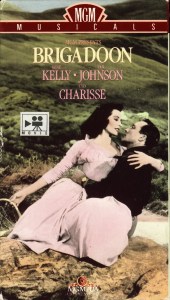
brigadoonIrish music tends to be better known for several reasons. Far more people have emigrated from Ireland than Scotland, a country with the same population as Dallas-Fort Worth. The Irish tended to have more children than the Scots, so they beat them on sheer numbers as well. Many of Scotland’s great ballads get lumped in with English, but Scottish music is far from unknown. Amazing Grace, played on bagpipes though it’s an English hymn, is a funeral standard. Pipe bands are often a staple of parades. There is the Broadway play Brigadoon by Lerner and Loewe, complete with kilts and dancing. There’s a 1954 film version, but even for its day it’s rather awful. If any film needs a full Hollywood reboot, this one is 60 years overdue.

If Ancient Scottish Ballads aren’t your thing, and you think bagpipes sound like boiling rodstewartdm1306_468x431witches, there’s a much better chance you’ve enjoyed modern Scottish music. So many of the songs we hear today and think of as American or British acts are actually the work of Scots, since accents aren’t always that obvious in song. Perhaps the best known Son of Scotland would be Rod Stewart, the gravel-voiced rock singer who worked his way from rock to swing music. Annie Lennox of The Eurythmics is a Scottish lass. Sheena Easton, KT Tunstall, Mark Knopfler, now solo but formerly the lead singer of Dire Straits, David Byrne of The Talking Heads, the folk group The Corries, Average White Band, and current smooth hit-maker Paolo Nutini (yeah, that had me fooled, too – his father was Italian, his mother Scotch, and he was born in Scotland). Add in Ian Anderson (lead singer for Jethro Tull), Lulu (you might remember her for the theme from the Bond film “Man With the Golden Gun”), Big Country (a one-hit wonder in America), Gerry Rafferty, Simple Minds, and the Celtic folk group Capercaillie.

200px-wallace_tartan_vestiarium_scoticumThat’s a lot of tartan pride!

So whether you like traditional Celtic folk, the plaintive reels of a good piper, or feel like rocking out to Maggie May, sit back and raise a pint to old William Wallace, a patriot who died keeping his country and culture from being lumped with Ireland and England.