It was a hard call, but I’d say White Trash by Nancy Isenberg was my Number 2 Must Read of 2016 (after Chasing the Scream), but oh, have I put off writing about it because it played so much into last year’s politics it seemed as if it were written for it – but it couldn’t, because it was written before last year’s one-of-a-kind election year.
“White Trash” is a term that began just before the Civil War and became entrenched afterward, a term for the poorest white people who were absolutely uneducated, dirty, poorer than slaves – and had no desire to change their ways. They considered themselves perfectly fine and above anyone else. Rich people were to be sneered at, since they considered themselves better. Educated people were sneered at, because they considered themselves better. Yet as a class they were so despised for their lack of morals and work ethic, even slaves considered themselves above Poor White Trash.
Isenberg feels the concept goes back further than that. Who did England send over to America to pad out their colonies? Who would not be missed from the overcrowded prisons and cities? Not the landed gentry, but those persons who for whatever reason did not fit into society and were unsuccessful at supporting themselves. The Virginia Colony had to go so far as to set a death sentence for people who did not work and did not attend church on Sundays. Starvation was so bad that people resorted to cannibalism. The people sent over refused to work, preferring to run off to unsettled land (which was “owned” by others) and fend for themselves. Getting people to do the hard labor of setting up a colony was quite difficult.
Further, Isenberg says that as the country expanded, the first to move west were… the folk who refused to work for others, could not function in a society, and would rather starve than work. Each time, the ones who pushed west first were the dregs, seeking escape from prisons, debt collectors, tax men, and others who “infringed” upon them. The wild west was wild because the people who colonized it couldn’t get along with anyone.
“White Trash” has many names, depending on geography – Crackers, Okies, Rednecks, Hillbillies, Trailer Trash, Mud Eaters – all people who shun government, distrust education, live in abject poverty, and have a very flexible moral code. I don’t mean “flexible” as a pejorative but as a term to describe a juxtaposition of ideals: your baby out of wedlock is a sin, but it’s okay for me. Never take charity, but taking free stuff from this agency over here isn’t charity, it’s just free stuff. They have quite the knack for making things acceptable for them but a sin for anyone else.
Isenberg digs into both politics and popularism, citing Andrew Jack son (the first person running for President who lost despite getting the most popular votes the first time he ran) as an uneducated, crass boor who appealed to the lowest masses and yet was elected President, and how he loved to flaunt that boorishness, to the distress of the American Gentry. She cites the 1970’s as a time when White Trash became hip – from Smokey and the Bandit, to the Dukes of Hazzard, to Tammy Faye Bakker and the whole Televangelist craze. Today’s exploitainment shows like Duck Dynasty, Honey Boo Boo, and 16 and Pregnant continue to flaunt poverty, lawlessness, and lack of education as something chic and desirable.
Of course race and politics play into it. Much of the divide still stems from the Civil War, with Southern States blaming Northern States for the outcomes, and the Northern States holding the South in utter contempt. Isenberg shows how that all translates into votes, and political forums, and how those in turn affect our elections – including the recent one.
 Isenberg is not alone in her observations. Numerous authors have also written similar observations, making her research more plausible. One is Deer Hunting With Jesus, by Joe Bageant, in which he talks about going home to rural Virginia, and why such places are becoming a permanent underclass. Lee Smith touches on a little of it in her dreamy autobiography Dimestore, about growing up in rural Appalachia. Hillbilly Elegy by J.D. Vance does a fantastic job presenting the issues from the first-hand experience of growing up in 1980’s Kentucky.
No matter what your political leanings, White Trash will open your eyes to why current politics are playing out the way they are and how people are being exploited in the process, why you can’t seem to educate people out of poverty, and how that poverty persists generation after generation – and no, it’s not due to Welfare. How do we change it? How do we shape it? Or should we allow an uneducated underclass to dictate policies it knows nothing about – and chooses not to learn? There’s no easy answer to be had, but this book is a must read and will open your eyes to a lot of things you never learned in school.
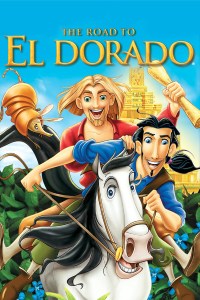 The Road to El Dorado is a wonderful movie for the entire family. It is about two Spanish con men, named Tulio and Miguel, who, after gambling for a map, getting captured and escaping from Cortés himself, and taking his horse Altivo along, find themselves somewhere in South America. They follow the map to find the legendary city of gold. Upon arriving, they meet a wonderful cast of characters, they are worshiped as gods, Tulio forms a relationship with a woman named Chel, and they get caught up in the sinister plans of a man named Tzekel-Kan. All the while, Cortés is drawing closer…


 Who wouldn’t like a better night’s sleep? In today’s over-connected, 24/7 society, we could all use a little more shut-eye. The