Graphic Novels That are Not Kid’s Stuff

Do you think you’ve outgrown comic books? Then you haven’t explored today’s Graphic Novels. Mature themes, a wide variety of subject matter, and barely a superhero to be found. There’s a Graphic Novel for every type of reader.

The Memoir Reader: Fun Home by Alison Bechdel. This cult favorite comic artist offers a darkly funny family portrait that details her relationship with her father–a funeral home director, high school English teacher, and closeted homosexual.

The Sci-Fi/Fantasy Fan: Saga by Brian K. Vaughan. When two soldiers from opposite sides of a never-ending galactic war fall in love, they risk everything to raise their child in a dangerous world.
The Foodie: Relish: My Life in the Kitchen by Lucy Knisley.  This recipe-complemented memoir describes the author’s food-enriched youth as the daughter of a chef and a gourmet, key memories that were marked by special meals and the ways in which cooking has imparted valuable life lessons.

The Humor Reader: Hyperbole and a Half by Allie Brosh. Blogger Allie Brosh showcases her unique voice, leaping wit, and her ability to capture complex emotions with deceptively simple illustrations.

The “I’d Rather Watch TV” Guy: The Walking Dead series by Robert Kirkman. Unless you ARE a member of the walking dead, you probably already know the premise.  An epidemic of apocalyptic proportions has swept the globe, causing the dead to rise and feed on the living. In a matter of months society has crumbled: no government, no industry, and very few survivors.  In a world ruled by the dead, the survivors are forced to find ways to start over in this terrifying new world.

The Sequel-ist: Fight Club 2: The Tranquility Gambit by Chuck Palahniuk.  Ten years after starting Project Mayhem, Sebastian lives a mundane life, but it won’t last long, the wife has seen to that, soon he’s back where he started, but this go-round he’s got more at stake than his own life.

The Film Noir Buff: The Fade Out by Ed Brubaker and Sean Phillips. An epic graphic novel of Hollywood in the early days of the Blacklist, The Fade Out tracks the murder of an up-and-coming starlet from studio backlots to the gutters of downtown LosAngeles, as shell-shocked front man Charlie Parish is caught between his own dying sense of morality and his best friend’s righteous sense of justice.
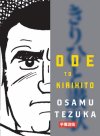
The Big Book Reader: Ode to Kirihito by Osamu Tezuka. It may or may not be contagious. There seems to be no cure for it. Yet, Monmow Disease, a life-threatening condition that transforms a person into a dog-like beast, is not the only villain in this shocking triumph of a medical thriller by manga-god Osamu Tezuka.
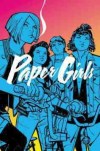
The “Stranger Things” Fan: Paper Girls by Brian K. Vaughan. Supernatural mysteries and suburban drama collide in the early hours after the Halloween of 1988 for four twelve-year-old newspaper delivery girls.
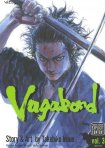
The Samurai Warrior: Vagabond series by Takehiko Inoue. Adventure abounds in this fictionalized account of the life of Japanese swordsman Miyamoto Musashi, based on Eiji Yoshikawa’s novel Musashi.
 

Wick-ed Action

I love a good action film. In going over lists of various film genres, I discovered I’ve seen the majority of the “best” action films, though I don’t always agree with what is considered an “action” film. I expect an action film to have – well, action: a lot of movement of characters or equipment, such as vehicles. It could be modern reality based – James Bond or Air Force One, or futuristic, such as Terminator, Alien, or Serenity, comic book heroes, or war-type films such as Commando or Rambo (my grandmother made me take her to every Stallone and Schwartzeneggar film that came out). There should be suspense, perhaps mystery, a vehicle chase, and almost always a good fight scene. Body counts are expected, but graphic violence isn’t required – Suicide Squad had a high bullet count, but little gore. History of Violence had a lower bullet count, but extremely graphic depictions. I don’t mind gore, but I won’t watch cruelty or sadism – I shut off Killing Season because it was focused on torture, not action.

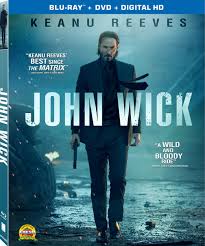
I adored John Wick, an action movie with Keanu Reeves as an assassin who tries to retire but is sucked back into the business against his will. It was just about everything I could want in a film – the script is good, the acting is good, the cast is excellent and the action is awesome. It’s just a good all-around film. I saw John Wick 2 on opening day (the DVD was released June 13) and – it was good, but not quite as great as the first. The action is impeccable – perhaps the best actual hand combat choreography I’ve ever seen (especially compared to the farce of Batman v. Superman). The script is good. But Wick’s lines, so eloquent before, are cut to choppy, often one-word sentences, which Reeves is not good at. It’s got a high bullet count, a high body count, and realistically graphic splatter from a man who was known for killing four people with a pencil.

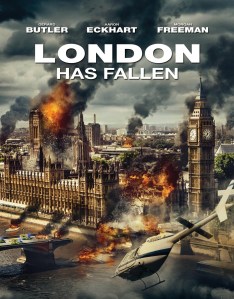
One thing I noticed about John Wick 2, though not as obvious as it was in London Has Fallen, a C+ film with multiple script flaws: the impact of videogames on choreography of action sequences. JW 2 has a wonderful flight/fight scene through the ancient underground tunnels of Rome, but you can see the influence of popular games such as Call of Duty or Grand Theft Auto. Run, stop, run, corner, shoot, shoot balcony. Man pops out of hall, bang. Run, stop, turn, shoot. It might fit the tone of the scene, but it’s very stiff and staged. London Has Fallen was much worse: the greatest action sequence of the film, the Big Rescue, and the movie looked as if you’d taken a clip from Call of Duty, overlayed it with actors, and CGI’d them together. Maybe it was my TV upgrading the blu-ray to 4K, but you could almost see pixelation in the edges of the graphics. You could have checked it off a list: guy pops up behind garbage can? Check. Drive-by shot through windshield? Check. Balcony? Check. It was so obvious that not only did it stand out, it was distracting, and you stopped watching the progression because you were so offset by the fakeness, a “Where-Have-I-Seen-This-Before?”

Is this the wave of the future? I hope not. Sure, you can look back at an early Bond film and see how cheesy the fight scenes are. You can almost hear them counting off in their heads: fist, block, step, kick, block, groin, throw, grab, twist… You can marvel at the slo-mo twists and turns of The Matrix sequences, but that’s not exactly reality, either. CGI is wonderful – it gave us Legolas sliding down oliphaunts , Avatar, and Inception. Almost all movies are made with a green-screen at this point, even comedies. But videogames are another empire – like trying to equate a romance film with porn: all the action, none of the reason. You can pop bullets all day, but why you’re doing it is a vague battle against “bad guys.” Relying on a videogame sequence kills the creativity needed. Think of the cliché of the good guy crouched down, pointing people what direction to go and then shooting at the target to cover them, or the stock western of a shootout on main street, with townsfolk peering through broken shutters. Action movies need to reinvent themselves by nature to keep themselves fresh and interesting.

Videogames are fun. Action films are fun. Sometimes movies based on a videogame are really fun (Warcraft, Tomb Raider, Mortal Kombat). But using videogame mentality in place of a more expensive or creative thought process – that’s cheating, and it doesn’t look nice.

Have you noticed the “videogame effect” in any other films?

Audiobooks for a Family Roadtrip

Audiobooks can be a great way to pass the miles on a road trip, but finding something that everyone can enjoy together can be challenging. Too complex and you’ll lose the younger listeners, too childish and older listeners will quickly tune out. Here’s my attempt at finding that happy medium that everyone can get something out of. Some are on CD, some are downloadable, many are both. Start your engines!

A Series Of Unfortunate Events by Lemony Snicket, read by Tim Curry.  Holy Cow, are these books entertaining. While ostensibly written for children, I devoured them as an adult. Tim Curry’s narration will keep everyone rapt for miles. And there are 13 books in the series!

The Harry Potter series by J.K. Rowling, read by Jim Dale. Some of these might be too lengthy for the very youngest listeners, but school-age and up will be swiftly caught up in the adventures of Harry and friends. Jim Dale’s award-winning narration is amazing.

The Spiderwick Chronicles by Tony DiTerlizzi and Holly Black, read by Mark Hamill. Yes, that Mark Hamill. Turns out he’s an excellent narrator in addition as well as the greatest Jedi the galaxy has ever known. The series tells the story of the Grace children, who move into the dilapidated Spiderwick Estate with their mother, only to find it full of faerie problems.

How to Train Your Dragon series by Cressida Cowell, read by David Tennant. Another narrator that parents will know more than kids, Tennant’s narration of this fictional Viking world and the experiences of Hiccup Horrendous Haddock III on his journey to Becoming a Hero the Hard Way will entertain one and all.

For a slightly older crowd (middle school & up):

The Hobbit and The Lord of the Rings, BBC Radio plays, from the books by J.R.R. Tolkien, performed by a full cast. Bilbo, Frodo, and friends keep the action going for 13+ hours, and the full cast keeps things lively.

Hatchet and Brian’s Return by Gary Paulsen, read by Peter Coyote. This wilderness survival story about a 13-year-old boy who’s the sole survivor of a plane crash in the wilds of Canada is a longtime favorite with boys and reluctant readers. A fast moving story with plenty of drama.

The Hitchhiker’s Guide to the Galaxy by Douglas Adams, read by Stephen Fry. A perfect marriage of material and narrator. Arthur Dent is plucked off the planet by his friend Ford Prefect, a researcher for the revised edition of “The Hitchhiker’s Guide to the Galaxy” who, for the last fifteen years, has been posing as an out-of-work actor. Hilarity ensues.

Ready Player One by Ernest Cline, read by Wil Wheaton. Futuristic gaming, 80’s nostalgia, and codes to crack – there is something to appeal to a broad age range here and a terrific fast-paced story to boot.


What are some audiobooks you’ve enjoyed as a family? Let us know in the comments!

Tossing and Turning? Try an Audiobook!

I think we all have nights when sleep eludes us. Our brains start whirling and it’s hard to quiet our thoughts enough to fall asleep. Some people take a pill. I take a book, an audiobook, that is.

I have found that listening to audiobooks in bed at night is the best way to redirect my thoughts away from all the stuff that’s keeping me awake. I discovered this by accident when my children were young and would wake up from a nightmare. They would inevitably be too keyed up to fall back to sleep, and I would stay up with them, usually telling them a story to get their mind off the bad dream until they could drift back off to sleep.

Years later, I had trouble sleeping myself and decided to adapt the storytelling method that had worked with my kids. I started listening to audiobooks at bedtime. What a help they were! I would inevitably fall asleep faster with the audiobook than without, and I found a way to squeeze a little extra “reading” time in!

Now, not all audiobooks are suitable for relaxing bedtime listening. A gruesome crime novel or horror story kind of defeats the purpose – I reserve grittier fare for print reading. Likewise, I find most mysteries require too much attention to detail, so are not the best for my “bedtime stories”. Romance, humor, fantasy, and classics have become my nighttime listening go-tos.

Here are a few suggestions if you want to give my insomnia-cure a try (great for daytime listening, too!):

The Rosie Project by Graeme Simsion, read by Dan O’Grady. A perfect match of book and narrator, this quirky Aussie love story is a delight.

The Martian by Andy Weir, read by R.C. Bray. Terrific narration by Bray gets character Mark Watney’s nerdy genius and dry humor just right.

A Man Called Ove by Frederik Bachman, read by George Newbern. You’ll quickly embrace the prickly Ove, and the neighbors who invade his formerly well-ordered life.

The Harry Potter audiobooks by J.K. Rowling, read by Jim Dale. Jim Dale is a perfect example of how the right narrator can elevate even the best books. He’s won many awards for his narration of the Harry Potter series, and all the accolades are deserved.

The His Dark Materials audiobooks by Philip Pullman, performed by a full cast. Another series that absolutely blooms to life in audio, with this full cast performance pulled together by Pullman’s narration. It’s stunning.

The Hobbit by J.R.R. Tolkien, read by Rob Inglis. Even if you’ve read the book, you’ll get something new out of the audiobook. If you like Inglis’s narration of The Hobbit, you can listen to him read the Lord of the Rings trilogy as well.

The Outlander audiobooks by Diana Gabaldon, read by Davina Porter. Again, even if you’ve read the Outlander series before, you will find new things to love about it in Davina Porter’s skilled narration. And it’s nice to hear all the Gaelic words pronounced correctly!

Bossypants by Tina Fey, read by the author. This book is, quite frankly, hysterical, and Tina Fey’s narration will have you chuckling into your pillow.

Lolita by Vladimir Nabokov, read by Jeremy Irons. Sure, it’s the story of a middle-aged man’s unhealthy obsession with a teenager, but the prose is practically poetry and Jeremy Iron’s narration is mesmerizing.

What is the Next Book in This Series?

whats-nextIt is extremely frustrating to read a book only to discover it is part of a series, and there is no clear list of reading order. While some series are loosely tied together and allow for skipping around and reading out of order, others can only be fully enjoyed when read in order. To help ease your frustration, I am going to share the tools that I use to help determine the correct reading order. There are several routes to find the answer to this question, some are simple and easy, others require a little work.

The first way to find the answer of reading order is to find the author’s website. Many internet savvy authors, or their publishers, maintain websites with series listings in order and, in the case of multiple series, the suggested reading order for everything. Not all authors do this, but some have very helpful lists to help out their readers. Many include printable lists so you can easily keep track of titles you have read and what you should read next.

Some examples of authors that offer comprehensive lists or tools on their websites to find the reading order include Nora Roberts, Gail Carriger, James Patterson, Janet Evanovich, Charlaine Harris, and many more. I highly suggest checking with the author’s website first before branching out and trying other avenues, because who better to explain the best reading order than the person that wrote them?

goodrdsIf the author fails you, do not lose heart! My second choice for series order, and further reading suggestions, is Goodreads. If you search for a book title, Goodreads will give you a wonderful amount of information. On the book’s page you can follow links to the author page or a list of book in that series (both published and sometimes books that have not been released yet) in order. The bonus is you get suggestions for books that might appeal to you because some authors list what they are currently reading or their own recommendations. For instance, on the author page for one of my current favorites, Maria V. Snyder, you can see her books listed by series, in order, and what she is currently reading.

There are also a few websites dedicated to helping readers find the next book in a series, or the complete reading order of any given series.  One website that I often use is well titled as: Book Series in Order which you can search by author or character name.  Order of Books is a second site that can help you find the reading order of different authors and series. This site allows you to search by author or main character. If you are looking specifically for children’s series check out Juvenile Series and Sequels, and if you need young adult series listings I would suggest using Series and Sequels. whats-next-in-series1

If  you still are not sure about the series order of the books you are reading or want to read, please stop in and visit our Welcome Desk or give  the library a call. We are here to help.