The Sleeper and the Spindle

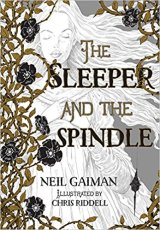
The Sleeper and the Spindle by Neil Gaiman is a unique twist on the Sleeping Beauty story.  Sleeping Beauty and the people in her castle have been asleep for years. However, this sleeping sickness seems to be spreading. First, the nearby villages fall asleep, then the villages near them, and so on. Soon, the entire kingdom is asleep, and it’s up to three dwarfs and the queen of the neighboring kingdom to figure out how to put an end to the curse.

This story has an ingenious blend of fairy tales. For instance, the queen is a character from another story. I’ll just say that she is someone who has also been asleep for a long time and let you figure out who she is. There are also additional elements to the story that help flesh it out. Those who are asleep do more than sleep, an old woman who is trapped inside the castle and immune to the curse, and the more one delves into the story, the more it becomes apparent that the details of the Sleeping Beauty that appear in each retelling are not what they seem. Not to mention that the ending will leave you thinking, “Wait, what? What just happened?” Overall, this is a quick read that goes more in-depth than one would think the amount of pages would allow.

Genre: Fantasy

Setting: A fairy tale land in an unspecified historical era.

Number of pages: 66

Objectionable content? A small amount of violence, one death, an occasional corpse, and unsettling factors (i.e. the sleepers)

Can children read this? Yes, as long as they are not easily upset by unsettling elements in stories. However, this book is best for teenagers and adults.

Who would enjoy this? Anyone who enjoys Neil Gaiman’s other works, and anyone who enjoys fairy tale remakes.

Themes: Beauty, power, loss, choices, strong women, and the need to control other’s emotions vs. the strength of only feeling your emotions.

Rating: Five stars

Childhood Horrors

Sometime ago in the mists of the last century, there were only three TV networks. On holidays, you usually had the choice of a football game, a different football game, or the longest movies the network could find – usually Chitty Chitty Bang Bang and The Sound of Music.  Chitty, an overly technicolor musical, scared the daylights out of me. As soon as that Childcatcher came prowling, I was behind the sofa holding my breath. Today’s kids would just send his photo to Instagram and beat him up.

Children see things differently. Some are easily spooked, some are skeptical from birth. Kids misunderstand and misinterpret things, and that alone can create unfounded horror.

Obviously, most children’s films try to avoid horror, but what’s marketed to kids is not always Barney and Big Bird – few Grimm’s Fairy Tales end happily ever after. Poltergeist –  ghosts, demons, peeling faces, and evil clowns in child-swallowing glowing closets – was only rated PG. PG, because PG-13 hadn’t been invented yet.

Young Sherlock Holmes (the food nightmare) scarred one of my children; to this day she won’t eat cream puffs. Tim Burton’s Mars Attacks! and its disembodied heads was another. Another didn’t trust Nazgûl (nor should you), and was terrified by Matilda. The 1971 Alastair Sim animated A Christmas Carol, with its writhing starving waifs and the faceless, voiceless Ghost of Christmas Future taints every incarnation I’ve seen since.

If your child likes spooky things and wants to be a part of the Addams family, here’s a list of kid’s films – honest! – that just might give your kid the shivers. If you have a child with a more sensitive nature, you might want to wait a few years on these:

Toy Story – Oh, doll-headed spider and hook-bodied Barbie, how we hate you! You may be Pixar, but you’re scary!

Coraline – Creepy button-eyed fake parents trying to steal a child?  Hmm….

Labyrinth – Sure, we adore Bowie, but these are Muppets who steal babies, chase girls with drill bits with intent to kill, and drop people into pits lined with talking disembodied hands. ‘Nuff said.

Something Wicked This Way Comes – Disney likes to whistle and pretend this isn’t theirs, but Ray Bradbury didn’t edit the scariness out of his novel of two boys and an evil carnival run by Mr. Dark, complete with electrocutions and freakshow.

Who Framed Roger RabbitBut this is a comedy! you cry – and it is, until crying Toons get faced with The Dip. Be prepared for a talk on death.

Return to Oz – if the flying monkeys didn’t scare you, perhaps Dorothy’s electroshock treatments will.

Jumanji – sure, it’s a game, but a deadly one. Floors that swallow people are just some of the issues; the intensity and situations may be too much entirely for young viewers.

Harry Potter series – yes, the first one is a charming tale of an orphan boy who learns he’s a wizard, but the stories get darker, and major beloved characters start dying. By the third film, Voldemort is embodied evil and believably out to get Muggles. Like your child.

The Dark CrystalFraggle Rock it’s not. It’s a dark Muppet film with lots of dark themes. Preteens maybe, but there’s no Elmo to lighten it for the little kids.

Gremlins – another movie made before PG-13, so it was stuck with PG. Gremlins are cute little things until you feed them, and then they become psychopathic demons out to harm and kill.  If preteen horror films was a separate genre, this would be one of their cornerstones, along with perhaps The Witches, Watcher in the Woods, and Jaws (which is also only PG).

Willy Wonka and the Chocolate Factory – let’s face it, Roald Dahl is almost never nice to children. Here alone, he sucks them up pipes, dumps them down garbage chutes, and has them cornered by very scary men in dark alleys asking them to sell their souls for money. But the crowning touch cited by many critics is the boat ride  scene, all psychedelic and threatening – but that’s the way it is in the book, too – a disorienting journey where everyone believes Wonka’s looney.

Every parent knows their child best. Some kids like a scary movie, some kids will wind up sleeping in your bed for a week with all the lights on. If your kid shows interest in scary movies, these might be a gentler introduction over, say, The Exorcist. Just be aware that even a seemingly wholesome, kid-marketed movie can have some really scary moments when you least expect it.

Graphic Novels That are Not Kid’s Stuff

Do you think you’ve outgrown comic books? Then you haven’t explored today’s Graphic Novels. Mature themes, a wide variety of subject matter, and barely a superhero to be found. There’s a Graphic Novel for every type of reader.

The Memoir Reader: Fun Home by Alison Bechdel. This cult favorite comic artist offers a darkly funny family portrait that details her relationship with her father–a funeral home director, high school English teacher, and closeted homosexual.

The Sci-Fi/Fantasy Fan: Saga by Brian K. Vaughan. When two soldiers from opposite sides of a never-ending galactic war fall in love, they risk everything to raise their child in a dangerous world.

The Foodie: Relish: My Life in the Kitchen by Lucy Knisley.  This recipe-complemented memoir describes the author’s food-enriched youth as the daughter of a chef and a gourmet, key memories that were marked by special meals and the ways in which cooking has imparted valuable life lessons.

The Humor Reader: Hyperbole and a Half by Allie Brosh. Blogger Allie Brosh showcases her unique voice, leaping wit, and her ability to capture complex emotions with deceptively simple illustrations.

The “I’d Rather Watch TV” Guy: The Walking Dead series by Robert Kirkman. Unless you ARE a member of the walking dead, you probably already know the premise.  An epidemic of apocalyptic proportions has swept the globe, causing the dead to rise and feed on the living. In a matter of months society has crumbled: no government, no industry, and very few survivors.  In a world ruled by the dead, the survivors are forced to find ways to start over in this terrifying new world.

The Sequel-ist: Fight Club 2: The Tranquility Gambit by Chuck Palahniuk.  Ten years after starting Project Mayhem, Sebastian lives a mundane life, but it won’t last long, the wife has seen to that, soon he’s back where he started, but this go-round he’s got more at stake than his own life.

The Film Noir Buff: The Fade Out by Ed Brubaker and Sean Phillips. An epic graphic novel of Hollywood in the early days of the Blacklist, The Fade Out tracks the murder of an up-and-coming starlet from studio backlots to the gutters of downtown LosAngeles, as shell-shocked front man Charlie Parish is caught between his own dying sense of morality and his best friend’s righteous sense of justice.

The Big Book Reader: Ode to Kirihito by Osamu Tezuka. It may or may not be contagious. There seems to be no cure for it. Yet, Monmow Disease, a life-threatening condition that transforms a person into a dog-like beast, is not the only villain in this shocking triumph of a medical thriller by manga-god Osamu Tezuka.

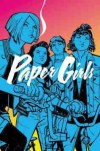
The “Stranger Things” Fan: Paper Girls by Brian K. Vaughan. Supernatural mysteries and suburban drama collide in the early hours after the Halloween of 1988 for four twelve-year-old newspaper delivery girls.

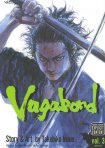
The Samurai Warrior: Vagabond series by Takehiko Inoue. Adventure abounds in this fictionalized account of the life of Japanese swordsman Miyamoto Musashi, based on Eiji Yoshikawa’s novel Musashi.


Wick-ed Action

I love a good action film. In going over lists of various film genres, I discovered I’ve seen the majority of the “best” action films, though I don’t always agree with what is considered an “action” film. I expect an action film to have – well, action: a lot of movement of characters or equipment, such as vehicles. It could be modern reality based – James Bond or Air Force One, or futuristic, such as Terminator, Alien, or Serenity, comic book heroes, or war-type films such as Commando or Rambo (my grandmother made me take her to every Stallone and Schwartzeneggar film that came out). There should be suspense, perhaps mystery, a vehicle chase, and almost always a good fight scene. Body counts are expected, but graphic violence isn’t required – Suicide Squad had a high bullet count, but little gore. History of Violence had a lower bullet count, but extremely graphic depictions. I don’t mind gore, but I won’t watch cruelty or sadism – I shut off Killing Season because it was focused on torture, not action.

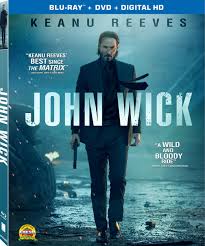
I adored John Wick, an action movie with Keanu Reeves as an assassin who tries to retire but is sucked back into the business against his will. It was just about everything I could want in a film – the script is good, the acting is good, the cast is excellent and the action is awesome. It’s just a good all-around film. I saw John Wick 2 on opening day (the DVD was released June 13) and – it was good, but not quite as great as the first. The action is impeccable – perhaps the best actual hand combat choreography I’ve ever seen (especially compared to the farce of Batman v. Superman). The script is good. But Wick’s lines, so eloquent before, are cut to choppy, often one-word sentences, which Reeves is not good at. It’s got a high bullet count, a high body count, and realistically graphic splatter from a man who was known for killing four people with a pencil.

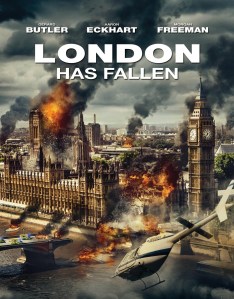
One thing I noticed about John Wick 2, though not as obvious as it was in London Has Fallen, a C+ film with multiple script flaws: the impact of videogames on choreography of action sequences. JW 2 has a wonderful flight/fight scene through the ancient underground tunnels of Rome, but you can see the influence of popular games such as Call of Duty or Grand Theft Auto. Run, stop, run, corner, shoot, shoot balcony. Man pops out of hall, bang. Run, stop, turn, shoot. It might fit the tone of the scene, but it’s very stiff and staged. London Has Fallen was much worse: the greatest action sequence of the film, the Big Rescue, and the movie looked as if you’d taken a clip from Call of Duty, overlayed it with actors, and CGI’d them together. Maybe it was my TV upgrading the blu-ray to 4K, but you could almost see pixelation in the edges of the graphics. You could have checked it off a list: guy pops up behind garbage can? Check. Drive-by shot through windshield? Check. Balcony? Check. It was so obvious that not only did it stand out, it was distracting, and you stopped watching the progression because you were so offset by the fakeness, a “Where-Have-I-Seen-This-Before?”

Is this the wave of the future? I hope not. Sure, you can look back at an early Bond film and see how cheesy the fight scenes are. You can almost hear them counting off in their heads: fist, block, step, kick, block, groin, throw, grab, twist… You can marvel at the slo-mo twists and turns of The Matrix sequences, but that’s not exactly reality, either. CGI is wonderful – it gave us Legolas sliding down oliphaunts , Avatar, and Inception. Almost all movies are made with a green-screen at this point, even comedies. But videogames are another empire – like trying to equate a romance film with porn: all the action, none of the reason. You can pop bullets all day, but why you’re doing it is a vague battle against “bad guys.” Relying on a videogame sequence kills the creativity needed. Think of the cliché of the good guy crouched down, pointing people what direction to go and then shooting at the target to cover them, or the stock western of a shootout on main street, with townsfolk peering through broken shutters. Action movies need to reinvent themselves by nature to keep themselves fresh and interesting.

Videogames are fun. Action films are fun. Sometimes movies based on a videogame are really fun (Warcraft, Tomb Raider, Mortal Kombat). But using videogame mentality in place of a more expensive or creative thought process – that’s cheating, and it doesn’t look nice.

Have you noticed the “videogame effect” in any other films?

Audiobooks for a Family Roadtrip

Audiobooks can be a great way to pass the miles on a road trip, but finding something that everyone can enjoy together can be challenging. Too complex and you’ll lose the younger listeners, too childish and older listeners will quickly tune out. Here’s my attempt at finding that happy medium that everyone can get something out of. Some are on CD, some are downloadable, many are both. Start your engines!

A Series Of Unfortunate Events by Lemony Snicket, read by Tim Curry.  Holy Cow, are these books entertaining. While ostensibly written for children, I devoured them as an adult. Tim Curry’s narration will keep everyone rapt for miles. And there are 13 books in the series!

The Harry Potter series by J.K. Rowling, read by Jim Dale. Some of these might be too lengthy for the very youngest listeners, but school-age and up will be swiftly caught up in the adventures of Harry and friends. Jim Dale’s award-winning narration is amazing.

The Spiderwick Chronicles by Tony DiTerlizzi and Holly Black, read by Mark Hamill. Yes, that Mark Hamill. Turns out he’s an excellent narrator in addition as well as the greatest Jedi the galaxy has ever known. The series tells the story of the Grace children, who move into the dilapidated Spiderwick Estate with their mother, only to find it full of faerie problems.

How to Train Your Dragon series by Cressida Cowell, read by David Tennant. Another narrator that parents will know more than kids, Tennant’s narration of this fictional Viking world and the experiences of Hiccup Horrendous Haddock III on his journey to Becoming a Hero the Hard Way will entertain one and all.

For a slightly older crowd (middle school & up):

The Hobbit and The Lord of the Rings, BBC Radio plays, from the books by J.R.R. Tolkien, performed by a full cast. Bilbo, Frodo, and friends keep the action going for 13+ hours, and the full cast keeps things lively.

Hatchet and Brian’s Return by Gary Paulsen, read by Peter Coyote. This wilderness survival story about a 13-year-old boy who’s the sole survivor of a plane crash in the wilds of Canada is a longtime favorite with boys and reluctant readers. A fast moving story with plenty of drama.

The Hitchhiker’s Guide to the Galaxy by Douglas Adams, read by Stephen Fry. A perfect marriage of material and narrator. Arthur Dent is plucked off the planet by his friend Ford Prefect, a researcher for the revised edition of “The Hitchhiker’s Guide to the Galaxy” who, for the last fifteen years, has been posing as an out-of-work actor. Hilarity ensues.

Ready Player One by Ernest Cline, read by Wil Wheaton. Futuristic gaming, 80’s nostalgia, and codes to crack – there is something to appeal to a broad age range here and a terrific fast-paced story to boot.


What are some audiobooks you’ve enjoyed as a family? Let us know in the comments!