Helping Young Children Deal With Grief

griefp1When a family faces grief due to the loss of a pet, home, or family member it is often hard to help our youngest family members deal with the changes. Sometimes we are so busy trying to deal with our own grief and the practical matters that need to be handled that we don’t have the energy and creative thinking necessary to handle the questions children have. Here are a variety of books that might help you and your kids deal with the emotions and changes.

In Our Parenting Section:griefp2
Tear Soup: a Recipe for Healing After Loss by Pat Schwiebert and Chuck DeKlyen; illustrated by Taylor Bills

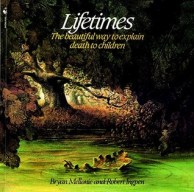
Lifetimes: a Beautiful Way to Explain Death to Children by Bryan Mellonie and Robert Ingp

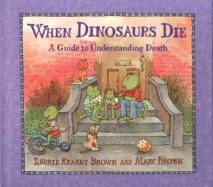
griefp3When Dinosaurs Die: a Guide to Understanding Death by Laurie Krasny Brown and Marc Brown

Guiding Your Child Through Grief by Mary Ann Emswiler and James P. Emswiler

When Children Grieve: For Adults to Help Children Deal GRIEF1with Death, Divorce, Pet Loss, Moving, and Other Losses by John W. James and Russell Friedman with Leslie Landon

With Our Picture Books and Children’s Non Fiction:
Always and Forever by Alan Durant; illustrated by Debi Gliori

Badger’s Parting Gifts by Susan Varleygrief8

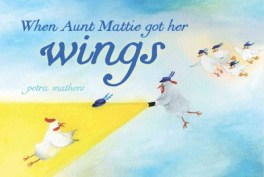
When Aunt Mattie Got Her Wings by Petra Math

The Fall of Freddie the Leaf: a Story of Life for All Ages by Leo Buscaglia

I’ll Always Love You by Hans Wilhelmgrief5

Boats for Papa by Jessixa Bagley

Harry & Hopper by Margaret Wild

When People Die by Pete Sanders and Steve Myersgrief7

Death by Patricia J. Murphy

When a Pet Dies by Fred Rogers

November is Native American Heritage Month

native-american-heritage-banner

What started at the turn of the century as an effort to gain a day of recognition for the significant contributions the first Americans made to the establishment and growth of the United States, resulted in President George Bush approving a joint resolution in 1990 designating the whole month of November as Native American Heritage Month.  These original inhabitants of the United States deserve to be honored for their contributions, achievements, sacrifices, and cultural and historical legacies.

The first evidence showing indigenous people to inhabit North America indicates that they migrated here from Siberia over 11,000 years ago. They prospered until around the 15th century when Europeans first arrived.  History was not kind to the Native Americans from that point on.  Today they account only for 1.4 percent of the population and live on designated Indian reservations that are described as ‘third world country’ conditions.  It wasn’t until The 1924 Citizenship Act, that all Native Americans were finally granted U.S. citizenship.

Some of the contributions from Native Americans include:

  1.  Many states names are of Indian derivation, including Connecticut, which means “river whose water is driven by tides or winds”.
  2. Ecology has always been a way of life for Native Americans.  The word ‘conservation’ does not exist in their language because it is an assumed way of life.
  3. Many of the foods we eat today were first grown by Native Americans – including potatoes, beans, corn, peanuts, pumpkins, tomatoes, squash, peppers, nuts, melons, and sunflower seeds.
  4.   Many of the games we play today came from Native Americans – canoeing, snowshoeing, tobogganing, lacrosse, relay races, tug-of-war, cat’s cradle, and ball games.
  5. Benjamin Franklin borrowed the idea of a federal government, in which certain powers are given to a central government and all other powers are reserved for the states, from the system of government used by the Iroquoian League of Nations.
  6. Native Americans developed and communicated with sign language.

Native Americans have a highly respected value system:

  1.  Respect for Mother Earth (Ecology)
  2. Respect for Fellow Man (No Prejudice)
  3. Respect for the Great Spirit (God)
  4. Generosity, sharing, honest leadership selection, bravery, courage, respect for the aged, family traditions.

The library has a wide variety of materials on Native Americans.  Since the Cheshire  schools study the history of Native Americans, our Children’s Department has an extensive collection of books on the subject for check-out.  The Librarian at the Children’s Desk can direct you in locating these materials.

For the adults, here’s a sample of some of the titles you can find at the library.

Tragic Encounters: the people’s history of Native Americans tragic-encountersA United States historian, author, professor and community activist, presents a meticulously researched history of Native Americans after the first European contact, exploring these peoples from coast to coast and giving them a chance to tell their own broad story.

tribeTribe, Race, History: Native Americans in southern New England – Tribe, Race, History examines American Indian communities in southern New England between the Revolution and Reconstruction, when Indians lived in the region’s socioeconomic margins, moved between semi-autonomous communities and towns, and intermarried extensively with blacks and whites.
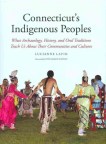
connecticuts-indigenousConnecticut’s Indigenous People: what archaeology, history, and oral traditions teach us about their communities and cultures – A groundbreaking volume on the rich 13,000-plus-year history and culture of Connecticut’s indigenous peoples.


custers-trialsCuster’s Trials: a life on the frontier of a new America – A biography of the iconic Civil War commander examines his contributions to politics and the Industrial Revolution, sharing insights into his turbulent relationships, perspectives on Native Americans, and conflicts with the military.
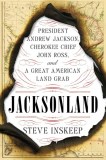
jacksonlandJacksonland: President Andrew Jackson, Cherokee Chief John Ross, and a great American land grab – Presents a narrative history of President Andrew Jackson and Cherokee Chief John Ross–two heroic yet tragically opposed men whose actions decided the fate of states and Indian nations in America at a moment of transition.
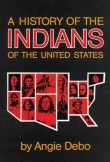
A History of the Indians of the United States- a-history-of-the-indians-of-the-united-statesTraces the history of the American Indians as a distinct social and cultural group in the United States, providing the basis for a critical reappraisal of government Indian policy.


windsWinds of Freedom: the story of the Navajo Code Talkers of World War II – Margaret Bixler
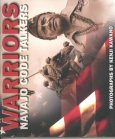


codeWarriors: Navajo Code Talkers Black-and-white photographic portraits of 75 survivors from the Navajo radio operators whose native tongue proved an unbreakable code to the Japanese during World War II.


towardToward the Setting Sun: John Ross, the Cherokees, and the trail of tears – Brian Hicks – Documents the story of a first white man to champion the Native American cause, describing his four-decade chieftainship throughout a turbulent period of racism, western expansion and broken treaties.
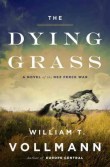
The Dying Grass: a novel of the Nez Pierce wardying-grass (Fiction) – William T. Vollman – Describes the 1877 war that pitted the legendary Chief Joseph of the Nez Perce against Civil War Veteran General Oliver Otis Howard. By the author of Europe Central.


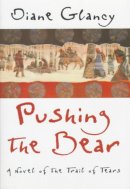
Pushing the Bearpushing (Fiction) – Diane Glancy – Chronicled through the diverse voices of the Cherokee, white soldiers, evangelists, leaders, and others, a historical novel captures the devastating uprooting of the Cherokee from their lands in 1838 and their forced march westward.


calebCaleb’s Crossing (Fiction) – Geraldine Brooks – Forging a deep friendship with a Wampanoag chieftain’s son on the Great Harbor settlement where her minister father is working to convert the tribe, Bethia follows his subsequent ivy league education and efforts to bridge cultures among the colonial elite.


runnerRunner (Fiction) – Thomas Perry – Native American guide Jane Whitefield returns from retirement to the world of the runner determined to hide a young pregnant girl who has been tracked across the country by a team of hired hunters.


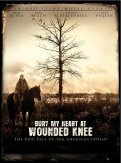
Bury My Heart at Wounded Kneebury-my-heart (DVD) – Fictionalized account of the forced annexation and assimilation of Native Americans in the nineteenth century West.


For more fiction books with Native American theme, click here.

For Romance readers, two authors have concentrated their writings on the American West – Cassie Edwards and Leigh Greenwood.  Click on their name for a list of titles.

For those who like to read Western Fiction, we have a great assortment from these three authors – William Johnstone, Elmer Kelton, and Zane Grey.  Click on their names for a list of titles.

In 2015, President Obama wrote a moving proclamation that sums up the ideals behind National Native American Heritage month.  You can read President Obama’s Presidential Proclamation for National Native American Heritage Month here.

On a personal note, it’s rare to find a New Englander who doesn’t embrace Colonial decor, but I don’t.  I think in a past life, I must have resided in the old American West!   I love contemporary decor with Southwest touches.  I was fortunate enough to visit the Southwest and bought home a few souvenirs.  (Can you spot the four snowmen I forgot to remove from the display?)

img_0134-1img_0135

img_0136

Sources:  Bureau of Indian Affairs, U.S. Department of the Interior, The White House, USDA: Natural Resources Conservation Service, Indians.org

Cookbooks that Caught My Eye, But I Know I Will Never Try

Sometimes when we catalog or check in or out library materials a book catches our eye and requires some serious perusal. More often than not this means setting it aside to check out and bring home.

Cookbooks with insanely creative or intricate recipes and decorating ideas regularly catch me. I love to bake and cook but do not have the time or energy to necessarily get fancy. I tend to worry first about taste and if I can get my family to eat it.

However, looking at the wonderful ideas and execution in these books sometimes inspires me to get more creative, and cookingsometimes just makes me wonder how anyone can eat something that obviously took some serious time and effort to make look so good. Here are some of the more recent cookbooks that have made me stop and look at their deliciously beautiful covers.

Cake My Day by Karen Tack & Alan Richardson

The New England Soup Factory Cookbook by Marjorie Druker and Clara Silverstein

What’s New, Cupcake?: Ingeniously Simple Designs for Every Occasion by Karen Tack

The Hot Bread Kitchen Cookbook: Artisanal Baking from Around the World by Jessamyn Waldman Rodriguez and the Bakers of Hot Bread Kitchen with Julia Turshen

Cupcakes, Cookies, and Pie, Oh, My! by Karen Tack & Alan Richardson

Seriously Delish: 150 Recipes for People Who Totally Love Food by Jessica Merchant

Great Balls of Cheese by Michelle Buffardi

The Confetti Cakes Cookbook: Cookies, Cakes, and Cupcakes from New York City’s Famed Bakery by Elisa Strauss with Christie Matheson

For some of us more realistic, or pessimistic, chefs I offer:
The Can’t Cook Book : 100+ Recipes for the Absolutely Terrified! by Jessica Seinfeld

Learning to Face Your Fears

worriedOctober 11, 2016 is National Face Your Fears Day, a day for confronting, if not overcoming, things that scare you.

The Cheshire Library is here to help. Try some of these online classes from lynda.com. FREE for Cheshire Library card holders.  Login in via cheshirelibrary.com/elearning.

Overcoming Your Fear of Public Speaking. Although it may seem to come naturally to some people, public speaking is actually a skill that can be learned. Learn techniques to prepare yourself mentally and physically so that you can feel comfortable—or even enjoy—delivering your message to an audience.  26 minutes.

Learning To Say No. Learning to say no is about making choices about what is important to you. Learn how to classify your work into categories of importance and decide how it matches your own goals and values. Using these guidelines, you can choose what to say “yes” to and what to say “no” to more effectively and in a way that is brief, honest, positive, and respectful.  22 minutes.

Learning to Be Assertive. We all get frustrated when we feel taken advantage of, or alternatively, respond too aggressively when we feel provoked or trapped. Overcome these knee-jerk responses by learning how to be assertive. This course reveals what assertiveness really means, and how it is different from aggression, and outlines specific techniques you can use to respond to challenging situations and difficult people.  55 minutes.

Building Self-Confidence. Confidence can help you accomplish your goals and build strong relationships. But the reverse is also true; a lack of confidence can hurt you personally and professionally. Luckily, there are steps you can take to build lasting self-confidence. In this 20 minute course, you will learn 10 techniques for building confidence you can apply at work and in your personal life.

Embracing Change. In this short course (12 minutes!), author and business coach Todd Dewett explains how you can harness the power of change and benefit those around you by avoiding quick reactions, adopting a positive attitude, and developing a 30-day plan to integrate change.

Or try some downloadable audiobooks books:

Fear Fear: Essential Wisdom for Getting Through the Storm / Thich Nhat Hanh


And downloadable ebooks:

Goldsmith, Barton.


Or some books off the shelf:

RewireRewire Your Anxious Brain : How to Use the Neuroscience of Fear to End Anxiety, Panic, & Worry / Catherine M. Pittman, PhD, Elizabeth M. Karle, MLIS

The Science of Fear : Why We Fear the Things We Shouldn’t– and Put Ourselves in Greater Danger / Daniel Gardner

Growing up Brave : Expert Strategies for Helping Your Child Overcome Fear, Stress, and Anxiety / Donna B. Pincus

October is National Seafood Month

sea

October is National Seafood Month.  Integrating seafood into your regular diet is something you can start in October and continue all year. By adding fish and other types of seafood to your palate, you can enjoy health benefits that are hard to find on land.  Here are some great seafood cookbooks for you to explore.

seafood how to buySeafood: how to buy, prepare, and cook the best sustainable fish and seafood from around the world – Featuring more than 300 recipes inspired by world cooking traditions, this fully illustrated cookbook provides information on seafood, shellfish and freshwater fish, and explains how to prepare them and the best way to cook them to bring out their flavor.

mystic seafoodMystic seafood: great recipes, history, and seafaring lore from Mystic Seaport – A delectable seafood cookbook from the eighteenth-century New England coastal village of Mystic brings together more than one hundred great seafood recipes, along with archival photographs and informational sidebars on such topics as the role of fishing in colonial America, how to prepare a classic clambake, and the culinary history of the lobster.

nyt seafoodThe New York Times Seafood Cookbook: 250 recipes for more than 70 kinds of fish and shellfish – A foremost food reviewer collects recipes for more than 100 kinds of fish and shellfish, in a volume that has options for every course and contributions by veteran food writers and top chefs including Mario Batali, Dave Pasternack, and Nobuyuki Matsuhisa.

new england seafood marketThe New England Seafood Markets Cookbook: recipes from the best lobster pounds, clam shacks, and fish mongers – Accompanied by profiles of more than 30 of the top seafood markets–their histories, owners and specialties–and profiles of some of the more colorful fishing operations along the New England seaboard, this cookbook offers recipes from the best seafood markets in the six-state New England region.

seafood lover's new englandSeafood Lover’s New England: restaurants, markets, recipes & traditions – Perfect for the local enthusiast and the traveling visitor alike, this book includes: restaurants and shacks, local fishmongers and markets, regional recipes from New England chefs and restaurants, a New England seafood primer, seafood-related festivals and culinary events and regional maps.

williams sonomaWilliams-Sonoma Seafood – A collection of oven and outdoor-grill Williams-Sonoma seafood recipes provides for dinners, parties, and casual entertaining, sharing the preparation instructions for dozens of options from Grilled Salmon and Garlic Shrimp to Lobster Risotto and Clams Oreganata.

fresh fishFresh Fish: a fearless guide to grilling, shucking, searing, poaching and roasting seafood – Collects recipes that showcase the versatility of seafood, including such options as curried lobster roll and New-Haven style white clam pizza, and offers tips on everything from shucking oysters and roasting whole fish to organizing a clambake.

two if by seaTwo If By Sea: delicious sustainable seafood – Boiling over with more than 150 new recipes for entrees, salads, soups, appetizers, pastas, stews, sides and sauces, a cookbook by the author of For Cod and Country features seafood that hasn’t been overfished or caught in an environmentally destructive way and provides advice on buying, choosing and making the most of your ingredients.