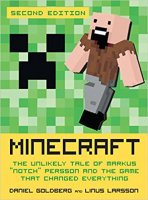
Minecraft: The Unlikely Tale of Markus “Notch” Persson and the Game That Changed Everything

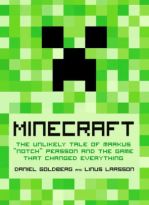
Minecraft: The Unlikely Tale of Markus “Notch” Persson and the Game That Changed Everything by Daniel Goldberg is a biography of Persson that focuses on how he came to be the creator of Minecraft, and how it changed his life. This book discusses how Persson was fascinated by programming since his early childhood. Despite a guidance counselor who did not support his career goals, a family that was breaking down, and a few jobs that limited his ability to program games freely, he began to brainstorm and program the beginnings of Minecraft. What started as a side job that almost no one knew about quickly developed into a company that was worth millions. Minecraft went from a game that was only played by a handful of people to a game that attracted thousands of people to conventions before it was even fully released.

Why did Minecraft have such sudden and overwhelming popularity? It is at least partly due to the creativity that the game allows. People are able to create their own goals and alter the game’s world in any way that they choose. The book goes even deeper into Persson’s life and the aspects of the game and is definitely worth reading. The book also paints a picture of the world of online gaming, gaming corporations, and indie developers, as well as certain aspects that contribute to designing a good game.

We also have several other Minecraft books for you to read!

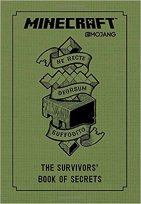
Minecraft: The Survivor’s Book of Secrets by Stephanie Milton is a new book that contains many tips and strategies that have been tested by people who have played Minecraft since it was first released.


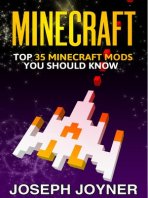
Minecraft: Top 35 Minecraft Mods You Should Know by Joseph Joyner is an unofficial guide to different mods that can be added to Minecraft.


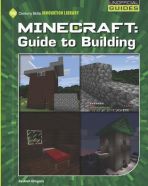
Minecraft: Guide to Building by Josh Gregory is a guide to building materials,  locations, and ideas. There are also several other similar books that are guides on other aspects of Minecraft, such as animals, mining, and farming.


The Making of Minecraft by Jennifer Zeiger is a book on a similar topic to the one reviewed at the beginning of this blog. It discusses the beginnings of Minecraft, and how it quickly grew into the phenomenon that it is today.


Quest for the Golden Apple: an unofficial graphic novel for Minecrafters by Megan Miller is the first in a series about the adventures of Phoenix and her brother in the world of Minecraft.


Click here to view the second edition of the reviewed book above. This edition has extra content that focuses on Microsoft’s purchase of Minecraft, Persson’s last days at Mojang, and what happened to Mojang afterwards.

Books-to-Movies : Fall 2017

I always anticipate movie adaptations of books I’ve read with equal measures of excitement and dread. Will the movie capture the spirit of the book, or bear little resemblance to the source material? Stephen King fans felt both ways this year with the well-received remake of the King classic It and the widely panned adaptation of  The Gunslinger from the Dark Tower series.

I usually like to read a book before I see the movie it’s based on, and there’s some kind of book-to-movie adaptation hitting theaters almost every week this fall. Here are the release dates for 10 of them – my reading list just got longer!

October 6

October 13

  • The Chinaman (movie title, The Foreigner) by Stephen Leather

October 20

October 27

This slideshow requires JavaScript.

November 10

November 17

November 24

Finding Wonders

Finding Wonders by Jeannine Harris is a fictional children’s book based on three real girls, Maria Sibylla Merian, Mary Anning, and Maria Mitchell, who made scientific contributions. Told with poems, each girl’s story begins with her childhood. Each girl learned to look beyond what other people took for granted or mistrusted. Each girl overcame the biases and challenges of her time for the sake of learning. These stories are an inspiration to anyone who has ever wanted to try something new despite the people around them. These girls were told they could not, should not, and would not, but they did anyway.

Genre: Children’s historical fiction

Setting: 1600s Germany, Amsterdam, and Suriname, 1800s England, 1800s Massachusetts

Number of pages: 195

Objectionable content? Several characters die, both adults and children, and religion is portrayed in a negative manner in some parts of the book.

Can children read this? Yes. This book is well-suited for elementary school children and up.

Themes: Learning, independent women, science, curiosity, restrictions

Rating: Five stars

Childhood Horrors

Sometime ago in the mists of the last century, there were only three TV networks. On holidays, you usually had the choice of a football game, a different football game, or the longest movies the network could find – usually Chitty Chitty Bang Bang and The Sound of Music.  Chitty, an overly technicolor musical, scared the daylights out of me. As soon as that Childcatcher came prowling, I was behind the sofa holding my breath. Today’s kids would just send his photo to Instagram and beat him up.

Children see things differently. Some are easily spooked, some are skeptical from birth. Kids misunderstand and misinterpret things, and that alone can create unfounded horror.

Obviously, most children’s films try to avoid horror, but what’s marketed to kids is not always Barney and Big Bird – few Grimm’s Fairy Tales end happily ever after. Poltergeist –  ghosts, demons, peeling faces, and evil clowns in child-swallowing glowing closets – was only rated PG. PG, because PG-13 hadn’t been invented yet.

Young Sherlock Holmes (the food nightmare) scarred one of my children; to this day she won’t eat cream puffs. Tim Burton’s Mars Attacks! and its disembodied heads was another. Another didn’t trust Nazgûl (nor should you), and was terrified by Matilda. The 1971 Alastair Sim animated A Christmas Carol, with its writhing starving waifs and the faceless, voiceless Ghost of Christmas Future taints every incarnation I’ve seen since.

If your child likes spooky things and wants to be a part of the Addams family, here’s a list of kid’s films – honest! – that just might give your kid the shivers. If you have a child with a more sensitive nature, you might want to wait a few years on these:

Toy Story – Oh, doll-headed spider and hook-bodied Barbie, how we hate you! You may be Pixar, but you’re scary!

Coraline – Creepy button-eyed fake parents trying to steal a child?  Hmm….

Labyrinth – Sure, we adore Bowie, but these are Muppets who steal babies, chase girls with drill bits with intent to kill, and drop people into pits lined with talking disembodied hands. ‘Nuff said.

Something Wicked This Way Comes – Disney likes to whistle and pretend this isn’t theirs, but Ray Bradbury didn’t edit the scariness out of his novel of two boys and an evil carnival run by Mr. Dark, complete with electrocutions and freakshow.

Who Framed Roger RabbitBut this is a comedy! you cry – and it is, until crying Toons get faced with The Dip. Be prepared for a talk on death.

Return to Oz – if the flying monkeys didn’t scare you, perhaps Dorothy’s electroshock treatments will.

Jumanji – sure, it’s a game, but a deadly one. Floors that swallow people are just some of the issues; the intensity and situations may be too much entirely for young viewers.

Harry Potter series – yes, the first one is a charming tale of an orphan boy who learns he’s a wizard, but the stories get darker, and major beloved characters start dying. By the third film, Voldemort is embodied evil and believably out to get Muggles. Like your child.

The Dark CrystalFraggle Rock it’s not. It’s a dark Muppet film with lots of dark themes. Preteens maybe, but there’s no Elmo to lighten it for the little kids.

Gremlins – another movie made before PG-13, so it was stuck with PG. Gremlins are cute little things until you feed them, and then they become psychopathic demons out to harm and kill.  If preteen horror films was a separate genre, this would be one of their cornerstones, along with perhaps The Witches, Watcher in the Woods, and Jaws (which is also only PG).

Willy Wonka and the Chocolate Factory – let’s face it, Roald Dahl is almost never nice to children. Here alone, he sucks them up pipes, dumps them down garbage chutes, and has them cornered by very scary men in dark alleys asking them to sell their souls for money. But the crowning touch cited by many critics is the boat ride  scene, all psychedelic and threatening – but that’s the way it is in the book, too – a disorienting journey where everyone believes Wonka’s looney.

Every parent knows their child best. Some kids like a scary movie, some kids will wind up sleeping in your bed for a week with all the lights on. If your kid shows interest in scary movies, these might be a gentler introduction over, say, The Exorcist. Just be aware that even a seemingly wholesome, kid-marketed movie can have some really scary moments when you least expect it.

Reliability is Overrated – 10 Books With Unreliable Narrators

Recently, I was discussing two of my favorite television series’ of the past year, “Mr. Robot“, and “Legion“, when it occurred to me what I found compelling about both of them – they are both told by unreliable narrators. The narrative characters in each show have major difficulties perceiving reality, which means the viewer sees the story through their skewed lens, often having to puzzle out what is real and what is not.

It’s a challenging concept, relatively uncommon in television, but more often used in literature. In the literary device of the Unreliable Narrator, the character who leads the reader through the story cannot be taken at face value. The reason could be because this character is lying, insane, or simply seeing events from a very limited viewpoint. In every case, though, it leads the reader to form conclusions beyond what is being disclosed in the narrative. A puzzle of sorts, where questioning what everything really means becomes part of the reading experience.

As I thought about it, I realized that many of the novels that have stayed with me long after reading them have had some kind of unreliable narrator. I remember finishing some of these books, and immediately starting them over again, looking for the “tells” that would have clued me in to the real truth of the tale if I had recognized them the first time. Here, with as few spoilers as possible, are some of my favorite unreliable narrators, (and a few whose heads I could not wait to get out of):

1. Silver Linings Playbook – When we meet the  point-of-view character Pat,  he’s being released from a mental facility into the care of his parents. That’s the first indication that situations in the story may not be exactly as they seem. As Pat’s repressed memories start to come forward, we’re able to piece together exactly why Pat was institutionalized in the first place.

2. Flowers for Algernon –  Charlie Gordon is a learning disabled man who undergoes an experimental operation to increase his intelligence. The novel is told through entries in Charlie’s journal, and the reader is able to see the improvements in self-awareness and intelligence through those entries. Then, too, we witness his deterioration as the long-term effects of the operation make themselves known. Bring a hankie.

3. Life of Pi – A fantastical tale of a boy set adrift after a shipwreck, with a tiger sharing his life raft. It’s a beautiful and uplifting story, until it is revealed that it may be what the narrator’s chosen to believe rather than what actually occurred.

4. Room Told from the very limited point of view of a five-year-old boy, Jack,  who has spent his entire life in an 11-square-foot soundproofed room with Ma, his mother. When Ma devises a plan for Jack to escape, we experience the exhilaration and confusion the world for the first time along with him.

5. The Curious Incident of the Dog in the Nighttime – The engaging narrator of this book is an autistic teen, so we perceive the events in the story the way he would. When he comes across a neighbor’s dog stabbed with a fork, his obsession with Sherlock Holmes takes over to help him solve the mystery.

6. Fight Club – Whether you’ve seen the movie or read the book, the twist that’s revealed about the identities of characters in this story packs a real punch (sorry, I couldn’t resist).

7. Shutter Island – In this gripping psychological thriller, nothing is quite what it seems. It starts out as an investigation into the escape of a mental patient, and well,  to say more  would be too spoiler-y.

8. Lolita – A compelling and beautifully written book told by a pedophile who is as charming as he is perverse. His justifications and attempts to win the reader’s sympathy are as fascinating to read as they are icky.

9 & 10.  The Girl on the Train  & Gone Girl – I’ve lumped both of these together even though they both contain different types of unreliable narrators (a blackout drunk and just plain liar) because they came out close together, are both murder mysteries, and if you’ve read one, you’ve probably read the other. I couldn’t wait to close the covers on both of them, though, the characters were just too unlikable for me to want to spend much time with.