The Day I Forgot My Phone

taber-No-Cell-Phones-AllowedI left the house without my smartphone and didn’t realize it until I arrived at work.
It felt funny at first. I had become used to carrying my phone with me. But as the day went on, I noticed something peculiar. I felt calmer.

There were no texts interrupting my concentration. No buzzing of a phone set to silent to distract me during a meeting. No notifications from apps warning me of impending weather fronts.

I didn’t text my husband with thoughts the second I had them. I didn’t send any “how are you” or “where are you” messages to my daughter.

Jacket.aspxAs if to reinforce the strange but not bad quiet of my day, I saw a book on the new book cart that caught my minimalist eye. The Joy of Less: 101 Stories about Having More by Simplifying Our Lives, a book in the Chicken Soup for the Soul series. Flipping through the pages, I discovered, by a great cosmic coincidence, a section titled “Joyfully Unplugged”.

This section has stories about taking a sabbatical from Facebook, going without television, and generally disconnecting from electronics in order to reconnect with life. One of my favorites is titled, “Why I Gave My Smartphone a Lobotomy” by Nicole L. V. Mullis. It is simply a short essay about a woman who began to pay more attention to her phone than to those around her and cured herself by deleting all her apps.

I’m not quite ready to do that, but I am ready to lay my phone aside and forget about it from time to time. I don’t need to be available 24/7. I don’t want to be available 24/7.

The quiet of my phoneless day was an unexpectedly nice surprise. I realized with a shock that quiet is now a treat, something that needs to be planned. And, I have decided, it is something worth planning.

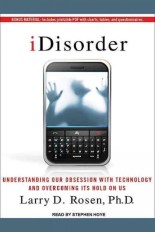
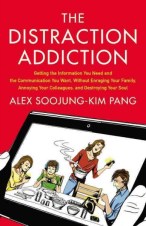
Interested in the effects being constantly online? Try these titles, which explore the bad and the good sides of being online:

Jacket1          Jacket.aspx          Jacket.aspx

Downloadable Audiobooks:

 Jacket.aspx          distraction

Save

Save

Save

Save

Save

Understanding Urban Issues

Here is a group of books – some of them very good – that are sure to fuel political fire, no matter which fence you sit on regarding the issues of the blighted inner cities.

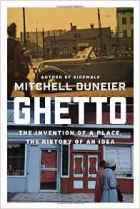
indexGhetto is a brand-new book by Mitchell Duneier on the term “ghetto,” which dates back to the 1400’s when Jews were forced to live in isolation from Christians. They were free to come and go, except at night, and anyone could do business with them. This led to a flourishing if separate culture for hundreds of years. Enter the Nazis, who isolated Jews into Ghettos with barbed wire. No one was allowed in or out. Here, people had no jobs, severe overcrowding, no public services, and as the ghettos decayed and residents grew desperate, people accepted the fact that Jews lived like animals, and it helped fuel antisemitism. Why would people live like that if they didn’t deserve it, forgetting that to cross the wire was not just banishment, but death. By the 1940’s the term expanded to the narrow neighborhoods that African-American people were allowed to live in. There was no barbed wire, but an invisible barrier that they weren’t allowed to cross except for work. As their neighborhoods became overcrowded because no one could move out, they fell victim to the same issues faced in Germany. Duneier presents facts throughout the last century – the 40’s, the 60’s, the 80’s, and today, on the current use of the term vs. the historical one, and how the stagnation and forced living creates the discord we see today. The book is far too long and detailed – it could be half and still be excellent – but even if you have to skim it, it is serious food for thought.

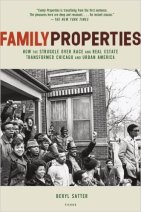
Easier to read, if not more infuriating, is Family Properties:  Race, Real Estate, and the5190mOD8p3L._SX329_BO1,204,203,200_ Exploitation of Urban Black America by Beryl Satter. Satter details the blatant racist policies of 1940’s Chicago, where Real Estate agents were threatened if they sold houses to African Americans past the “White” line, and people who did buy in would find the houses disassembled by the neighbors to prevent it. It took many years and many lawsuits to get things to change. This book will make you angry.
514dyV2l3KL._SY479_BO1,204,203,200_A head scratcher is All Souls: a Family Story from Southie by Michael Patrick McDonald. Mrs. McDonald is Irish, unmarried, and pumps out children like party favors (11 in all), living in the infamous projects of South Boston – an area run by no less than Whitey Bulger himself. Michael tries to sort out his childhood as his siblings fall victim to gangs and drugs and forced busing. Entertaining and tragic, even if you can’t relate to their lifestyle.

Death at an Early Age, Savage Inequalities, and Fire in the Ashes, all by Jonathan Kozol, are heart-rending books about the disparities in Urban and Suburban education. They are excellent reading that will break your heart. The realities of urban living will block most of these kids from ever achieving, and it is not their fault.

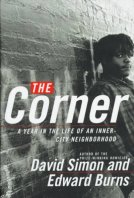
Jacket.aspxI cannot recommend the book The Corner: A Year in the Life of an Inner-City Neighborhood by David Simon and Edward Burns enough. I could not put it down. It covers the grim streets of Baltimore, a place so bad it’s where trauma surgery originated. It is compelling and reads like a novel. And they made a TV Miniseries out of it. One of my top-50 favorite books.

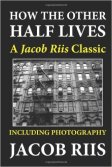
51BHwvQwVbL._SX331_BO1,204,203,200_If you’re really, really, really into sociology, then go back to the original: How the Other Half Lives by Jacob Riis. This is one of the first sociological studies on the slums of 1886 New York City, and the issues seen there – discrimination, overcrowding, street children,  gangs, alcoholism, domestic violence, prostitution – paint a familiar story as European immigrants try to find a way to survive in a hostile new world. It’s dry reading at times, but interesting in the patterns that appear.

Lyndon Johnson took decisive moves to improve our urban areas; 50 years later, not much has changed. The issues brought up in these books are just as relevant today as then, and we have more than enough information to make positive changes. These books will open your eyes.

Flowers Are Blooming

flowers 2

Everywhere you look, there are beautiful flowers blooming.  Nature’s artwork is a feast for the eyes.  Another feast for the eyes, is a good book to read.  To continue with the  flower theme, here’s a list of fiction books with ‘flower’ in the title.  Pick a title, find a beautiful place to sit, and enjoy your reading!

language of flowersThe Language of Flowers – Vanessa Diffenbaugh.
Discovering the symbolic meanings of flowers while languishing in the foster-care system, 18-year-old Victoria is hired by a florist, a situation that leads to a romantic prospect and the confrontation of a painful secret from her past.

all the flowers are dyingAll The Flowers Are Dying – Lawrence Block.
Matthew Scudder, with his eye keenly on retirement, unofficially investigates the suspicious online suitor of an acquaintance, and finds his own life in grave danger.


send no flowersSend No Flowers – Sandra Brown.
Since the death of her husband, Alicia Russell has struggled to take care of her two young sons alone. Now fiercely independent, she is determined to never again depend on another person. But when a sudden storm threatens to ruin a family camping trip, Alicia finds it hard to say no to a stranger offering a night’s refuge–especially when the man playing hero offers much more than shelter from the storm.

a hundred flowersA Hundred Flowers – Gail Tsukiyama.
A tale set during the Chinese Cultural Revolution follows the struggles of Kai Ying to safeguard her family when her teacher husband is arrested and sent to a “reeducation” labor camp for criticizing the Communist Party.


the blood of flowersThe Blood of Flowers – Anita Amirrezani.
After her father dies without leaving her with a dowry, a seventeenth-century Persian teen becomes a servant to her wealthy rug designer uncle in the court of Shah Abbas the Great, where her weaving talents prove both a blessing and curse.


flowers on mainFlowers on Main – Sherryl Woods.
When she abandons Chicago and returns home to open a flower shop, writer Bree O’Brien finds her new life anything but peaceful when her estranged mother arrives and her former lover, Jake Collins, tries to run her out of town.

war of flowersThe War of Flowers – Tad Williams.
When his music career becomes stagnant, thirty-year-old Theo Vilmos seeks solace in a secluded cabin in the woods where he discovers an old book written by his great-uncle that transports him into the terrifying world of Faerie – a strange and dangerous place that holds the key to his destiny.

queen of the flowersQueen of the Flowers – Kerry Greenwood.
Chosen Queen of the Flowers for St. Kilda’s first Flower Parade festival, Phryne Fisher finds the glamour of her crown wearing off when one of her attendants vanishes. She launches her own investigation, which is complicated by the disappearance of her adopted daughter Ruth and a not-so-pleasant reunion with an old lover.

all the flowers in shangAll The Flowers in Shanghai – Duncan Jepson.
A young Chinese woman plots revenge after being forced into a cruel arranged marriage in 1930s Shanghai as the entire country begins to become gripped in a growing call for revolution.


art of arranging flowersThe Art of Arranging Flowers – Lynne Branard.
After 20 years as an intuitive florist who has helped her friends, neighbors, and customers with their romances, celebrations, and sympathy gestures, Ruby Jewell looks to the power of that community to heal her floundering spirit after her sister’s death.


Snow Flower and the Secret Fansnow flower and – Lisa See.
A story of friendship set in nineteenth-century China follows an elderly woman and her companion as they communicate their hopes, dreams, joys, and tragedies through a unique secret language.


Learn about Xeriscaping

Jacket.aspx

Water is a precious resource. As the planet warms and the weather changes, more and more gardeners are turning to xeriscaping as a water-conserving alternative to traditional gardens.

So, the big question is, what is xeriscaping?

Basically, it is landscaping that reduces or eliminates the need for supplemental water. In an age when weather extremes are becoming the norm, gardens that are indifferent to the amounts of water they receive are a good idea.

Xeriscaping uses drought-tolerant plants and non-plant elements. Crushed stone, boulders, large urns, and decorative pieces of sculpture are often the backbone of xeriscapes. Plants such as cacti, low-water grasses, and succulents add a touch of green.

New to xeriscaping? We have the resources you need to get started.

Jacket1.aspxThe Water Saving Garden:  how to grow a gorgeous garden with a lot less water by Pam Penick


lawngoneLawn Gone! Low-maintenance, sustainable, attractive alternatives for your yard by Pam Penick


Jacket4.aspxRock Garden Design and Construction by by the North American Rock Garden Society; edited by Jane McGary


Jacket9.aspxDesigning with Succulents by Debra Lee Baldwin

Autobiographies for Children

The biography’s in the children’s room are all shelved together, in order alphabetically by the last name of the person they are about. Well, all but the Who Is/Was series which has a special display and place of honor. So finding a biography (a book written by an author about someone else) is not hard, as long as you know who you want to read about. What is difficult is finding an autobiography (a book that a person writes about their own life). Often there is no way of knowing which books are regular biographies and which are autobiographies until you pick the book up off the shelf and read the author’s name. Finding a well done and interesting autobiography, or one by someone you want to read about, can be even more challenging.

AUTOB1So, I decided to get busy and find a list of autobiographies for children to make the search a little easier for young readers, their parents, and my fellow seekers. Here are some of the best autobiographies for children that are part of our library’s collection. I have them divided into three groups. The groups are authors and illustrators, important figures in history and civil rights, and athletes.

Authors and Illustrators:AUTOB2
Knots in My Yo-Yo String: the Autobiography of a Kid by Jerry Spinelli
Brown Girl Dreaming by Jacqueline Woodson
Bill Peet: an Autobiography
26 Fairmount Avenue by Tomie dePaola
I Know Why the Caged Bird Sings by Maya Angelou
It Came from Ohio!: My Life as a Writer by R.L. Stine as told to Joe ArthurAUTO9
Guts: the True Stories Behind Hatchet and the Brian Books by Gary Paulsen
No Pretty Pictures: a Child of War by Anita Lobel
A Girl from Yamhill: a Memoir by Beverly Cleary
Down a Sunny Dirt Road by Stan & Jan Berenstain
Boy: Tales of Childhood by Roald Dahl
Looking Back: a Book of Memories by Lois Lowry

AUTOB3Important Figures in History and Civil rights
Through My Eyes by Ruby Bridges
Escape from Slavery: the Boyhood of Frederick Douglass in his Own Words edited and illustrated by Michael McCurdy
Rosa Parks: My Story by Rosa Parks with Jim Haskins
I am Rosa Parks by Rosa Parks with Jim Haskins
The Diary of a Young Girl by Anne Frank
AUTOBehind the Secret Window: a Memoir of a Hidden Childhood During World War Two by Nelly S. Toll
The Boy Who Harnessed the Wind by William Kamkwamba and Bryan Mealer
The Boy on the Wooden Box: How the Impossible Became Possible..on Schindler’s List by Leon Leyson; with Marilyn J. Harran and Elisabeth B. Leyson

AUTOBAthletes
Tony Hawk: Professional Skateboarder by Tony Hawk with Sean Mortimer
Soul Surfer: a True Story of Faith, Family, and Fighting to Get Back on the Board by Bethany Hamilton with Sheryl Berk and Rick Bundschuh
Oksana: My Own Story by Oksana Baiul; as told to Heather Alexander
AUTO3Michelle Kwan, Heart of a Champion: an Autobiography by Michelle Kwan as told to Laura James
Cal Ripken, Jr.: My Story by Cal Ripken, Jr. and Mike Bryan; adapted by Dan Gutman
Chamique Holdsclaw: My Story by Chamique Holdsclaw with Jennifer Frey
Dominique Moceanu, an American Champion: an Autobiography as told to Steve Woodward
Fire on Ice: autobiography of a Champion Figure Skater by Sasha Cohen with Amanda Maciel

aatoThere are several more great autobiographies that I just could not fit in these lists,or that are accessible to willing children and teens, but shelved with the adult biographies. In no particular order, these include: The Story of My Life by Helen Keller, More About Boy: Roald Dahl’s Tales from Childhood by Roald Dahl, Tara Lipinski: Triumph on Ice: an Autobiography as told to Emily Costello, I am Malala: the Girl who Stood up for Education and was Shot by the Taliban by Malala Yousafzai, Caught by the Sea: My Life on Boats by Gary Paulsen, Bad Boy: a Memoir by Walter Dean Myers, The Bite of the Mango by Mariatu Kamara with Susan McClelland,  A Pioneer Woman’s Memoir: Based on the Journal of Arabella Clemens Fulton by Judith E. Greenberg and Helen Carey McKeever, Positive: Surviving My Bullies, Finding Hope, and Living to Change the World: a Memoir by Paige Rawl with Ali Benjamin, and The Year We Disappeared: a Father-Daughter Memoir by Cylin Busby & John Busby.