Brief Biographies for Non-Fiction Readers

The CPL collection includes short biographies on major historical figures.  The Penguin Lives Series from publisher Penguin Random House is an innovative series that pairs celebrated writers with famous individuals who have shaped our thinking.  The broad and diverse subjects of these biographies come from around the world and from all walks of life.

Here is the complete list of the 28 ‘mini-biographies’ owned by the library:

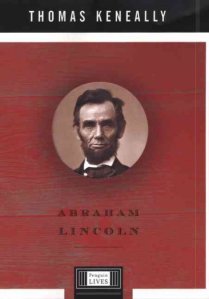
Abraham Lincoln by Thomas Keneally
Andy Warhol by Wayne Koetenbaum
Branch Rickey by Jimmy Breslin
Buddha by Karen Armstrong
Crazy Horse by Larry McMurtry
Dante by R.W.B. Lewis
Elvis Presley by Bobbie Ann Mason
Frank Lloyd Wright by Ada Louise Huxtable
George Herbert Walker Bush by Tom Wicker
Herman Melville by Elizabeth Hardwick
Jane Austen by Carol Shields
Joan of Arc by Mary Gorden
Joseph Smith by Robert V. Remini
Julia Child by Laura Shapiro
Leonardo da Vinci by Sherwin B. Nuland
Mao Zedong by Jonathan Spence
Marcel Proust by Edmund White
Martin Luther by Martin Marty
Martin Luther King, Jr. by Marshall Frady
Mozart by Peter Gay
Napoleon by Paul Johnson
Pope John XXIII by Thomas Cahill
Robert E. Lee by Roy Blount, Jr.
Rosa Parks by Douglas Brinkley
Saint Augustine by Gary Wills
Simone Weil by Francine du Plessix Gray
Winston Churchill by John Keegan
Woodrow Wilson by Louis Auchincloss

They can be found on the Lower Level in the Biography section.

Wick-ed Action

I love a good action film. In going over lists of various film genres, I discovered I’ve seen the majority of the “best” action films, though I don’t always agree with what is considered an “action” film. I expect an action film to have – well, action: a lot of movement of characters or equipment, such as vehicles. It could be modern reality based – James Bond or Air Force One, or futuristic, such as Terminator, Alien, or Serenity, comic book heroes, or war-type films such as Commando or Rambo (my grandmother made me take her to every Stallone and Schwartzeneggar film that came out). There should be suspense, perhaps mystery, a vehicle chase, and almost always a good fight scene. Body counts are expected, but graphic violence isn’t required – Suicide Squad had a high bullet count, but little gore. History of Violence had a lower bullet count, but extremely graphic depictions. I don’t mind gore, but I won’t watch cruelty or sadism – I shut off Killing Season because it was focused on torture, not action.

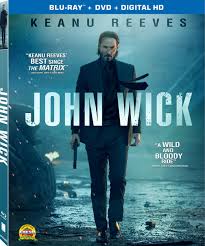
I adored John Wick, an action movie with Keanu Reeves as an assassin who tries to retire but is sucked back into the business against his will. It was just about everything I could want in a film – the script is good, the acting is good, the cast is excellent and the action is awesome. It’s just a good all-around film. I saw John Wick 2 on opening day (the DVD was released June 13) and – it was good, but not quite as great as the first. The action is impeccable – perhaps the best actual hand combat choreography I’ve ever seen (especially compared to the farce of Batman v. Superman). The script is good. But Wick’s lines, so eloquent before, are cut to choppy, often one-word sentences, which Reeves is not good at. It’s got a high bullet count, a high body count, and realistically graphic splatter from a man who was known for killing four people with a pencil.

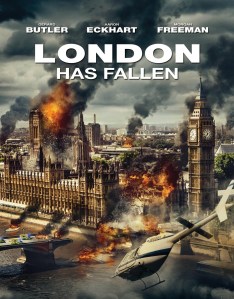
One thing I noticed about John Wick 2, though not as obvious as it was in London Has Fallen, a C+ film with multiple script flaws: the impact of videogames on choreography of action sequences. JW 2 has a wonderful flight/fight scene through the ancient underground tunnels of Rome, but you can see the influence of popular games such as Call of Duty or Grand Theft Auto. Run, stop, run, corner, shoot, shoot balcony. Man pops out of hall, bang. Run, stop, turn, shoot. It might fit the tone of the scene, but it’s very stiff and staged. London Has Fallen was much worse: the greatest action sequence of the film, the Big Rescue, and the movie looked as if you’d taken a clip from Call of Duty, overlayed it with actors, and CGI’d them together. Maybe it was my TV upgrading the blu-ray to 4K, but you could almost see pixelation in the edges of the graphics. You could have checked it off a list: guy pops up behind garbage can? Check. Drive-by shot through windshield? Check. Balcony? Check. It was so obvious that not only did it stand out, it was distracting, and you stopped watching the progression because you were so offset by the fakeness, a “Where-Have-I-Seen-This-Before?”

Is this the wave of the future? I hope not. Sure, you can look back at an early Bond film and see how cheesy the fight scenes are. You can almost hear them counting off in their heads: fist, block, step, kick, block, groin, throw, grab, twist… You can marvel at the slo-mo twists and turns of The Matrix sequences, but that’s not exactly reality, either. CGI is wonderful – it gave us Legolas sliding down oliphaunts , Avatar, and Inception. Almost all movies are made with a green-screen at this point, even comedies. But videogames are another empire – like trying to equate a romance film with porn: all the action, none of the reason. You can pop bullets all day, but why you’re doing it is a vague battle against “bad guys.” Relying on a videogame sequence kills the creativity needed. Think of the cliché of the good guy crouched down, pointing people what direction to go and then shooting at the target to cover them, or the stock western of a shootout on main street, with townsfolk peering through broken shutters. Action movies need to reinvent themselves by nature to keep themselves fresh and interesting.

Videogames are fun. Action films are fun. Sometimes movies based on a videogame are really fun (Warcraft, Tomb Raider, Mortal Kombat). But using videogame mentality in place of a more expensive or creative thought process – that’s cheating, and it doesn’t look nice.

Have you noticed the “videogame effect” in any other films?

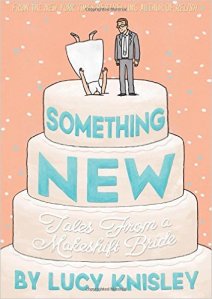
Something New: Tales From a Makeshift Bride

Something New: Tales From a Makeshift Bride by Lucy Knisley is a funny and interesting biographical graphic novel about Lucy’s relationship with her boyfriend, John, and their wedding. This book takes you through how they met in college, moved in together, broke up, dated other people for three years, then abruptly became engaged.

Then, it takes you through a year of a DIY wedding. DIY: decorations (ALL the decorations), music playlist, ties for the men in the wedding party, photo booth, personalized gifts for every single guest, personalized gifts for everyone in the wedding party, and the list goes on. What they could not do themselves they worked out as cheaply as possible: a wedding dress that was on sale (it had pockets!), a backyard barn built for the occasion, and a friend of the family to cater everything.

There is also plenty of wedding stress. Lucy’s mother had her own list of guests to invite that mostly consisted of people who were strangers to Lucy and John, and it was longer than Lucy and John’s list of guests. The mother-of-the-bride also kept insisting on other things such as hiring a wedding planner without consulting the bride and groom, changing the size of the intended barn which forced the couple to remove guests from their invitation list, a band instead of their DIY playlist, and her badly-behaved dog walking down the aisle at the wedding. As Lucy and John worked through all of this stress, Lucy also reflected on what weddings used to be, what they have become, what marrying a man means for her bisexuality, and what she wants most in a marriage.

Genre: Non-fiction graphic novel

Setting: Most of the story takes place in modern-day Chicago and New York state.

Number of pages: 291

Is this good for a book club? Yes, if the club is willing to read a graphic novel. This book contains a lot of good discussion material about an important cultural milestone. It is also very quick to read, despite the number of pages.

Themes: The history of weddings, the modern wedding industry’s influence on what people think weddings are supposed to be (and what they are supposed to cost), how weddings can negatively impact people who are not heterosexual, what it means to have a good marriage, different types of relationships, and how wedding stress can bring out the worst in people.

Objectionable content: Suggestive themes, sexuality, and alcohol.

Can children read this? Teenagers would enjoy this.

Who would like this? Anyone who is preparing for their own wedding, preparing for someone else’s wedding, has gone through a wedding, thinks weddings are overrated, thinks weddings are wonderful, or enjoys examining the wedding industry.

Rating: Five stars

Save

Save

It’s International Cake Day!

July 20th is International Cake Day! Here’s a low-calorie way to celebrate the day.

The Particular Sadness of Lemon Cake by Aimee Bender
Being able to taste people’s emotions in food may at first be horrifying. But young, unassuming Rose Edelstein grows up learning to harness her gift as she becomes aware that there are secrets even her taste buds cannot discern.


Lots of Candles, Plenty of Cake by Anna Quindlin
In this irresistible memoir, the #1 “New York Times” bestselling author writes about her life and the lives of women today, looking back and ahead–and celebrating it all–as she considers marriage, girlfriends, our mothers, faith, loss, all that stuff in our closets, and more.


Wedding Cake Murder by Joanne Fluke
Hannah is marrying Ross Barton, her college crush, but not before she can solve the murder case of nasty celebrity chef Alain Duquesne found stabbed to death in the Lake Eden Inn’s walk-in cooler.


Eat Cake: A Novel by Jeanne Ray
Ruth draws on her talent for concocting delectable cakes and desserts when her family begins to disintegrate around her–her husband loses his job, her mother moves in, and her long-estranged father shows up at the door with no place to go.


Have Your Cake and Kill Him, Too by Nancy Martin
When the tycoon owner of a spectacularly tacky sports bar is killed, Nora Blackbird suspects a secretive politician, a shady former rock star doubling as a pastry chef, and a dangerous aristo-brat on the verge of stardom.


Brief Histories of Everyday Objects

Brief Histories of Everyday Objects by Andy Warner is a hilarious non-fiction graphic novel that describes how many of the items that we take for granted have interesting, unusual, and sometimes downright silly origins. The author guessed when it came down to deciding what people looked like and what they said (unless they were quoted), but the facts are all true! Once you read this book, you will never look at the things you use on a daily basis in the same way again. The next time you go to a party, you’ll be able to tell people about the story behind the pull tabs on their soda cans.

Did you know that the woman who invented flat-bottomed paper grocery bags had to fight for her right to the patent when a man tried to steal it? She became the first woman to win a patent lawsuit.

Did you know that Earl Tupper invented Tupperware, but Brownie Wise made it sell? In fact, she was so successful that she became the face of the product. This greatly angered Mr. Tupper, so he fired her, sold the company, and purchased an island where he lived for the rest of his life.

Did you know that postcards were the results of an elaborate prank?

Did you know that roller skates were first invented in 1760 when John Joseph Merlin, a prolific inventor, built a pair so he could show off at a masquerade?

Genre: Non-fiction graphic novel

Setting: All over the world, throughout different times

Is this good for a book club? Only if the book club is interested in discussing previously unknown facts regarding everyday things.

How long is the book? 206 pages

Objectionable content? Barely. There are some references to bathing, bras, excrement, and violence, but there is nothing explicit. There are some illustrations of women wearing sports bras.

Can children read this? The humor and information are enjoyable for all ages, as long as they have a good vocabulary.

Who would like this? Anyone with a good sense of humor and a good appreciation for learning about how everyday objects were created.

Rating: Five stars

Save

Save