Childhood Revisited

  ramona If you grew up in the 70’s and 80’s, you probably read at least one of the Ramona Quimby books by Beverly Cleary. Cleary documents inquisitive, quirky Ramona from the age of four upward, and how her innocent rationales confound and vex her parents, sister, and just about everyone she meets. Cutting her own hair, baking her doll inside a birthday cake, fighting with her sister, starting school – stories every child or parent can relate to with much laughter.

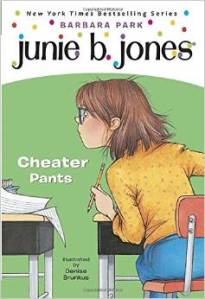
Fast forward a generation. Ramona gives way to Junie B. Jones, a kindergartener of the modern age whose misinterpretations and misguided notions get her into just as much trouble as Ramona, at home and in school. But while Ramona is filled with the sweet innocence of a bygone era, Junie is modern empowered sass. Whether getting into trouble on the schoolbus or with her family or with her nemesis, That May, Junie says aloudjunie what many children and adults often think.
Myself, I’ll take Ramona over Junie B, simply because Junie is a little too fresh for me, but I confess: I love the Junie B. Jones books, and sneak off to read them even though my youngest is now 17. And yes, I would have no problem rereading a Ramona book if I had an hour to kill – I have the whole set. If you love the genre but won’t read a kid’s book, there is hope: if you miss those kinds of stories, of seeing the world through a child’s eyes as they struggle to make sense of the world around them, often hilariously misinterpreting things, fear not! The adult form of those stories exists.

zippyEnter Haven Kimmel, who grew up in the tiny town of Mooreland, Indiana, in the 1970’s (population 300). Kimmel is a real life Ramona Quimby, and she chronicles her life in a book called A Girl Named Zippy. How she sees things, both odd and oh-so-totally familiar (“A Short List of Records My Father Threatened to Break Over my Head If I Played Them One More Time” “A Short List of Things My Father Won Gambling” “The Breakfast Bar at Which No Breakfast Was Ever Eaten.”), will have you laughing out loud where ever you happen to be reading at the time. Her cast of crazy characters, both friends and family, are common to almost every family, whether they admit them or not. Her father works in a factory, her mother lies on the couch watching TV ignoring any and all household chores, and there’s nothing in the house to eat but carrots. Although Kimmel never has clean clothes (people she visits tend to wash her clothes for her when she stops by), only one room has heat, and the house is falling down around them, Kimmel never feels neglected. She hates her Quaker roots and three-times-a-week church, her mother’s best friend has the mouth of a sailor (I can’t help but see Kathy Bates playing her in a movie), and her brother and sister flee home at the first opportunity.couch

In her second book, She Got Up Off the Couch, Kimmel describes her later years when her mother got some gumption, got off the couch, and decided to enroll at Ball State University – though it only made the home conditions worse, if possible. While being on campus with her mother, attending theater, even just listening to her mother’s phone conversations, Kimmel is suddenly thrust into realizing there’s a world beyond Mooreland, and she is never the same again. Things are not always fun and games, and Kimmel starts to become aware of the differences of how she lives versus how other people live (her father’s friend has gold toilets and velvet wallpaper; they have a hole in their wall that goes almost to the outside, and no running water), and begins to notice her parents are never together. Eventually she catches on to the fact her father’s having an affair, but even then Kimmel’s tone is wistful and both painfully accusatory and forgiving at the same time.

Whether you grew up in the 60’s, 70’s, or 90’s, the fact that you grew up at all gives you a common experience shared by everyone else, oftentimes more than you know. If you can’t relate directly to Kimmel, you probably knew someone in your neighborhood just like her. Whether you grew up in Indiana, Oregon, Arizona, or Massachusetts, you will find delight and painful familiarity in Kimmel’s youthful innocence (“She picked out a wig to wear on the special day, too, a style and color she considered “subtle’ and which I thought said ‘Pekingese.’”), while your children laugh knowingly at Junie and Ramona. It is the same story, different audiences.
In the Public Domain

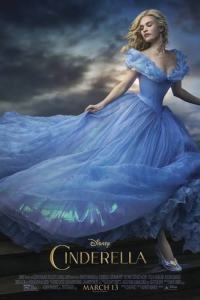
 dressIn the past few years we’ve seen a sudden resurgence of fairy tales, bombarded by big-screen live-action versions of Snow White and the Huntsman, Mirror, Mirror (which came out the same year, just for overkill), Maleficent, Cinderella, Oz the Great and Powerful, the soon-to-be released Peter Pan (October 9), Alice Through the Looking Glass (spring 2016, reprising the 2010 cast of Alice in Wonderland), Beauty and the Beast (2017 release date) and so many more. While some of these have been spectacular (who can forget Cinderella’s dress!), did you ever wonder why?

It’s more than just the fact Hollywood can’t seem to come up with anything original lately, or that remakes are a fad. Movies cost huge coin to produce – truly, hundreds of millions of dollars, from pre-production through movie rights to scripting, set design, music, choreography, lighting, costuming, and advertising. One of those big costs is often acquisition of rights – buying the rights to the material from the original author. In the case of fairy tales, the cost of that right is Zero, and that is a producer’s favorite number. Zero means you can do whatever you want with the material. Yes, you could feasibly make (and I’m sure it’s been done) a very dirty film of Snow White, Cinderella, and Ariel and no one can stop you, as long as you don’t reference anyone else’s version.

We’re accustomed to believing that Disney or Touchstone or some other major Alice in Wonderland.jpg.653x0_q80_crop-smartcompany created Snow White, Sleeping Beauty, Cinderella, Rapunzel, Beauty and the Beast, The Little Mermaid, Peter Pan, and so many other cherished films. In fact the answer is no, they did not. They only made their own version of them. Many of Disney’s greatest tales were old folk tales and fairy tales, borrowed from collections by Hans Christian Anderson or the Brothers Grimm, or bought way back when from J. M. Barrie or Rudyard Kipling. The original tales were often a bit different and usually very dark (Mermaid is a very murderous tale; the Little Match Girl freezes to death, etc). They all have one thing in common however: they are all in what’s called the Public Domain. That means they are not copyrighted, and anyone can make their own version of the tale. The stories don’t have to be bought, no author has to be fought with, and a producer can do whatever he or she wants to the story.

panIn the United States, copyright is generally good for the life of the author plus seventy years (in some instances, it is extended to as much as 120 years). If the author has good descendants and they renew on behalf of the estate, it can continue further. This is how Peter Pan is now in the public domain: J.M. Barrie died in 1937; his copyrights have expired. Treasure Island is a free e-book, because it’s in the public domain. Gone With the Wind will enter into public domain in 2031. Many of the early silent films are also free for making use of. This also holds true with music: that’s why so much classical music is used in movie and TV soundtracks: no one has to pay a penny to use it. You can tour the country playing Beethoven and Mozart all you want, and you never have to pay them a dime. Their works, like Shakespeare, and Byron, and even the Bible are all available for public use and performance.

Yes, Anne is now the public's darling, too.

Yes, Anne is now the public’s darling, too.

Now, that’s not to say you can pick up a copy of a play and start performing it for money. While the play and its characters are not under copyright, the person who planned out/composed/wrote the playbook or libretto has a copyright on the booklet or sheet music you are using – their “version” – which is why school plays cost so much (the same way “Snow White” is a public domain tale, but “Disney’s Snow White” is most definitely under copyright). Unless you’ve taken the idea of Romeo and Juliet and written up your own version, you’re going to wind up having to pay someone somewhere for your performance of the material.

Here’s one list of free public-domain books available on ebook, including both adult and children’s classics: https://www.goodreads.com/list/tag/public-domain.

So whether you look forward to some of the new, spectacularly beautiful versions of old tales coming out, or grumble about how much more money does Disney need rehashing their own blockbusters, remember the reason: movie studios are cheapskates, and copyrights don’t last forever.

Fairy tale fact: Cinderella is the most universal fairy tale. Almost every culture has a version of it. The very first known “Cinderella” story can be traced back to the story of Rhodopis, a real Greek slave girl from Thrace who married the King of Egypt. That story is from 7 BC! Our current version of Cinderella (Cendrillon) goes back to the late 1600’s France, a French version by Charles Perrault.

One Million Steps

indexI read a an eclectic variety of books; I rarely set out to read a specific book, unless I have a reason. Books come into my hands; if they sound intriguing, whether neurology, biography, the history of Times Square, or a fantasy novel, I read them. As a writer, I may step outside my normal zone of interest as part of research for something I’m writing. Such was my current situation, researching background details for a fictional warrior culture I was developing.

I don’t follow military anything. Yes, my grandfather was in the Navy, my uncles and cousins in the army, Uncle Laurie was lost at sea in WWII, and Uncle Art was a Marine at Iwo Jima, but that’s not the same as being from a military family, where service is a way of life. No one in my family has seen combat in 50 years, so I needed a lot of research. I didn’t want a diatribe on why we did what we did, the politics involved, or a lot of technical jargon that was going to make my head spin. I needed to know what it was like in the trenches, how do you respond when pinned down by gunfire, how do you get yourself out? What do you do when the population you’re fighting for wants you dead?

And I found a number of books and films that were not just entertaining, but fascinating to read and watch.

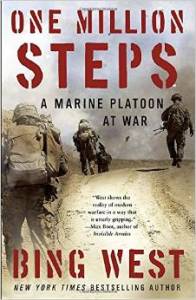
If you can read just one book on the subject – one – read One Million Steps: A Marine Platoon at War” by Bing West. West, a Viet Nam vet, embedded with Kilo Company, a Marine rifle company of the 3rd Battalion of the 5th Marine Regiment (3/5). This was exactly the book I was looking for. West takes you along with the Marines as they walk their daily walk in Sangin, Afghanistan, the worst sector for casualties. Each day’s walk was approximately 5,000 steps; their rotation was up after 200 days, or approximately one million steps, a million steps that could trigger a mine or a bullet from a mostly invisible enemy. In a country torn by war for decades, no one was welcoming them as liberators. West is actually critical of the war without being nasty about it, showing you how the policies over the years, the lack of unified vision from the uppermost tiers, the conflicting orders from above all kept the troops from doing what they were trained and equipped to do: take out the Taliban. This was a wonderful book, easy to read, easy to follow, and left you with deep respect for every man who who went over there.51zvSX4uIPL._AA160_

I also read “The Reaper: Autobiography of One of the Deadliest Special Ops Snipers” by Nicholas Irving. Although it’s simple to read, I would not rate it close to West’s book. His story – most likely ghost-written, rambles along like you’re sitting next to him at a bus station. He gives detailed accounts of one or two missions, but the rest – you might as well be talking to him at a birthday party while he tells you his life. He may be a very good sniper, but he’s not a great storyteller.

hornetsIf you don’t have time to sit and read, there are some great war films out there, both fiction and non-fiction, that will put you in the line of fire. The Hornet’s Nest is probably the most realistic of them, because it’s actual footage. A father and son journalism team go to Afghanistan to cover what is supposed to be a one-day strike that turns into a harrowing nine-day seige. If you want to see and feel exactly what goes on, this is your film. You will be riveted.

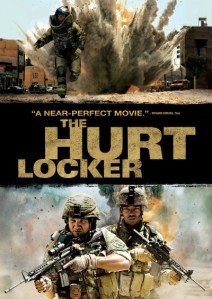
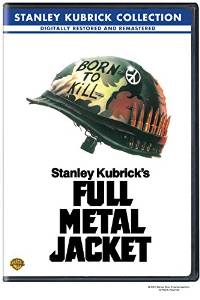
If you’re looking for more of a Hollywood polish, I recommend The Hurt Locker, starring Jeremy Renner as a bomb disposal expert addicted to the adrenaline rush he gets in the face of danger. It has the documentary style, and will keep you on the edge of your seat. An ex-Marine handed me Full Metal Jacket, which I’d only heard of. A serious and yet farcical film directed by Stanley Kubrick in the best of the 70s style, FMJ gives you all the grit of Viet Nam with the horrific insensibility of M*A*S*H*. For any Firefly fans, check out a very young Adam Baldwin toting an old-fashioned Vera. I watched it three times in one week. Another I recommend is 9th Company, which is a Russian film about battles the Russians fought in Afghanistan in the 80’s. If you don’t mind subtitles, it’s an action-packed film that gives a non-American perspective.

Sometimes you have to step away from your comfort zone to find something wonderful. This time, I hit the jackpot.


large_uToiRjgTYfGrXnMNxpyiGZPgvM0              FMJ               9th company

Son Risen – Books about Children With Autism

Barry Neil Kaufman’s son Raun was born in 1973, only to be diagnosed with severe autism by the age of one and a half. Refusing to believe the prognosis, the Kaufmans spent hours observing their son, and created their own special program for him long before anyone beyond Lovaas and Bettleheim were making any attempt to teach autistics. Three years later, their son showed no symptoms of autism, not even Aspergers. They named their program the Son-Rise Program, now taught at their foundation, the Autism Treatment Center of America in Sheffield, Mass. You can read their incredible story in Kaufman’s book Son-Rise, or the newer version, Son-Rise: The Miracle Continues, which includes the development of their foundation and follows Raun when he’s older. I warn you, however, the newer version gets a little heavy in the New-Agey/Hippie feel.

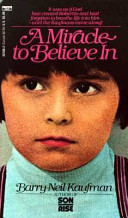
To prove that you didn’t need to start with an infant to get results, Kaufman also wrote up his work with a five-year old boy named Robertito, in the book A Miracle to Believe In. Again, Kaufman’s methods produced a child who came back from the depths of Autism to be a happy, intelligent, socially-adjusted verbal child.51ip9t-N0wL._SX331_BO1,204,203,200_

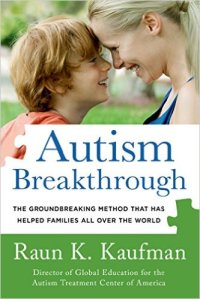
Now Raun Kaufman himself, the director of Global Outreach for the ATCA, has written Autism Breakthrough, a book that details the process the Son-Rise program uses, so you can try it yourself. The basis for the program goes against modern practices – and Kaufman’s explanations make very good sense. In short, autism is a disorder of social-relational behavior; if you can’t fix that, then all the educational training in the world isn’t going to help. The program focuses intensively on connecting with the child by entering their world, and then drawing them out into yours. Once you have social interaction and communication, then education can fall into place easily and logically.

While I am a Kaufman guru – I’ve used many of their methods with a number of “throwaway” kids and made connections like no one else – there are places we’ll have to agree to disagree. Diet is one of them. If your child’s autism is cured by diet, then chances are it wasn’t autism to start with. While organic diets are wholesome and ideal for everyone, I do not recommend “assuming” your child has a difficulty with a food just because someone said so. I do not recommend filling your child with probiotics or supplements unless a doctor has proven there is a serious deficiency. Too much of the wrong thing can be just as bad as a lack of something, and certain vitamins can be toxic in large doses. He doesn’t mention honest-to-goodness physical issues, such as brain disorders, genetic issues (such as Rett’s or Fragile X, often lumped with autism), or seizure disorders. While he does mention that you should not allow your child to do anything unsafe, he makes no attempt to give guidance to parents whose children are severely hyperactive, sleepless, or self-injurious. It’s wonderful, it works, but he glosses over the amount of time it takes to make the program work and have even the most minimal semblance of a life. His own “cure” took a team of people working almost around the clock for more than three years. Most people can’t do that.

On the opposite side of the spectrum (no pun intended), hunt down A Child Called Noah, by Josh Greenfeld. Greenfeld’s son Noah was born in 1966, just a few years before Raun Kaufman. Noah was also born severely autistic, and his story is much more typical. His father, a screenwriter, documented their family struggles through three volumes, and the other year his brother, Karl Greenfeld, wrote Boy Alone: A Brother’s Memoir, on what it’s like to live in the shadow of an autistic sibling. What he chronicles is much more typical of a family with extreme autism. If your child is not or will not be a miracle, the Greenfelds will let you know you are not alone.

Soak yourself in the Kaufman’s program (he does have a chapter just for dealing with Aspergers). Of all the programs out there, this is one I can stand behind, but like everything else, take it with a grain of salt. Critics complain it is not possible to scientifically measure the program, therefore no aspect of it can be considered valid, others complain it is still a gentle teaching/ABA program under a different name; other parents have not seen such miracle results. Nothing is perfect, nothing works all of the time. But in the land of Autism, even a thirty-percent increase in functional ability is a landmark indeed.


  6357288                           index                               content

The Martian is Coming!

martiAll I can say is

WOW.

I have not read a book this gripping in ages. Oh, sure, I adore the Retribution Falls series by Chris Wooding, they are delightful and make my heart sing, but in The Martian, Andy Weir has managed to catch me in my weakest spot, a tale that feeds both my need for a good imagine-if story and lovingly nerdy details that set my non-fiction scientific brain on fire. I got to the end, and I wanted to read it all over again.

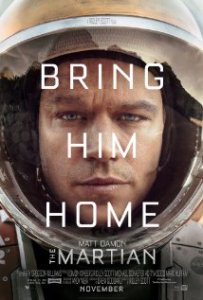
Very rarely do I seek a book out. They just happen to come to me in weird ways and tickle my interest enough that I open the cover (and covers are so VERY important. If it wasn’t for the fantastic artwork on the original Dragonlance books, I never would have entered a world that kept me trapped for more than ten years and ultimately sent to me to Lord of the Rings, which, really, is the Great-Granddaddy of the genre anyway). This time, I saw the trailer for the upcoming movie version of The Martian (release date: October 2, 2015), and was intrigued enough that when the book passed through my hands, I grabbed it.

Mark Watney is a crewman on the third manned mission to Mars. When a dust storm hits the crew on their way back to the lander, a piece of equipment snaps off and skewers his spacesuit, sending him reeling down a dune. His crew searches, but can’t locate him in the storm. His vital signs aren’t registering, and they all saw him toothpicked by that antenna. At the last possible second, they admit to themselves he’s dead and blast off to the mother ship while they can.

Only one problem.

He’s not dead.MV5BMTcwMjI2NzM2MF5BMl5BanBnXkFtZTgwNDkyNTI5NTE@._V1_SX214_AL_

The story revolves around Watney’s ability to survive the impossible, figuring things out as he goes, making everything out of the most basic substances, James T. Kirk channeling MacGyver. Because the supplies left behind were meant for six and he’s only one, he’s able to piece things along using his own ingenuity until NASA realizes he’s still alive. They try and mount a rescue mission, but NASA being NASA and twisted up in bureaucracy and safety margins, not everything is going to go by plan. The chances of Watney making it or not remain 50-50 right up until the final pages. This is a book that will make you sneak off every possible second to read just one more paragraph. From the first page, it will grab you and never let you go. By the end, you’re going to be looking around your house to see if you, too, have anything that can free oxygen or create water, and you will never look at potatoes the same way.

Knowing that in the film Matt Damon has the lead role of Watney makes you read the story in his voice. He is a brilliant piece of casting; the book seems written for him and he will be utterly convincing in the role. Check out the trailer here:  https://www.youtube.com/watch?v=Ue4PCI0NamI . Ridley Scott (Alien, Blade Runner, Thelma and Louise) is directing, and he is certainly adept at handling suspense. I’m waiting to see what they do with the soundtrack, since it’s a running joke through the book that the only music that was left behind is disco (can you imagine being stuck somewhere for months or years with nothing but a few tracks of disco to listen to? I love the Saturday Night Fever album, and I do love ABBA, but not for weeks on end!).

You don’t have to know science to enjoy the book. You don’t even have to know your Phobos from your Deimos. You just have to love a good pressure-cooker story. Don’t let this one skip your orbit.

Andy Weir, I love you.

Mars surface close to equator

Mars surface close to equator