Disappearing Authors

Barbara Newhall Follett was a writer who disappeared. Not fell out of favor or faded out of print, but disappeared. Considered a child genius who published a successful novel at the age of 12, The House Without Windows (it helped, of course, that her father was an editor at Alfred Knopf publishers), Follett was emotionally destroyed by her father’s divorce when she was 14, and never did much more. In 1939, Follett had a fight with her husband, walked out her door in Boston, and was never seen again…

Some authors are known for being extremely reclusive – J. D. Salinger, for one. Salinger had numerous personal and family issues, many, his daughter believed, stemming from PTSD from serving in World War II, and he hid from the intense fame he acquired from Catcher in the Rye. He seldom gave interviews or made appearances.

Thomas Pynchon is another, not having given an interview or even having a photo published in more than fifty years. He has no media accounts. In his late 80’s, it’s believed he’s living in Mexico, but no one except perhaps his publisher knows for certain.

Some authors aren’t lost, they’re just taking forever on that next novel – sometimes 10 years or more (staring right at you, George R. R. Martin). There are only a handful who have actually disappeared, becoming their own mystery.

Agatha Christie is perhaps the most famous. The Queen of Mystery herself disappeared in 1926, after a fight with her husband over his request for a divorce. Her car was discovered, empty. More than 15,000 people turned out to look for her, with Sir Arthur Conan Doyle going so far as to hire mediums. Eleven days later, she turned up in a hotel, 185 miles away, with no memory of what happened. Some publicists called it revenge against her husband that backfired when so many people got involved, while doctors said she had a nervous breakdown from the strain.

Solomon Northup is a name you may be familiar with. His memoir was made into an Oscar-Winning film, Twelve Years a Slave. Northup, who was born free in upstate New York but kidnapped and sold into slavery, wrote and published his memoir in 1853. Then, in 1857, he seems to disappear from historical records. Some thought he may have been kidnapped again, but his age at the time (around 50) made it unlikely. A Methodist minister in Vermont claimed to have worked with him in the early 1860’s, and last saw him in 1863. It’s assumed he died sometime between 1863 and 1864.

Elena Ferrante is a well-known author of more than 30 books, some of which have been made into movies or TV series, such as My Brilliant Friend. It’s also a pseudonym. Her true identity is a secret and almost nothing is known about her, except that she was born in Naples. In interviews, she claims it’s from shyness and fear of coming out of her shell. Speculation claims the author is actually Anita Raja, or her husband. Both people, and Ferrante’s publisher, deny it emphatically.

Antoine de St. Exupery is most famous for the timeless classic, The Little Prince, which was partly based on an airplane crash he and his navigator survived in the Libyan Desert. St. Exupery became a pilot in the 1920’s, joining the French Army, and later the French Air Force. Much of his writing has an aviation theme. When France was pulled into World War II, St. Exupery was assigned to reconnaissance missions, as an experienced pilot. On July 31, 1944, he left the airbase on Corsica in a Lockheed P-38, and was never heard from again. It wasn’t until 1998 – 54 years later, that a fisherman found a bracelet with his name on it. No one believed it, as it was some distance away from his intended flight plan. In 2000, a diver near the same area discovered wreckage of a Lockheed P-38. In 2003, the pieces were recovered and tested, proving indeed it was St. Exupery’s plane, downed in the war, though the details remain a mystery.

Ambrose Bierce was a short story writer and Civil War veteran, most famous for the story An Occurrence at Owl Creek Bridge. His stories influenced Stephen Crane and Ernest Hemingway, and he is considered one of America’s best satirists. At the age of 71, he went on a trip to visit his old Civil War battlegrounds, crossed over into Mexico, and wound up joining Pancho Villa’s army, documenting the battles. His last letter is dated December 26, 1913. His secretary believed he threw himself into the Grand Canyon in a suicide move, but witnesses saw him in Chihuahua in January of 1914.  Mexican legend has it he was executed by a firing squad.  Either way, it’s a great story!

Jack Black is one rough figure- no, not the actor! A drifter and burglar born around 1871, his 1926 autobiography You Can’t Win described his life of crime on the road. Disenchanted with both “genteel” life and that of the judicial system, he spent 30 years as a traveling criminal (15 of which he spent in prison). The book was influential for William S. Burroughs, a pioneer of the Beat Generation. Another odd fact: The author who helped him with his autobiography was none other than Rose Wilder Lane, the daughter of Laura Ingalls Wilder. You Can’t Win was adapted into a movie starring Michael Pitt and Jeremy Allen White, but has been in a liminal post-production stage for years. Black himself disappeared in 1932, and is believed to have committed suicide.

Returning to Barbara Newhall Follett’s story, there is something of a conclusion. After her disappearance, her husband didn’t report her missing for two weeks. The police eventually put out a bulletin – four months later. They used her married name, not her maiden name. A body was found, then determined not to be hers but a woman who had been missing years before. Thirteen years later, her mother insisted the police look harder, but nothing new was found. In 2019 – eighty years later – writer Daniel Mills proposed a theory that her body had been found in 1948, just not properly identified. The body had been found in New Hampshire – just a half mile from where she had a rental property and not terribly far from her home in Boston. The possessions found with the body were things Follett was known to have. The cause of death was barbiturate overdose, a substance Follett had taken before. The police in New Hampshire had no idea she’d been missing.

Authors, even the most famous ones, are still people, with the same dramas as everyone else. Does art imitate life, or does life create the art?

For books on “prodigies” who turn away from their potential, check out Outliers by Malcolm Gladwell, or Off the Charts: The Hidden Lives and Lessons of American Child Prodigies by Ann Hulbert.

Sherlock Holmes Lives On!

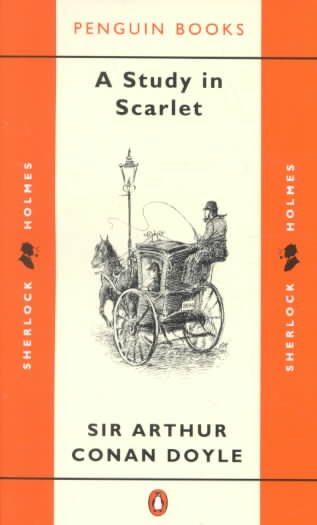
Sherlock Homes, the quintessential detective created by Arthur Conan Doyle, first appeared in A Study in Scarlet in 1887.  Doyle penned four novels and 56 short stories, chronicling the adventures of the great detective as seen though the eyes of the narrator of the Sherlock tales, Doctor John Watson.

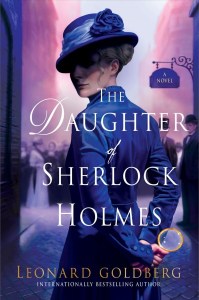
Yet, when you go to our catalog and type “Sherlock Holmes” in the search box, much more comes up that just the Arthur Conan Doyle tales.  Sherlock Holmes appears in many new and sometimes surprising stories. One of my new favorites is The Daughter of Sherlock Homes by Leonard S. Goldberg.

It is no secret from the outset of the story that Joanna Blalock, a widow with a ten year old son who looks just the late Sherlock Holmes,  is the daughter of the great detective. The pleasure of this tale is not making that discovery but uncovering a world where the descendants of all the original Conan Doyle characters are living intertwined lives. The son of Inspector Lestrade bumbles his way though a murder investigation. The son of Doctor Watson is at the side of his elderly parent and just as blind to observations and deductions that never escape the sharp eyes of Joanna (whose mother is none other than Irene Adler, the only person to ever get the better of Sherlock Holmes!) Even the offspring of the infamous villains that Holmes faced are present.

I recently wrote a blog post about Enola Homes, the younger sister of Sherlock in Nancy Springer’s clever children’s mystery series. Since then, I have realized that the exploits of Sherlock Holmes did not end with the final Conan Doyle story, and, being a big Holmes fan, I’m glad that the great detective lives on. Here is a small sampling of other incarnations of Sherlock Holmes:

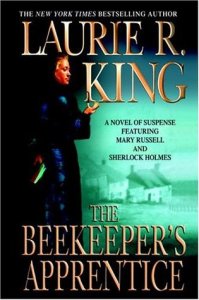
The Mary Russell and Sherlock Holmes mystery series by Laurie R. King.
In The Beekeeper’s Apprentice, the first book in the series, a chance meeting with a Sussex beekeeper turns into a pivotal moment when fifteen-year-old Mary Russell discovers that the beekeeper is the reclusive, retired detective Sherlock Holmes, who soon takes on the role of mentor and teacher.

Sherlock Holmes and the King’s Evil and Other New Adventures of the Great Detective by Donald Thomas.
Five original tales inspired by Sir Arthur Conan Doyle’s iconic character feature Holmes taking on such challenges as the famed siege of Sydney Street, a planned German invasion of America, and a supernatural curse.

Sherlock Holmes and the Shakespeare Letter by Barry Grant.
Searching through modern London for a stolen letter purportedly written by Shakespeare, Sherlock Holmes discovers a plot to arm terrorists and enlists the aid of his roommate, James Wilson, to track the arms dealers to a Scottish castle.

The Perils of Sherlock Holmes by Loren D. Estleman.
A collection of Sherlock Holmes mysteries and essays, including “Channeling Holmes,” “On the Significance of Boswells,” and “Was Sherlock Holmes The Shadow?” that delve deeper into the world of Sherlock Holmes and the imaginative mind of Sir Arthur Conan Doyle.

Sherlock Holmes and the Eisendorf Enigma by Larry Millett.
Dogged by depression and—as a trip to the Mayo Clinic has revealed—emphysema, 66-year-old Sherlock Holmes is preparing to return to England when he receives a shock: a note slipped under his hotel room door, from a vicious murderer he’d nearly captured in Munich in 1892.

A Delicious Mystery Series

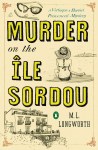
I recently stumbled on the Verlaque and Bonnet mysteries by M.L. Longworth. These delectable stories are set in Aix-en-Provence and begin with Death at the Château Bremont.

Death at the Château Bremont‘s description says “Antoine Verlaque, the handsome chief magistrate of Aix and his sometimes love interest, law professor Marine Bonnet, investigate the death of a local French nobleman who fell from the family Chateau in charming and historic Aix-en-Provence.”

Simple, non? Well, that one-sentence blurb does not even begin to cover the colorful world waiting for you within its pages. Not only do you get a good mystery, the descriptions of the town and countryside are a virtual tour of Provence. Longworth, who has lived there since 1997, obviously loves her adopted home.

And the food! As the characters eat and drink their way though the story, I often became more engrossed in their meals than in their sleuthing. They partake of fine wines and cheeses. They visit vineyards and cafes.  They meet friends for scrumptious dinners at small restaurants owned by skilled chefs. I was completely consumed by lifestyle envy.

The story is liberally sprinkled with passages such as this:

He tore open the cannele and bit into the soft inner cake made of rum and vanilla. Crusty and caramelized on the outside and soft and gooey on the inside, it was perfect.

The mystery floats in the background as the characters sit in cafes consuming fine French food and debating the merits of various wines. Verlaque often despairs of Marine. He is a gourmet and she will eat anything! Still, they enjoy an on-again, off-again love affair amid some meals that made me want to pack and move to France.

There are currently six books in this cozy mystery series. Warning: They are not only a good read, they will make you hungry!

Murder in the Rue Dumas

Death in the Vines

Murder on the Île Sordou

The Mystery of the Lost Cézanne

The Curse of La Fontaine

Return Ticket for the Orient Express

  Sometimes a literary character – and an author – just doesn’t quit, staying popular generation after generation. Sometimes we call that a classic – Scarlett O’Hara, Oliver Twist, Jane Eyre, Robin Hood and Maid Marian. Sometimes we call that Hercule Poirot.

Agatha Christie is the modern world’s most successful author (yes, even more than J.K. Rowling and Nora Roberts), third only to The Bible and Shakespeare, and has sold over two BILLION copies of her works (that’s 165 stories). Rowling only ranks ninth or so, with an estimated 500 million in sales. Sure, you can use the Gone With the Wind excuse that Rowling only hit big in 1997, while Christie’s first novel was published in 1920, so it has had a lot more years to gather sales (GWTW remains the highest-grossing film of all time, adjusted for inflation, due to its 1939 release date. Yes, more than Star Wars). Either way, there’s a reason for that.

Christie’s first and most popular detective is Hercule Poirot (the other being Miss Marple), a retired Belgian police officer with peculiarly meticulous habits and a brilliant mind for solving crimes, well-known for his thick black curling mustache – the only fictional character to ever have an obituary on the front of the New York Times. Poirot first appears in The Mysterious Affair at Styles (1920)and goes on for more than 33 novels, 50 short stories, and a stage play. You may have heard of his most famous case: Murder on the Orient Express.

Originally published in 1934, Orient Express tells the story of a murder (obviously) that occurs on a train going from Istanbul to Calais, France, which Poirot, a passenger on the train, slowly unravels. The Orient Express is a real train service that began in 1883 and ran from Turkey to France, ending its official run in 2009 – operating in three centuries!

Numerous film and television adaptions of both Orient Express and Poirot’s mysteries have been made over the years, most notably the 1974 film adaption of Orient Express starring Albert Finney – the only actor to receive an Oscar Nomination for playing Poirot, though he didn’t win (Ingrid Bergman won as Supporting Actress for the role of Greta Ohlsson). The library has many volumes of television adaptions of Poirot’s mysteries. If comedy and spoofs are more your style, check out 1976’s Murder by Death, with James Coco as Milo Perrier (Poirot), Elsa Lanchester as Jessica Marbles (Miss Marple) and a host of top-name stars poking fun at all the famous detectives.

Low and behold, Murder on the Orient Express is once again returning to the big screen on November 10, 2017, with a – dare I say it? – killer cast. Kenneth Branagh, British superstar of myriad films including Henry V, Harry Potter and the Chamber of Secrets, Dunkirk, Jack Ryan: Shadow Recruit and so many more, takes the lead as Poirot – not as short as Poirot is supposed to be, but ever since Hollywood ridiculously cast 5’6” Tom Cruise as 6’5” Jack Reacher, all rules are off. Add in Penelope Cruz, Dame Judy Dench, Willem Dafoe, Derek Jacobi, Johnny Depp, Leslie Odom Jr., Michelle Pfeiffer and more, and it’s worth the price of admission just for the cast and the gorgeous period costumes and vehicles. Of course there’s already a furor raging among the purists about his mustache.

Kenneth Branagh is a superb actor but an even superior director, and with him in the director’s seat  and the blessings of Agatha Christie’s estate, the film promises to be everything we want it to be. So prepare by reading a couple of Poirot’s mysteries, or check out a couple of other adaptions, and then watch the film. Or, give the movie a shot and then follow up with a binge of Poirot stories. When you run out, there’s always Miss Marple.

Mysteries: Around the World in 80 Sleuths

I love mysteries that immerse the reader in another culture, so here is a short (won’t burden you with 80!) list of some of my favorites, all written by authors with a gift for conveying a strong sense of place. There is no Nordic noir on my list.  A dead body or two and a certain amount of violence are inevitable in all but the coziest of mysteries, but the Scandinavians tend to take it a little far for my taste. Plus I prefer that the majority of the characters in the books I read be people I would enjoy spending time with!  So make yourself a nice cup of tea and curl up with any one of these for a satisfying few hours of reading.

Tannie Maria mysteries by Sally Andrews.
Set in rural South Africa, Recipe for Love and Murder is the first in a series featuring Tannie Maria, a middle-aged widow who loves both to cook and eat and also writes a recipe and advice column for the Klein Karoo Gazette.  While assisting other people with their problems, Tannie Maria is forced to deal with her own–and with a murder to boot. Recipes included! The second novel in the series, The Satanic Mechanic, is due out at the end of March 2017.

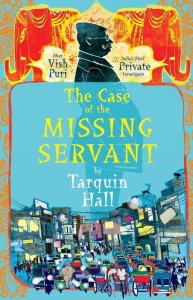
Vish Puri, Most Private Investigator mysteries by Tarquin Hall.
Set in the colorful, crowded  metropolis of Delhi, this humorous series features the endearingly idiosyncratic detective Vish Puri (aka Chubby for reasons that will be obvious), India’s Most Private Investigator, and a boisterous cast of supporting characters including Puri’s irrepressible Mummi-ji and his operatives Tubelight, Facecream and Handbrake. Warning:  Do not read these books on an empty stomach, the descriptions of food are positively mouth-watering. No need to read in order.

Commissario Guido Brunetti mysteries by Donna Leon. 
Venice is the setting for this best-selling series, which has been running for 25 years and captures the beauty, character and seamy underbelly of  life in this glorious city.  Brunetti is a good and intelligent man working to keep crime and injustice at bay in his beloved Venice.  You read these books as much for his musings and observations about daily life, his beloved family, politics and government as you do for the mysteries. The books are also celebrated for their mouth-watering descriptions of the food,  so much so that Donna Leon co-wrote a cookbook featuring some of the fabulous Venetian recipes referenced in her novels.  For long-time fans, reading the latest Donna Leon book is like a visit with old friends. Pick up any one in the series and start reading!

Chief Inspector Armand Gamache mysteries by Louise Penny.
Set in Quebec, these books feature one of the most admirable men to ever command a police force. Or pretty much anything else.  Multilayered plots, a large and richly described cast of characters and lyrical writing characterize this series which is made even stronger by its incorporation of the complexities of bi-lingual and bi-cultural Quebec.  As one reviewer said, “few writers in any genre can match Penny’s ability to combine heartbreak and hope in the same scene.” Still Life is the first in the series of 12 books, which is best read in order.

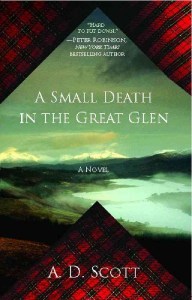
The Highland Gazette Mystery Series by A. D. Scott.
Set in the northern Scottish Highlands in the 1950s, this series about a mystery-solving newspaper staff in a small town captures the changing world of post-war Scotland.  This series has everything I like–richly drawn characters, complicated relationships and well-developed backstories in a setting both beautiful and bleak.  Read this fine series in order–the first one is A Small Death in the Great Glen.  There are 6 books in all and the author is working on the seventh.  As a bonus, you will meet members of the Highland Travelers, an indigenous group similar to the Romani in Europe.

Bruno, Chief of Police mysteries by Martin Walker.
A small village in the Dordogne region of south-central France is the setting for this series, featuring Benoit “Bruno” Courreges, a soldier-turned-policeman who would rather tend his garden or whip up a gourmet meal than use his gun or arrest a suspect.  Part of the pleasure of these richly satisfying mysteries is the contrast between the traditional rhythms of life in a French village and the terrors of the modern world.  You may miss a few details if you read this series out of order, but it will not dampen your pleasure in the slightest.

Emily Dickinson said it best:  “There is no Frigate like a Book To take us Lands away…”