Kids say the darndest things. They also play the darndest games! Even with scarce resources, children have no problem keeping themselves busy. Tag, hide and seek, charades, telephone, the floor is lava—these games provide hours of entertainment and require very little except imagination. If they’re feeling very imaginative, kids will even make up new games, creating their own worlds, rulesets, and objectives.
Made-up games that appear in books are interesting to me for a couple of reasons. On the surface, these games tend to be exciting and make for lively passages of fun and frenzy (and often disaster). But on a deeper level, they’re often constructed and presented in a way that conveys some hidden meaning about the characters, themes, or world. Take Calvinball, for instance:
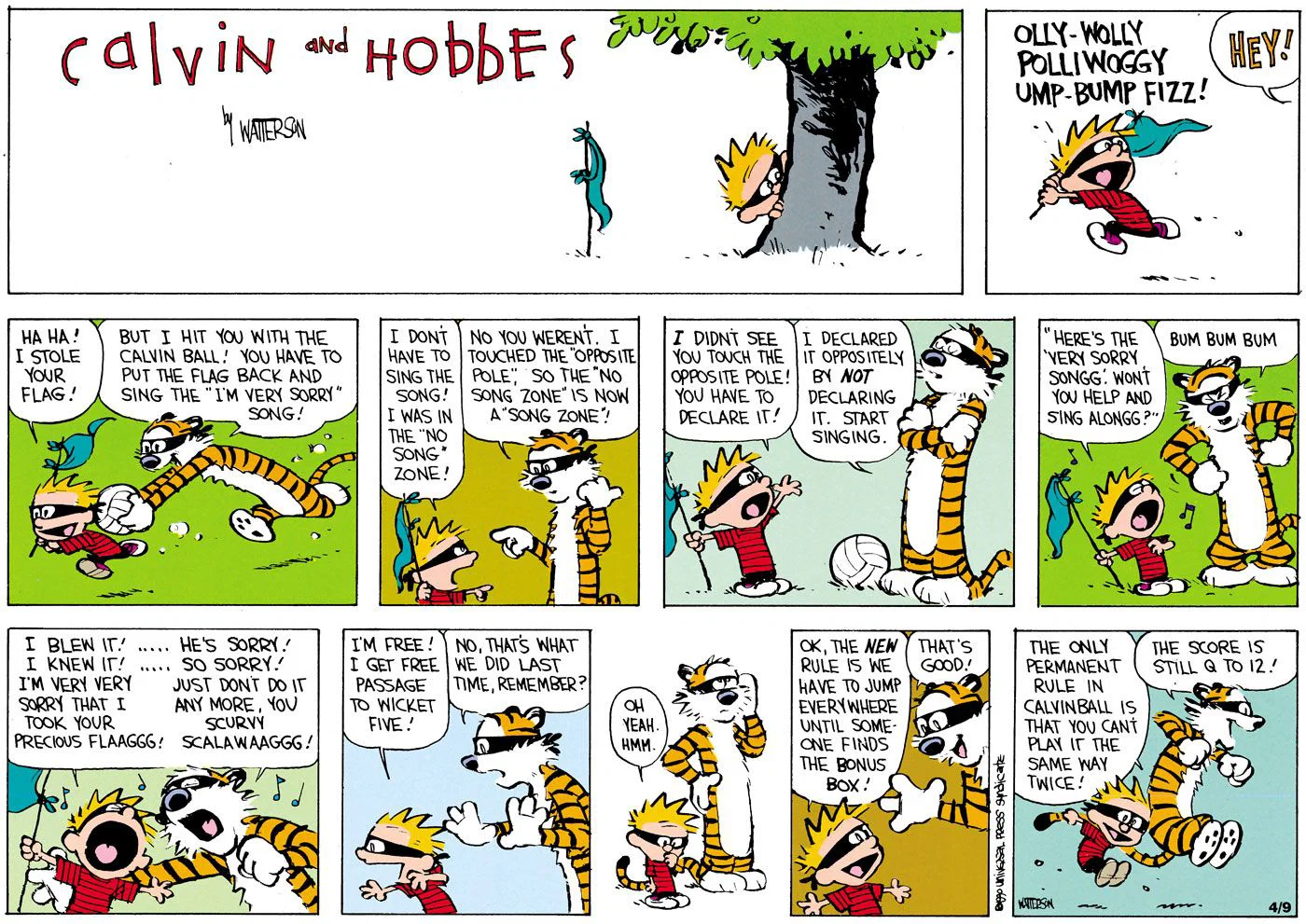
Yes, Calvinball is silly and a joy to read, but it also allows us to learn about Calvin’s worldview: he prioritizes novelty and creativity over everything else. He gives up his (probably VERY valuable) “free passage to wicket five” in order to avoid anything habitual. Thinking about Calvin’s troublemaking with this in mind offers a more nuanced take on why he acts out. Perhaps his motivations for disrupting the status quo are less nefarious than they first seem. This subtext can be found in other Calvin and Hobbes comics, but it’s through Calvinball that we get a glimpse into the purest incarnation of his beliefs. I feel as though the same scrutiny can be applied to other invented games in novels and would like to share several in this blog post.
Gormenghast by Mervyn Peake (1950)
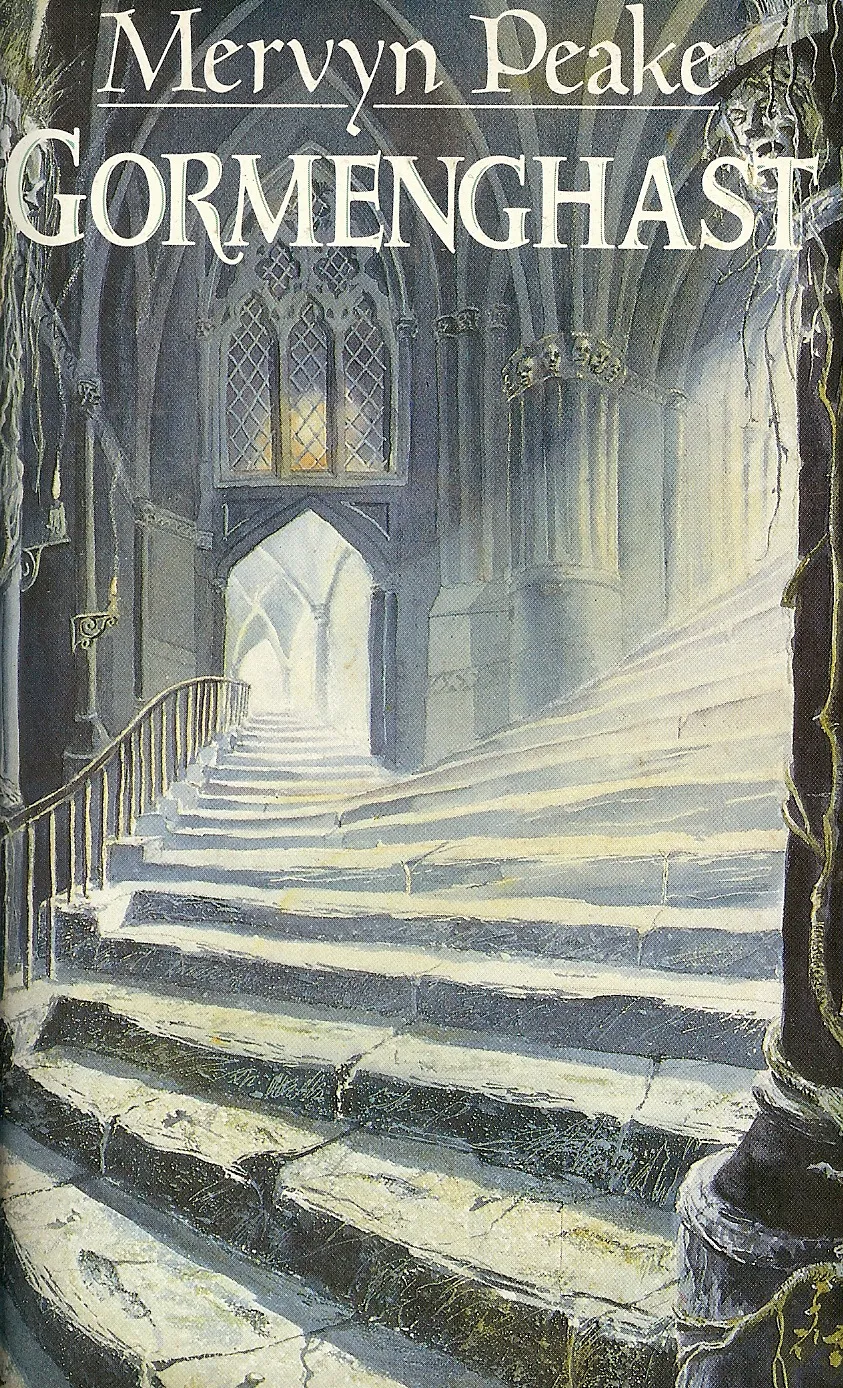
The first book of Mervyn Peake’s Gormenghast trilogy, Titus Groan, opens with the birth of the titular Titus, the 77th Earl of Gormenghast. In keeping with Peake’s sense of humor, baby Titus has almost no role whatsoever in the book he lends his name to; the bulk of the drama surrounds his family and the servants who reside in Gormenghast Castle. In the second book, Gormenghast, he has his time in the sun:
Titus is seven. His confines, Gormenghast. Suckled on shadows; weaned, as it were, on webs of ritual: for his ears, echoes, for his eyes, a labyrinth of stone: and yet within his body something other – other than this umbrageous legacy. For first and ever foremost he is child.
A ritual, more compelling than ever devised, is fighting anchored darkness. A ritual of the blood; of the jumping blood. These quicks of sentience owe nothing to his forebears, but to those feckless hosts, a trillion deep, of the globe’s childhood.
The gift of bright blood. Of blood that laughs when the tenets mutter ‘Weep’. Of blood that mourns when the sere laws croak ‘Rejoice!’ O little revolution in great shades!
Alluded to in the above quote, Gormenghast pits Titus’ youthful optimism and joie de vivre against the castle’s oppressive and ever-present “webs of ritual”. Each hour of each day is dictated by an ancient book of customs and procedure, and tradition is upheld simply for the sake of tradition. The children of Gormenghast are some of the only characters who are able to see through this farce and find ways to rebel against the system that holds them hostage.
In class, with the Professor sound asleep in a heap at his desk, the children spring into action. They carefully flip over a floorboard whose bottom has been waxed into a frictionless plane. They open the window (100 ft. above ground), launch themselves onto a tree, swing from a branch back into the classroom where they land with extraordinary momentum onto the polished board. They speed past a firestorm of hardened spitballs (courtesy of their classmates) until they make it to the opposite wall, and then the next student soars out the window, beginning another round…
It’s a particular brand of chaos only children are capable of, a mix of danger and whimsy that defies logic. It’s telling that their game ends very poorly for Headmaster Deadyawn, who is described as an “arch-symbol of delegated duties, of negation and apathy.” Several other emblems of authority and tradition are challenged throughout the novel, but the jubilant spirit of this childhood game serves as a perfect foil to Gormenghast’s bleak rituals.
Black Swan Green by David Mitchell (2006)
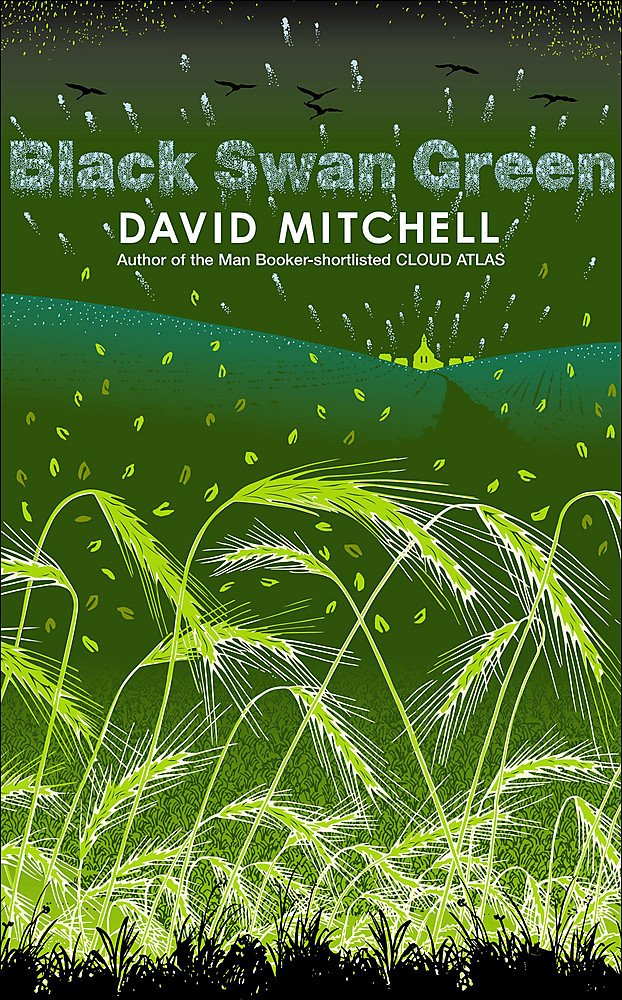
Unlike the “floorboard game” of Gormenghast, which defies order, childhood games are also effective ways to impose order, as is the case in Black Swan Green, a semi-autobiographical novel by David Mitchell. It follows Jason Taylor, a boy with a speech impediment growing up in dreary Thatcher era England. He savors the highs and suffers the lows of adolescence over a series of 13 vignettes, penned in Mitchell’s colorful prose. Black Swan Green touches upon family discord, the Falklands War, sexuality and shame, but a major theme both implicit (in discussions of Britain’s xenophobia towards the Romani) and explicit (in the bullying Jason endures every day at school) is hierarchy and predation. It seems Jason would do anything for the acceptance and safety bestowed to those at the top of the pecking order, and in the 6th chapter, titled Spooks, he’s given an opportunity.
He impresses the popular kids by pulling a prank on a neighborhood menace and is invited to join the Spooks (British slang for spies, not the racial slur). It’s unclear even to Jason the material benefits of being a member, but the idea of being part of the in-group is enough for him. First, he has to pass a test:
“So you knows the rules?” Grant Burch flobbed. “Yer gets a leggy over this wall, then yer’ve got fifteen minutes to get across the six back gardens. Once yer done, yer legs it to the green. Swinyard ’n’ Redmarley’ll be waitin’ under the oak. If yer in time, welcome to the Spooks. If yer late, or if yer don’t show, yer ain’t no Spook and yer never will be.”
Complicating the situation for Jason, his decidedly-uncool friend, Moran, is invited to join as well. After the race kicks off, Jason thrives and Moran is caught by a neighborhood menace (lots of neighborhood menaces in this book). Jason wants to go back for his friend, but doing so would ruin his chances with the popular kids. What to do?!
Childhood games lend themselves so easily to hierarchy. Rules are important so that all participants share a mutual understanding of the game, but oh, how convenient it is when the rules work in the victor’s favor. How many times does one hear, “Sorry, I don’t make the rules,” on the playground? Such is the case with Jason’s friend: He’s in danger? Why should I care? He’s not in our club. And now that you’re in our club, why should you care?
Jason’s urge to help his friend is a threat to the club’s entire existence. If the “losers” are extended the same privileges as the “cool kids” (namely: sympathy and assistance), then what becomes of the line that divides the two groups? How are the “cool kids” supposed to feel protected by their status if no one can tell where the in-group ends and the out-group begins?
A Prayer for Owen Meany by John Irving (1989)
(Mild spoilers ahead)
Another reason I find childhood games interesting is because they anticipate elements of adulthood. Kids will play-act scenes they observe in the lives of adults and find joy in navigating their pretend responsibilities. At the library, we have a restaurant play area where kids pretend to be customers, chefs, and cashiers. Funnily enough, sometimes they’ll pretend to be managers and get the valuable duty of bossing everyone else around. In games and play, moments like this are a bittersweet reminder that the adult world of order and authority is just around the corner, inescapable. The older kids get, the more complicated play becomes as they borrow the expectations and roles they pick up from adults in their life. You want to say, “Hey, you don’t have to worry about this adult stuff yet, just have fun!” But of course, there’s nothing you can do…
This is a tragedy you’ll find in A Prayer for Owen Meany by John Irving. Owen, though not the protagonist, is the heart of the novel: a tiny, serious boy who believes he’s God’s instrument. This belief both haunts and motivates him, subtly guiding his decisions and imparting his childhood with a creeping heaviness that affects even the games he plays with his friend (and our main character) Johnny:
“LET’S PRACTICE THE SHOT,” Owen would say; that was all we ever called it — “the shot.” We’d go over it again and again. He would grasp the ball in both hands and leap into my arms (but he never took his eyes from the rim of the basket); sometimes he would twist in the air and slam the ball into the hoop backward — sometimes he would dunk it with one hand. I would turn in time to see the ball in the net and Owen Meany descending — his hands still higher than the rim of the basket but his head already below the net, his feet kicking the air. He always landed gracefully.
Sometimes we could entice the old janitor to time us with the official scorer’s clock. “SET IT TO EIGHT SECONDS,” Owen would instruct him. Over the summer, we twice managed “the shot” in under five seconds. “SET IT TO FOUR,” Owen would say, and we’d keep practicing; under four seconds was tough. When I’d get bored, Owen would quote me a little Robert Frost. “ ’ONE COULD DO WORSE THAN BE A SWINGER OF BIRCHES.’ ”
“The shot” at first seems like a silly made-up game with no real origin or purpose. It’s not legal in an official basketball game and Johnny can think of no reason why Owen would be so dedicated to something so meaningless. He knows it has something to do with Owen’s self-described divine purpose, but his friend keeps him in the dark. Deprived of actual fun and boyish frivolity, Johnny makes his feelings known:
“It’s simply irresponsible,” I said — “for someone your age, and of your education, to go around thinking he’s God’s instrument!”
All Johnny wants is for them to play like normal kids but Owen is pushing fun to the side and prioritizing obscure, abstract duties. In other words, Owen is behaving like an adult. My biggest takeaway from “the shot,” however, is not that fun wanes as maturity waxes. That’s too reductive. I’m left thinking about how Johnny stands by his friend (and his friend’s dull game) even when he’s bored out of his mind. Isn’t that another mark of maturity: seeing the forest for the trees? He understands that friendship is worth so much more than a little gratification. Loyalty might not be as lofty an ideal as divinity, but it is something we can all achieve.
The Unconsoled by Kazuo Ishiguro (1995)
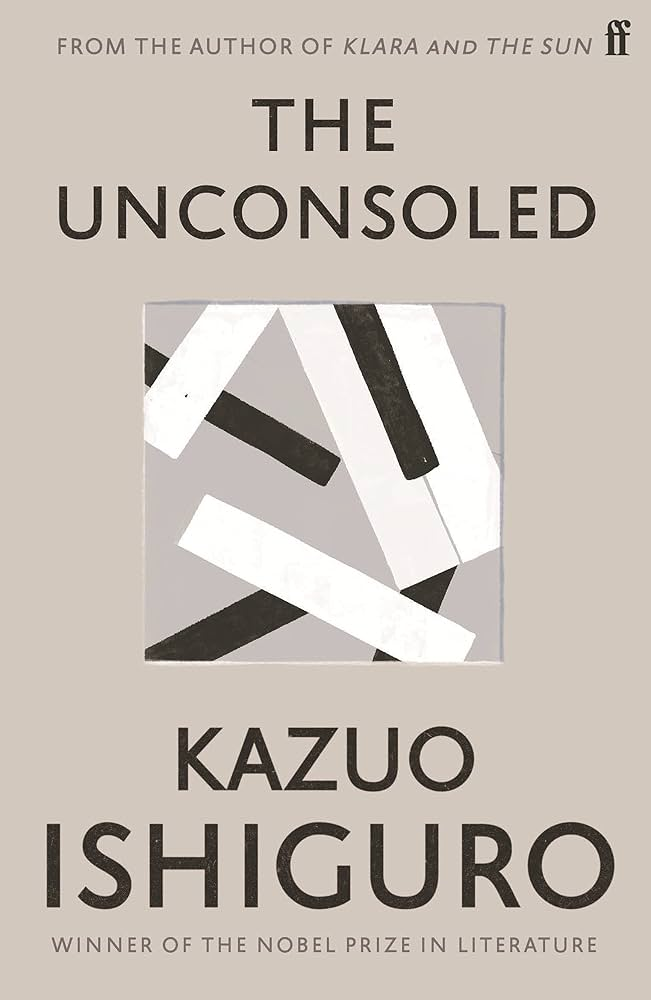
Whether by desire or necessity, kids often play games by themselves. Isolation has never stopped childhood creativity and whimsy from running amok. In fact, games created in isolation can provide meaningful insights into the game-maker’s psyche. Such is the case with one particular character in Kazuo Ishiguro’s The Unconsoled. The novel follows Mr. Ryder, a renowned pianist who arrives in a nameless Central European country for a performance he doesn’t remember agreeing to. In a similarly hazy fashion, Ryder may or may not have a wife, Sophie, and child, Boris, who expect Ryder to perform fatherly duties as he runs around town preparing for the concert. Sometimes Ryder gives them the light of day, other times he acts as if he barely knows them and concentrates instead on the strangely demanding townsfolk. The nerve! Poor Boris exists in a constant state of partial fatherlessness, and one of the ways we learn about how this affects him is through games:
Boris’s mentions of ‘Number Nine’ had rung some distant bell for me. Now as I listened to his whispering, I recalled that ‘Number Nine’ was not in fact a real footballer, but one of Boris’s miniature players from his table-football game. The footballers, moulded in alabaster and each one weighted at the base, could be made with flicks of the finger to dribble, pass and shoot a tiny plastic ball. The game was intended for two people each controlling a team, but Boris only ever played on his own, spending hours lying on his front orchestrating matches full of dramatic reversals and nail-biting comebacks.
Number Nine is Boris’ favorite player, and it soon becomes clear that Number Nine acts as a stand-in for Ryder in the microcosm of his table-football game:
However, for all his immense skill, Number Nine was a highly moody personality. His position in the team was somewhere in midfield, but often, for long stretches of a match, he would sulk in some obscure part of the pitch, apparently oblivious of the fact that his team was losing badly. Sometimes, Number Nine would continue in this lethargic manner for over an hour, so that his team would go four, five, six goals down, and the commentator – for indeed there was a commentator – would say in a mystified voice: ‘Number Nine so far just hasn’t found his form. I don’t quite know what’s wrong.’
It would be an understatement to call Number Nine a bad footballer; his ineptitude goes so far as to suggest that he’s not even aware that he’s involved in a football match. Similarly, Ryder spends the novel bumbling around, ignorant of the expectations placed upon him. When he does attempt to satisfy the requests and demands of the townsfolk, he is clumsy and uninformed. He leaves people agitated and worse-for-wear. Boris experiences Ryder’s failures first-hand and wishes for nothing more than a father-figure who can rise to the occasion, a hero who knows exactly what to do. This is where Boris’ table-football game diverges from reality:
Then, perhaps with twenty minutes remaining, Number Nine would finally give a glimpse of his true ability, pulling back a goal for his side with some fine piece of skill. ‘That’s more like it!’ the commentator would exclaim. ‘At last, Number Nine shows what he can do!’ From that moment on, Number Nine’s form would grow steadily stronger, until before long he would be scoring one goal after another, and the opposing team would be concentrating entirely on preventing at virtually any cost Number Nine receiving the ball. But sooner or later he would, and then, no matter how many opponents stood between him and the goalmouth, he would manage to find a way through to score. Soon the inevitability of the outcome once he had received the ball was such that the commentator would say: ‘It’s a goal,’ in tones of resigned admiration, not when the ball actually went into the net, but at the moment Number Nine first gained possession – even if this occurred deep within his own half.
Here we glimpse Boris’ childish optimism, a redemption and salvation for the unlikeliest of characters: the sulking and oblivious Number Nine. His comeback is so hyperbolic and cartoonish that you have to feel sorry for Boris. Boris believes in Number Nine but the reader knows well that heroism is not a switch that can be flipped on and off. Even more-so, an absentee father cannot redeem himself overnight because fatherhood is not a game that can be won or lost. Every failure of Ryder to show up for Boris both physically and emotionally has its cost. Boris’ admission of Number Nine’s “moody personality” attests to this, but innocent soul he is, he wants to believe that all past transgressions can be forgiven with some courageous display by Ryder. You might be able to guess that Ryder’s redemption is not in the cards, but at least Boris is able to briefly live out this fantasy through his table-football game.
Infinite Jest by David Foster Wallace (1996)
Infinite Jest by Davis Foster Wallace is one of those novels whose reputation looms larger than the book itself. Only hearing horror stories of erudition and footnotes and pretentious super-fans, I was surprised by the amount humor I found, enough to add an unexpected levity to the reading experience. A book that features herds of feral hamsters stampeding across the Northeast should not be taken that seriously. Perhaps the most comic moment comes in Chapter 42, when the students of Enfield Tennis Academy play the fictional game of Eschaton.
Every year at E.T.A., maybe a dozen of the kids between maybe like twelve and fifteen — children in the very earliest stages of puberty and really abstract-capable thought, when one’s allergy to the confining realities of the present is just starting to emerge as weird kind of nostalgia for stuff you never even knew — maybe a dozen of these kids, mostly male, get fanatically devoted to a homemade Academy game called Eschaton. Eschaton is the most complicated children’s game anybody around E.T.A.’d ever heard of.
Eschaton takes place on four tennis courts divided into sections that represent different countries and treaty groups, like a game of Risk. The main mechanic is straightfoward: tennis balls represent 5-mega-ton thermonuclear warheads and can be launched by teams representing various global alliances. That’s where the simplicity ends. The “Triggering Incident” that begins the game takes three whole pages to explain and is near indecipherable without a degree in international relations. You might expect tweens to be quickly fed up with the complexity, but instead, they embrace it:
For these devotees become, on court, almost parodically adult — staid, sober, humane, and judicious twelve-year-old world leaders, trying their best not to let the awesome weight of their responsibilities — responsibilities to nation, globe, rationality, ideology, conscience and history, to both the living and the unborn — not to let the terrible agony they feel at the arrival of this day — this dark day the leaders’ve prayed would never come and have taken every conceivable measure rationally consistent with national strategic interest to avoid, to prevent — not to let the agonizing weight of responsibility compromise their resolve to do what they must to preserve their people’s way of life. So they play, logically, cautiously, so earnest and deliberate in their calculations they appear thoroughly and queerly adult, almost Talmudic, from a distance.
Unlike in Owen Meany, where a child is thrust into adulthood by an external party (God), the children in Infinite Jest seem inwardly driven to seek out adult behavior. This is the age where you begin to understand how difficult and complicated the world is, and these kids’ mastery of Eschaton could be viewed as a way to cope with all the uncertainty and fear of adulthood rushing quickly to meet them. If you can shoulder the Atlas-esque burden of wartime leadership and keep a cool head, what else could there be to worry about? And for a while, it seems as though the kids are holding it together. But it doesn’t last. Unprecedented weather prompts an argument over whether snowfall is occurring within the game of Eschaton, or just on the real-life courts. Insults are lobbed, tempers flare, tension mounts until suddenly, one player launches a tennis ball directly at the back of an opponent’s head.
No Eschaton Combatant has ever intentionally struck another Combatant’s physical person with a 5-megaton thermonuclear weapon. No matter how frayed players’ nerves, it’s never made a lick of sense. A Combatant’s megatonnage is too precious to waste on personal attacks outside the map. It’s been like this unspoken but very basic rule.
At this, hell breaks loose and the facade of adulthood disappears. Punches, headlocks, and tennis balls no longer representing nuclear weapons, just painful projectiles. The game is forgotten and the scene devolves into a chaotic snowy brawl.
This is a very funny turn of events after pages and pages of dense geopolitical jargon, but it also works thematically. The first half of this chapter has a certain cynicism about it. It’s as though the world these kids have been raised in is so volatile and prone to violence that they can remain stone-faced as they obliterate entire cities with their tennis-ball warheads. It paints a scary picture of the future. When their game crumbles, it’s proof that these are not stone-faced murderers. They’re just stubborn and reckless children who still have plenty of room to grow.