Happy Birthday to Neil Gaiman! (November 10)

gaimanhimselfAs of November 10, 2015 Neil Gaiman is 55 years old. He is a supporter of libraries, the arts, and is everything that this librarian could want in an author. Neil is the author of books from a wide range of genre’s, and for every age group. His body of work is extensive, and includes many groundbreaking volumes. He is also the father of three children from his first marriage, now grown adults, and a new baby just born on September 16 with his wife Amanda Palmer who is a singer, song writer, performance artist, and author. To make him even cooler in my eyes, he is also good friends with singer/songwriter Tori Amos and godfather of her daughter. I am admittedly a bit of a fangirl.
gaiman5Gaiman began his writing career in England as a journalist. His first book was a Duran Duran biography that took him three months to write, and his second was a biography of Douglas Adams, Don’t Panic: The Official Hitch Hiker’s Guide to the Galaxy Companion. Soon afterward he collaborated or creating in graphic novels such as Violent Cases, Black Orchid, and Sandman. Over the years he has added picturebooks, children’s fiction, adult fiction, television, film, and theater to his body of work. This includes writing for one of my favorite shows, Doctor Who. He also does the narration for most, if not all, of the audiobook versions of his work.

Neil and his works have won many nominations and awards over the year. A few of the awards include: Kurt Vonnegut Jr Award For Literature, Boston Public Library Literary Lights For Children, CBLDF Defender of Liberty, The “Galaxy” Award (China) for Most Popular Foreign Author, Horn Book Honors, Kirkus Reviews Best Children’s Books, ALA Booklist Editors’ Choice: Books for Youth, Hugo Award, IndieBound Award, and many, many more.
gaiman1Here is a sampling of his works, though far from comprehensive. They are in no particular order.
Picturebooks:
Chu’s Day
Chu’s First Day of School
Chu’s Day at the Beach
The Wolves in the Walls
Blueberry Girl
Crazy Hairgaiman2
Instructions: Everything you’ll Need to Know on your Journey

Children’s and Young Adult Books:
Fortunately, the Milk
M is for Magic
The Graveyard Book
Coraline
Hansel & Gretel: a Toon Graphic
Odd and the Frost Giants
Interworld
The Truth is a Cave in the Black Mountainsgaiman3
The Books of Magic
Marvel 1602

Adult Books:
The Ocean at the End of the Lane
The Make Good Art Speech
Trigger Warning: Short Fictions and Disturbancesgaiman4
Anansi Boys
American Gods
Stardust
Good Omens
Smoke and Mirrors: Short Fictions and Illusions
Neil Gaiman’s Lady Justice. Vol. 1

November is Aviation History Month

aviationConnecticut is rich in history when it comes to aviation.  Some of the biggest aviation manufacturers are located in Connecticut including: Sikorsky, United Technologies, sikorskyLockheed Martin, and Pratt & Whitney.  There are dozens of smaller companies that supply all sorts of parts and support to the aviation industry.  Connecticut is not only home to Bradley airportInternational Airport, but to many small local air fields as well.  There is Candlelight Farms Airport in New Milford, Groton-New London Airport, Markham Municipal Airport in Meriden, Ripley Field Airport in Litchfield  to name a few, along with many heliports throughout the state.  Most of the larger hospitals have heliports, and many companies also have their own heliports.

new englandConnecticut is fortunate to have a wonderful air musuem – The New England Air Museum in Windsor Locks.   And the Cheshire Library is fortunate to offer a pass for reduced admission to this museum, courtesy of the Friends of the Cheshire Public Library.  For more information on this pass, click here.

The library also offers an extensive collection of materials about aviation.  For a list of titles, click here.  Below is a tiny sampling:

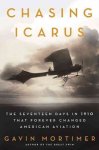
Chasing Icarus

Area 51 Black Jets

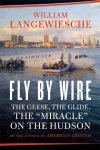
Fly By Wire: the geese, the glide, the miracle on the Hudson

Birdmen: the Wright Brothers, Glenn Curtiss and the right to control the skies

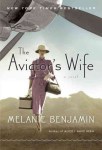
The Aviator’s Wife Melanie Benjamin (Fiction)

Fly By Night – Ward Larson (Fiction)

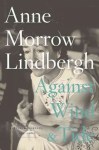
Against Wind and Tide – Anne Morrow Lindbergh (Biography)

The Aviator   (DVD)

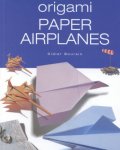
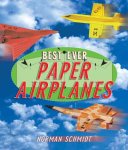
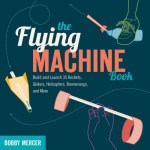
If you are interested in building paper airplanes, the library offers these titles.


My Most Frequently Recommended Children’s Authors

One of my favorite things about working in the library is getting the chance to do favsalanna-the-first-adventurereader’s advisory. This is librarian jargon for answering questions about what book a patron (or their child) might enjoy reading next. On our part it involves discovering what the reader is most interested in, and what kind of books they usually enjoy most. While I might occasionally get stumped in the adult fiction category, when it comes to books for children (or teens) I could go on for hours. We all have our favorites, particularly if given free reign to mention any genre of book we enjoyed, or when we find a patron that has enjoyed some of the same books that we loved as well.

faviconThere are several authors that most parents, librarians, and parents think of first and fondly, such as E.B. White, Beverly Cleary, C.S. Lewis, Judy Blume, Lemony Snicket, Roald Dahl, Kate DiCamilloand more. Once the typical go to books have been read, or dismissed by the young reader since the parents suggested them, I have several of my own go to authors that I usually favssisters-grimmrecommend. Here is my “short” list.

Tamora Pierce has several series, all connected by the fantasy world they are set in and some overlapping events and characters. You do not have to read all of the series to enjoy the others. The first series is Song of the Lioness, about a young girl who defies all the odds to become a knight. She has books in both the children’s and young adult sections of the library. Other series include Beka Copper, the Daughter of the Lioness or Trickster series, Circle of Magic, and  Protector of the Small.

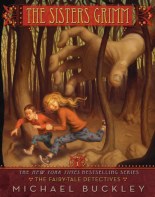
favsnerdsMichael Buckley has one stand alone novel (Undertow) for young adults and two wonderful series for children. The Sisters Grimm is a mystery series about orphaned sisters Sabrina and Daphne Grimm who are sent to live with an eccentric grandmother, who just happens to live in a town with a variety of fairy-tale characters. NERDS is a series that combines all the excitement of international espionage and all the awkwardness of elementary school. The series features a group of unpopular students who run a spy network from inside their school. With the help of cutting-edge science, their nerdy qualities are enhanced and transformed into incredible abilities!

Tom Angleberger has a selection of fun and fast paced books that are great for favsmustashreluctant readers. There is Fake Mustache, the Origami Yoda series, the Qwikpick Papers series, and Horton Halfpott.  All of his books have silly humor, illustrations, and realistic characters in less believable situations.

E.D. Baker tends to writes books that take our assumptions about princesses, magic, and fairy tales and makes us look at them with new eyes. First came The Frog Princess which started a series. Soon after came The Wide-Awake Princess and its follow ups. There is also the stand alone (at least so far) A Question of Magic and the start to another series with The Fairy-Tale Matchmaker.

favsfrogOther great authors, that rarely disappoint readers willing to give them a chance include Avi, Shannon Hale, Neil Gaiman, Jonathan Stroud, Gail Carson Levine, Ben Hatke, Jennifer Holm, Vivian Velde Vande, Holly Black, Matt Christopher, Diana Wynne Jones, Lois Lowry, Louis Sachar, Jerry Spinelli, Andrew Clements, Margaret Peterson Haddix, Cornelia Funke, and so many more. Still looking for suggestions, or need a specific recommendation for you or your child? Swing by the Children’s Room and any of us will be glad to help and share our favorites!

Spooky Selections for Middle Grade Readers

mgspook1Do you have a middle grade reader that lovers anything spooky? This age group often loves to be scared, but not terrified, by their scary stories. Finding books that make parents and readers happy is sometimes hard, but here are some books that might just hit the mark.

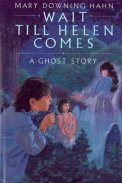
Wait Till Helen Comes by Mary Downing Hahn
Unhappy about moving into a converted church in the country with her mother and new stepfather, Molly must put aside her dislike of her little stepsister, Heather, when the child is possessed by a malevolent ghost.

The Graveyard Book by Neil Gaimanmgspooky3
Raised since he was a baby by ghosts, werewolves, and other residents of the cemetery in which he has always resided, Bod wonders how he will manage to survive amongst the living with only the lessons he has learned from the dead.

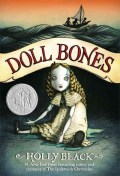
Doll Bones by Holly Black
Zach, Alice, and Poppy, friends from a Pennsylvania middle school who have long enjoyed acting out imaginary adventures with dolls and action figures, embark on a real-life quest to Ohio to bury a doll made from the ashes of a dead girl.mgspooky4

A Tale Dark & Grimm (A Tale Dark & Grimm, #1) by Adam Gidwitz
Follows Hansel and Gretel as they walk out of their own story and into eight more tales, encountering witches, devils, warlocks, kindly strangers, and other helpful folk as they take charge of their own happily ever after.

The Cavendish Home for Boys and Girls by Claire Legrand
Practically-perfect twelve-year-old Victoria Wright must lie, sneak, and break the rules when her investigation of the disappearance of her best–and only–friend, Lawrence, mgspooky6reveals dark secrets about her town and the orphanage run by the reclusive Mrs. Cavendish.

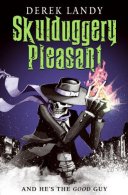
Skulduggery Pleasant (Skulduggery Pleasant, #1) by Derek Landy
When a not-so-innocent twelve-year-old girl named Stephanie inherits her eccentric uncle’s estate, she must join forces with Skulduggery Pleasant, a skeleton mage, to save the world from an ancient evil.

This slideshow requires JavaScript.


Looking for more spooky mayhem that will please a middle grade (or older) reader? Here are a few more of the many avalible options: Coraline by Neil Gaiman, The Old Willis Place by Mary Downing Hahn, The Nightmarys by Dan Poblocki, The Doll in the Garden by Mary Downing Hahn, The Halloween Tree by Ray Bradbury, The House with a Clock in Its Walls (Lewis Barnavelt, #1) by John Bellairs, School Spirit (Suddenly Supernatural #1) by Elizabeth Cody Kimmel,  Skeleton Man by Joseph Bruchac, The Ghost Comes Calling by Betty Ren Wright, Liesl & Po by Lauren Oliver,  Ghosts I Have Been by Richard Peck, and The Ghost’s Grave by Peg Kehret.

In the Public Domain

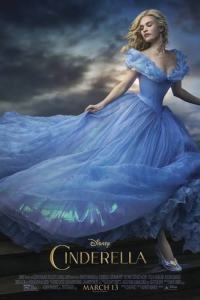
 dressIn the past few years we’ve seen a sudden resurgence of fairy tales, bombarded by big-screen live-action versions of Snow White and the Huntsman, Mirror, Mirror (which came out the same year, just for overkill), Maleficent, Cinderella, Oz the Great and Powerful, the soon-to-be released Peter Pan (October 9), Alice Through the Looking Glass (spring 2016, reprising the 2010 cast of Alice in Wonderland), Beauty and the Beast (2017 release date) and so many more. While some of these have been spectacular (who can forget Cinderella’s dress!), did you ever wonder why?

It’s more than just the fact Hollywood can’t seem to come up with anything original lately, or that remakes are a fad. Movies cost huge coin to produce – truly, hundreds of millions of dollars, from pre-production through movie rights to scripting, set design, music, choreography, lighting, costuming, and advertising. One of those big costs is often acquisition of rights – buying the rights to the material from the original author. In the case of fairy tales, the cost of that right is Zero, and that is a producer’s favorite number. Zero means you can do whatever you want with the material. Yes, you could feasibly make (and I’m sure it’s been done) a very dirty film of Snow White, Cinderella, and Ariel and no one can stop you, as long as you don’t reference anyone else’s version.

We’re accustomed to believing that Disney or Touchstone or some other major Alice in Wonderland.jpg.653x0_q80_crop-smartcompany created Snow White, Sleeping Beauty, Cinderella, Rapunzel, Beauty and the Beast, The Little Mermaid, Peter Pan, and so many other cherished films. In fact the answer is no, they did not. They only made their own version of them. Many of Disney’s greatest tales were old folk tales and fairy tales, borrowed from collections by Hans Christian Anderson or the Brothers Grimm, or bought way back when from J. M. Barrie or Rudyard Kipling. The original tales were often a bit different and usually very dark (Mermaid is a very murderous tale; the Little Match Girl freezes to death, etc). They all have one thing in common however: they are all in what’s called the Public Domain. That means they are not copyrighted, and anyone can make their own version of the tale. The stories don’t have to be bought, no author has to be fought with, and a producer can do whatever he or she wants to the story.

panIn the United States, copyright is generally good for the life of the author plus seventy years (in some instances, it is extended to as much as 120 years). If the author has good descendants and they renew on behalf of the estate, it can continue further. This is how Peter Pan is now in the public domain: J.M. Barrie died in 1937; his copyrights have expired. Treasure Island is a free e-book, because it’s in the public domain. Gone With the Wind will enter into public domain in 2031. Many of the early silent films are also free for making use of. This also holds true with music: that’s why so much classical music is used in movie and TV soundtracks: no one has to pay a penny to use it. You can tour the country playing Beethoven and Mozart all you want, and you never have to pay them a dime. Their works, like Shakespeare, and Byron, and even the Bible are all available for public use and performance.

Yes, Anne is now the public's darling, too.

Yes, Anne is now the public’s darling, too.

Now, that’s not to say you can pick up a copy of a play and start performing it for money. While the play and its characters are not under copyright, the person who planned out/composed/wrote the playbook or libretto has a copyright on the booklet or sheet music you are using – their “version” – which is why school plays cost so much (the same way “Snow White” is a public domain tale, but “Disney’s Snow White” is most definitely under copyright). Unless you’ve taken the idea of Romeo and Juliet and written up your own version, you’re going to wind up having to pay someone somewhere for your performance of the material.

Here’s one list of free public-domain books available on ebook, including both adult and children’s classics: https://www.goodreads.com/list/tag/public-domain.

So whether you look forward to some of the new, spectacularly beautiful versions of old tales coming out, or grumble about how much more money does Disney need rehashing their own blockbusters, remember the reason: movie studios are cheapskates, and copyrights don’t last forever.

Fairy tale fact: Cinderella is the most universal fairy tale. Almost every culture has a version of it. The very first known “Cinderella” story can be traced back to the story of Rhodopis, a real Greek slave girl from Thrace who married the King of Egypt. That story is from 7 BC! Our current version of Cinderella (Cendrillon) goes back to the late 1600’s France, a French version by Charles Perrault.