In the Public Domain

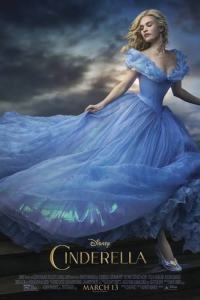
 dressIn the past few years we’ve seen a sudden resurgence of fairy tales, bombarded by big-screen live-action versions of Snow White and the Huntsman, Mirror, Mirror (which came out the same year, just for overkill), Maleficent, Cinderella, Oz the Great and Powerful, the soon-to-be released Peter Pan (October 9), Alice Through the Looking Glass (spring 2016, reprising the 2010 cast of Alice in Wonderland), Beauty and the Beast (2017 release date) and so many more. While some of these have been spectacular (who can forget Cinderella’s dress!), did you ever wonder why?

It’s more than just the fact Hollywood can’t seem to come up with anything original lately, or that remakes are a fad. Movies cost huge coin to produce – truly, hundreds of millions of dollars, from pre-production through movie rights to scripting, set design, music, choreography, lighting, costuming, and advertising. One of those big costs is often acquisition of rights – buying the rights to the material from the original author. In the case of fairy tales, the cost of that right is Zero, and that is a producer’s favorite number. Zero means you can do whatever you want with the material. Yes, you could feasibly make (and I’m sure it’s been done) a very dirty film of Snow White, Cinderella, and Ariel and no one can stop you, as long as you don’t reference anyone else’s version.

We’re accustomed to believing that Disney or Touchstone or some other major Alice in Wonderland.jpg.653x0_q80_crop-smartcompany created Snow White, Sleeping Beauty, Cinderella, Rapunzel, Beauty and the Beast, The Little Mermaid, Peter Pan, and so many other cherished films. In fact the answer is no, they did not. They only made their own version of them. Many of Disney’s greatest tales were old folk tales and fairy tales, borrowed from collections by Hans Christian Anderson or the Brothers Grimm, or bought way back when from J. M. Barrie or Rudyard Kipling. The original tales were often a bit different and usually very dark (Mermaid is a very murderous tale; the Little Match Girl freezes to death, etc). They all have one thing in common however: they are all in what’s called the Public Domain. That means they are not copyrighted, and anyone can make their own version of the tale. The stories don’t have to be bought, no author has to be fought with, and a producer can do whatever he or she wants to the story.

panIn the United States, copyright is generally good for the life of the author plus seventy years (in some instances, it is extended to as much as 120 years). If the author has good descendants and they renew on behalf of the estate, it can continue further. This is how Peter Pan is now in the public domain: J.M. Barrie died in 1937; his copyrights have expired. Treasure Island is a free e-book, because it’s in the public domain. Gone With the Wind will enter into public domain in 2031. Many of the early silent films are also free for making use of. This also holds true with music: that’s why so much classical music is used in movie and TV soundtracks: no one has to pay a penny to use it. You can tour the country playing Beethoven and Mozart all you want, and you never have to pay them a dime. Their works, like Shakespeare, and Byron, and even the Bible are all available for public use and performance.

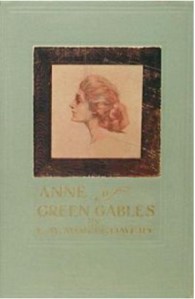
Yes, Anne is now the public's darling, too.

Yes, Anne is now the public’s darling, too.

Now, that’s not to say you can pick up a copy of a play and start performing it for money. While the play and its characters are not under copyright, the person who planned out/composed/wrote the playbook or libretto has a copyright on the booklet or sheet music you are using – their “version” – which is why school plays cost so much (the same way “Snow White” is a public domain tale, but “Disney’s Snow White” is most definitely under copyright). Unless you’ve taken the idea of Romeo and Juliet and written up your own version, you’re going to wind up having to pay someone somewhere for your performance of the material.

Here’s one list of free public-domain books available on ebook, including both adult and children’s classics: https://www.goodreads.com/list/tag/public-domain.

So whether you look forward to some of the new, spectacularly beautiful versions of old tales coming out, or grumble about how much more money does Disney need rehashing their own blockbusters, remember the reason: movie studios are cheapskates, and copyrights don’t last forever.

Fairy tale fact: Cinderella is the most universal fairy tale. Almost every culture has a version of it. The very first known “Cinderella” story can be traced back to the story of Rhodopis, a real Greek slave girl from Thrace who married the King of Egypt. That story is from 7 BC! Our current version of Cinderella (Cendrillon) goes back to the late 1600’s France, a French version by Charles Perrault.

Celebrate the Freedom to Read with Challenged Children’s and Young Adult Titles

Banned Books Week is an annual event celebrating the freedom to read anything and everything that catches our fancy. This usually happens during the last week of September, and this year it runs from September 27 through October 3 2015. For more information on banned books weeks and challenged books in general, you might want to check out the American Library Association’s dedicated pages on the subject here.

banned1Banned Books Week brings together everyone who loves books, reading, and readers. This includes librarians, book sellers, teachers, and readers of all ages who support the freedom to seek and to express ideas, even those that might be uncomfortable or unpopular. To celebrate banned books this year, I am going to read as many of the children’s and young adult books that have faced challenges that I can. This will mean rereading some of my favorites, and reading some books for the first time. I have noted after each book whether it is a young adult book (YA), children’s chapter or poetry book (CB), or picture book (PB). How many of these challenged books have you read and are you surprised by the number of books many consider classics or favorites are on the list?

banned2The Absolutely True Diary of a Part-Time Indian by Sherman Alexie (YA)

The Witches by Roald Dahl (CB)

And Tango Makes Three by Justin Richardson and Peter Parnell (PB)

The Perks of Being a Wallflower by Stephen Chbosky (YA)

banned10Blubber by Judy Blume (CB)

In the Night Kitchen by Maurice Sendak (PB)

To Kill a Mockingbird by Harper Lee (YA)

A Light in the Attic by Shel Silverstein (CB)

1984 by George Orwell (YA)

The Chocolate War by Robert Cormier (YA)

Harry Potter and the Sorcerer’s Stone (and the rest of the series) by J.K. Rowling (CB)banned14

For even more reading you might want to check out other challenged titles: A Wrinkle in Time by Madeleine L’Engle (YA), The Great Gilly Hopkins by Katherine Paterson (CB), Julie of the Wolves by Jean Craighead George (YA), Bridge To Terabithia by Katherine Paterson (CB), Deenie by Judy Blume (YA), Flowers for Algernon by Daniel Keyes (YA), James and the Giant Peach by Roald Dahl (CB), Are You There, God? It’s Me, Margaret by Judy Blume (CB), The Adventures of Tom Sawyer by Mark Twain (CB), Speak by Laurie Halse Anderson (YA), Blood and Chocolate by Annette Curtis Klause (YA), Staying Fat for Sarah Byrnes by Chris Crutcher (YA), and Persepolis by Marjane Satrapi (YA). This is just the tip of the iceberg! For further lists of challenged books, and why they have been challenged visit the ALA’s page of Frequently Challenged Books.

This slideshow requires JavaScript.

Movies or Television Shows and the Books You Did Not Know They Were Based On

We know that many television shows and movies are based on books. Love them or hate them hits like Twilight, Harry Potter, Gone Girl, True Blood, Game of Thrones, and many more were based on (or inspired by) the written word. However, there are so many more movies and television series that you have already seen, or could be currently binge watching, that are also based on books and you just do not know it. Here are some of the titles that I thought were the most interesting or surprising.booktomovie1

Pitch Perfect the film may have been based on Pitch Perfect: The Quest for Collegiate A Cappella Glory by Mickey Rapkin, a non-fiction book about a capella competitions, but I have to imagine that the movie version is much more audibly entertaining.

The movie Die Hard is based on Nothing Lasts Forever by Roderick Thorp. The book was published in the late ’70s, and went out of print before the movie adaptation was released almost a decade later.booktomovie2

Shrek! by William Steig is a picturebook about an ogre who falls in love with an “ugly” princess, so part of the concept remained when the animated version of Shrek was made.

Forrest Gump by Winston Groom might have been changed a great deal in the film adaptation of Forrest Gump.  However, the award-winning film certainly helped book sales.

booktomovie4Gordon Buford wrote Car, Boy, Girl in 1961, seven years before the first Herbie the Love Bug adaptation.

The Brave Little Toaster by Thomas M. Disch was a critically acclaimed science fiction novella long before it was turned into a beloved children’s movie, also named The Brave Little Toaster, it was nominated for both a Hugo Award and a Nebula Award.

The self-help book Queen Bees & Wannabes by Rosalind Wiseman might not seem like the typical book to inspire a movie. However, it is what  Mean Girls is based on.booktomovie6

Ted Hughes, former poet laureate of England,  wrote a children’s book called The Iron Giant in 1968. The animated movie, also titled The Iron Giant, was released in 1999.

Jack Bickham wrote The Apple Dumpling Gang, a novel about orphans during the California gold rush. Disney adapted it into the classic The Apple Dumpling Gang with Don Knotts in 1975.

booktomovie7I know of a few more that were surprising, either because I did not know the book existed or because the adaptation so barely resembled the book that I could not recognize it. Are there any here that surprised you, and do you know of any more book to movie or television series adaptations that might be surprising? Please share your thoughts with us in the comments.

Young Adult Books Without Romance

Do you love young adult books but have found yourself bored with the love triangles and angst that comes with the almost constant presence of a complicated love interest? Well, I have gone in search of young adult books that entertain and are romance free! Here are some of the best young adult books that steer clear of the expected traps of young love. Some of these might have some flirting, or some hints of possible romance in the future, but I aimed for the books with no romance at all. This turned out to be a harder list than I nolovechildrenexpected to curate; so if you have additional titles to suggest please share them in the comments. I know I cannot be the only one to notice the lack in this area.

Miss Peregrine’s Home for Peculiar Children by Ransom Riggs
After a family tragedy, Jacob feels compelled to explore an abandoned orphanage on an island off the coast of Wales, discovering disturbing facts about the children who were kept there.

Sabriel by Garth Nix
nolovesabrielSabriel, daughter of the necromancer Abhorsen, must journey into the mysterious and magical Old Kingdom to rescue her father from the Land of the Dead.

Here, There be Dragons by James A. Owen
Set in 1917, an undergraduate is given a special book that he is told was the reason for his professor’s murder and so must now protect it with his life as he goes on a journey like no other to places that are only supposed to exist in history and dreams.

Code Name Verity by Elizabeth Weinnoloveverity
In 1943, a British fighter plane crashes in Nazi-occupied France and the survivor tells a tale of friendship, war, espionage and great courage as she relates what she must do to survive while keeping secret all that she can.

The Absolutely True Diary of a Part-Time Indian by Sherman Alexie
Leaving the Spokane Indian Reservation to attend an all-white high school, Junior struggles to find his place in his new surroundings in order to escape his destiny back on the reservation.

Going Bovine by Libba Braynolovebovine
Dealing with an illness that will soon result in his death, 16-year-old Cam is intrigued by the stories told by an eccentric girl named Dulcie and so is encouraged to go on a wild road trip across America where their search for a special cure will lead them to the strangest places on the map.

For more romance free, or very light, here are some more suggestions; Deadline by Chris Crutcher, Katya’s World by Jonathan L. Howard, The Eye of Minds by James Dashner, The Alchemyst: the Secrets of the Immortal Nicholas Flamel by Michael Scott, The Last Dragonslayer by Jasper Fforde, Ender’s Game by Orson Scott Card, Monster by Walter Dean Myers, Butterfly by Sonya Hartnett, Orleans by Sherri L. Smith, The Wee Free Men by Terry Pratchett, The Book Thief by Markus Zusak, The Hobbit: or, There and Back Again by J.R.R. Tolkien, The Maze Runner by James Dashner,The Sky Inside by Clare B. Dunkle, Watership Down by Richard Adams, The Knife of Never Letting Go by Patrick Ness, Killer of Enemies by Joseph Bruchac, or Speak by Laurie Halse Anderson.

This slideshow requires JavaScript.

Books for the Clone Club – What to Read After Orphan Black

I recently discovered the BBC America series Orphan Black, somewhat by accident. In my job as Social Media Coordinator at Cheshire Library, I spend a lot of time on various social media networks, where I’d see Orphan Black referenced regularly. The show has a very vocal online fandom, particularly on Twitter and Tumblr, and I guess this is a good example of social media effectively surpassing traditional advertising in getting the word out about something. After the fandom’s outpouring of joy when the show’s lead, Tatiana Maslany, was nominated (finally! they exclaimed) for an Emmy, I decided to see what all the fuss was about.

Luckily we own Seasons One, Two, and Three here at CPL, which allowed me to binge-watch my heart out, and guess what? They got me! It’s a really riveting show that, not being a huge sci-fi fan, I normally wouldn’t have thought to watch. I have joined the masses in my awe of Tatiana Maslany’s “heavy lifting” as an actress, playing multiple clones in each episode and making them all identifiable and unique.

Season Four won’t premiere until sometime in 2016;  where to get our clone fix in the meantime? Fear not, Clone Club, I’ve found a few books to fill the genetically-engineered void until then. Surprisingly, to me anyway, most of these are considered YA (young adult) books, but they stand up to adult reading.  So if you like fiction with a clone-y twist, might I suggest:


1False Sight by Dan Krokos. Resolving to move past the disturbing truths of her clone origins to enjoy time with Peter and her other friends, Miranda is compelled to follow her genetically programmed instincts when a member of her team turns rogue and triggers a humanity-threatening war.


2Project Cain by Geoffrey Girard. Jeff Jacobson learns that not only was he cloned from infamous serial killer Jeffrey Dahmer’s blood as part of a top-secret government experiment, but there are other clones like him and he is the only one who can track them down before it is too late.


3Partials by Dan Wells. In a post-apocalyptic eastern seaboard ravaged by disease and war with a man made race of people called Partials, the chance at a future rests in the hands of Kira Walker, a sixteen-year-old medic in training


4Falls the Shadow by Stefanie Gaither. When her sister Violet dies, Cate’s wealthy family brings home Violet’s clone who fits in perfectly until Cate uncovers something sinister about the cloning movement.  Murder, morality, and a slow-burning romance fill the pages of this futuristic thriller.


5The House of the Scorpion by Nancy Farmer. This modern classic takes on an iron-fisted drug lord, clones bred for their organs, and what it means to be human. Winner of the National Book Award as well as Newbery and Printz Honors.


7Never Let Me Go by Kazuo Ishiguro. Kathy grows up at a peculiar English boarding school called Hailsham, knowing that she and her classmates are “donors,” clones raised for organ harvesting. Kathy has deferred her fate by becoming a caregiver for dying clones, including her close childhood friends Ruth and Tommy. This award-winning novel straddles the YA and Adult Fiction genres, and takes the reader on a real emotional journey.