Hope in the Hot Zone

No, I won’t bore you with flu information. Let’s talk about something more deadly.

There have been a LOT of deadly epidemics throughout history. AIDS/HIV has killed 36 million people since 1981, a virus with a 99.9% fatality rate, though after billions of dollars we’re down to “only” 1.6 million deaths per year, world-wide. The 1918 flu epidemic (the same flu you get a shot for, H1N1) killed 20-50 million people in less than two years. The Black Death, that 1346 wave of flea-borne bubonic plague, killed 200 million. Plague, carried in the US by squirrels and prairie dogs, still kills 100 people a year. Another mega-epidemic was the Plague of Justinian in 541, which coincided with a major volcanic eruption – some believe it was an earlier explosion of the famous Krakatoa – and a year with crazy weather and an abundance of misery, killed 50 million. It’s also believed to have been Bubonic Plague. The plague of Antonine in 165 AD, brought back by Roman soldiers, killed 25 million people and might have been either Measles or Smallpox. The entire population of New England plus New York State is 30 million.

In the case of viruses – HIV, Smallpox, Measles, Flu – those numbers were due to germs released on a population that had little to no immunity. Measles has been around for millennia, but viruses mutate. Mutations are accidents during reproduction – like the first case of left-handedness, or blue eyes. Viruses can reproduce rapidly inside a cell; if they multiply every 20 minutes, and if you expect one accident every 1,000 generations, that’s 1600 mutations every eight hours. Some mutations can render a virus or bacteria weaker. But sometimes, they become more dangerous.

Like Ebola.

I don’t know why, but I’ve read almost every book by anyone who’s worked on Ebola. The Hot Zone is one of my favorites. So of course, along comes Richard Preston and writes another book on the most recent outbreak of Ebola, a disease that, untreated, has a 90% fatality rate, and a 40% rate if treated with supportive care (let’s not forget, Smallpox had a 30% fatality rate. Yeah, maybe before your time, but that’s why there was such a forced vaccine campaign to eradicate it.) Ebola is extremely contagious – just one particle, out of the billions spewed by each victim, can be deadly.

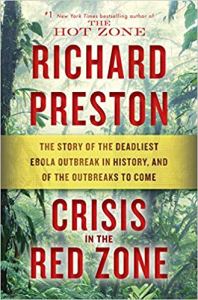
In his new book, Crisis in the Red Zone, Preston begins with the 1976 outbreak,  then covers the 2014 outbreak, so you can see just how far medicine has come in those 40 years, from reusing the same needle without sterilizing it to PCR breakdown of the genetic code of Ebola. Six strains have been identified; the new one, Ebola Makona, is four times more deadly, the result of just one mutation swapping one single amino acid.
Why should Ebola bother you? As Preston reiterates time and time again, if the countries where Ebola is endemic cannot handle an outbreak, imagine Ebola getting loose on a subway in New York, by a person who gets off in Grand Central, and then walks to a play on Broadway, even though they’re feeling a bit feverish and coughing. They’ve now infected several thousand people, who will infect several thousand people, who will get on planes and fly around the world, spreading the virus very rapidly, to major cities with crowded airports. The risk is entirely too real, on medical systems not the least bit prepared to handle it – there are barely 400 Level-4 isolation beds in the ENTIRE US. (And yes, in the last epidemic, Ebola DID make it to the US, all the way to Texas, where it killed two people. )

However, there is now hope – ZMapp was the first antibody-driven treatment for Ebola, taking a victim literally in the process of their last breaths to walking around *in one hour*.  And yet, two new drugs with the unimaginative names of REGN-EB3 and mAB114 were found to be better – bringing a death rate of 90% to a survival rate of 90%. There has also been the creation of an Ebola vaccine, which is 97% effective. Preston chronicles the moral and ethical dilemma of these developments – you cannot have trials in people because of the fatality rate of the disease, and in giving an unknown treatment to people who already have a 50% chance of living, you may kill them with the “cure”. How do you give informed consent when no one knows what the drug will do? And who do you choose to give a possible cure to?

Read the book. It’s got all the angst of a good murder mystery, the joys of survival, and medical miracles on top. If you live on Earth or do business here, you really need to be aware of these things.

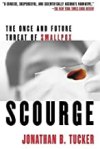
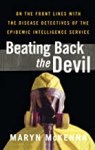
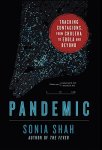
Wash your hands and check out some of these other awesome books on viruses!


CPL Staff’s Favorite Reads of 2019

As you might imagine, our library staff reads a lot of books! I recently asked CPL staffers what their favorite reads of the last year were, and the list was varied and long, a mix of fiction and nonfiction, older titles and new releases. If you’re looking for some “librarian-approved” reading, we’ve got quite a few suggestions for you!

Print Fiction:

Audiobook:

Graphic Novel:

Print Nonfiction:

Susan’s Best Reads of 2019

I don’t read as much as I wish I could; I just don’t have time at the moment. It doesn’t help that I wind up with sometimes 600 page books in my hands, and those take longer.  I never know what I’ll read next, and I read a bunch of good ones last year. Here are some of my favorites:

One of the two best books I read this year, I’ve already blogged about: Creativity, Inc, by Ed Catmull, was amazing. Not just a history of Pixar films, it’s also the best darned, most entertaining book on business and employee management you will read. Pixar is a 5-star company for a reason.

The second of my Best Reads this year is The Man from the Train: The Solving of a Century-Old Serial Killer Mystery by Bill James and Rachel McCarthy James.  From approximately 1898 to 1912, a serial killer traversed the US by train – coming through New Haven’s Union Station on the way – with an MO of bludgeoning his victims with the back of an axe. Because of communications at the time, few people were able to connect the murders. James painstakingly, with the utmost detail, traces the dozens of murders and examines them, deciding if they were likely by the same killer or not, and why. He traces the paths through the states and the seasons, chasing the trail to a man who was most likely the killer. By the time he’s done, you are convinced and amazed. I could not stop reading this book. I read it while waiting for the school bus. I read it while cooking. I would have read it in the shower if I could have. If you love a mystery, if you love history, if you love crime stories, this book is a must.

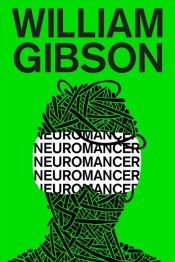
I’m only 30 years late in reading Neuromancer, the Hugo-winning cyberpunk novel by William Gibson. I can see why it is held as one of the greatest novels of our time. Gibson predicts and writes about today’s modern computers and internet and gaming – long before they existed. The scenarios he describes are both familiar and futuristic at the same time. While not only visionary, it’s written in  a flawless style and with realistic, interesting characters. If you loved Ready Player One or The Matrix (which has to have been influenced by this book), you will love Neuromancer.

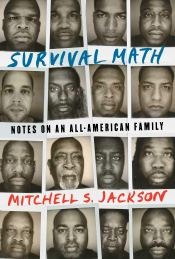
If you’re aware of social and racial issues, I strongly recommend Survival Math, by Mitchell S. Jackson. A professor of writing, in achingly beautiful prose worthy of Martin Luther King Jr., with the voice of a preacher without being preachy, Johnson breaks down the issues faced in his own family, examining how he came to where he is, how racism played into it without even being visible, and how despite all the odds, it’s possible to thrive. He covers harsh topics without flinching. The book is brilliant, spellbinding, and a superb read from a voice that soars with truth.

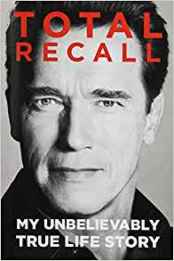
Far more than I expected, I loved Total Recall, an older door-stop of a biography on Arnold Schwarzenegger. From his birth in a tiny town in Austria (which still has only 2500 people) to his divorce from Maria Shriver, Arnold is witty and candid and down to Earth. No matter what you think of his politics or his movies or his personal life, this book may be older, but it was highly entertaining. His best friend just died in September of this year.

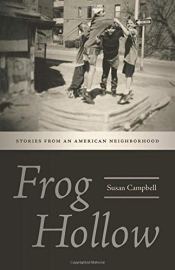
Not my favorite, but worth mentioning because of its local importance, is Frog Hollow  by Susan Campbell. Campbell, a former reporter with the Hartford Courant, digs into the history of the notorious Frog Hollow section of Hartford, and through tireless research shows the former glory of the neighborhood as not only an important area in Colonial times, but once a major manufacturing center (in 1898, Pope automotive made half the cars in the US). I was hoping for a deep sociologic dissection of the issues, but instead Campbell gives us an upbeat view from street level about the good aspects of Hartford and the people who live there, not just the doom and gloom of ad-selling news clips.

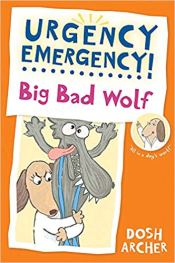
Last but not least, I’ll throw in a kid’s series you probably missed; with 18 years between my last two kids, I certainly did, but my youngest is so hooked on the British easy reader series Urgency Emergency! by Dosh Archer, I wound up buying most of them. The series is so witty and enjoyable you don’t mind reading them over and over again. Doctor Glenda, Nurse Percy, and the Pengamedics, in predictable melodrama, assist the maladies of Humpty Dumpty, The Big Bad Wolf, the Itsy Bitsy Spider, and many more. They are a delight. The library has several of the stories; be sure to read them all!

NaNo Boosters

November is NaNoWriMo month! 

If you’ve never heard of it, NaNoWriMo stands for National Novel Writing Month, a time when thousands of hopeful writers spend every possible minute banging out  the novel they’ve always wanted to write. Those who finish a 50,000 word novel in thirty days receive a certificate of completion, and little booster badges to keep going.

NaNo started back in 1999 as a support group for a bunch of friends. Today, it’s grown into a massive non-profit organization with more than 150,000 participants. More than 400,000 people finished their novels. 

Sounds great, doesn’t it? More than 250 NaNo novels have been picked up by publishers.

Two hundred fifty, out of hundreds of thousands. And that’s part of the problem. NaNo focuses on speed and word count, not quality. They encourage you to write schlock – don’t think too long, don’t get locked up, let the ideas flow. Git’r done. People finish their novel and can’t wait to send it off to a publisher. And the publisher will see the line “I just finished my novel for NaNoWriMo…” and immediately the manuscript will hit the trash can.  

Why? Because in many ways, NaNo is a pat on the back, nothing more. A writer – someone who is dead-set on writing, knows the craft – doesn’t need a dedicated month to write or stickers to keep them going. Writers write. That’s what they do. Nothing stops them. NaNo makes it a game for those who wish to be writers, but often don’t know what to do. There is no accountability for content – you could type “This is my novel” 13,000 times. Finishing a manuscript, typing The End, is only the start of a writer’s job. It’s shaping the clay before the sculpting, putting the pencil sketch onto your canvas before the paint. Every manuscript – every, save a very few elite writers (and I’m not talking rich or popular ones) – is garbage at the rough draft.

Every.  One.

Every novel must be edited, rewritten, checked, rechecked, spellchecked, polished, and inconsistencies and logic errors ironed out. Plot holes must be sewn shut. Grammar – please, oh please – must be fixed. No manuscript  goes to an agent or publisher on the rough draft. Most writers doesn’t even let their beta readers – those friends whose opinions they trust – read their rough draft. You might slap that story together in 30 days, but the editing and rewrites are more likely to take months. And even when you’ve edited it twelve times, made the corrections of six beta readers, run it through grammar and spell check, there will still be some error that everything has still missed. 

You want to write? Write. A writer burns with passion. A writer wants their work to be the best it possibly can, not rush production for a certificate of completion. Quality is the key that will open doors. Read everything that you can lay your eyes on. Learn format. Learn editing. If you have a question, check it on the internet. Check your facts – if you aren’t sure an African Swallow can carry a coconut, look it up.  Cross-reference to make sure your source is correct. Author Naomi Wolf – a respected writer with several influential best-sellers to her name – was caught red-handed when she realized in the middle of a radio interview that her interpretation of relevant material was completely wrong. The publisher then pulled the published book. ALWAYS do your research.  Anyone who has the seen the movie My Cousin Vinny is well aware that a 1964 Buick Skylark was not available with positraction, a tiny fact that would escape most people but proved hugely important in the legal case of the film. Facts matter.

And when you do finish your manuscript, with or without NaNoWriMo to keep you focused, and you think you’ve got something good, check out these books on writing to help you polish it into a sure-fire winner! 

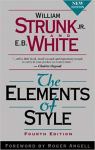
Strunk and White: The Elements of Style
The Writers Digest Writing Clinic  
From Where You Dream: The Process of Writing Fiction
Writing and Publishing Your Book 
Writing the Blockbuster Novel 
The Craft of Writing Science Fiction That Sells
How to Self Publish Your Book
Just Write: Creating Unforgettable Fiction
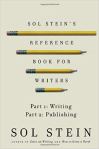
Sol Stein’s Reference Book for Writers   

Cheshire Library also has a Writer’s Group that meets monthly (run by yours truly), check our Events Calendar for Cat Tales Writers Group and join us!

What’s Happening at Cheshire Library in November

There’s so much going on at CPL this month: two concerts, special programs honoring our veterans, a new Homeschool meetup, the big Fall Book Sale, and so much more!  Check out our Event Calendar for the full roster, here are some highlights:

Play & Learn

Saturday, November 2, 2019, 10:00-11:00am

Our new drop-in play group for children and their caregivers! Explore interactive and sensory activities, encouraging the development of early literacy skills.  We will have lots of movement, songs, and a short storytime during the last 20 minutes of the program. Recommended for ages 2 to 5 years old.  Younger and older siblings are also welcome to attend. No registration required.

College Financial Aid Seminar

Saturday, November 2, 2019, 2:00 – 3:30pm

Jennifer Philips’ seminar, “Simplifying the Financial Aid Process, “ will provide parents and students with tips on securing the best possible financial aid package from the college of their choice. Jennifer will describe the best student loans, grants and scholarships available, explain the critical financial aid forms and deadlines and the various components of a financial aid offer. Registration is required.

United States Coast Guard Dixieland Jazz Band

Sunday, November 3, 2019, 2:00 – 4:00pm

Performing classic jazz, blues, and rags with a “New Orleans” flavor. The Dixieland Jazz Band has entertained audiences across America and around the world.  Please join us for a very special concert! No registration required.

Author Talk – Formation: A Woman’s Memoir of Stepping Out of Line

Monday, November 4, 2019, 6:30 – 8:00pm

Ryan Dostie never imagined herself on the front lines of a war halfway around the world. But then a conversation with an Army recruiter in her high-school cafeteria changes the course of her life. Hired as a linguist, she quickly has to find a space for herself in the testosterone-filled world of the Army barracks, and has been holding her own until the unthinkable happens: she is attacked by a fellow soldier. Join us as the author discusses her powerful book. Registration is required.

Veterans’ Writing Group

Tuesday, November 5, 2019, 6:30 – 8:00pm

Join us for a short film and a panel discussion with members of the Veterans’ Writing Group. The Russell Library Veterans’ Writing Group has been meeting and writing stories of their incredible experiences for several years, which will be published by En Route Publishing this year. Come get a sneak peak of this fascinating book, and listen to true stories from veterans from all branches of service. Registration is required.

Veterans Day Concert with the Cheshire Community Band

Sunday, November 10, 2019, 2:00 – 4:00pm

The Cheshire Community Band will perform a variety of selections including historical and patriotic numbers in celebration of Veterans Day. No registration required.

Veterans Day Movie: They Shall Not Grow Old 

Tuesday, November 12, 2019, 6:00 – 8:00pm

On the centenary of the end of the First World War, experience the Great War as never before. Using state-of-the-art technology and materials from the BBC and Imperial War Museum, Academy Award-winning filmmaker Peter Jackson allows the story of World War I to be told by the men who were there. Life on the front is explored through the voices of the soldiers, who discuss their feelings about the conflict, the food they ate, the friends they made and their dreams of the future. Registration is required.

Homeschool Meetup (all ages)

Wednesday, November 3, 2019, 11:00am – 12:00pm

Meet other local families who are educating their children and teens at home while sharing tips, ideas, and educational materials. Toys and sensory play will be available for young children and crafts will be provided for older children and teens. Please register each child or teen separately.

Medicare Supplement and Advantage: Q & A

Thursday, November 14, 2019, 1:00 – 3:00pm

Staff from the Western Connecticut Area Agency on Aging will present this seminar and provide vital information about Medicare, Medicare Supplement and Medicare Advantage.  Their mission is to provide the information and assistance necessary for consumers to understand their rights, receive benefits to which they are entitled and make informed choices about health insurance concerns. Registration is required.

A Night with Georgia O’Keeffe ~ Craft night

Thursday, November 14, 2019, 6:30 – 8:00pm

Join us for a short film on the life of Georgia O’Keeffe and then create your own work of art in her style. All materials will be provided. Registration is required for this adult (18+)  program.

“Are You In Your Right Mind?” – A Joyce Saltman Workshop

Monday, November 18, 2019, 1:00 – 2:30pm

Interactive and fun, this lecture will explore individual differences through left-brain/right brain research, in an effort to understand and appreciate these differences in ourselves and others. Joyce Saltman is a professor Emeritus of Special Education at Southern Connecticut State University in New Haven and a former Cheshire resident. Her experience in the areas of education, therapy, and comedy has provided an outstanding background for her research on The Therapeutic Value of Laughter. Registration is required.

Fall Book Sale!

Thursday, November 21  – Sunday, November 24, 2019

Bargains galore at the big Fall Book Sale! Browse more than 15,000 books of every possible genre. Stock up on audiobooks and DVDs. You never know what treasures you’ll find. Book sale hours:

  • Wednesday, November 20, 6:30-8:00pm (Preview Night for Friends’ Members only)
  • Thursday, November 21, 9:00am – 8:00pm
  • Friday, November 22, 9:00am – 4:30pm
  • Saturday, November 23, 9:00am – 4:30pm
  • Sunday, November 24, 12:00 – 3:00pm

Mysteries of St. Peter’s Basilica

Tuesday, November 26, 2019, 6:30 – 8:00pm

Did you know that St. Peter’s church at the Vatican has hidden geometry pinpointing certain locations? Robert Kerson will discuss this fascinating mystery. Learn details of the current basilica few people are aware of. Registration is required.

Books Over Coffee

Wednesday, November 27, 2019, 12:00 – 1:30pm

On the last Wednesday of every month from 12-1:30p we’ll meet in the Loft to discuss the selected title. Americanah by Chimamanda Ngozi Adichie is our November selection. Books are available in print,  audio, & ebook format. You bring your lunch, we’ll provide the coffee and tea. Registration is required.