May is National Salad Month

salad

The Association for Dressings & Sauces (ADS) launched National Salad Month in May 1992 in response to a 1991 Gallup Poll that revealed that three out of four people eat a tossed salad at least every other day.

Salad is generally a mixture of cold foods such as vegetables or fruits.  It is usually topped with dressing, nuts, croutons and sometimes meat, fish, pasta, cheese or whole grains are added.  It is often served as an appetizer, sometimes as a meal, and some people serve it after the meal.

Eating a salad is great all year round, but now that the warm weather is here, take a look at what the Cheshire Library has to offer with these selections of salad cookbooks.  It’s a great time to come up with some new ideas for salads!

saladWilliams-Sonoma Salad  – Salads bring out the best in fresh seasonal ingredients, whether they are delicate spring lettuces paired with soft goat cheese or crisp autumn apples tossed with toasted pecans. Williams-Sonoma Collection Salad offers more than 40 easy-to-follow recipes, including both classic favorites and fresh new ideas. In these pages, you’ll find inspiring salads designed to suit occasions throughout the year — from an informal summer picnic to an elegant dinner with friends. This vividly photographed, full-color recipe collection, appealing to both novice and experienced cooks, will become an essential addition to your kitchen bookshelf.

foodFood Made Fast – Salad – A collection of illustrated cookbooks for the busy home cook utilizes a straightforward approach to preparing tasty, healthful, and time-saving dishes for every night of the week, with easy-to-follow recipes and tips on keeping a well-stocked pantry, planning ahead, and using fresh ingredients.


mealSalad as a Meal – A collection of recipes for more than one hundred salads that can be served as a main dish, featuring salads for each season as well as recipes for soup sides and breads.


daySalad of the Day – A year’s worth of salad ideas features seasonally inspired options for every month and includes suggestions for special occasions, providing instructions for such dishes as chickpea salad with mint and spicy crab salad.


salad-daysSalad Days – The author of Death by Chocolate and Desserts to Die For brings his creative approach to main-course salads, with such creations as Penne Pasta and Spinach with Oven-Roasted Plum Tomatoes, Toasted Walnuts, Curly Endive, and Cracked Black Pepper Vinaigrette.


bib-bookCooking Light Big Book of Salads – Showcases salads, from simple side salads to giant, meal-size creations, featuring recipes centered around pasta and grains, poultry and meats, and fish.


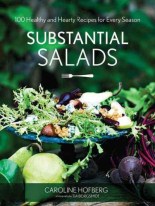
subSubstantial Salads – Salads are often considered an appetizer or a summertime meal. When the weather is too hot, lightly tossed greens with seasonal fruits and veggies are perfect for cooling the body and filling the stomach. But with rich, filling ingredients and heartier flavors, salads can be served as main courses even in spring, autumn, and winter. Substantial Salads offers one hundred healthy and delicious recipes for green salads, whole-grain salads, and dressings.

May is quite the foody month.  Here is a link to a blog post I did in 2014 on National Barbecue Month and National Hamburger Month.

Tossing and Turning? Try an Audiobook!

I think we all have nights when sleep eludes us. Our brains start whirling and it’s hard to quiet our thoughts enough to fall asleep. Some people take a pill. I take a book, an audiobook, that is.

I have found that listening to audiobooks in bed at night is the best way to redirect my thoughts away from all the stuff that’s keeping me awake. I discovered this by accident when my children were young and would wake up from a nightmare. They would inevitably be too keyed up to fall back to sleep, and I would stay up with them, usually telling them a story to get their mind off the bad dream until they could drift back off to sleep.

Years later, I had trouble sleeping myself and decided to adapt the storytelling method that had worked with my kids. I started listening to audiobooks at bedtime. What a help they were! I would inevitably fall asleep faster with the audiobook than without, and I found a way to squeeze a little extra “reading” time in!

Now, not all audiobooks are suitable for relaxing bedtime listening. A gruesome crime novel or horror story kind of defeats the purpose – I reserve grittier fare for print reading. Likewise, I find most mysteries require too much attention to detail, so are not the best for my “bedtime stories”. Romance, humor, fantasy, and classics have become my nighttime listening go-tos.

Here are a few suggestions if you want to give my insomnia-cure a try (great for daytime listening, too!):

The Rosie Project by Graeme Simsion, read by Dan O’Grady. A perfect match of book and narrator, this quirky Aussie love story is a delight.

The Martian by Andy Weir, read by R.C. Bray. Terrific narration by Bray gets character Mark Watney’s nerdy genius and dry humor just right.

A Man Called Ove by Frederik Bachman, read by George Newbern. You’ll quickly embrace the prickly Ove, and the neighbors who invade his formerly well-ordered life.

The Harry Potter audiobooks by J.K. Rowling, read by Jim Dale. Jim Dale is a perfect example of how the right narrator can elevate even the best books. He’s won many awards for his narration of the Harry Potter series, and all the accolades are deserved.

The His Dark Materials audiobooks by Philip Pullman, performed by a full cast. Another series that absolutely blooms to life in audio, with this full cast performance pulled together by Pullman’s narration. It’s stunning.

The Hobbit by J.R.R. Tolkien, read by Rob Inglis. Even if you’ve read the book, you’ll get something new out of the audiobook. If you like Inglis’s narration of The Hobbit, you can listen to him read the Lord of the Rings trilogy as well.

The Outlander audiobooks by Diana Gabaldon, read by Davina Porter. Again, even if you’ve read the Outlander series before, you will find new things to love about it in Davina Porter’s skilled narration. And it’s nice to hear all the Gaelic words pronounced correctly!

Bossypants by Tina Fey, read by the author. This book is, quite frankly, hysterical, and Tina Fey’s narration will have you chuckling into your pillow.

Lolita by Vladimir Nabokov, read by Jeremy Irons. Sure, it’s the story of a middle-aged man’s unhealthy obsession with a teenager, but the prose is practically poetry and Jeremy Iron’s narration is mesmerizing.

Teach Yourself Technology

technology support help me please!

At Cheshire Public Library’s weekly Drop-In Tech Help, I am often told that people don’t know where to begin with learning technology. They ask me what special resource of knowledge I use and where I went to school and how long it took me to learn all of these tricks and devices. The answer is simple: There is no secret knowledge! I use books and the internet, and you can, too.

If you recently got a new device or you feel overwhelmed by your device’s capabilities, start with a book. The library has a variety of books on popular devices, and we can always get something for you if we fail to carry it. Books are great for starting out with a new computer, smart phone, or tablet. You can look up topics like Setting Up Your Email or page through the whole book at your own pace. Most technology books are visual, and you can go through step-by-step instructions with your device at your side.

If you prefer video instruction, you can try Lynda.com, which is now available for all Cheshire Public Library resident cardholders. Lynda.com is an online learning site that hosts a constantly growing library of over 3,000 courses.

What are you waiting for? Here’s a small sample of the books we have available:

jacket-aspx iPhone: The Missing Manual by David Pogue

Covers all models with iOS 8.1 software, including iPhone 6 and 6 Plus.


jacket-aspx iPad for Seniors by Nancy Muir

Learn about all the incredible things your iPad can do with this friendly guide. Learn to make video calls, navigate with maps, find almost anything with Siri, and more!


jacket-aspx Teach Yourself Visually: Android Phones and Tablets by Guy Hart-Davis

Includes customizing your phone or tablet, working with text and voice, making calls and instant messaging, enjoying social networking, working with apps, browsing the web and e-mailing, taking and using photos and videos, using maps, Google Earth, and clock, playing music and videos, troubleshooting your device.

jacket-aspx Kindle Fire HDX for Dummies by Nancy Muir

Also covers the Kindle Fire HD!


jacket-aspx My Windows 10 by Katherine Murray

An easy, full-color tutorial on the latest operating system from Microsoft.


Technology Help – Need device advice? Come to Drop-in Tech Help. No appointment necessary. We provide help with smartphones, laptops, tablets, ereaders, email, Facebook, social media, and more! Check out the calendar for our next session.

Why We Need Diverse Books

screen-shot-2017-02-06-at-5-07-57-pmIn your wanderings around the internet, you may have seen references to “diverse books”, maybe even noticed the hashtag #weneeddiversebooks. What, exactly, is this all about, and how did it become a “thing”? In a Twitter exchange in 2014, YA authors Ellen Oh and Malinda Lo discussed their frustration with the lack of diversity in children’s and YA literature. Several other authors, bloggers, and others in the book industry joined the conversation, and a movement was born.
 *
 This is not a new subject. In Nobel Prize- and Pulitzer Prize-winning American jacket-aspxnovelist Toni Morrisson’s debut novel, The Bluest Eye (published in 1970), the character of Pecola Breedlove prays every day that she will wake up with white skin, blue eyes, and blonde hair, despite the fact that she is an African-American girl. She reads “Dick and Jane” books, plays with white-skinned dolls, etc., and gets the subliminal message that white is normal, better, best. Percola didn’t see herself reflected in the books she read, which lead to her assumption that she was less-than.
*
Why has diversity in literature (in particular, children’s lit) become such a cause? It has long been established that the world of fiction is a lot whiter than the real 20141021193246-wndb_infographic_squareworld. Today, so many kids and teens learn about the world through the media they consume: books, movies, magazines, etc.  As our country gets more and more diverse, shouldn’t our reading material follow suit? And it’s not only children of color,  physical challenges, or atypical family situations that benefit from diverse books. It’s a well know fact that fiction reading increases empathy in the reader, and reading about primarily white characters and culture can contribute to “otherness” and preconceived notions that turn into prejudice. How much better to foster empathy and understanding early in all children with diverse books.
*
Where to begin? Here are some books recommended by WNDB to get you started. Let’s make 2017 a diverse reading year!
Young  Adult Books:
screen-shot-2017-02-06-at-4-46-46-pmX : a Novel by Ilyasah Shabazz with Kekla Magoon
The Weight of Feathers by Anna-Marie McLemore
Killer of Enemies by Joseph Bruchac
Shadowshaper by Daniel José Older
Middle Grade Books:
screen-shot-2017-02-06-at-4-55-56-pmBlackbird Fly by Erin Entrada Kelly
The Red Pencil  by Andrea Davis Pinkney
The Way Home Looks Now by Wendy Wan-Long Shang
Picture Books:
screen-shot-2017-02-06-at-4-56-52-pmBeautiful Moon by Tonya Bolden
The Twins’ Blanket by Hyewon Yum
Tutus Aren’t My Style by by Linda Skeers
Red: a Crayon’s Story by Michael Hall

Post-Traumatic Stress Disorder

ptsd

Most people associate PTSD with events suffered by war veterans, but it is very common for any one who experiences a traumatic event to get PTSD.  It can be triggered when a person lives through, or witnesses, a traumatic event such as a fire, natural disaster, shooting,  robbery, car accident, sudden death of a loved one, abuse, etc.  Many people are not aware that they are suffering from it.  Symptoms can include flashbacks, trouble sleeping, nightmares, feeling worried, guilty, or sad.  Sometimes the symptoms don’t appear until many months after the event.  Huffington Post recently featured an article that you can read here.  If you think you or someone you know may be suffering from PTSD and want to learn a little more about it, the library has books that may be of help to you.

no-1Post-traumatic Stress Disorder – The authors here provide discussions of current research in treatment, intervention, and prevention of post-traumatic stress disorder. In addition to giving a historical review of PTSD, following chapters all include case studies intended to add to the understanding of the influences and impacts of the disease and its treatment and care. Topics include recognizing PTSD, its varieties, PTSD in children and adolescents, neuroscience, treatment approaches, and post-traumatic strengths.

no-2Post-traumatic Stress Disorder Scott Barbour – Describes the causes, symptoms, and treatments of post-traumatic stress disorder.


copingCoping with post traumatic stress disorder: a guide for families – Cheryl Roberts – This book is a user friendly discussion of Post-Traumatic Stress Disorder (PTSD) as it affects individuals and families. 


the-post-tramatic-disorderThe post traumatic stress disorder relationship: how to support your partner and keep your relationship healthy – Diane England – Citing a prevalence in PTSD in America, a guide for partners of PTSD sufferers shares practical counsel on such topics as managing a loved one’s emotions, communicating while separated by military duty, and handling post-trauma sexual relations.

sourcebookThe post-traumatic stress disorder sourcebook: a guide to healing, recovery and growth – Glenn Schiraldi – An important updated guidebook for those suffering from a traumatic experience provides information on coping mechanisms, emotional triggers, the mental defenses that protect us from further harm, and much more.

conqueringConquering post-traumatic stress disorder – More than 13 million Americans experience Post Traumatic Stress Disorder, and one out of 13 adults will develop it in their lifetime. Recent worldwide crises and events including the Iraq war; the September 11th attacks; numerous Columbine-like events; the Catholic Church child molestation scandal; and the Katrina tragedy in New Orleans, continue to present thousands more PTSD cases each year in all age groups. This book helps victims make sense of the events that led to their illness and teaches them how to create a new reality with specific advice and action plans that put them on the road to recovery and long-term healing.

upsideUpside: the new science of post-traumatic growth – Jim Rendon -Drawing on interviews with leading researchers and trauma survivors, a journalist, delving into the study of Post-Traumatic Stress Disorder, uses accessible language, prescriptive takeaways and specific tools to promote positive responses to trauma.

the-body-keepsThe body keeps the score: brain, mind and body in the healing of trauma – Bessel Van Der Kolk –  A forefront expert on traumatic stress outlines his own take on healing, explaining how traumatic stress affects brain processes and how to use innovative treatments to reactivate the mind’s abilities to trust, engage others and experience pleasure.