Quick Read: Mozart: A Life

Mozart: A Life by Paul Johnson is a short and simple biography of Wolfgang Amadeus Mozart. It is only five chapters long! However, don’t let that fool you into thinking that it doesn’t provide a decent account of his life and music. It describes Mozart in a way that is easy to understand by all. The author also gives the reader new insights into information about his life, and a good understanding both of what his music is about and just how prolific a writer he was. I would have preferred it if this book had been longer and more detailed, but it works well with its simple approach.

Did you know that Mozart wrote over 600 pieces of music in his lifetime? This is especially impressive since he only lived for 35 years.

Did you know that Mozart had a brief a relationship with his wife’s sister?

Did you know that Mozart was literally kicked in the rear by one of his employers when he was fired?

Genre: Biography

Setting: Different parts of Europe from 1756-1791

Is this good for a book club? Yes, if the book club is interested in biographies, music, or just a quick read.

Objectionable content? Yes, but it is not detailed. Religion, sex, violence, incest, and death are referenced, but nothing is explicitly described.

Can children read this? Yes, if they have interest in Mozart and a good vocabulary regarding history and music. Teenagers would be the most likely to be interested.

Who would like this? Anyone who is interested in Mozart and his music. It is also good for people who like quick and interesting reads.

Number of pages: 164

Rating: Four stars

Save

Save

Save

Save

Save

Save

Save

Save

Save

Save

Save

Save

Save

Save

Ceòl na h-Alba (Music of Scotland)

wallacesco-368349William Wallace is a Scots folk hero who, it is believed, was born around April of 1270. Wallace was a Knight who fought for Scottish independence from English rule, and was immortalized in the Oscar-winning film Braveheart, at least in name. Braveheart, while an entertaining drama, is about as factual on Scottish history as a tub of Cool Whip is the equivalent to Whipped Cream.

Braveheart’s soundtrack, while pleasant,  is also a modern composition, in the style of 468e4c6be98b994f6e8abf87e1f95732Scottish music but not containing a single actual Scots tune. This begs a greater question: what’s the difference between Scottish Music and Irish Music? Aren’t they the same, but with bagpipes? The question might just get you decked for saying that.

Truth is, they are quite similar, passing traditions back and forth. If you listen to folk steeped in the music, there are subtle differences in rhythms, traditional Scots music tends to be in the key of A (there’s only so much you can do on a bagpipe), while the Irish prefer drums and the key of D. Scots tunes tend to be more “snappy,” while the Irish are more “driving” (the Clancy Brothers version of “Johnny I Hardly Knew Ye” all but jumps out and strangles you through the speakers). But, as in anything, the styles change song to song. Each will tell you theirs is better.

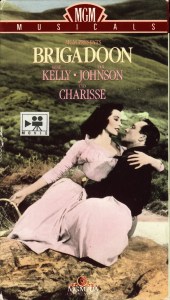
brigadoonIrish music tends to be better known for several reasons. Far more people have emigrated from Ireland than Scotland, a country with the same population as Dallas-Fort Worth. The Irish tended to have more children than the Scots, so they beat them on sheer numbers as well. Many of Scotland’s great ballads get lumped in with English, but Scottish music is far from unknown. Amazing Grace, played on bagpipes though it’s an English hymn, is a funeral standard. Pipe bands are often a staple of parades. There is the Broadway play Brigadoon by Lerner and Loewe, complete with kilts and dancing. There’s a 1954 film version, but even for its day it’s rather awful. If any film needs a full Hollywood reboot, this one is 60 years overdue.

If Ancient Scottish Ballads aren’t your thing, and you think bagpipes sound like boiling rodstewartdm1306_468x431witches, there’s a much better chance you’ve enjoyed modern Scottish music. So many of the songs we hear today and think of as American or British acts are actually the work of Scots, since accents aren’t always that obvious in song. Perhaps the best known Son of Scotland would be Rod Stewart, the gravel-voiced rock singer who worked his way from rock to swing music. Annie Lennox of The Eurythmics is a Scottish lass. Sheena Easton, KT Tunstall, Mark Knopfler, now solo but formerly the lead singer of Dire Straits, David Byrne of The Talking Heads, the folk group The Corries, Average White Band, and current smooth hit-maker Paolo Nutini (yeah, that had me fooled, too – his father was Italian, his mother Scotch, and he was born in Scotland). Add in Ian Anderson (lead singer for Jethro Tull), Lulu (you might remember her for the theme from the Bond film “Man With the Golden Gun”), Big Country (a one-hit wonder in America), Gerry Rafferty, Simple Minds, and the Celtic folk group Capercaillie.

200px-wallace_tartan_vestiarium_scoticumThat’s a lot of tartan pride!

So whether you like traditional Celtic folk, the plaintive reels of a good piper, or feel like rocking out to Maggie May, sit back and raise a pint to old William Wallace, a patriot who died keeping his country and culture from being lumped with Ireland and England.

Top 10 Best Selling Non-Fiction Books Of All Time

Since books are so expensive these days, do you wonder what titles people are willing to spend their money on?  Amazon has compiled a list of their all time top selling non-fiction books.  Luckily for those who don’t want to shell out the money, our library owns most of them.

strengthStrengths Finder 2.0 – Tom Rath (ebook).  To help people uncover their talents, Gallup introduced the first version of its online assessment, StrengthsFinder, in 2001 which ignited a global conversation and helped millions to discover their top five talents.


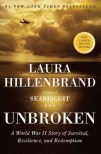
unbrokenUnbroken: A World War II Story of Survival, Resilience, and Redemption – Laura Hildebrand. Tells the gripping true story of a U.S. airman who was the soul survivor when his bomber crashed into the sea during World War II and had to face thousands of miles of open ocean, leaping sharks, a foundering raft, thirst and starvation, enemy aircraft, and, beyond, a trial even greater.

who moved my cheeseWho Moved My Cheese – Spencer Johnson. Relates a highly meaningful parable intended to help one deal with change quickly and prevail, offering readers a simple way to progress in their work and lives.


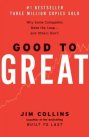
good to greatGood to Great: Why Some Companies Make the Leap and Others Don’t – Jim Collins. The author uses his research on the Fortune 500 to create a blueprint for turning good companies into spectacular ones.


steve jobsSteve Jobs – Walter Isaacson. Draws on more than forty interviews with Steve Jobs, as well as interviews with family members, friends, competitors, and colleagues to offer a look at the co-founder and leading creative force behind the Apple computer company.


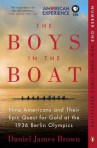
boys in the boatThe Boys in the Boat – Daniel James Brown. Traces the story of an American rowing team from the University of Washington that defeated elite rivals at Hitler’s 1936 Berlin Olympics, sharing the experiences of such contributors as their enigmatic coach, a visionary boat builder and a homeless teen rower.

life changing magicThe Life-Changing Magic of Tidying Up – Marie Kondo. Presents a guide to cleaning and organizing a living space, discussing best methods for decluttering and the impact that an organized home can have on mood and physical and mental health.

7 habitsThe 7 Habits of Highly Effective People – Stephen Covey.  A leading management consultant outlines seven organizational rules for improving effectiveness and increasing productivity at work and at home.


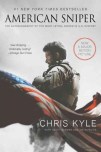
american sniperAmerican Sniper –  Chris Kyle.  A member of Navy SEAL Team 3 describes his life as a father and husband, and as the serviceman with the most confirmed sniper kills in the history of the United States military while serving in Iraq and Afghanistan.


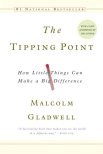
The Tipping Pointtipping point – Malcolm Gladwell.  An introduction to the Tipping Point theory explains how minor changes in ideas and products can increase their popularity and how small adjustments in an individual’s immediate environment can alter group behavior.


The next 10 top selling titles are:  Lone Survivor – Marcus Lutrell; Killing Lincoln – Bill O’Reilly; How to Win Friends & Influence People – Dale Carnegie; Proof of Heaven – Eben Alexander; The Glass Castle – Jeannette Walls; Quiet: The Power of Introverts in a World That Can’t Stop Talking – Susan Cain; Bossypants – Tina Fey; Outliers – Malcolm Gladwell; Lean In: Women, Work and the Will to Lead – Sheryl Sandberg

Understanding Urban Issues

Here is a group of books – some of them very good – that are sure to fuel political fire, no matter which fence you sit on regarding the issues of the blighted inner cities.
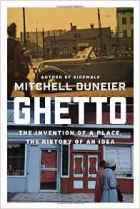
indexGhetto is a brand-new book by Mitchell Duneier on the term “ghetto,” which dates back to the 1400’s when Jews were forced to live in isolation from Christians. They were free to come and go, except at night, and anyone could do business with them. This led to a flourishing if separate culture for hundreds of years. Enter the Nazis, who isolated Jews into Ghettos with barbed wire. No one was allowed in or out. Here, people had no jobs, severe overcrowding, no public services, and as the ghettos decayed and residents grew desperate, people accepted the fact that Jews lived like animals, and it helped fuel antisemitism. Why would people live like that if they didn’t deserve it, forgetting that to cross the wire was not just banishment, but death. By the 1940’s the term expanded to the narrow neighborhoods that African-American people were allowed to live in. There was no barbed wire, but an invisible barrier that they weren’t allowed to cross except for work. As their neighborhoods became overcrowded because no one could move out, they fell victim to the same issues faced in Germany. Duneier presents facts throughout the last century – the 40’s, the 60’s, the 80’s, and today, on the current use of the term vs. the historical one, and how the stagnation and forced living creates the discord we see today. The book is far too long and detailed – it could be half and still be excellent – but even if you have to skim it, it is serious food for thought.

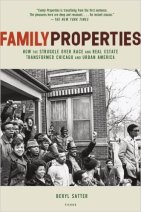
Easier to read, if not more infuriating, is Family Properties:  Race, Real Estate, and the5190mOD8p3L._SX329_BO1,204,203,200_ Exploitation of Urban Black America by Beryl Satter. Satter details the blatant racist policies of 1940’s Chicago, where Real Estate agents were threatened if they sold houses to African Americans past the “White” line, and people who did buy in would find the houses disassembled by the neighbors to prevent it. It took many years and many lawsuits to get things to change. This book will make you angry.
514dyV2l3KL._SY479_BO1,204,203,200_A head scratcher is All Souls: a Family Story from Southie by Michael Patrick McDonald. Mrs. McDonald is Irish, unmarried, and pumps out children like party favors (11 in all), living in the infamous projects of South Boston – an area run by no less than Whitey Bulger himself. Michael tries to sort out his childhood as his siblings fall victim to gangs and drugs and forced busing. Entertaining and tragic, even if you can’t relate to their lifestyle.

Death at an Early Age, Savage Inequalities, and Fire in the Ashes, all by Jonathan Kozol, are heart-rending books about the disparities in Urban and Suburban education. They are excellent reading that will break your heart. The realities of urban living will block most of these kids from ever achieving, and it is not their fault.
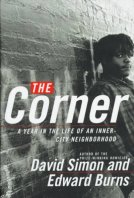
Jacket.aspxI cannot recommend the book The Corner: A Year in the Life of an Inner-City Neighborhood by David Simon and Edward Burns enough. I could not put it down. It covers the grim streets of Baltimore, a place so bad it’s where trauma surgery originated. It is compelling and reads like a novel. And they made a TV Miniseries out of it. One of my top-50 favorite books.
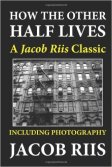
51BHwvQwVbL._SX331_BO1,204,203,200_If you’re really, really, really into sociology, then go back to the original: How the Other Half Lives by Jacob Riis. This is one of the first sociological studies on the slums of 1886 New York City, and the issues seen there – discrimination, overcrowding, street children,  gangs, alcoholism, domestic violence, prostitution – paint a familiar story as European immigrants try to find a way to survive in a hostile new world. It’s dry reading at times, but interesting in the patterns that appear.

Lyndon Johnson took decisive moves to improve our urban areas; 50 years later, not much has changed. The issues brought up in these books are just as relevant today as then, and we have more than enough information to make positive changes. These books will open your eyes.

Autobiographies for Children

The biography’s in the children’s room are all shelved together, in order alphabetically by the last name of the person they are about. Well, all but the Who Is/Was series which has a special display and place of honor. So finding a biography (a book written by an author about someone else) is not hard, as long as you know who you want to read about. What is difficult is finding an autobiography (a book that a person writes about their own life). Often there is no way of knowing which books are regular biographies and which are autobiographies until you pick the book up off the shelf and read the author’s name. Finding a well done and interesting autobiography, or one by someone you want to read about, can be even more challenging.

AUTOB1So, I decided to get busy and find a list of autobiographies for children to make the search a little easier for young readers, their parents, and my fellow seekers. Here are some of the best autobiographies for children that are part of our library’s collection. I have them divided into three groups. The groups are authors and illustrators, important figures in history and civil rights, and athletes.

Authors and Illustrators:AUTOB2
Knots in My Yo-Yo String: the Autobiography of a Kid by Jerry Spinelli
Brown Girl Dreaming by Jacqueline Woodson
Bill Peet: an Autobiography
26 Fairmount Avenue by Tomie dePaola
I Know Why the Caged Bird Sings by Maya Angelou
It Came from Ohio!: My Life as a Writer by R.L. Stine as told to Joe ArthurAUTO9
Guts: the True Stories Behind Hatchet and the Brian Books by Gary Paulsen
No Pretty Pictures: a Child of War by Anita Lobel
A Girl from Yamhill: a Memoir by Beverly Cleary
Down a Sunny Dirt Road by Stan & Jan Berenstain
Boy: Tales of Childhood by Roald Dahl
Looking Back: a Book of Memories by Lois Lowry

AUTOB3Important Figures in History and Civil rights
Through My Eyes by Ruby Bridges
Escape from Slavery: the Boyhood of Frederick Douglass in his Own Words edited and illustrated by Michael McCurdy
Rosa Parks: My Story by Rosa Parks with Jim Haskins
I am Rosa Parks by Rosa Parks with Jim Haskins
The Diary of a Young Girl by Anne Frank
AUTOBehind the Secret Window: a Memoir of a Hidden Childhood During World War Two by Nelly S. Toll
The Boy Who Harnessed the Wind by William Kamkwamba and Bryan Mealer
The Boy on the Wooden Box: How the Impossible Became Possible..on Schindler’s List by Leon Leyson; with Marilyn J. Harran and Elisabeth B. Leyson

AUTOBAthletes
Tony Hawk: Professional Skateboarder by Tony Hawk with Sean Mortimer
Soul Surfer: a True Story of Faith, Family, and Fighting to Get Back on the Board by Bethany Hamilton with Sheryl Berk and Rick Bundschuh
Oksana: My Own Story by Oksana Baiul; as told to Heather Alexander
AUTO3Michelle Kwan, Heart of a Champion: an Autobiography by Michelle Kwan as told to Laura James
Cal Ripken, Jr.: My Story by Cal Ripken, Jr. and Mike Bryan; adapted by Dan Gutman
Chamique Holdsclaw: My Story by Chamique Holdsclaw with Jennifer Frey
Dominique Moceanu, an American Champion: an Autobiography as told to Steve Woodward
Fire on Ice: autobiography of a Champion Figure Skater by Sasha Cohen with Amanda Maciel

aatoThere are several more great autobiographies that I just could not fit in these lists,or that are accessible to willing children and teens, but shelved with the adult biographies. In no particular order, these include: The Story of My Life by Helen Keller, More About Boy: Roald Dahl’s Tales from Childhood by Roald Dahl, Tara Lipinski: Triumph on Ice: an Autobiography as told to Emily Costello, I am Malala: the Girl who Stood up for Education and was Shot by the Taliban by Malala Yousafzai, Caught by the Sea: My Life on Boats by Gary Paulsen, Bad Boy: a Memoir by Walter Dean Myers, The Bite of the Mango by Mariatu Kamara with Susan McClelland,  A Pioneer Woman’s Memoir: Based on the Journal of Arabella Clemens Fulton by Judith E. Greenberg and Helen Carey McKeever, Positive: Surviving My Bullies, Finding Hope, and Living to Change the World: a Memoir by Paige Rawl with Ali Benjamin, and The Year We Disappeared: a Father-Daughter Memoir by Cylin Busby & John Busby.