Smart from the Start

Let’s face it. Toddlers are adorable, but they’re a pain in the kneecaps when you have to keep getting up to chase them. Like an overcaffeinated octopus in a waterpark, they get into EVERYTHING. Once a baby starts to creep, your time to sit and relax evaporates. So what do you do to keep them busy long enough to check your email without having to hold them, yet manage to keep them from banging on the keyboard?

The worst thing you can do is plug them in. No child under the age of two should be parked in front of a TV or – and I see this every day in one store or another – a cell phone. Babies and toddlers need to DO. They need to use their bodies – crawling and climbing and running for gross motor, and touching, poking, pulling, pushing to develop not only fine-motor skills, but tactile, sensory integration, mental mapping, visual-motor integration, social expectations, and spatial memory – things they cannot develop from passive observation of a flat screen.

And that is not an easy task. Walk through Toys я Us or Walmart and almost every toy is merely a piece of plastic that beeps or flashes when you push a button. Maybe it sings a song or says the ABCs. Cute, but useless, really. Learning without context is gibberish – it has no meaning. If I suddenly switch to кириллица alphabet, and give you no explanation, ქართულად წერა, most of you will never clue in to my meaning*. These are no better than a cell phone or endless Dora. But the toys that ARE geared for actual learning are not usually found in stores but educational catalogs, and those are  often overpriced because they expect a school system to pay for them – like these awesome 32-pc clear plastic magnet builders, for $53. My favorite toddler toy is the Bilibo chair, an artfully designed piece of plastic that has endless imaginary uses: a chair, a stepstool, a rocker, a doll bed, a helmet, a bucket, a turtle shell, and it creates a vortex really well – but at $30, these two toys alone are close to $100 without shipping, making Christmas a stretch.

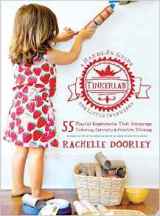
One of the memes making the rounds of the internet is one Dad’s solution, which is genius. Give the kid all those things he wants to explore, but in one safe location: a real-life busy board. Phones, switches, calculators, all those forbidden things, right in reach, and no one yelling. Finding myself the unexpected guardian and caretaker of an infant and starting all over again, I wanted one of those. As she started to crawl, I built one, too. Wheels for spinning, latches, jingly keys (and old dog license tags), a push-on closet light, a light switch that turns on an actual LED, a small baking sheet for magnets (we use photos of relevant family and friends), interchangeable carabiners with a pacifier, a fun keychain, a small measuring tape that retracts, a mailbox flag that goes up and down, a brush for sensory input, Velcro dots for sticking pictures to (and they feel fun), a light-up keychain, numbers for counting and matching clothespins, an old TV remote, and most importantly – the springy door stoppers that go BOING when you whap them. Fastened to the wood, they make a very satisfying sound. Another important item was a small grab bar fourteen inches off the ground. This allows the beginning stander and walker to hold on and pull, and feel secure while standing and playing. All this, on a 2  by 3 foot piece of plywood attached to the dining room wall. The only other thing we did was add three mirrored tiles at baby height on a different wall.
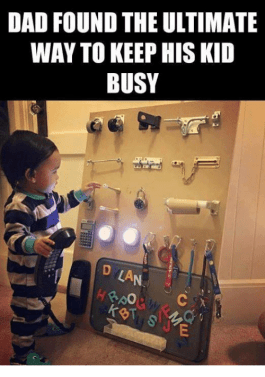
Now, raiding your garage or your family’s may land you half these items, but to buy them all from scratch is not cheap – easily in the $100 range, as the plywood section alone was $20, and all those $5 items add up. Of course, you can start off with just a few and add on. A toddler’s toy that can’t be thrown, lost, and actually occupies them over and over while letting them explore and learn? Priceless.

Today it’s building the busy wall; tomorrow the treehouse, then the race car, the playhouse, and the sandbox. Are you game? Then check out these books on simple building projects, and things to keep your toddler busy.


* by the way, the above is the word Cyrillic in Russian, and the words writing in Kartuli, which is Georgian Russian.

Audiobooks for a Family Roadtrip

Audiobooks can be a great way to pass the miles on a road trip, but finding something that everyone can enjoy together can be challenging. Too complex and you’ll lose the younger listeners, too childish and older listeners will quickly tune out. Here’s my attempt at finding that happy medium that everyone can get something out of. Some are on CD, some are downloadable, many are both. Start your engines!

A Series Of Unfortunate Events by Lemony Snicket, read by Tim Curry.  Holy Cow, are these books entertaining. While ostensibly written for children, I devoured them as an adult. Tim Curry’s narration will keep everyone rapt for miles. And there are 13 books in the series!

The Harry Potter series by J.K. Rowling, read by Jim Dale. Some of these might be too lengthy for the very youngest listeners, but school-age and up will be swiftly caught up in the adventures of Harry and friends. Jim Dale’s award-winning narration is amazing.

The Spiderwick Chronicles by Tony DiTerlizzi and Holly Black, read by Mark Hamill. Yes, that Mark Hamill. Turns out he’s an excellent narrator in addition as well as the greatest Jedi the galaxy has ever known. The series tells the story of the Grace children, who move into the dilapidated Spiderwick Estate with their mother, only to find it full of faerie problems.

How to Train Your Dragon series by Cressida Cowell, read by David Tennant. Another narrator that parents will know more than kids, Tennant’s narration of this fictional Viking world and the experiences of Hiccup Horrendous Haddock III on his journey to Becoming a Hero the Hard Way will entertain one and all.

For a slightly older crowd (middle school & up):

The Hobbit and The Lord of the Rings, BBC Radio plays, from the books by J.R.R. Tolkien, performed by a full cast. Bilbo, Frodo, and friends keep the action going for 13+ hours, and the full cast keeps things lively.

Hatchet and Brian’s Return by Gary Paulsen, read by Peter Coyote. This wilderness survival story about a 13-year-old boy who’s the sole survivor of a plane crash in the wilds of Canada is a longtime favorite with boys and reluctant readers. A fast moving story with plenty of drama.

The Hitchhiker’s Guide to the Galaxy by Douglas Adams, read by Stephen Fry. A perfect marriage of material and narrator. Arthur Dent is plucked off the planet by his friend Ford Prefect, a researcher for the revised edition of “The Hitchhiker’s Guide to the Galaxy” who, for the last fifteen years, has been posing as an out-of-work actor. Hilarity ensues.

Ready Player One by Ernest Cline, read by Wil Wheaton. Futuristic gaming, 80’s nostalgia, and codes to crack – there is something to appeal to a broad age range here and a terrific fast-paced story to boot.


What are some audiobooks you’ve enjoyed as a family? Let us know in the comments!

Fast and (Not Always) Furious

I don’t “watch” TV. The last series I actually watched was the last season or two of NYPD Blue, back in the early ‘00’s. My life was just too complicated to worry about being home to catch a program, because nine times out of ten, it just wasn’t going to happen. And my life was so much better for it! Free time I never had before.

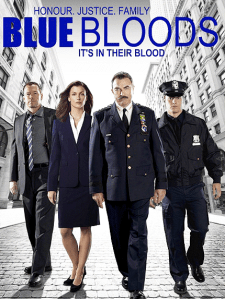
But, thanks to the availability of On-Demand programming, whether streaming Hulu or Amazon or Netflix or Hoopla, I do get to see some shows – on my time, when I’m able, and it’s no crime if today’s not one of those days. If it’s a television show, we’ll watch one episode during dinner – everyone around the table, talking and watching. That’s how I got through six seasons of Sons of Anarchy, two fabulous seasons of Penny Dreadful, a full 12-season recap of NYPD Blue, and now my husband has me watching Blue Bloods, a mild police drama starring Tom Selleck, though I still think of him as Magnum, P.I., and the original Sweeney Todd himself, Len Cariou, whom I adore in anything.

Blue Bloods is okay. It’s got good actors, it’s entertaining, but it’s not deep. Each episode is self-contained, bright and polished like an old Quinn-Martin production, and none of the gritty realism and continued drama of NYPD Blue. It’s very clean and family oriented, but the writing is not always the greatest, with occasional weak scripts and clichéd lines. Because each episode wraps up on its own, nothing can get too much meat to it.

The last episode I watched had to do with insurance fraud over a valuable car – the car allegedly from the Steve McQueen movie Bullitt, which they touted as one of the greatest car chase scenes ever.

So of course we had to watch it.

My dad’s favorite sport was cars – race cars – not the NASCAR stock stuff, but the elegant turns of the Monaco Gran Prix, the high-speed chase of Formula One, or the Holy Car Holiday in our house, The Indy 500. I thought Jackie Stewart was the greatest announcer in history. And I learned to drive stick on my parents’ automatics just by the engine sounds my dad would make when he pretended he was driving a race car – when I finally did learn stick, it was effortless because I could tell when to shift by the sound of the engine.  So I don’t mind a bit if I have to watch a car-chase movie. And I guess I’ve watched a lot of them.

Bullitt, as a movie, is typical of the late-60’s-early-70’s dark genre: a slow movie where actors must have been paid by the line, because nobody says anything unless they absolutely have to, all the actors are deadpan, and the sound quality is horrible because they really did just take a cheap microphone out onto the street, with little soundtrack, and there’s no great conclusion, they just sort of end with a “Life Stinks” blackout. What was strange was realizing not only there was Zero airport security, but no paramedics yet (1968; paramedics weren’t even an idea until 1971), rotary phones – not even push button, glass IV bottles, and no gloves during surgery. San Francisco lends itself to many great film chases (such as the comedy What’s Up Doc?), and this one does not disappoint, pitting a 1968 Ford Mustang 390 GT against a 1968 Dodge Charger 440 Magnum. That they manage to hold those corners is impressive.

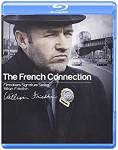
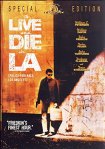
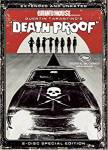
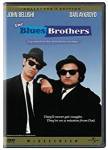
Fandango listed their account of the ten best car-chase movies (a bad thing to think about as summer approaches and pavement is dry and the weather begs you to take a long drive) as:

  1. Bullitt
  2. Max Mad: The Road Warrior (still my favorite movie of all time)
  3. To Live and Die in LA
  4. Deathproof
  5. The Blues Brothers
  6. Ronin (I think this should be number 2 myself – it’s truly awesome)
  7. Smokey and the Bandit (How can you not love this one?)
  8. Gone in 60 Seconds (the 1974 original, though I like the remake better as a film)
  9. The French Connection (more famous than Bullitt, but the same era of filmmaking)
  10. Terminator 2: Judgment Day

For myself, I’d add Batman: The Dark Knight (anyone who can flip a tractor trailer end over end ranks high in my book), and the new Bourne movie, Jason Bourne, which opens with a wicked car chase through Las Vegas that got me from the first go.

Even if you don’t like car movies or car chases, I highly recommend the movie Ronin, as well as French Connection, Jason Bourne, and even Bullitt, movies where the storyline takes precedence and the chase is inconsequential and there’s no harsh screeching music track – like the Fast and Furious films, the thinking person’s car chase films; a little something for everyone.


The Road to El Dorado

The Road to El Dorado is a wonderful movie for the entire family. It is about two Spanish con men, named Tulio and Miguel, who, after gambling for a map, getting captured and escaping from Cortés himself, and taking his horse Altivo along, find themselves somewhere in South America. They follow the map to find the legendary city of gold. Upon arriving, they meet a wonderful cast of characters, they are worshiped as gods, Tulio forms a relationship with a woman named Chel, and they get caught up in the sinister plans of a man named Tzekel-Kan. All the while, Cortés is drawing closer…

This movie is one of my personal childhood favorites. It is a musical comedy that is perfect for children and adults. The plot is well-paced. At no point does one feel as if things have slowed down too much, which is especially good for children. The songs are memorable, the jokes are consistently funny, and the portrayal of Indigenous people is done very well.

Did you know that the people of El Dorado are meant to represent many different cultures of South America? Each aspect of the society (i.e. the buildings) is taken from a different civilization of South America.

Setting: Spain and the continent of South America in 1519.

What is this movie rated? PG

What is the run time? One hour and twenty-nine minutes.

Is there any objectionable content? There is cartoon violence in this movie, allusions to violence that is unseen, two on-screen deaths (one is a human and the other is a seagull), and two short scenes that show blood. Chel is a bit scantily clad, and there is a suggestive scene between her and Tulio. Tzekel-Kan has some scary scenes when he uses dark magic and when he is trying to sacrifice someone. This character also presents dark views of religion. Also, there are several adult jokes that are aimed at parents. However, as mentioned above, the portrayal of the people of El Dorado is not done disrespectfully.

Is this movie appropriate for children of all ages? Younger children may be scared or upset at a few scenes, but they should be fine otherwise. They will probably miss the adult jokes.

What themes are found in the movie? Themes of friendship, romance, good vs. evil, making mistakes, and adventure are found throughout this movie.

Who would like this? This movie is good for most families who like music, adventure, and comedic family fun.

Rating? Five stars.

Save

Save

Save

Save

Save

Save

Save

Save

Save

Save

Save

Save

Save

Save

Save

Save

Save

Save

Strong Girls, Stronger Women

stb-jaylah-3While previewing the DVD for Star Trek: Into Darkness (as if I didn’t see it in the theater and wasn’t buying it myself 5 days later), I realized that Jaylah, the lead female character, is everything I want my daughters and granddaughter to be: strong, brave, smart, resourceful, a planner, a leader, and even when emotionally wounded, she never, ever gives in. Surely one of the strongest female leads ever, without losing her femininity in the process, like Grace Jones as May Day in A View to a Kill, or Louise Fletcher as Nurse Ratched in One Flew Over the Cuckoo’s Nest. It may even be safe to say that Jaylah’s the strongest female lead ever in Star Trek itself – and no, not even Uhura, who, although she could kick butt, was often saddled with lines like, “Captain, I’m frightened.”

And that made me start thinking on who the strongest female leads might be. By strong I don’t mean nastiest or most vicious goal-driven women, no Joan Crawfords or Cersei Lannisters or Erica Kanes. I mean women or girls who started out ordinary, but when faced with impossible odds, had the grit and determination and education and smarts to work their way into survival.

First on almost any list is Warrant Officer Ellen Ripley, from Alien. While you can say it ec93835d9542a13ce50f467297565f63already took guts and grit to be a warrant officer aboard a deep-space ship, finding out your mission was a suicide run to bring back an alien life form and you’re its food can either send you screaming in helpless panic (as Lambert did), or make you hike your bra straps and shoot first. Ripley is a real woman – no makeup, no unrealistic sexy uniforms, and not afraid to be pushy when she needs to be. And almost 40 years later (can it possibly be that long?) Alien still holds up on every level of film making; truly, a masterpiece.

katniss_prim_hugKatniss Everdeen is also a favorite for strongest female: just sixteen at the start of The Hunger Games, Katniss is already a survivor, having raised a sister and cared for a dysfunctionally depressed mother following the death of their father, in a world where people are kept in line through fear and starvation. Sacrificing herself to the Hunger Games to save her sister is just the start; surviving the Hunger Games not once but twice, surviving on luck, wits, and the smarts acquired through a lifetime of survival makes Katniss a formidable – but sympathetic and realistically feminine – heroine.

Sarah Connor of Terminator fame would round out my top three: a simple waitress who thought she was minding her own business until she’s hunted down by a terminator from the future – because when push comes to shove, Sarah will become a serious survivalist to save her son – a son who will grow up to be the leader against the machines that take over the world. Sarah is thrown into an impossible situation but comes out on top through sheer determination and a survival instinct that won’t quit.

Why so many women from science-fiction? That’s a good question. Perhaps it’s because “strong” women in literature or film are often seen as detestable power-hungry ladder-climbers who will use murder or sex to achieve their goals, and it is only in the realm of “fantasy” that women are allowed to be every-day humans, both strong and vulnerable at the same time, without boob jobs and fake nails. Yet the real world is peppered with incredibly strong women – Anne Frank, Malala Yousafzai, Margaret Sanger, Harriet Tubman, and so many more. Not one of them is sexualized by the media, either.

turn_me_loose_it_s_ashleySo, to be fair, there are literary women who also struggled against formidable odds: Scarlett O’Hara’s entire world was ripped from her by the Civil War: her income, her inheritance, her mother, her husband (whether or not she wanted him alive) wind up Gone With the Wind. She takes charge in a time and place when genteel women did not do that, and through guile and determination pulls her life and the lives of her family back together. And as the anti-Scarlett, I would include Mammy, who carried on through war and starvation, caring for former slaves and slave-owners alike, facing the same dangers as Scarlett but with even less means or social approval. In The Color sofiaPurple, yes, Celie has to survive an ugly life, but to me Sofia is far more of a tough cookie, taking her lumps and even prison because she won’t take the abuse anymore. Sofia is limited by society, but she’s every bit as tough as Katniss.

And moving further away, I would also nominate Maria, from West Side Story. She’s sixteen and stands between two warring gangs for love. The Sharks don’t frighten her. The Jets don’t frighten her. The police don’t frighten her. She gets in the face of each and every west-side-story-1961-dvdrip-moviecenter-avi_snapshot_02-16-56_2016-07-21_15-39-34one, standing up for what she believes in. No one is telling Maria what to think or do.

I could add more – Elizabeth Swan, Marion Ravenwood, Molly Weasley, Natasha Romanov – but if you’re looking for role models for girls and teens, real women who aren’t villainous or overly sexualized or vacuuous but incredibly strong and resourceful, there are plenty to choose from.