New Trends in Science Fiction

Say Science Fiction, and most readers will make a face as images of bad 50’s movies, computers and technobabble, and Star Wars arguments come to mind. “I don’t read Science Fiction,” but chances are, you do. Science Fiction simply means a story that more or less follows the laws of science as we know them, as opposed to fantasy, which drags in magic and elves and things that don’t normally exist on Earth. The material is as broad as anything else in fiction.

Science Fiction has come a long way since 1977, and is almost unrecognizable to the campy 50’s tin-can imagery. Like rock music, science fiction has a hundred sub-categories, and chances are you’ve read – and liked – at least one. Here are some of the newest trends you may not know about.

Soft Science Fiction:  “Soft SF” isn’t new, but the definition is newer. Soft SF doesn’t deal with “hard” techno stuff, but concentrates on people, societies, psychology, and intrigue.  Cloud Atlas, The Handmaid’s Tale, Flowers for Algernon, Yiddish Policemen’s Union, The Time Traveler’s Wife, and Alas, Babylon all fall under “Soft” SF. Half of Stephen King can be categorized here. You could make an argument for Jason Bourne, too.

Gender-Focused: These stories explore cultures and people who may have a single gender, multiple genders, or are genderless entirely. Check out Ancillary Justice by Ann Leckie, Seveneves by Neal Stephenson, Mask of Shadows by Linsey Miller, or the Grandmama of them all, The Left Hand of Darkness by Ursula K. LeGuin.
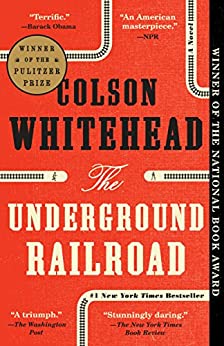
Afrofuturism: Representation of minorities is growing in SF, and with it new ways of seeing inclusion in the future. Check out top authors like N. K. Jemisin, Colson Whitehead, Nnedi Okorafor, P. Djeli Clark, and Octavia Butler.

International: There’s a huge influx of stories being translated from other countries. While America may be stuck on space opera and predictable heroes, other countries aren’t, and offer a refreshing break from the Same Old Thing. Try The Three-Body Problem by Liu Cixin, Master and the Margarita by Mikhail Bulgakov, The Witcher Series (yeah, the TV one) by Andrzej Sapkowski, The Lost Village by Camilla Sten, or Shadow of the Wind by Carlos Ruis Zafon.

Generation Ship fiction: No faster than light ships here, but pressure-cooker stories onboard ships making a long haul. Dangers take on a whole new meaning when you’re dependent on your ship for years on end. Check out Across the Universe by Beth Rivis, Rendezvous with Rama by Arthur C. Clarke, Aurora by Kim Stanley Robinson, or Ship of Fools by Richard Russo.

New Space Opera: Space opera traditionally involves weapons, danger, heroes, and rescued damsels (Star Wars being a perfect example, among many), but newer stories are throwing in more gritty realism. They’re a higher quality of writing, more scientifically plausible, and tend to address more social issues under the guise of “fiction.” Grown-up SF. Try the Leviathan Falls series by James Corey, Hail Mary by Andy Weir, the Thrawn series by Timothy Zahn, The Echo Wife by Sarah Gailey, or Winter’s Orbit, by Everina Maxwell.
Climate SF:  With the doomsday clock ticking down the moments to an expected 6th mass extinction, climate SF may be the most relevant wave of stories to hit shelves, and can fully include apocalyptic virus stories. Read them!  State of Fear by Michael Crichton, New York 2140 by Kim Stanley Robinson, The Overstory by Richard Powers, Oryx and Crake by Margaret Atwood, The Bone Clocks by David Mitchell, Flight Behavior by Barbara Kingsolver.

Science Fiction isn’t the same old trope you’re used to, but a growing, evolving body of literature with numerous authors, styles, and focus – and guaranteed there’s one right for you!

Read it Before You See it: Book-to-Screen Adaptations Coming in 2022

So many screen adaptations, so little time! There are so many books coming to big and small screens this year, it’s easy to lose track or what’s coming out when. We’ve put together a list of some adaptations that we’re really looking forward to this year – some have release dates, some do not, but the list will give us time to read as many books as we can before their adaptations come out! Which books are you most looking forward to seeing on the screen this year?


MOVIES


The Black Phone Release date: Feb. 4, 2022

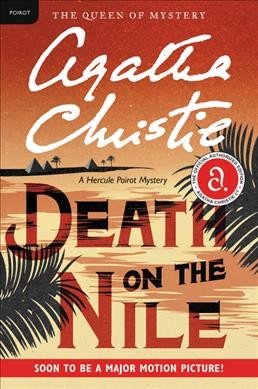
Death on the Nile Release date: Feb. 11, 2022

Mothering Sunday Release date: Feb. 25, 2022

Where the Crawdads Sing Release Date: July 22, 2022 (Netflix)

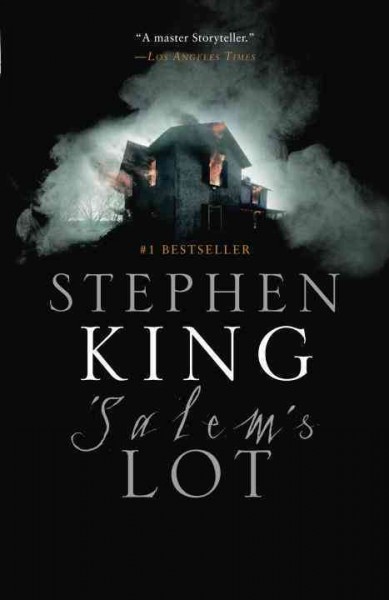
Salem’s Lot Release Date: September 9, 2022

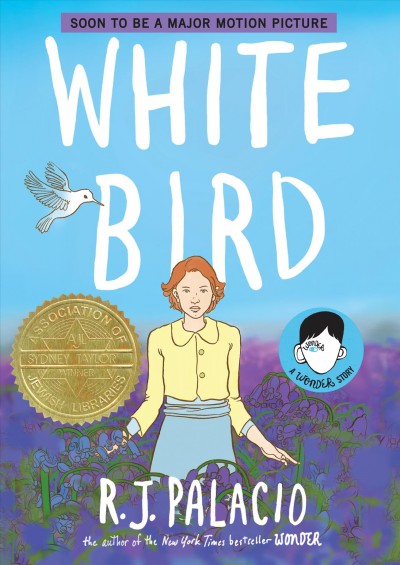
White Bird: A Wonder Story Release Date: October 14, 2022

She Said Release date: Nov. 28, 2022

The Nightingale Release Date: December 23, 2022

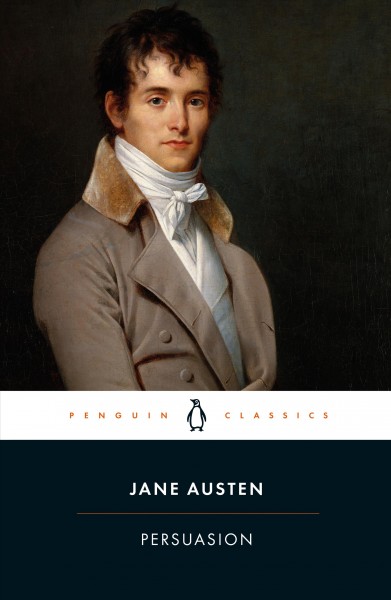
Persuasion Release date: TBD 2022

The School for Good and Evil Release Date: TBD 2022 (Netflix)

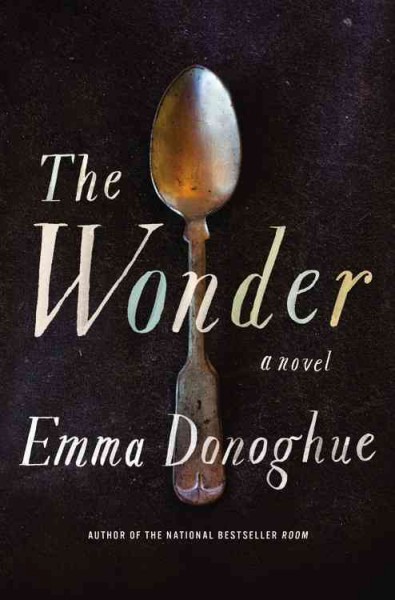
The Wonder Release Date: TBD 2022 (Netflix)


TV SERIES


Outlander Season 6 (Starz) Premiere Date: March 6, 2022

Based on the book: A Breath of Snow and Ashes by Diana Gabaldon 

Bridgerton Season 2 (Netflix) Premiere Date: March 25, 2022

Based on the book: The Viscount Who Loved Me by Julia Quinn

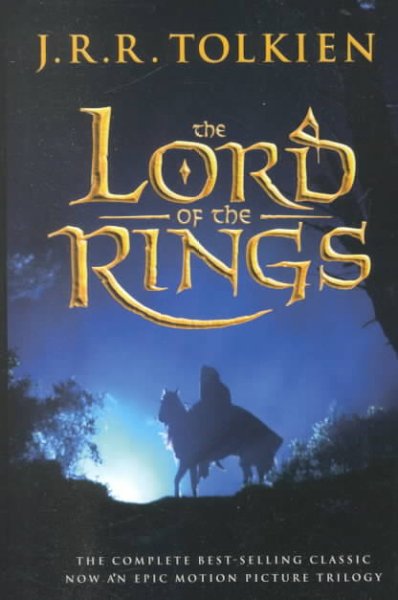
Lord of the Rings (Amazon Prime Video) Premiere Date: Sept. 2, 2022

Based on the books: The Lord of the Rings trilogy by J.R.R. Tolkein 

The Sandman (Netflix) Premiere Date: TBD 2022

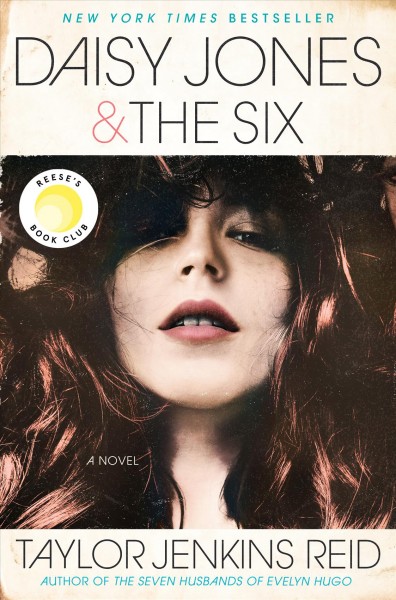
Daisy Jones & the Six (Amazon Prime Video) Premiere Date: TBD 2022

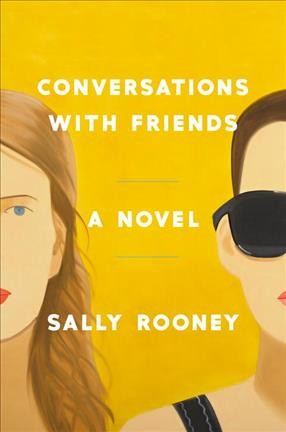
Conversations with Friends (Hulu) Premiere Date: Spring 2022

Shifting Dunes

When it comes to epic book series impossible to film, first came Lord of the Rings, (which was done marvelously at last but needed more than 10 hours of screen time).

Then came Dune.

Dune, by Frank Herbert, is considered the best-selling Science-Fiction novel of all time (though it’s far more Game of Thrones than space ships), with more than 12 million copies sold in 14 languages. It tied for the 1966 Hugo Award. And like Lord of the Rings, getting it to film is a Holy Grail of filmmakers.

Dune tells the far-distant-future story of Duke Leto Atreides, who is given the stewardship of the desert planet Arrakis, also known as Dune. Dune is the only place in the universe where the spice Melange exists – a spice that not only can alter your mind, in some species it lets them fold time and space, creating almost instant space travel. “He who controls the spice, controls the universe.” Thus, Dune is a hotbed of politics and backstabbing. When the Duke is murdered, his son Paul, deemed an abomination by a powerful religious group, is seen as a prophesied savior by the natives of Dune. So begins the battle for control of Dune. The book is an immersive, detailed, visionary epic of grand scope (there’s a dictionary in the back). When you read the book, you are on Dune. This is a book that sticks with you for years to come.

Herbert wrote five books to the series; his son Brian added another twelve after his death. Dune – even just the first installment – is a novel of such grand scope (like GOT and LOTR) that putting it to film has been almost laughable – think of Rankin Bass’s 90-minute adaption of The Hobbit. Game of Thrones took 8 years and more than 73 hours to tell – can you imagine it as a three-hour theater film and have it make sense? It was tried in the 70’s, but after 3 years of attempts, the budget just couldn’t be managed. In 1984, David Lynch did make it, condensing much of the book to ethereal voiceovers, changing major points to condense action, and adding some now-cheesy early computer effects (the blue contacts of the Fremen didn’t work, and every frame of the film had to be colored by hand). It’s a film you either love or hate, with musician Sting as Feyd Rautha famously flexing in a winged bikini.

In 2000, SyFy channel did two Dune mini-series, which were much better received, won several awards, yet seemed to fade into obscurity faster than Lynch’s version, with the chief complaint it stuck too close to the source material, and dragged. Now, thanks to Warner Bros and HBO, we have a $165 million dollar spectacle by Denis Villeneuve that covers – only half the book, with a sequel (hopefully the second half) due in 2023. 

While the film has been viewed favorably, the scenery and cinematography spectacular, Villeneuve took many liberties with the material that once again changes the focus and depth of the story. To modernize it, he gender-swapped characters (which goes against the society Herbert wrote) and changed the roles of other women (no, the Bene Gesserit. He left out much of the religious aspect, the mysticism, even avoided the word jihad, used by the Fremen. It gives a sanitized, whitewashed view of the story, afraid of offending anyone. Herbert believed that modern societies will always decay back to a feudalistic society, and that the desert cultures, especially those of the Middle East, were more prone to messianic complexes and religious wars (remember, he’s writing in 1964 or so, when the Middle East was still rather bland politically. Think Star Wars and Tatooine, or The Great Humongous in Road Warrior, etc. There’s a lot to be said for that theory). To remove the root of the story – is it still the same story? Can anyone ever make a decent, book-abiding video version of Dune?

If you can’t wait for the new film to come out on DVD (or, rather, the first half of the book), check out the book series itself. Few things are better than the source material.

I can give up Sting in his bikini (though I thought he was a perfect Feyd), but there is no better Gurney Halleck than pre-Captain Picard Patrick Stewart. That’s my opinion, and I’m sticking to it!

Dune

Dune Messiah

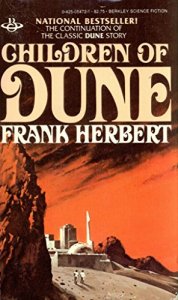
Children of Dune

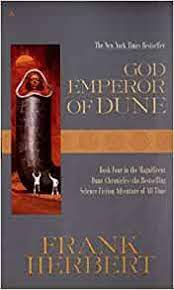
God Emperor of Dune

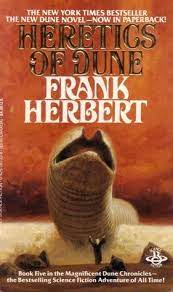
Heretics of Dune

Sandworms of Dune

Dune: House Atreides

Dune: House Harkonnen

Dune: House Corrino

Dune: The Machine Crusade

Dune: The Lady of Caladan

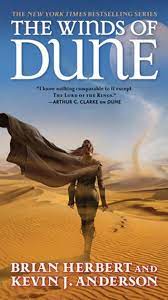
The Winds of Dune

The Sisterhood of Dune

Paul of Dune

Mentats of Dune

Navigators of Dune


November is NaNo Month!

It’s NaNoWriMo season again!

NaNoWriMo is National Novel Writing Month, run by a non-profit group aiming to help young, new, and aspiring writers to find their voice and learn to hone the craft of writing. It began in 1999, with a challenge to write 50,000 words in the month of November. Hundreds of thousands of writers participate each year. Once you sign up and log in, your progress is tracked in real-time, and you can reach goals and earn reward stickers.

Hundreds of thousands of people will try and may actually succeed in completing the challenge, but does it really get you anywhere?  Mmm, depends on how good you are. Water for Elephants began its first draft as a NaNoWriMo project. It was picked up, sold more than four million copies, and in 2011 became a major motion picture. So yeah, dreams do happen.

I must make this perfectly clear: Dreams do happen, after LOTS AND LOTS OF EDITING. Please don’t send your finished first draft to any non-family member to read. Poor editing will kill your chances before you even think of your book cover. Edit, edit, edit. If you can’t pay for a professional editor, then check out some books and learn to do it yourself.

But have no fear!  Cheshire Public Library can help you with that as well. Join us once a month for Cat Tales, an open group for writers of anything, beginner to published, playing with a rough idea or finished draft in hand. Talk about the ins and outs, the how-tos, editing, publishing, development, and more. Read us something you’d like feedback on, or maybe try a writing prompt.  Subject doesn’t matter – Memoir, non-fiction, fiction, romance, science fiction, action-thriller, young adult (Who doesn’t love Hunger Games?) – we can talk about them all. Learn how to take that NaNoWriMo novel and beat it into shape.

Cat Tales has been meeting virtually during the pandemic, but will be returning to in-person meetings this winter. Check the calendar for the next meeting!

Bundle Up With a Good Book

Do you like certain types of books – stories about dogs, or maybe vacations in Italy? Perhaps you like adventure stories, or space opera, or a good forensic mystery, but don’t know what to read next.  Do you like binge-reading a good series? 

Have you noticed the case of bound books in the middle of the lobby?

Take a closer look at our Book Bundles.

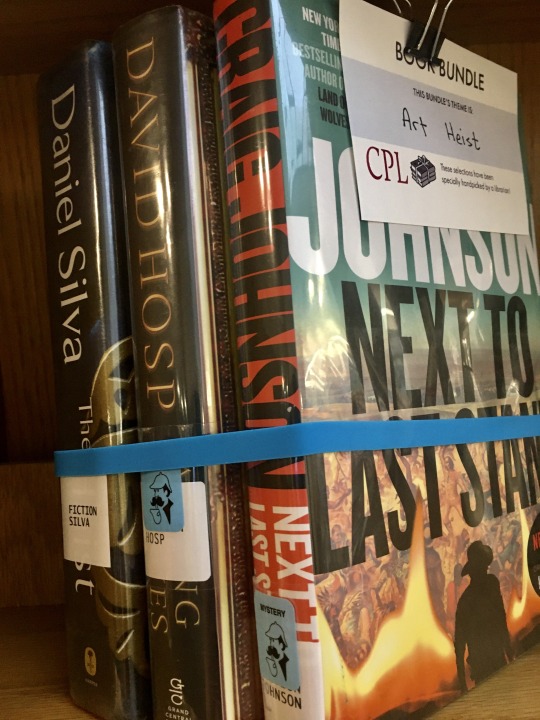
Book bundles are three books of a common theme bound together, so you can binge-read on a topic you enjoy. It might be outdoors, kidnappings, or WWII stories. It could be autism, award winners, westerns, Book Club Favorites, art heists, robots, or gothic horror. There’s always something new on the shelf, so check it frequently. Intrigued by a category? Check out the bundle and explore!

But not all of the titles seem interesting to me – what if I only want to check out one or two?

You can check out one or all three, whatever you’d like. Just return the unwanted ones to the desk and we’ll find them new partners. 

Don’t see anything to your liking? Prefer existentialist graphic novels? Right now you’re only reading novels that have cats in them? Trying to catch up on real-life medical stories? Let us know! We’d be happy to take requests!

There’s nothing like finding a good book, and it’s even better when you find three new favorites at once. A whole new world of reading adventures awaits!