When asked to write a post about strong female protagonists, it took me longer than I’d like to admit to think of my favorites. Even if I’ve read hundreds of books over the course of my life, only a handful stand out in their portrayal of a female lead. Most often, the most interesting characters I’ve come across are varied, flawed, and human, filled with errors and quirks that I find easy to relate to in my day to day life. These are the women I find myself relating to (even if I do wish I could be as perfect as Hermione Granger) and rooting for. I’ve compiled a list of a few of my favorites, which barely scratch the surface of the wonderful and wide world of women in books, but hey, we all have to start somewhere.
If I’ve missed your favorites, please feel free to leave a comment down below, I’m always looking to add books to my reading list.
She’s Come Undone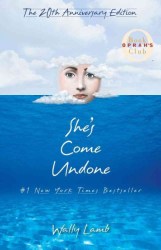 by Wally Lamb. First off, this is a book I swore to never read again, ironically, just because of how much it hurts to read. Wally Lamb is a master of creating a character you physically hurt for after getting to know them, and Dolores Price is no different. At once a fragile girl and a hard-edged cynic, so tough to love yet so inimitably lovable, Dolores is as poignantly real as our own imperfections. Through rough edges and rougher trials, including assault, mental institutions, absentee parents and lonely adulthood, Lamb shapes a character you find yourself cursing at, wincing for, and holding close.
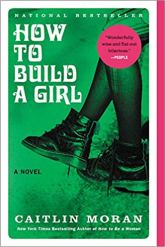 How to Build a Girl by Caitlin Moran. After she shames herself on local TV, 14-year-old Johanna Morgan reinvents herself as Dolly Wilde–a fast-talking, hard-drinking Gothic hero and full-time Lady Sex Adventurer. Watching Johanna stumble through her rebirth into a plucky more confident version of herself made me look back fondly (and lets be honest, not that fondly) on my high school years. Trying to re-brand yourself, whether it be with new fish net stockings, a streak of pink in your hair, or a new favorite band, is a rough process. How to Build A Girl highlights how surface level all of these additions are, and asks the question, how far will one really go to re-imagine themselves? I found myself wanting to hug the pivotal character Johanna, and tell her it gets better, if not by action, then by time. It seems like even if she’s struggling, Johanna is a character you find yourself egging on, and even being somewhat jealous of at times.
The Trauma Cleaner 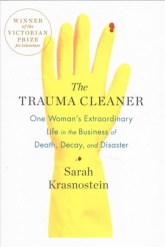 by Sarah Krasnostein. I brought this book on vacation thinking I’d enjoy a pulpy novel about crime scene clean up. I’m a true crime fan myself, and my interest in forensic science has led me down an interesting path in terms of books in the past year. This book turned out to be the opposite of pulp, and had very little to do with crime scene clean up after all. Sandra Pankhurst is a titan in the industry of Specialized Trauma Cleaning, she does her job and she does it well. Before she began professionally cleaning up their traumas, she experienced her own. First, as a little boy, raised in violence and excluded from the family home. Then as a husband and father, drag queen, gender reassignment patient, sex worker, small businesswoman, and trophy wife. The true life story of Sandra left me wounded in ways I didn’t expect. In a world that profits of making jokes of hoarders and death, this book, and Sandra, treat these people with dignity. She bags up their postcards, their books, their recipe cards tucked into binders, and saves them from the despair of dirt and mold. She returns them to their family, and gives the people effected by it hope to start their life over. She never once jokes at their expense, or teases them for their situation behind closed doors. After going through such a violent and unforgiving life, Sandra shows grace and humility, mixed in with grit and sarcasm I find comforting.
 Annihilation by Jeff VanderMeer. If you’re looking for a strange, otherworldly novel, that expands into two more books, then the Southern Reach trilogy is for you. A group of female scientists, ignoring the high mortality rate of the previous missions, travels into an area only known as “Area X” to research a strange phenomenon. Their mission is to map the terrain, record all observations of their surroundings and of one another, and, above all, avoid being contaminated by Area X itself. The narrator, the biologist of the group, is a strange and difficult character to get a hold on. You don’t know her motives until they uncover themselves, slowly and methodically throughout the text. She seems driven by knowledge and the unknown alone, until it’s revealed that she had a husband who also went into the reach, but who came back strange and unrecognizable. I think one of my favorite parts of this character is that she’s not a broken record throughout the story. She doesn’t repeat over and over her need to find her husband in the Reach, if anything, she loses that goal almost immediately. Her goals become more abstract, her position as a narrator is unreliable at best, which makes her all the more interesting.
Some other books with strong female protagonists worth checking out: The Hunger Games by Suzanne Collins, Postmortem by Patricia Cornwell, Little Women by Louise May Alcott, The Girl With the Dragon Tattoo by Steig Larsson, Anne of Green Gables by L.M. Montgomery, Daughter of Fortune by Isabel Allende, A Wrinkle in Time by Madeleine L’Engle.

 mat. Others have reduced the number of issues per year. But even with the decline in print magazines, there are still great new titles popping up. We’ve just added 3 new magazines to our collection: Cowboys and Indians, which highlights the life and style of the modern American West, The Magnolia Journal, created by popular HGTV hosts Chip and Joanna Gaines, and Pioneer Woman, created by author and TV personality Ree Drummond. We have over 130 other magazine titles on the lower level adjacent to our new quiet reading area. Enjoy reading the latest issue of your favorites in the library in our new quiet reading lounge, or check out previous issues to take home.
 more. One of my personal favorites is National Geographic, which includes additional video content and is absolutely glorious on an IPad—so glorious that one of my neighbors purchased an IPad after seeing the National Geographic on mine! You can “subscribe” to as many magazines as you would like and receive an email notifying you when the newest issue is ready to be read or downloaded to your device of choice. It really doesn’t get much easier. Overdrive/Libby offers about 50 magazine titles including Cosmopolitan, Car & Driver, Esquire, and TV Guide. There is some overlap in content between the 2 platforms, (for example, you can access Newsweek and Popular Science through both platforms) but the subscription feature is available only through RBdigital.
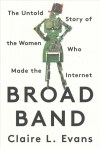


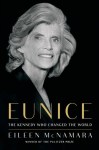


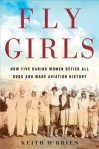

 Many people are aware that
  the era. The need was great, her products worked, and she went on to become an American philanthropist.
 century has shown remarkable gains, with not only




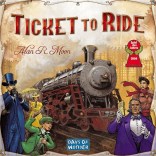
 the board and keeping track of piles of colorful money never really engaged me. In reality, I spent the next three hours curing diseases in Pandemic, creating train tracks that spread the globe in Ticket to Ride, and trading spices in Century: Spice Roads. I was floored that board games had evolved so much since I had played as a kid, the art was more engaging, the stories richer, and the play more involved. In the months following this revelation I’ve added over thirty board games to my list, and I’ve expanded my idea of what a board game can be.
 resources in a library that encourage community and collaboration. At a time when parents and educators are concerned about the rise in digital media and isolation, board games get people of different backgrounds engaging with each other across a table, solving problems, improving a number of practical skills, and having a good time. When you look at it that way, it’s no surprise that board games are a critical part of a libraries community, and a lifelong pursuit of learning.