Lauren Gledhill is the new head of Reference and Adult Services at Cheshire Public Library, following the retirement of Bill Basel last July. Many of you may already know Lauren from the children’s department, where she’s been CPL librarian for several years, keeping watch over much of the children’s media selections. If you haven’t met Lauren before, come on downstairs to the Reference Department and get to know her!
Lauren got her Library Degree from the Dominican University in Chicago, a big change from the rural Pennsylvania area she grew up in. Cheshire certainly falls between the two!
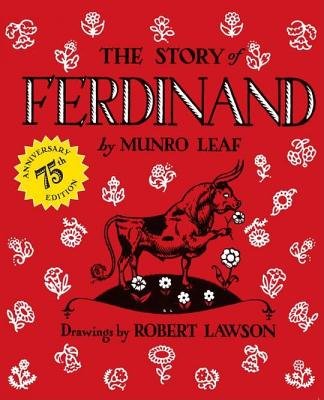
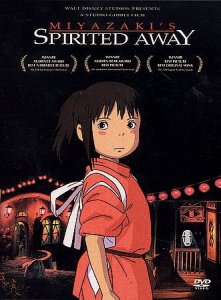
Children’s Librarian to Reference Librarian is a big change. What does she prefer to read? Lauren likes horror, graphic novels, and non-fiction science. Her favorite book as a child was Ferdinand the Bull. If you haven’t read it, Ferdinand is a sweet classic children’s story from 1936 about a bull who prefers to smell flowers rather than fight in the bullring – and not surprisingly was banned as subversive by both Hitler and Francisco Franco! Today, Lauren’s favorite author is Barbara Kingsolver. Her favorite movie? She loves Spirited Away, the animated feature by noted Japanese director Hayao Miyazaki. Given the chance, she much prefers to listen to audiobooks over print. (Did you know that audiobooks alone make up almost 10% of Cheshire’s offerings?).
Librarians often get the chance to meet world-famous authors at book expos and conventions. Two authors Lauren would love to meet are Neil Gaiman, the multi-award winning author of tales such as Sandman and Coraline, as well as Hugo-award winning author Ursula Vernon, who also writes under the pen name T. Kingfisher. (I hate to mention it, Lauren, but Neil was a guest at Noreast Con 4 the year I went. If I remember right, he emceed the Costume Call.)
Lauren promises to bring new and exciting ideas to the Adult Services Department, so stay tuned and keep checking back to see what’s up!
When it comes to epic book series impossible to film, first came Lord of the Rings, (which was done marvelously at last but needed more than 10 hours of screen time).
Then came Dune.
Dune, by Frank Herbert, is considered the best-selling Science-Fiction novel of all time (though it’s far more Game of Thronesthan space ships), with more than 12 million copies sold in 14 languages. It tied for the 1966 Hugo Award. And like Lord of the Rings, getting it to film is a Holy Grail of filmmakers.
Dune tells the far-distant-future story of Duke Leto Atreides, who is given the stewardship of the desert planet Arrakis, also known as Dune. Dune is the only place in the universe where the spice Melange exists – a spice that not only can alter your mind, in some species it lets them fold time and space, creating almost instant space travel. “He who controls the spice, controls the universe.” Thus, Dune is a hotbed of politics and backstabbing. When the Duke is murdered, his son Paul, deemed an abomination by a powerful religious group, is seen as a prophesied savior by the natives of Dune. So begins the battle for control of Dune. The book is an immersive, detailed, visionary epic of grand scope (there’s a dictionary in the back). When you read the book, you are on Dune. This is a book that sticks with you for years to come.
Herbert wrote five books to the series; his son Brian added another twelve after his death. Dune – even just the first installment – is a novel of such grand scope (like GOT and LOTR) that putting it to film has been almost laughable – think of Rankin Bass’s 90-minute adaption of The Hobbit.Game of Thrones took 8 years and more than 73 hours to tell – can you imagine it as a three-hour theater film and have it make sense? It was tried in the 70’s, but after 3 years of attempts, the budget just couldn’t be managed. In 1984, David Lynch did make it, condensing much of the book to ethereal voiceovers, changing major points to condense action, and adding some now-cheesy early computer effects (the blue contacts of the Fremen didn’t work, and every frame of the film had to be colored by hand). It’s a film you either love or hate, with musician Sting as Feyd Rautha famously flexing in a winged bikini.
In 2000, SyFy channel did two Dune mini-series, which were much better received, won several awards, yet seemed to fade into obscurity faster than Lynch’s version, with the chief complaint it stuck too close to the source material, and dragged. Now, thanks to Warner Bros and HBO, we have a $165 million dollar spectacle by Denis Villeneuve that covers – only half the book, with a sequel (hopefully the second half) due in 2023.
While the film has been viewed favorably, the scenery and cinematography spectacular, Villeneuve took many liberties with the material that once again changes the focus and depth of the story. To modernize it, he gender-swapped characters (which goes against the society Herbert wrote) and changed the roles of other women (no, the Bene Gesserit. He left out much of the religious aspect, the mysticism, even avoided the word jihad, used by the Fremen. It gives a sanitized, whitewashed view of the story, afraid of offending anyone. Herbert believed that modern societies will always decay back to a feudalistic society, and that the desert cultures, especially those of the Middle East, were more prone to messianic complexes and religious wars (remember, he’s writing in 1964 or so, when the Middle East was still rather bland politically. Think Star Wars and Tatooine, or The Great Humongous in Road Warrior, etc. There’s a lot to be said for that theory). To remove the root of the story – is it still the same story? Can anyone ever make a decent, book-abiding video version of Dune?
If you can’t wait for the new film to come out on DVD (or, rather, the first half of the book), check out the book series itself. Few things are better than the source material.
I can give up Sting in his bikini (though I thought he was a perfect Feyd), but there is no better Gurney Halleck than pre-Captain Picard Patrick Stewart. That’s my opinion, and I’m sticking to it!
NaNoWriMo is National Novel Writing Month, run by a non-profit group aiming to help young, new, and aspiring writers to find their voice and learn to hone the craft of writing. It began in 1999, with a challenge to write 50,000 words in the month of November. Hundreds of thousands of writers participate each year. Once you sign up and log in, your progress is tracked in real-time, and you can reach goals and earn reward stickers.
Hundreds of thousands of people will try and may actually succeed in completing the challenge, but does it really get you anywhere? Mmm, depends on how good you are. Water for Elephants began its first draft as a NaNoWriMo project. It was picked up, sold more than four million copies, and in 2011 became a major motion picture. So yeah, dreams do happen.
I must make this perfectly clear: Dreams do happen, after LOTS AND LOTS OF EDITING. Please don’t send your finished first draft to any non-family member to read. Poor editing will kill your chances before you even think of your book cover. Edit, edit, edit. If you can’t pay for a professional editor, then check out some books and learn to do it yourself.
But have no fear! Cheshire Public Library can help you with that as well. Join us once a month for Cat Tales, an open group for writers of anything, beginner to published, playing with a rough idea or finished draft in hand. Talk about the ins and outs, the how-tos, editing, publishing, development, and more. Read us something you’d like feedback on, or maybe try a writing prompt. Subject doesn’t matter – Memoir, non-fiction, fiction, romance, science fiction, action-thriller, young adult (Who doesn’t love Hunger Games?) – we can talk about them all. Learn how to take that NaNoWriMo novel and beat it into shape.
Cat Tales has been meeting virtually during the pandemic, but will be returning to in-person meetings this winter. Check the calendar for the next meeting!
Do you like certain types of books – stories about dogs, or maybe vacations in Italy? Perhaps you like adventure stories, or space opera, or a good forensic mystery, but don’t know what to read next. Do you like binge-reading a good series?
Have you noticed the case of bound books in the middle of the lobby?
Take a closer look at our Book Bundles.
Book bundles are three books of a common theme bound together, so you can binge-read on a topic you enjoy. It might be outdoors, kidnappings, or WWII stories. It could be autism, award winners, westerns, Book Club Favorites, art heists, robots, or gothic horror. There’s always something new on the shelf, so check it frequently. Intrigued by a category? Check out the bundle and explore!
But not all of the titles seem interesting to me – what if I only want to check out one or two?
You can check out one or all three, whatever you’d like. Just return the unwanted ones to the desk and we’ll find them new partners.
Don’t see anything to your liking? Prefer existentialist graphic novels? Right now you’re only reading novels that have cats in them? Trying to catch up on real-life medical stories? Let us know! We’d be happy to take requests!
There’s nothing like finding a good book, and it’s even better when you find three new favorites at once. A whole new world of reading adventures awaits!
Music and its forms have always been in a state of flux. While operas often dragged for hours, recording them, when the means became available, was a different problem. When temperamental wax cylinders gave way to 78 rpm shellac discs, you had 5 minutes of music before you ran out of groove and had to turn it over. Post-WWII, when brittle shellac gave way to more forgiving vinyl, record speed dropped to 33 rounds per minute, allowing up to 22 minutes per side on a 12” “long-playing” record (or LP, for short.). When the 45 rpm single – cheaper to produce, cheaper to purchase – became standard, music averaged 3-5 minutes a side.
If you wanted to get airplay on a radio, music had to be submitted on a 45, thus most popular songs were limited to around 3 minutes in length (Hence Billy Joel’s line from The Entertainer: “If you’re gonna have a hit, you gotta make it fit, so they cut it down to 3:05”). Albums could play for as long as 20 minutes a song on each side. Jump up to CD, and you can now go to 100 minutes. Streaming? The only limit is your tolerance.
So what’s the long and short of it? What are the longest and shortest songs on the road to success? The 50’s and 60’s, with the advent of transistor radios to make music portable, saw an explosion of short catchy tunes, meaning more could be crammed onto the radio, which meant more airtime, more commercials, and thus more money all around. Elvis consistently comes in under two minutes (Let Me be Your Teddy Bear – 1:43, Are You Lonesome Tonight, 1:25) as do the early Beatles (From Me to You, 1:56, Please Please Me, 1:59), Summer Time Blues by Eddie Cochrane (1:58), and Hit the Road, Jack by Ray Charles (1:58).
Albums play around more – If you’ve got 18 minutes of music, but can squeeze one more short track in, you fill it. Styx’s legendary Paradise Theateralbum has 3 blink-and-they’re-over tracks (AD 1928, 1:07, State Street Sadie – a flash at 33 seconds, and AD 1958, 1:06). Pink Floyd, who loves to drag out a tune, logs in at 1:25 with Pigs on the Wing, a beautiful melody on theAnimals album. Frankie Goes to Hollywood’s legendary Welcome to the Pleasuredome album clocks in two blips – Snatch of Fury, at 36 seconds, and The World is my Oyster, which is 1:02, perhaps 45 seconds longer than the track needs to be.
But just how long can you carry a tune? Well, outside of perhaps an opera or symphony (Beethoven’s 9th is about 70 minutes long). AmericanPie takes up both sides of a 45 at 8 minutes 32 seconds, and Hey Jude clocks in at 7:11, perhaps the longest singles on 45s. But when you hit albums and their longer tracks, if you count all nine parts of Pink Floyd’s ethereal “Shine On You Crazy Diamond” from the album Wish You Were Here, it totals 26:01, the longest segment being over 13 minutes. You could add Rush’s 2112, at 20:33, Yes’s Close to the Edge at 18:30, or the legendary In a Gadda da Vida by Iron Butterfly at 17:05 – three songs that can carry you clear across the state. Meatloaf’s I’d Do Anything For Love (But I Won’t Do That) made it to Number One on the Charts with a time of more than 12 minutes, so length does not affect popularity at all.
With the pandemic, streaming of music and even live concerts has increased in popularity. While the current trend is to make shorter songs for the attention-short listener, it will be interesting to see in the next five years or so if, freed from the limits of physical media, musicians will increase the length of their songs or not. Genres are losing their hold as streaming crosses boundaries (ie, Jimmy Buffett gets mixed with a lot of country), 24-bit audio capacity has lead to quieter music (less digital noise on soft tracks and streaming services even out loud tracks anyway), music labels are losing importance as musicians self-release songs, and songs are even breaking up their ages-old format and frequently starting with the chorus instead of a verse. We might cringe at the pace of the changes, but in the end, for the musicophile, it’s a wonderful time for variety and a widening range of music.