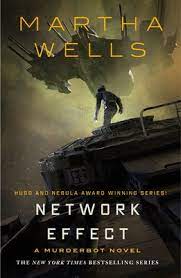
My Favorite Android: The Murderbot Diaries

The first use of the word “robot” dates back to the 1920’s (robotnik or similar being a term for factory worker in many slavic languages), but the word “android,” meaning a miniature human-like automaton, is older, as far as 1863. A robot – a disembodied piece of machinery – does work for you – like a Roomba, or the useless rolling pest in the grocery store that spies on people who might steal things (at least Roomba can clean up a mess it finds, and doesn’t cost $35,000). An android looks like a human, moves like a human, interacts like a human (more or less), but inside is a machine.

That fact has led to a huge amount of introspection – how do we define Human? Is a self-aware, English-communicating Gorilla a person? What about our AI creations? When a computer becomes self-aware, does it have a soul? Is it “human”? At that point, is the use and ownership of an android slavery?  That question was battled in the Star Trek: The Next Generation episode “Measure of a Man,” where Starfleet claimed to own Data the android and control him like equipment, while the case was made he was sentient and free. The movie(s) Blade Runner also focused on that question. 

I’m not a techie. Computers are great if they do what I need,  but I couldn’t care less about future tech, AI interfaces, androids, or streaming. Anyone who knows any science fiction knows you never trust AI or give it too much power. I like Data, I don’t love Data. C3PO is annoying. I hated Marvin the Paranoid Android. No matter how many times I watch Blade Runner, I think it’s one of the most boring movies ever (I still love The Six Million Dollar Man, but he was a bionic human, not android). So I was really, really surprised that I even picked up the book All Systems Red by Martha Wells, also known as The Murderbot Diaries #1. Not my kind of book. But from the first page, I could not put the book down. I read it while cooking. I read it while my kids were in the tub. I read it while walking. I had to finish it in one day. Thankfully, it’s a short novella, and that’s entirely possible.

Murderbot, as it calls itself (it has no gender. Murderbots are not built for sex; that’s a sexbot), is a Security Unit (SecUnit), a partly organic robot/android construct built to provide security detail for whoever rents or buys it. Of course, mostly what security entails is killing whatever might harm the persons it’s hired to protect, hence the term Murderbot. Murderbot, however, manages to hack its own governor module, releasing itself from control by the company who owns it. 

This starts Murderbot on a soul-searching (or soul-developing?) quest to find out exactly who or what it is now, all while working hard not to let anyone realize it’s free, because an uncontrolled killing machine is a very, very dangerous thing (to quote Kyle Reese from Terminator, “That terminator is out there, it can’t be bargained with, it can’t be reasoned with, it doesn’t feel pity or remorse or fear, and it absolutely will not stop… EVER, until you are dead!”).  But Murderbot isn’t fond of killing. He’s fond of soap operas and TV serials (like The Rise and Fall of Sanctuary Moon). All he wants is to be left undisturbed to watch his shows while he tries to figure out the human race. Life never lets him, and he feels obligated (like the heroes in the soaps he watches) to help while trying to solve the mystery of who is trying to kill the people he was hired to protect.

Murderbot is sarcastic, droll, funny, depressed, almost autistic in his stilted approach to emotion and interaction with people. He’s a fast thinker and an opportunist. He says s**t a lot more than Data. He doesn’t want to be human, yet is fascinated by them and can’t stop studying them. And he makes mistakes, just like a human. The innovative – and logical – adaption/hijacking of computer systems has opened my eyes to issues I’ve never given a thought to, such as the power of drones. With all the issues currently happening via ransomware, spying, and breaches, and the mass-market and miniaturization of drones, maybe we should be thinking more along the lines of Murderbot, as our military is also controlled by computers, and nothing but nothing is hack-proof. People mistrusted the NYPD robodog so much they had to send it back.

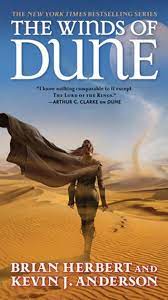
I had to read the second book Artificial Condition (possibly my favorite, because of ART, Murderbot’s name for the “A*****e Research Transport” ship computer), whipped through the third, Rogue Protocol , flew through the fourth Exit Strategy, (also possibly my favorite), and am now reading the fifth, Network Effect. The sixth and current volume is Fugitive Telemetry, with three more commissioned by the publisher, and a TV version is in the works (please, please don’t mess it up!). All Systems Red has won the Nebula Award, the Hugo Award, the Alex Award, and the Locus Award. Yes, the stories are simple (good guy must take down bad guy) but the humanity and humanism throughout the series will keep you emotionally invested to the very end. 

Pure enjoyment, with no other agenda. Murderbot is my favorite android ever. 


9/11 – Twenty Years Later

There are several points in US history that are “fixed points,” dates and events which become so embedded in the minds and hearts of the people that they become part of our universal consciousness, whether or not we experienced them ourselves. July 4, 1776, the signing of the Declaration of Independence. April 15, 1865, Abraham Lincoln is assassinated. December 7, 1941, the Bombing of Pearl Harbor, “The Day That Will Live in Infamy.” November 22, 1963, the assassination of President John F. Kennedy.

And September 11, 2001, known simply as 9/11, when foreign nationals who had trained here in America, who bypassed airline “security,” hijacked four American jetliners and crashed them into the Twin Towers in New York City, the Pentagon in Washington, DC, and a field in Pennsylvania. The entire world stopped. On that day 2,983 Americans died, including 343 Firemen, 60 police officers, and 8 medical personnel – not counting the people who died from breathing in all the toxins released from the burning rubble. If you remember the day, you remember exactly where you were when you heard about it. People stayed glued to their TVs for days, hoping beyond hope that someone had survived the horror. So many people knew someone, or had ties to someone, who died that day. A friend of mine at Morgan Stanley by chance happened to be sent to a meeting at a different office that morning. Every one of his coworkers died. My husband’s cousin was just blocks away on her way to work when it hit, and wound up having to evacuate her apartment.

This year is the 20th anniversary of 9/11, a somber day for reflection. An entire generation has now grown up in a post-9/11 world, knowing the date as something only in a history book, no emotional ties to the day at all. Millions of New Yorkers are new to the city, with no experience of the unity the catastrophe created. Perhaps this is the most important memorial yet. 

The 9/11 Memorial and Museum at 180 Greenwich St. in New York City will be holding a ceremony for the families of the victims on that day. There will be six moments of silence, one for each of the tragedies that happened. Churches are encouraged to toll bells. The ceremony is private, but the museum will be open to the public from 1 pm until midnight. At sundown, the annual tribute in lights will commence. 

9/11 is a day that is going to be with us for a very long time, whether you remember it or not, whether you had any connection to it or not, whether you care about it or not. It’s still hanging over us, a Damoclean Sword we cannot take our eyes from. 

To honor the date, Cheshire Public Library invites you to share your 9/11 memories through our 9/11 Reflections project. As we approach the anniversary date, we are compiling the stories of local residents – where they were, what they remember, how they were affected that day. You can click on the link here, or pick up a paper form at the library. Select stories and photos will be displayed on our website on September 10. The deadline for submissions is September 3.

Be considerate about the date, even if you feel it doesn’t affect you. Hold that moment of silence, if not for the past, but for the future, that we – or anyone else – won’t have to suffer such an attack again. 

To learn more, check out some of these books and films:

Inside 9/11

Fahrenheit 9/11

In Memoriam: NYC 9/11/01

Zero Dark Thirty

The Only Plane in the Sky

Fall and Rise: The Story of 9/11

The 11th Day

The Looming Tower

Kill Bin Laden

A Nation Challenged

Rock of Ages

As Neil Young said, “Rock and roll will never die.” 

Here we are, 66 years later, and he may just be right (well, if you don’t count Mozart and the Old Masters who chalk up hits centuries later, like Herb Alpert’s A Fifth of Beethoven). Maybe because they’re cool, maybe it was just Covid isolation, but a number of “classic” rockers have put out new albums, some of which are rather good, no matter what style of music you like. Not bad for a group of people of whom the youngest is 71. I’ve never been a huge fan of Neil Young’s solo work – he’s twangy, he’s whiney, he’s slow and drawling despite unspeakable talent, but his new album Young Shakespeare got me. Sure, the songs are old classics, but the acoustic guitar on this live album is absolutely exquisite. Even if you don’t particularly care for him, give this a listen just for the guitar music. I listened to the album three times in a row. And he’s not even in my top 50 musicians.

Alice Cooper is another rocker I never got into. His first album was in 1969; I was 4, and it would be many years before I caught on to rock. Now he’s back with Detroit Stories, his 21st solo album.  Some of the album is classic metal work, while some of it is bluesy. I found Our Love Will Change the World to be delightfully commercial, and Wonderful World to be both seductive and ironic. Hanging on By a Thread is a direct acknowledgement that not everyone was able to deal with quarantine isolation, and not to give up. The album feels uneven because of the variety of styles presented, but age is no factor here and Cooper’s still got it. There’s a song here for everyone.

Greenfields: The Gibb Brothers Songbook, Vol. 1, is interesting because of its strangeness, in the way listening to Ironhorse play bluegrass Led Zeppelin is strange – good, but strange. Barry Gibb, the only surviving Gibb brother, sings many of their classic disco-era hits with top country singers, in a pleasant country-pop manner – such as Dolly Parton singing Words, and Alison Krauss singing Too Much Heaven. The effect is some nice easy-listening music, not too country and certainly not disco, with the benefit of the lyrics being suddenly understandable. Even if you don’t like country, this is something that should be easy for you to like. 

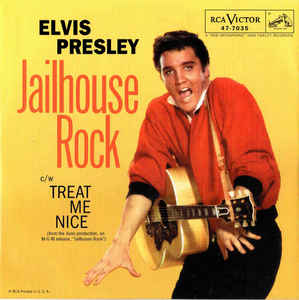
Paul McCartney released McCartney II in 1980. Now, 40 years later, he releases McCartney III. For someone with hits in five different decades (yeah, Elvis did that, but he was dead for two of them), it’s not likely he’s going to fail with this one. My favorite is Kiss of Venus, but check out the amazing blues guitar work on Long Tailed Winter Bird. This is classic McCartney unleashed, rock, blues, jazz, Beatles, and orchestration, sometimes all at once. Seize the Day sounds like classic late-60’s Beatles. He’s 79 years old and still plucking away like a master. You might not like all the tracks, but the album is worthy.

Badfinger: No Matter What: Revisiting the Hits is probably the weakest of this group. You might not immediately remember the name, but you’ve certainly heard their music, even if it was only the Brady Bunch doing a cover of Day After Day on their first album. One of the problems is most of the band is dead. Like Greenfields, having a different singer do a cover of one of Badfinger’s past hits isn’t a problem, but more like Alice Cooper, it’s the strange mix of styles that kind of sinks the album. Some sound deliberately tinny, 60’s British mono throwbacks. Some sound ethereal and Pink Floyd-ish. Some, because you know the song so well, just don’t sound right, as happens when – well, when someone remakes a favorite song in a very different style. Sometimes it’s done very right, such as The Art of McCartney (If you doubt Cooper’s talent, check out his Eleanor Rigby). This time, the greatness just doesn’t come together.

Peter Frampton hits his 50th year as a solo artist this year (he’s been in bands since the age of 12). His newest release is an instrumental cover album entitled Frampton Forgets the Words, an easy way to release old material. Imagine you’re at a massive outdoor concert – a rock festival somewhere, and you’re walking around the grassy fields picking your way through people, and there’s some really awesome band on stage playing a 50-minute instrumental improv and it’s just a groovy background soundtrack to your life. That’s exactly what this album is. Nothing sticks out, it’s just the perfect background music for your life, somewhat familiar and comforting without you really knowing why. 

If you know the artists, give these a try. If you don’t know the artists, give them a try anyway. You might just find you missed something good.

Cheshire Grange Fair

Did you know that the Grange has been a part of Cheshire since 1885? 

Did you know that the Grange system was founded by agricultural families in 1867, to help both the North and South recover from the terrible destruction of the Civil War? There are more than 240,000 members across the US, with more than 60 chapters in Connecticut alone.

So, outside of owning the building on Wallingford Road (where, last century, I used to take dance lessons), what exactly does the Grange do?  While there’s still some focus on agriculture, the modern Grange performs charitable community services for rural, suburban, and urban localities, and is open to everyone. Among the many community programs they run and support are Red Cross Blood Drives, quilts for AIDS babies, supporting Heifer International, gift baskets for the needy and elderly, school supplies, camperships, scholarships, equipment for police and fire departments, community education programs, and so much more. And of course, the annual Grange Fair – this year on August 21. 

See, the more people who enter – anything! – the more interesting your Grange Fair is. This is your community fair – and the more we support it, the better it is! (I’m tired of being the only entry in some categories. That’s just no fun.)

So dig through your treasures. Print that photo. Iron that placemat you made. Tuck the threads on that needlepoint you did during shutdown. Pick those tomatoes carefully. No effort is too “amateur,” so get moving and get your entry form in! 

There are a limited number of entry booklets available at the library and around town, or you can download them yourself from their website. 

Best of luck!

http://www.cheshiregrange.org/grangeagfair.asp

Darkly Dahl

Roald Dahl is an author of controversy. He’s lauded for being a brilliant writer; he’s shunned because of his 1920’s upbringing and racist and antisemitic writings and comments. His children’s books are considered classics of literature; his children’s books are ignored by some who complain they are too dark for children’s literature.

Too dark? Let’s look at this.

Little Red Riding Hood’s grandmother was eaten by a predatory wolf, Cinderella’s stepmother made her into a slave, Hansel and Gretl were abandoned (twice!) by their parents and taken in by a cannibalistic hag; the Little Match Girl freezes to death all alone. Is Charlie and the Chocolate Factory or Matilda darker than that? Not quite.  

There is some truth to it – in many of Dahl’s stories, parents, if not most adults, are seen as evil, or cruel, or incompetent providers – mean teachers, poor and ever-working parents, buffoonish adults who cannot see the plight of the child (Wonka is most definitely – well, Wonky). There are elements of racial bigotry (the tiny black (yes, they were black in the book) oompa loompas living on grubs; Germans always being fat gluttons, etc). But is this so far from other children’s stories? Not so much. Lemony Snicket’s Series of Unfortunate Events is also darkly humorous, and few are crying foul. Dr. Doolittle bleaches a man’s skin, rather than let a black man marry a white woman. Peter Pan’s stereotypical depiction of Native Americans is downright painful and offensive on many levels. Bigotry and stereotyping is nothing new, only that fact that we now call it what it is. 

One point to remember is that parents, quite frankly, are a pain in the neck to children. They love them, while at the same time resent them for setting limits, saying no, and dragging children kicking and screaming through the process of growing up. For Dahl – and millions of others – who grew up in British boarding schools, at the mercy of bullies they couldn’t escape and teachers who were allowed to whip children, the experience left a more lasting impression (Pink Floyd, anyone?). For those in Britain who grew up in World War II, who as children hid during the Blitz or were shipped out to board with strangers, it lends another level of abandonment and trust issues to children’s literature. There’s a reason behind a lot of the dark – and for British children, it’s a shared cultural memory. Is Fantastic Mr. Fox an allegory for the war? Possibly. 

Another point to consider is children are the hero of their own story. It’s fine if Daddy vanquishes the dragon, but children would much rather be the ones doing it. Tween and Pre-tween children desperately want to be seen as competent, able to impress grown ups with their abilities. Children want to be the hero, and they can’t do that if Mummy and Daddy are with them telling them no – hence the number of orphan stories, or children alone. They can’t rely on the adults with them, or the story won’t work. A story about a child who tried and failed, who gave up and lived with their perceived oppression, isn’t a story a child wants to read about. There’s no role model there, no hero, no inspiration, no one to pretend to be. So of course Matilda has to shine, and the Peach must kill James’s wicked aunts, even if he has to find kinship with a bunch of insects, and even wacky Mr. Wonka can’t miss the good that dwells in Charlie. 

Darkness, shmarkness. The world is a dark place, and childhood a relatively new invention. In too many places, children are still locked in war-torn places, famines, camps, drug violence, and abusive situations. Our lauded fairy tales of yore – right down to Mother Goose and Aesop’s Fables – hark back to far darker times.

 Let them read. If nothing else, darker literature provides the perfect chance to discuss empathy, fantasy vs. reality, and handling tough situations – including some of the tough times we’ve been through in the past year.

The Magic Finger

Danny the Champion of the World

Charlie and the Chocolate Factory

The Witches

The BFG

Matilda

James and the Giant Peach

Fantastic Mr. Fox