I love ghosts. I’ve never met a ghost myself, so the best I can do is read about them. Why ghosts? Well, they don’t have to follow our rather tiresome rules of gravity and thermodynamics! They could do a loop-de-loop in the air, just for the fun of it. Maybe I’m a bit jealous…
There are many shades of ghost: vengeful ghosts, poltergeists, ghosts with the intent to improve the life of a living person à la A Christmas Carol… These are all fun in their own way, but I find it especially delightful when ghosts are given roles that betray their traditional raisons d’être–ghosts that are not strictly malicious, nor are just around to aid the protagonist. These ghosts are maybe just as complicated and multi-faceted as the humans who begat them.
It’s also interesting to see how authors answer fundamental ghost questions like: Why has the ghost come into existence? What makes the ghost different from a living person? What does the ghost want? The answers to these questions change dramatically from author to author and story to story. They also feel substantial, weighty. Making assumptions and declarations about ghosts is not so different from making assumptions and declarations about life. Like a Rubin vase, where the negative space around a subject becomes its own subject, writing about ghosts and death is a clever way of writing about life.

Anyway, here are some exciting and not-quite-traditional portrayals of ghosts.
Ghostwritten by David Mitchell
David Mitchell’s first novel is ghost-obsessed. “Ghost” is even in the title! But instead of offering a treatise on ghosts and ghostliness, Mitchell’s ghosts, or “noncorpora,” are hard to pin down. They come in many forms, sometimes existing independently and other times hopping from human to human, using bodies as a kind of macabre public transport. For part of the book, we follow one such noncorporum as it travels through rural Mongolia in the body of an American tourist. This particular noncorporum is a self-described “inhuman humanist” and provides some delightfully empathetic insights into the human condition.

Lincoln in the Bardo by George Saunders
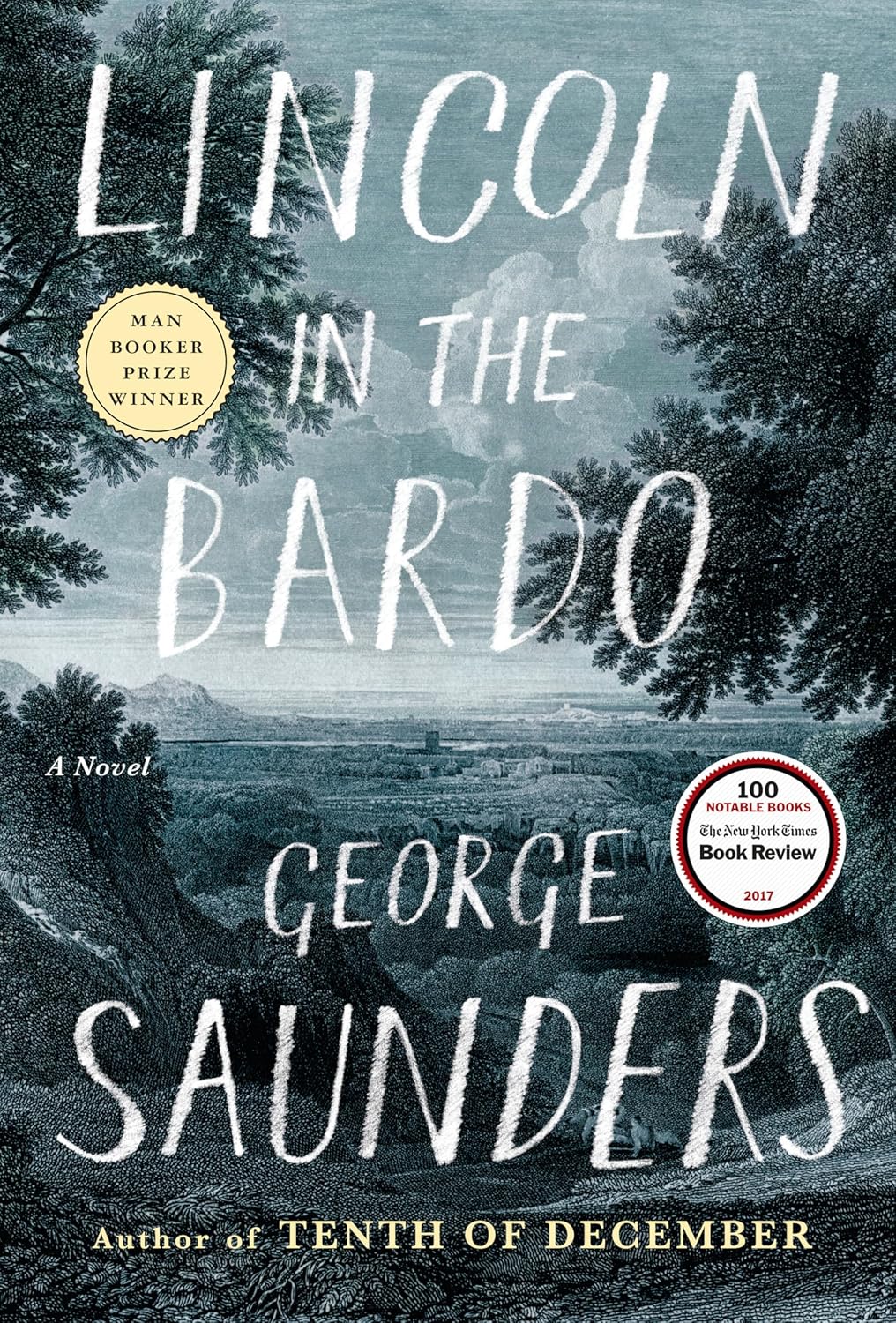
Sometimes when driving home, I’ll hang out in the left lane even if the right lane is moving faster. In my head, I’m thinking, “I know the left lane is faster!” when that’s clearly not the case. People are stubborn, and George Saunders doesn’t see any reason why ghosts wouldn’t be stubborn as well. The ghosts in Lincoln in the Bardo are so stubborn, in fact, they cannot come to terms with the reality of death. Their “sick-forms” (read: corpses) lie in “sick-boxes” (read: coffins) and only need rest. With just a bit more rest, they’ll emerge in tip-top shape and be able to resume their prior lives (read: they won’t). These circumstances may seem hopeless and wretched, but Saunders is able to deliver one of the most affecting and life-affirming conclusions I’ve read. A jewel of a book.
Her Fearful Symmetry by Audrey Niffenegger
Her Fearful Symmetry is a hoot. Unlike some of the other books mentioned here that use the otherworldly to contrast comically with the mundane, Her Fearful Symmetry wholeheartedly commits to flights of fancy. Romance and death intertwine and are taken to their melodramatic extremes. There are envious ghosts, faked deaths, identical twins posing as one another: everything you could possibly want in a story. It’s often absurd and always sublimely entertaining.

100 Years of Solitude by Gabriel García Márquez

In 100 Years of Solitude, characters are haunted by their lineages. Decisions and dispositions repeat from generation to generation, entire lifetimes become ghostly echoes of the past. It is no surprise, then, that actual ghosts occasionally show up to haunt the residents of Macondo. Touchingly (and thematically), isolation is what brings several ghosts back from the dead. They return because they “could not bear the solitude,” or in another case, “the yearning for the living was so intense, the need for company was so pressing.” Human connection is so fundamental a force that not even death can stand in its way.
Welcome to the Monkey House by Kurt Vonnegut
Kurt Vonnegut is a famed humanist, but he has mixed feelings about human bodies. Take Breakfast of Champions for example: the protagonist’s rapidly declining mental health is due to an abundance of “bad chemicals” in the brain. Or both Slaughterhouse-Five and Sirens of Titan, where characters’ cannot even rely upon their bodies to stay rooted in space-time. It’s no surprise then that he was interested in a world where humans are not subservient to their oft-malfunctioning bodies. Such is the conceit of the short story, “Unready to Wear,” found in the collection, Welcome to the Monkey House. A mathematician discovers a technique that allows one’s soul to be separated from their physical being and float about unburdened by corporeal whims.

Beloved by Toni Morrison
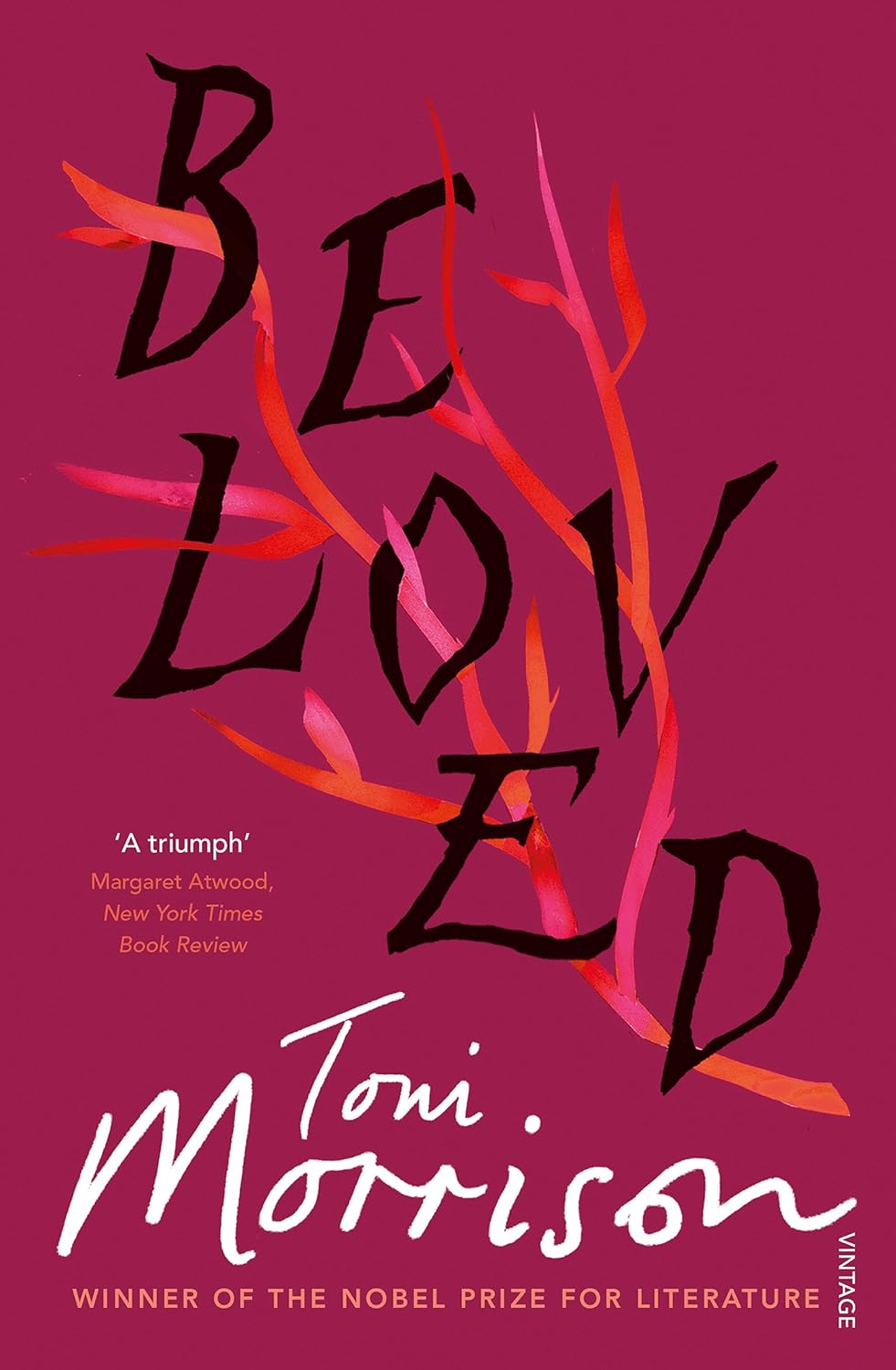
Ghosts can represent trauma, guilt, love, regret, suffering, anger, dehumanization–really anything if an author can realize their vision. But since ghosts can mean so many things, they have the potential to become unwieldy, or conversely, underbaked. Toni Morrison does not have this problem. The ghost in Beloved is loaded with nuanced meaning, compelling but elusive. This is a literary balancing act and a depiction of ghostliness so unique that it stands alone. Brutal, beautiful, and haunting.
 The Cheshire Library Blog