All’s Faire in Fall

bristol-Renaissance-FaireFall is here again, and with it comes Fair season – Church Fairs, Grange Fairs, State Fairs, Harvest Festivals, and perhaps the most fun of all – The Renaissance Faire.
Renaissance Faires are  newer than you think. The first official “Renaissance Faire” traces back to Los Angeles in 1963, when a school teacher named Phyllis Patterson put one on for a weekend fundraiser for radio station KPFK, and more than 8,000 people showed up. A fall staple was born (because, let’s face it, NO ONE wants to be buried under that many yards of wool, satin, and leather in the middle of July).

Why the Renaissance? Why not Roman Bacchanalias with chariot races? Why not the 1363839072Dark Ages? Why not Pompeiian pageants? Celebrating the gruesome deaths of a city of people might be just a tad morbid. The Dark Ages were – well, Dark. We don’t know much about them, because following the fall of Rome civilization was illiterate, spread out, and little was going on beyond warfare and survival. And Rome? Rome certainly had a lot going for it, but not many speak Latin anymore, and togas, while simple and fun for frat parties, just don’t have the suave flair of swashbuckling boots, rapiers, and villains’ pointed beards and mustaches. The Renaissance has far more possibilities.

Robin-Hood-Men-In-Tights-dracula-and-robin-hood-in-tights-and-loving-it-22205932-320-240Rising up out of the depths of the Black Plague, the Renaissance means, literally, a rebirth. Disenchanted with a church that did not save them from the plague, men turned to science to keep them safe, resulting in great advancements in learning, science, art, music, and warfare. Stretching from 1300 to 1600, the Renaissance saw the rise of DaVinci, of Galileo, Columbus, Martin Luther, the printing press, Magellan, Henry VIII, William Harvey,  the advent of gunpowder, muskets, and the waning of armor and swords. Most Renaissance Faires throw in the likes of Robin Hood (earliest tales date to 1377), and sometimes evejeffpiraten King Arthur, who, although Malory’s history of Le Morte D’Artur is published in 1470, the story from which The Once and Future King is taken,  is believed to have lived, if he’s not merely legend, sometime between 600 and 800. Herein lie the tales of valor, not long before the Three Musketeers, the tales of actual pirates Barbossa and William Kyd, of Dutch corsairs and privateers, and let’s not forget Shakespeare (though Shakespeare’s plays, though written and performed around 1600, were often taken from history much older: King MacBeth actually lived in the 1000’s). That’s a lot of romanticized history to be able to play with, a lot of possibilities for actors to delve into. Hence Renaissance Faires are full of LARPers (live-action role players) and SCA (Society for Creative Anachronism, hard-core medieval recreationists) members running about. Your inner Dragon Master can run amok, and no one will ever know.

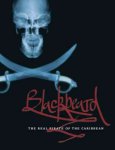
unspecifiedSo pull on your hose, strap on your broadsword, lace your corset, and get ready for an imaginative adventure back in time, and if you’re not careful, you just might learn something. Faires can offer a diversity of activities such as Birds of Prey shows, sword forging, glass blowing, theater, jousting, live chess tournaments, musicians, and more, as well as authentic foods, drink, clothing, crafts, and entertainments.  Check out the Connecticut Renaissance Faire, or if you like a drive, try the larger ones like King Richard’s Faire in Massachusetts, or my favorite, The New York Renaissance Faire in Tuxedo, New York. They’re worth the trip!  For a more in-depth experience, check these great books out as well:
Understanding Urban Issues

Here is a group of books – some of them very good – that are sure to fuel political fire, no matter which fence you sit on regarding the issues of the blighted inner cities.

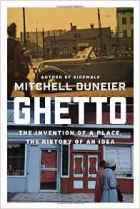
indexGhetto is a brand-new book by Mitchell Duneier on the term “ghetto,” which dates back to the 1400’s when Jews were forced to live in isolation from Christians. They were free to come and go, except at night, and anyone could do business with them. This led to a flourishing if separate culture for hundreds of years. Enter the Nazis, who isolated Jews into Ghettos with barbed wire. No one was allowed in or out. Here, people had no jobs, severe overcrowding, no public services, and as the ghettos decayed and residents grew desperate, people accepted the fact that Jews lived like animals, and it helped fuel antisemitism. Why would people live like that if they didn’t deserve it, forgetting that to cross the wire was not just banishment, but death. By the 1940’s the term expanded to the narrow neighborhoods that African-American people were allowed to live in. There was no barbed wire, but an invisible barrier that they weren’t allowed to cross except for work. As their neighborhoods became overcrowded because no one could move out, they fell victim to the same issues faced in Germany. Duneier presents facts throughout the last century – the 40’s, the 60’s, the 80’s, and today, on the current use of the term vs. the historical one, and how the stagnation and forced living creates the discord we see today. The book is far too long and detailed – it could be half and still be excellent – but even if you have to skim it, it is serious food for thought.

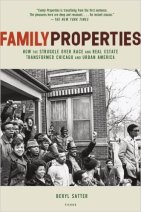
Easier to read, if not more infuriating, is Family Properties:  Race, Real Estate, and the5190mOD8p3L._SX329_BO1,204,203,200_ Exploitation of Urban Black America by Beryl Satter. Satter details the blatant racist policies of 1940’s Chicago, where Real Estate agents were threatened if they sold houses to African Americans past the “White” line, and people who did buy in would find the houses disassembled by the neighbors to prevent it. It took many years and many lawsuits to get things to change. This book will make you angry.

514dyV2l3KL._SY479_BO1,204,203,200_A head scratcher is All Souls: a Family Story from Southie by Michael Patrick McDonald. Mrs. McDonald is Irish, unmarried, and pumps out children like party favors (11 in all), living in the infamous projects of South Boston – an area run by no less than Whitey Bulger himself. Michael tries to sort out his childhood as his siblings fall victim to gangs and drugs and forced busing. Entertaining and tragic, even if you can’t relate to their lifestyle.

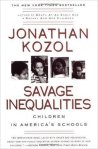
Death at an Early Age, Savage Inequalities, and Fire in the Ashes, all by Jonathan Kozol, are heart-rending books about the disparities in Urban and Suburban education. They are excellent reading that will break your heart. The realities of urban living will block most of these kids from ever achieving, and it is not their fault.

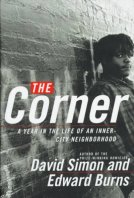
Jacket.aspxI cannot recommend the book The Corner: A Year in the Life of an Inner-City Neighborhood by David Simon and Edward Burns enough. I could not put it down. It covers the grim streets of Baltimore, a place so bad it’s where trauma surgery originated. It is compelling and reads like a novel. And they made a TV Miniseries out of it. One of my top-50 favorite books.

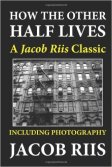
51BHwvQwVbL._SX331_BO1,204,203,200_If you’re really, really, really into sociology, then go back to the original: How the Other Half Lives by Jacob Riis. This is one of the first sociological studies on the slums of 1886 New York City, and the issues seen there – discrimination, overcrowding, street children,  gangs, alcoholism, domestic violence, prostitution – paint a familiar story as European immigrants try to find a way to survive in a hostile new world. It’s dry reading at times, but interesting in the patterns that appear.

Lyndon Johnson took decisive moves to improve our urban areas; 50 years later, not much has changed. The issues brought up in these books are just as relevant today as then, and we have more than enough information to make positive changes. These books will open your eyes.

Susan Reads: The Riddle of the Labyrinth by Margalit Fox

Every now and then a book comes along and all you can say is, “WOW!”

That’s my reaction to The Riddle of the Labyrinth: The Quest to Crack an Ancient Code, by Margalit Fox.

Ever hear of the minotaur, the half-man, half bull that lived in the center of the labyrinth, built by King Minos on ancient Crete?  As with most myths, this was one of those partly based on fact.  There was a palace of Knossos, on ancient Crete (which lies in the middle of the Mediterranean), and there was a King Minos, although the name seems to have been a general title, not a specific person. His palace was huge, hundreds of rooms built, well, in a maze-like fashion. For reasons unknown, the palace burned down sometime between 1450 and 1400 BCE, or about 3400 years ago, and that marked the end of the great Minoan civilization. And this we know for fact because Arthur Evans dug up the palace in Heraklion, Crete, in 1900.

And he found a storeroom.

With more than 2000 written clay tablets, baked by fire, still sitting there.

But what script was it? It wasn’t Egyptian hieroglyphics. It wasn’t Phoenician. It was too old for Ancient Greek. Unraveling the mystery would shed light on Bronze-age European civilization.  Scholars worked on it for years, including one Antiquities professor of Brooklyn College, Alice Kober. Kober, with incredible intelligence, scientific method, and a knack for languages that was almost frightening, through extreme perseverance managed to work out the basics, realizing that the mysterious language – known as Linear B – was written left to right, had different endings for masculine and feminine, and was a syllabary – a language where each symbol (read ‘letter’, if you wish) stood for a syllable of a word, not an individual letter, much like Japanese kana does. Kober poured her life into decoding the script. She came very close, but died before she could finish it.

Enter Michael Ventris, a quirky little upstart twenty years younger, a lonely child prodigy who, like Kober, mastered languages the way a sponge absorbs water (because everyone should know ancient Hittite and Etruscan). Ventris had been intrigued by Linear B since he was 14, if not outright obsessed.  Untrained (he went to a trade school to become an architect, but never took a college class at all), he corresponded with some of the greatest scholars of ancient civilizations, read Kober’s papers, put ideas together, sometimes wrong but sometimes right, and just 18 months – 18 heartbreaking months after Kober’s death, broke through the code of Linear B – a writing system native to Crete, but bent to write an ancient Greek dialect 400 years older than Greek was thought to be. The discoveries of other, similar tablets also written in Linear B on the mainland of Greece and surrounding territories corroborated the information. A whole new era in historical understanding was broken open, and the timeline for civilization had to be pushed back to accommodate it.

This book reads like a fascinating detective novel.  I could not put it down.  It’s like watching the film of Titanic – you know the ending, but you’re gripping your seat the entire time anyway. Fox’s style is extremely easy to follow and to read – she drops little hints about what’s to come and then speeds ahead, and you can’t stop reading.  If you love ancient history, if you love languages, cryptology, biographies of women in science or just a really good story, then read this book. It was truly a pleasure to read it.

History, Read All About It – For Book Clubs

history 2Here’s a selection of histories that should satisfy your reading club’s yearning for learning.

A People’s History of the United States: 1492 to Presentby Howard Zinn – Known for its lively, clear prose as well as its scholarly research, this is the only volume to tell America’s story from the point of view of — and in the words of — America’s women, factory workers, African-Americans, Native Americans, working poor, and immigrant laborers.

Lady Almina and the Real Downton Abbey: The Lost Legacy of Highlcere by Countess of Fiona Carnarvon –  This rich tale contrasts the splendor of Edwardian life in a great house against the backdrop of the First World War and offers an inspiring and revealing picture of the woman at the center of the history of Highclere Castle.

With the Old Breed: At Peleliu and Okinawaby E.B. Sledge – Based on notes Sledge secretly kept in a copy of the New Testament, this book captures with utter simplicity and searing honesty the experience of a soldier in the fierce Pacific Theater. Here is what saved, threatened, and changed his life. Here, too, is the story of how he learned to hate and kill—and came to love his fellow man.

Citizens of London: The Americans Who Stood with Britain in Its Darkest, Finest Hour by Lynne Olson – A behind-the-scenes story of how the United States forged its wartime alliance with Britain, told from the perspective of three key American players in London: Edward R. Murrow, the handsome, chain-smoking head of CBS News in Europe; Averell Harriman, the hard-driving millionaire who ran FDR’s Lend-Lease program in London; and John Gilbert Winant, the shy, idealistic U.S. ambassador to Britain.

Helmet for my Pillow by Robert Leckie –  From the live-for-today rowdiness of marines on leave to the terrors of jungle warfare against an enemy determined to fight to the last man, Leckie describes what war is really like when victory can only be measured inch by bloody inch.

The Lost City of Zby David Grann – In 1925, the legendary British explorer Percy Fawcett ventured into the Amazon jungle, in search of a fabled civilization. He never returned. Over the years countless perished trying to find evidence of his party and the place he called “The Lost City of Z.” Journalist David Grann interweaves the spellbinding stories of Fawcett’s quest for “Z” and his own journey into the deadly jungle, as he unravels the greatest exploration mystery of the twentieth century.

The Forgotten Man: A New History of the Great Depression by Amity Shlaes – Amity Shlaes, one of the nation’s most-respected economic commentators, offers a striking reinterpretation of the Great Depression. She traces the mounting agony of the New Dealers and the moving stories of individual citizens who through their brave perseverance helped establish the steadfast character we recognize as American today.

April 1865: The Month That Saved America by Jay Winik – A brilliant new look at the Civil War’s final days that will forever change the way we see the war’s end and the nation’s new beginning. Uniquely set within the larger sweep of history and filled with rich profiles of outsize figures, fresh iconoclastic scholarship, and a gripping narrative, this is a masterful account of the thirty most pivotal days in the life of the United States.

Here are some additional titles that might interest your club:  Team of Rivals by Doris Kearns Goodwin; The Swerve: How the World Became Modern by Stephen Greenblatt; Paris 1919: Six Months That Changed the World by Margaret MacMillan; The Eighty-Dollar Champion: Snowman, The Horse That Inspired a Nation by Elizabeth Letts; A Walk Across America by Peter Jenkins; Sin in the Second City: Madams, Ministers, Playboys, and the Battle for America’s Soul by Karen Abbott; Havana Nocturne: How the Mob Owned Cuba and Then Lost It to the Revolution by T.J. English

Susan Reads: The Immortal Game: A History of Chess

[Cover] People have been doing it for more than 1300 years.  James Bond did it. So did Kirk and Spock.  Ben Franklin was addicted to it. Harry Potter did it the wizard way, but never once did Doyle ever directly say Sherlock Holmes did. I picked up The Immortal Game: A History of Chess, expecting it to be the dorkiest book ever written, a checkered feather in my Nerd cap.  I expected it to be boring and confusing, full of that chessy shorthand I can’t seem to follow despite its simplicity, and I never expected to actually finish it.

            I was so wrong.

            Author David Shenk presents a surprisingly fascinating history of the game, starting with its roots in India in the 600’s, played in similar fashion on a squared but monochrome board. The game spread to the Middle East just as Mohammad was gathering his followers, and the spread of Islam throughout the Mediterranean carried the game to Spain, where it spread upwards all the way to the Vikings. Chess underwent several incarnations as different kings and clerics tried to ban it, adding the familiar two-toned board to make it easier to follow.  In the late 1400’s, the king’s minister became the all-powerful queen, in response to the presence of several very strong queens in Europe at the time, such as Isabella of Spain and Mary, Queen of Scots. It was during this renaissance that our current game was born.

            Chess has been used throughout the ages as a teaching tool of the masses, from teaching peasants their place in society, to teaching the peasants that they are just as powerful as kings and helping to fuel revolutions (Ben Franklin allegedly told a player who check-mated him to go ahead and take his king; America had no need of kings and he would continue to play without it), to teaching battlefield strategies, to almost freeing the imprisoned Napoleon, but the man sent to tell him of the rescue plans stored in the game died en route.

            Shenk alternates his chapters of history with play-by-play explanations of one historic game, explaining why each move was important. This breaks up the history with examples of strategy, without delving too deep into QH4/BH3 shorthand, and makes for an enjoyable and educational read. Shenk argues that chess masters are made, not born (reiterating M. Gladwell), and that any person can become a Grand Master at any age, if enough practice is given. I am no chess master, playing on an entertainment level in a very random and haphazard fashion and doing rather well at it. However, after reading the book, with very little thought effort on my part, I was able to beat my computer chess program – four times in a row.

            A very painless and interesting book whether you actually play or just want to read about it. As Spock would say : Fascinating.