Three Pen Names, One Romance Author

Did you know Jayne Ann Krentz , the author of numerous of New York Times bestsellers, uses three different pen names?

As Jayne Ann Krentz (her married name) she writes contemporary romantic-suspense.

When All the Girls Have Gone
When Charlotte Sawyer is unable to contact her step-sister, Jocelyn, to tell her that one her closest friends was found dead, she discovers that Jocelyn has vanished. In a desperate effort to find her, Charlotte joins forces with Max Cutler, a struggling PI who recently moved to Seattle after his previous career as a criminal profiler went down in flames–literally.

She uses Amanda Quick for her novels of historical romantic-suspense.
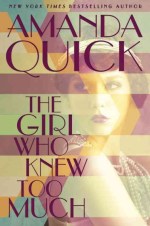
The Girl Who Knew Too Much
In 1930’s Hollywood, rookie reporter Irene Glasson (who found her previous employer murdered) discovers the body of an actress at the bottom of a California hotel pool. She investigates and finds herself drawn to Oliver Ward, a former magician. As the mystery deepens and more women die by drowning, Irene struggles to keep her own past a secret while she and Oliver hunt for the killer.

Jayne Castle (her birth name) is reserved for her stories of futuristic/paranormal romantic-suspense.

Illusion Town
Hannah West isn’t the first woman to wake up in Illusion Town married to a man she barely knows, but she has no memory of the ceremony at all. For that matter, neither does Elias Coopersmith, her new husband. All either of them can remember is that they were on the run. The coolly competent mining heir arouses her curiosity and interest. And even her dust bunny likes him! Set on the planet of Harmony in the future.

“I am often asked why I use a variety of pen names,” Krentz says.  “The answer is that this way readers always know which of my three worlds they will be entering when they pick up one of my books.”

Krentz’s three worlds often intermingle. Her Arcane Society series, books about men and women with paranormal power, spans all three of her worlds. Second Sight, written under the Amanda Quick pen name,  takes place in Victorian England at a time when the very old, very secret Arcane Society is about to run head-first into the 20th century. Flash forward to Jayne Ann Krentz’s White Lies, a tale of the Arcane Society in the 21st century. And then jump all the way to Jayne Castle’s Midnight Crystal, an Arcane society novel that takes place on the planet Harmony in the future. Characters from the novels that take place in the past are often referenced in the modern-day stories and the futuristic tales.

Not all her novels involve the paranormal. Many of her contemporary romance novels are stories of suspense in which the main characters must unravel a mystery that usually involves tracking down a killer.  Secret Sisters, River Road and Trust No One are three recently published works that fall into this category.


The library owns many of Krentz’s titles. if you enjoy romance and love romantic suspense and the paranormal, then any of Krentz’s three worlds will delight you.

Brief Biographies for Non-Fiction Readers

The CPL collection includes short biographies on major historical figures.  The Penguin Lives Series from publisher Penguin Random House is an innovative series that pairs celebrated writers with famous individuals who have shaped our thinking.  The broad and diverse subjects of these biographies come from around the world and from all walks of life.

Here is the complete list of the 28 ‘mini-biographies’ owned by the library:

Abraham Lincoln by Thomas Keneally
Andy Warhol by Wayne Koetenbaum
Branch Rickey by Jimmy Breslin
Buddha by Karen Armstrong
Crazy Horse by Larry McMurtry
Dante by R.W.B. Lewis
Elvis Presley by Bobbie Ann Mason
Frank Lloyd Wright by Ada Louise Huxtable
George Herbert Walker Bush by Tom Wicker
Herman Melville by Elizabeth Hardwick
Jane Austen by Carol Shields
Joan of Arc by Mary Gorden
Joseph Smith by Robert V. Remini
Julia Child by Laura Shapiro
Leonardo da Vinci by Sherwin B. Nuland
Mao Zedong by Jonathan Spence
Marcel Proust by Edmund White
Martin Luther by Martin Marty
Martin Luther King, Jr. by Marshall Frady
Mozart by Peter Gay
Napoleon by Paul Johnson
Pope John XXIII by Thomas Cahill
Robert E. Lee by Roy Blount, Jr.
Rosa Parks by Douglas Brinkley
Saint Augustine by Gary Wills
Simone Weil by Francine du Plessix Gray
Winston Churchill by John Keegan
Woodrow Wilson by Louis Auchincloss

They can be found on the Lower Level in the Biography section.

Dog Days of Summer

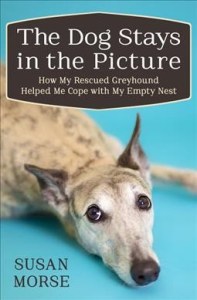
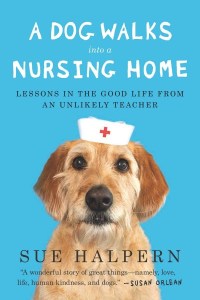
How our four-legged friends amuse, instruct, and inspire us! Many dog owners have been sufficiently inspired to write books dedicated to their canine companions, and their stories appeal to dog-people and non-dog-people alike. The bond between humans and their dogs is complex and unique, the power of an animal’s ability to change lives is uplifting and hopeful – a perfect combination for summer reading.

Wick-ed Action

I love a good action film. In going over lists of various film genres, I discovered I’ve seen the majority of the “best” action films, though I don’t always agree with what is considered an “action” film. I expect an action film to have – well, action: a lot of movement of characters or equipment, such as vehicles. It could be modern reality based – James Bond or Air Force One, or futuristic, such as Terminator, Alien, or Serenity, comic book heroes, or war-type films such as Commando or Rambo (my grandmother made me take her to every Stallone and Schwartzeneggar film that came out). There should be suspense, perhaps mystery, a vehicle chase, and almost always a good fight scene. Body counts are expected, but graphic violence isn’t required – Suicide Squad had a high bullet count, but little gore. History of Violence had a lower bullet count, but extremely graphic depictions. I don’t mind gore, but I won’t watch cruelty or sadism – I shut off Killing Season because it was focused on torture, not action.

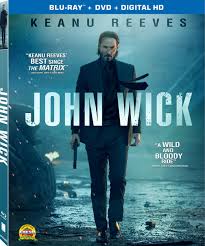
I adored John Wick, an action movie with Keanu Reeves as an assassin who tries to retire but is sucked back into the business against his will. It was just about everything I could want in a film – the script is good, the acting is good, the cast is excellent and the action is awesome. It’s just a good all-around film. I saw John Wick 2 on opening day (the DVD was released June 13) and – it was good, but not quite as great as the first. The action is impeccable – perhaps the best actual hand combat choreography I’ve ever seen (especially compared to the farce of Batman v. Superman). The script is good. But Wick’s lines, so eloquent before, are cut to choppy, often one-word sentences, which Reeves is not good at. It’s got a high bullet count, a high body count, and realistically graphic splatter from a man who was known for killing four people with a pencil.

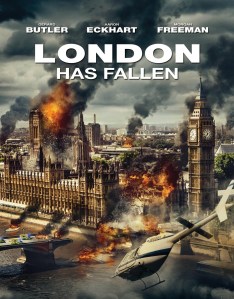
One thing I noticed about John Wick 2, though not as obvious as it was in London Has Fallen, a C+ film with multiple script flaws: the impact of videogames on choreography of action sequences. JW 2 has a wonderful flight/fight scene through the ancient underground tunnels of Rome, but you can see the influence of popular games such as Call of Duty or Grand Theft Auto. Run, stop, run, corner, shoot, shoot balcony. Man pops out of hall, bang. Run, stop, turn, shoot. It might fit the tone of the scene, but it’s very stiff and staged. London Has Fallen was much worse: the greatest action sequence of the film, the Big Rescue, and the movie looked as if you’d taken a clip from Call of Duty, overlayed it with actors, and CGI’d them together. Maybe it was my TV upgrading the blu-ray to 4K, but you could almost see pixelation in the edges of the graphics. You could have checked it off a list: guy pops up behind garbage can? Check. Drive-by shot through windshield? Check. Balcony? Check. It was so obvious that not only did it stand out, it was distracting, and you stopped watching the progression because you were so offset by the fakeness, a “Where-Have-I-Seen-This-Before?”

Is this the wave of the future? I hope not. Sure, you can look back at an early Bond film and see how cheesy the fight scenes are. You can almost hear them counting off in their heads: fist, block, step, kick, block, groin, throw, grab, twist… You can marvel at the slo-mo twists and turns of The Matrix sequences, but that’s not exactly reality, either. CGI is wonderful – it gave us Legolas sliding down oliphaunts , Avatar, and Inception. Almost all movies are made with a green-screen at this point, even comedies. But videogames are another empire – like trying to equate a romance film with porn: all the action, none of the reason. You can pop bullets all day, but why you’re doing it is a vague battle against “bad guys.” Relying on a videogame sequence kills the creativity needed. Think of the cliché of the good guy crouched down, pointing people what direction to go and then shooting at the target to cover them, or the stock western of a shootout on main street, with townsfolk peering through broken shutters. Action movies need to reinvent themselves by nature to keep themselves fresh and interesting.

Videogames are fun. Action films are fun. Sometimes movies based on a videogame are really fun (Warcraft, Tomb Raider, Mortal Kombat). But using videogame mentality in place of a more expensive or creative thought process – that’s cheating, and it doesn’t look nice.

Have you noticed the “videogame effect” in any other films?

You Know You Love Sci-fi if….

You know you love sci-fi if…

1. You see the words “Travel Program” in an email and think it says “Time Travel Program”.  (Yes, I did this! Wouldn’t that have been a great library program?)

2. Your collection of cosplay costumes is larger than your regular wardrobe. (Guilty.)

3. You have a working knowledge of Klingon. (Did you know that Klingon translations of works of world literature have been published? Just saying…)

4. You have strong feelings about the Star Wars versus Star Trek debate. (In the interests of not offending anyone, I’m going to give this a miss.)

5. When someone mentions the number 42, you laugh. (Every time.)

If this sounds like you,  you’re in luck! The Cheshire Library has a great collection of science fiction. Check out some of our new sci-fi arrivals:

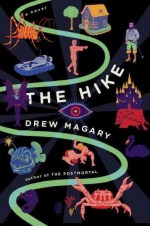
The Hike
by Drew Magary
When Ben, a suburban family man, takes a business trip to rural Pennsylvania, he decides to spend the afternoon before his dinner meeting on a short hike. Once he sets out into the woods behind his hotel, he quickly comes to realize he is falling deeper and deeper into a world of man-eating giants, bizarre demons, and colossal insects, and the path he has chosen cannot be given up easily.

A Night Without Stars by Peter F. Hamilton
On a routine space flight, Major Ry Evine inadvertently frees a captive vessel that crash-lands on the planet of Bienvenido carrying the last, best hope for human survival: a baby. But a far from ordinary one. The child not only ages at a remarkable rate but demonstrates knowledge and abilities far beyond those of Bienvenido’s humans. Hunted by all, she is a crucial link to humanity’s lost past–and a  future already almost out of reach.

Take Back the Sky by Greg Bear
Marooned beneath the icy, waxy crust of Saturn’s moon, Titan, Skyrine Michael Venn and his comrades face double danger from Earth and from the Antagonists, both intent on wiping out their growing awareness of what the helpful alien Gurus are really doing in our solar system. Venn must  journey far beyond Pluto where he will finally understand his destiny and the destiny of every intelligent being in the solar system.

The Stars are Legion by Kameron Hurley
On the outer rim of the universe, a galactic war has been waged for centuries upon hundreds of world-ships. But these worlds will continue to die through decay and constant war unless a desperate plan succeeds. Anat, leader of the Katazyrna world-ship and the most fearsome raiding force on the Outer Rim, wants peace. To do so she offers the hand of her daughter, Jayd, to her rival.

Navigators of Dune by Brian Herbert
Navigators, mutated by spice into beings far superior to normal humans, have made space travel possible: their prescient awareness allows them to foresee safe paths through the universe as starships “fold” space. Only one man knows the secret of creating Navigators, and he intends to use them to build a commercial empire that spans the galaxy.  What could go wrong?

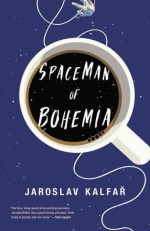
Spaceman of Bohemia by  Jaroslav Kalfar
Hoping to become a national hero, Czech astronaut Jakub Procha accepts a dangerous solo mission to Venus and faces unknown dangers, wavering sanity, Russian rivals, and a giant alien spider who engages him in philosophical conversations.