Build a Better Backyard

The concept of Outdoor Rooms isn’t new.  The idea of expanding living space to the exterior of our homes has been around a while but planning and building an outdoor space can be a challenge!

Nowadays there are some pretty lavish outdoor areas: multi-tiered decks, anything-but-square patios, gazebos, pergolas, paths, benches, bowers–you name it! Outdoor kitchens are trending in many backyards as families “add” onto their homes by incorporating the space around their houses into three-season living areas.

Getting outside is good for you. Disconnecting from your devices is healthy and there’s no more relaxing place than your own backyard.

If you need  inspiration, check out some of our newest titles on creating outdoor living spaces:

She sheds : a room of your own / Erika Kotite

Happy home outside : everyday magic for outdoor life / Charlotte Hedeman Guéniau

Backyard building : treehouses, sheds, arbors, gates and other garden projects / Jeanie & David Stiles

Gardens are for living : design inspiration for outdoor spaces / by Judy Kameon

Shed decor : how to decorate & furnish your favorite garden room / Sally Coulthard

Simple & stylish backyard projects / Anna & Anders Jeppsson

Porches & outdoor spaces / CountryLiving

Man-Oh-Manilow

Not everyone can keep a career going for fifty years. Desk workers get bored, factory workers get sold out, artists get stuck in a groove and lose inspiration (et tu, Thomas Kincade?) Musicians are not immune, either – anyone remember a recent hit song by Rupert Holmes, B.J. Thomas, or Debby Boone?

Thought so.

Some talents, however, can’t be squashed. Paul McCartney, Rod Stewart, Robert Plant, and Tom Petty are just a few of the extremely talented musicians who are still pumping out music in various new forms, rock, classical, jazz, or folk, after more than fifty years.

So is Barry Manilow.

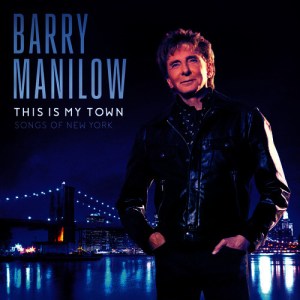
Barry Manilow first hit the charts forty-four years ago. An easy two generations. And with his latest album This is My Town: Songs of New York, Manilow shows he’s still at the top of his game.

Sure. Manilow isn’t for everyone. Say his name and images of white disco suits, sunshiny bright smiles, and Dr. Pepper come to mind (Manilow wrote or sang the hottest 70’s jingles for Dr. Pepper, McDonald’s, Band Aids, and more). Say you’re a Manilow fan and people smile politely and take a step sideways. But whether you like him or not, he’s a musical powerhouse.

In This is My Town, Manilow gives tribute to New York City. Maybe it’s refinement, maybe it’s age – he’s now 74, but his voice has gained a maturity, a deeper tenor that says he’s in command and making a hit is easier than crossing a New York City street. The album is short – just ten songs – and contains a variety of styles.  The first track, This is My Town, is breathtaking, a huge, glorious, Broadway-esque song that begs to be turned into an entire musical. Unfortunately, putting your best first means the rest of the album tends to fade.

Not that the tracks are bad; they just aren’t my style. Manilow drops into several tracks of smooth jazz, more in line with a Las Vegas lounge act than a hot New York club scene. While Manilow is no Petula Clark, his mashup of “Downtown/Uptown” is quite likeable. My only issue with the closing track of “NYC Medley” is that he starts with a cut of Billy Joel’s “New York State of Mind”; I wish he’d sung the entire song. He does end with a vibrant rendition of “New York, New York,” which is both fitting and energizing, reminding  you exactly why he is so popular.

Listen to it, even just for the first track. Barry, team up with a good playwright, and get that song made into a musical. It needs it. If you like smooth jazz, Broadway, cheerful music that is easy on the ear, New York City, or even just Barry Manilow, this is an album you won’t want to miss.

Which brings up the question – can Manilow write a song that isn’t upbeat? Sure, Could it Be Magic is in a minor key, and Mandy isn’t exactly a cheerleading tune (replace Tony Basil’s Mickey with Mandy?), but it’s not a throw-yourself-in-the-grave tearjerker like Goldsboro’s Honey or Clapton’s Tears in Heaven (written on the death of his five year old son). Chase Holfelder’s a musician who takes upbeat songs (like Girls Just Wanna Have Fun, or Disney’s Kiss the Girl), works them in a minor key, and turns them into haunting pop tracks. Maybe Manilow should be the next thing he tackles.

What’s Happening at Cheshire Library in September

Seems like summer just began, and now it’s over. Our Fall lineup of programs kicks off with some ways to help you get organized, get crafty, and get connected.


After school Zumba

Thursdays, Sep 7, 14, 21, 28, 4:00 – 5:00 PM 

Zumba® is an easy-to-follow, Latin-inspired dance-fitness program. Classes specifically for kids are formatted in a way to make getting fit fun. Kids can just let loose and be themselves. It’s an hour filled with energy and routines created to the latest music, like hip-hop, reggaeton and cumbia. For all ages, Parents and/or caregivers are welcome to participate with their children. No registration required.

B.Y.O.C.

Thursday Sep 7, 2017, 6:00 – 8:00 PM

Bring Your Own Crafts!  Coloring, stitching, drawing, stamping, scrapbooking, if it’s crafty, bring it in!  Come for a relaxing and destressing night of crafting. We will meet most every first Thursday of the month. There will be plenty of room to spread out for your crafts.  Some supplies will be provided for this adult program, no registration required.

Keepsakes: Sorting the Stuff of Memories 

Saturday Sep 9, 2017, 3:00 – 4:00 PM

Back by popular demand Sheri Bertoolini will build on her teachings Heart of Organization.  She will discuss what to do with sentimental or inheritance of family members earthly goods and are both faced with the question: which things do I keep?  Registration is required.

A Day in the Life of a 102d Infantry Soldier

Tuesday Sep 12, 2017, 6:30 – 8:00 PM

America entered World War I, the Great War, 100 years ago.  What was it like for the men and women who served?  Alan Crane of the 26th Yankee Division WWI Living History Group will lead the discussion. Seating is limited and registration is required.

Get a Handle on All that Paper

Thursday Sep 14, 2017, 6:30 – 8:00 PM

Do you waste time searching through piles and stacks of paper in order to find the one piece that you really need? Are you wondering where you put the bills you just received? This workshop will teach you how to create functional, efficient paper management systems for your home and office. Registration is required.

Rosh Hashanah with PJ Library and Temple Beth David

Friday Sep 15, 2017, 10:30 – 11:15 AM

PJ Library in cooperation with Cheshire Library and Temple Beth David present a family friendly Rosh Hashanah program – come read, sing and create an apples and honey dish with other families! All ages welcomed. Registration is required.

Create Greeting Cards with Rubber Stamps

Thursday Sep 21, 2017, 6:00 – 7:30 PM

Greeting cards are quick and fun to create – and even more fun to receive. Join Sue Bernier and create three beautiful greeting cards with rubber stamps, in, and Stampin’ Up products. All levels are invited to join. Space is limited, registration is required.

Community Connections Civic Engagement Fair

Saturday Sep 23, 2017, 10:00 AM – 12:00 PM

Are you looking to find local volunteer opportunities but can’t seem to find anything?  Are the volunteer opportunities you find not really appealing to you?  Do you want to meet fellow civic minded individuals? Let the Cheshire Public Library and the Cheshire High School help! Join us at the Cheshire High School for a civic engagement fair.  Local non-profit organizations as well as political groups will be onsite for you to learn how to get involved. This program will take place at the Cheshire High School 525 S Main St, Cheshire, CT.

Mark Twain in Connecticut

Tuesday Sep 26, 2017, 6:30 PM
Welcome Dr. James Golden of the Mark Twain House and Museum as he explains the importance of Connecticut and Hartford to Twain’s life and work, including his famous neighbors, such as novelist Harriet Beecher Stowe, travel writer and journalist Charles Dudley Warner, Civil War hero and senator Joseph Hawley, and female suffrage campaigner Isabella Beecher Hooker. Registration is required.

Job Search! Tune In & Tune Up!

Wednesday Sep 27, 2017, 6:00 – 7:30 PM

This 90-minute workshop will look at job searching from a wholistic perspective. Come prepared to address your barriers, review your job search skills and build a plan that re-energizes your search! At this interactive workshop, you will learn about:

  • Your emotional, social and/or physical barriers
  • How to move beyond your barriers
  • Winning strategies of the successful job seeker

Registration is required.

Organizing for Those Downsizing

Thursday Sep 28, 2017, 6:30 – 8:00 PM

Are you thinking of downsizing to a smaller home or apartment?  Are you overwhelmed on what to do with all the stuff you have accumulated over the years?   Join us as Elaine C. Turek, a declutter specialist,  gives you the techniques you need to organize the maze of clutter. Registration is required.


Miss Moore Thought Otherwise

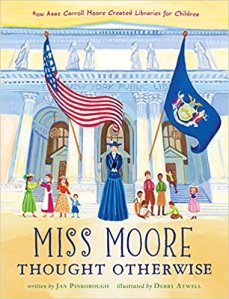
Miss Moore Thought Otherwise by Jan Pinborough is a true children’s story about one of the first children’s librarians. Anne Moore grew up in a time where many libraries were not free, and they were certainly not meant for children. Usually, children were not even allowed inside, especially girls. But Miss Moore thought otherwise.

Anne Carroll Moore was an independent thinker ever since she was a child. While other girls stayed inside and sewed, Anne was outside sledding on the hills. When other girls got married, Anne was working in her father’s office, learning how to be a lawyer. When other women stayed home, Anne moved to New York City, went to college, and got a job in a library.

Anne Moore changed the ways in which libraries viewed children. Under her supervision, libraries no longer demanded silence from patrons, children were allowed to take books home, child-sized furniture was built, more children’s books were published, rooms became more colorful, and people were brought in to do children’s programming. Libraries all around the world followed her example, all because she always looked at things differently.

Genre: Children’s non-fiction

Setting: Maine and New York in the late 1800s-early 1900s

Number of pages: 40

Themes: History of children’s libraries, and independent women

Objectionable content? None.

Can children read this? Yes. This book is appropriate for all ages. There are interesting things for the older kids to read, and the younger kids will enjoy the beautiful pictures.

Who would like this? Anyone who is interested in how children’s libraries developed into their current focus on library users, and anyone who enjoys learning about strong women.

Rating: Five stars

Food Fraud

The unofficial nickname of Connecticut is “The Nutmeg State.”  This stems from a story dating back to the mid-1800’s, whereby a southerner called foul that his order of nutmegs were made of wood – and they do look similar. One thought is that shrewd Yankee traders were cheating by carving wooden nutmegs to pad out a sale and thus increase  profit at the expense of the consumer, but another assumption is that the ignorant southerner didn’t know nutmegs had to be grated, and tried to eat them like a walnut.
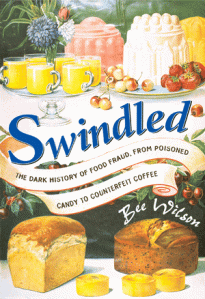
Either way, the practice of substituting one food – or non-food – substance for another has probably been around since the dawn of man. Egyptians did it. Romans complained about it. And all the way up until Victorian England, food adulteration could kill you.

That’s the subject in Swindled: The Dark History of Food Fraud, by Bee Wilson. The book was far more interesting than I thought, chronicling the history of food cheats, such as substituting chicory or wood shavings for ground coffee, or adding alum to cheap bread to make it whiter. The medieval guild system helped keep staple foods clean, but England gave up the guilds earlier than Europe, and suffered more malnutrition for it. Poisonings and deaths were common, as bad food was often colored with copper and arsenic to make it prettier. Finally, the microscope helped discern without a doubt what was real and what wasn’t, starting the “pure food” campaign that continues today. It wasn’t until World War II’s shortages that people began to embrace modern chemical foods, and the decline of modern health can be clearly linked to it.

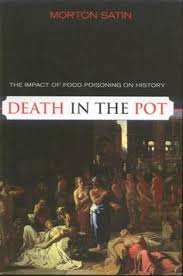
A similar book is Death in the Pot: The Impact of Food Poisoning on History, by Morton Satin. Satin, a retired expert in microbiology and food-borne illness, traces several turning points in history that were likely caused by accidental or deliberate food poisoning, from the Great Plague of Athens to the Salem Witch trials, right through modern day KGB tactics. Satin also reiterates Wilson on discussion of the “Poison Squads” of the early 20th century, human guinea pigs who consumed chemicals to see if they were safe to put into foods.

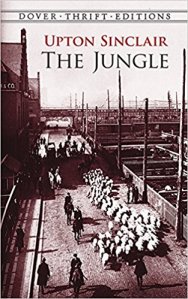
Perhaps the Granddaddy of the entire subject, dredged up in almost any conversation on food safety and purity, is the novel The Jungle by Upton Sinclair, the seminal book from 1906 that sent such shock through America that the Pure Food and Drug Act followed just five months later.  Sinclair, a socialist pushing for unions in the horrific meat-packing industry in Chicago, slipped inside the factories to investigate the situations for himself, and what he found was chilling, from rats mixed into the meat to allegedly men themselves that fell into the rendering vats. When President Roosevelt sent men to investigate, they, too, were appalled that it was true.  While he  didn’t bring many converts to socialism, he cleaned up the food supply as well as working conditions in the meat packing plants. As Sinclair said, “I aimed at the public’s heart, and by accident I hit it in the stomach.”

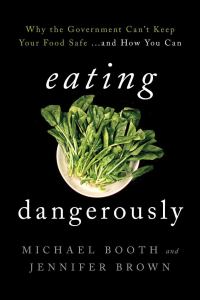
More modern – and thus frightening – is Eating Dangerously, by Michael Booth and Jennifer Brown, a balanced book which discusses modern food safety in the wake of so many deaths from salmonella, E coli O157, and other bacteria, that kill people, especially children and elderly, every year. Nothing makes you scrub your hands like reading about deadly germs, and, outside of undercooked meat or that dire warning to never eat your raw cookie dough, most of the deadliest food poisoning outbreaks have centered on produce that is eaten raw: lettuce, spinach, sprouts, cantaloupe, and peanuts. The authors acknowledge what farmers and the government already know: producers can’t wash every leaf of spinach adequately, even in the best scenario. Animals walk through fields. Birds poop in flight. Flies are everywhere. WASH YOUR PRODUCE. It grows in dirt. Wash it. The biggest problem with US Food Safety? Continuous cuts to the CDC, inspectors, and FDA, lawmakers afraid of industry lobbyists, and unclear departmental responsibilities. And the huge demand for out of season produce shipped from other countries, where growing practices aren’t as clean as the US.

It’s hard to separate sensationalism from fact when it comes to health. Today’s fact is tomorrow’s proven gimmick. Poisoned food, however, is a reality we live with each day, from undercooking our meat to leaving that mayonnaise sitting out, or the grim fact chickens are BORN positive for salmonella. Wash your food. Wash your counters. Wash your hands. Watch your food temperatures. Know what’s in your food – remember, cellulose can mean wood pulp, too. Still love raw cookie dough? Make it with Eggbeaters, which is pasteurized, and you won’t have to worry.