Our Head of Adult Services, Bill, has some Fourth of July facts for you:

The Fourth of July – also known as Independence Day – is the day we celebrate our country’s birthday. Think you know all there is to know about it? The library’s here to help you celebrate with some fun facts and other ways to learn about democracy and the founding of our nation!
Did you know?
“Yankee Doodle” is a well-known American song, the early versions of which date to before the Seven Years’ War and the American War for Independence. It is the official state anthem of Connecticut. The melody can be traced back to folk songs of Medieval Europe.
 In a bizarre coincidence, Thomas Jefferson and John Adams both died on July 4, 1826 — the nation’s 50th birthday. The two founding fathers and political adversaries died within five hours of each other.
Americans consume roughly 150 million hot dogs on the Fourth of July — enough to stretch from Washington, D.C. to Los Angeles five times!
More Fourth Fun Facts:
The Declaration of Independence:
 The Declaration of Independence wasn’t signed on July 4, 1776.
 On July 4, 1776, Congress officially adopted the Declaration of Independence, and as a result the date is celebrated as Independence Day. Nearly a month would go by, however, before the actual signing of the document took place. Most of the delegates signed on August 2, but several signed on a later date. (Two others, John Dickinson and Robert R. Livingston, never signed at all.)
One signer of the Declaration of Independence later recanted. On November 30, 1776, delegate Richard Stockton from Princeton, New Jersey was captured by the British and thrown in jail. After months of brutal treatment, a broken and sickly Stockton renounced his signature on the Declaration of Independence and swore his allegiance to King George III.
There is something written on the back of the Declaration of Independence.
In the movie “National Treasure,” Nicholas Cage’s character claims that the back of the Declaration contains a treasure map with encrypted instructions from the founding fathers, written in invisible ink. Unfortunately, this is not the case. There is, however, a simpler message, written upside-down across the bottom of the signed document: “Original Declaration of Independence dated 4th July 1776.” It’s thought that the text was added as a label.

Read more about it!
ADULTS:
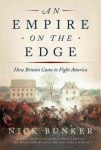




- An Empire on the Edge : How Britain Came to Fight America by Nick Bunker
- The Expanding Blaze : How the American Revolution Ignited the World, 1775-1848 by Jonathan Israel
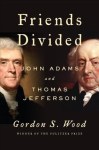
- Friends Divided : John Adams and Thomas Jefferson by Gordon S. Wood
- In the Hurricane’s Eye : The Genius of George Washington and the Victory at Yorktown by Nathaniel Philbrick
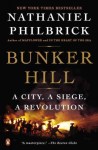
- Bunker Hill : A City, a Siege, a Revolution by Nathaniel Philbrick
- Revolution Song : A Story of American Freedom by Russell Shorto
- Valley Forge by Bob Drury and Tom Clavin
- The Penguin Guide to the United States Constitution : A Fully Annotated Declaration of Independence, U.S. Constitution and Amendments, and Selections from the Federalist Papers by Richard Beeman
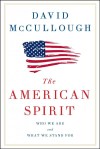
- The American Spirit : Who We Are and What We Stand For ; Speeches by David McCullough
- Democracy : A Case Study by David A. Moss
- This America : The Case for the Nation by Jill Lepore
- The Patriot’s Handbook : Songs, Poems, Stories, and Speeches Celebrating the Land We Love selected and introduced by Caroline Kennedy
KIDS:


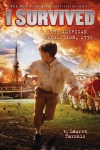
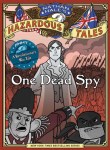

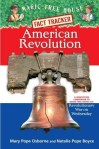
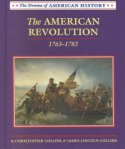

- The Thrifty Guide to the American Revolution : A Handbook for Time Travelers by Jonathan W. Stokes
- In 1776 by by Jean Marzollo
- The Fourth of July Story by Alice Dalgliesh
- I Survived the American Revolution, 1776 by Lauren Tarshis
- One Dead Spy : The Life, Times, and Last Words of Nathan Hale, America’s Most Famous Spy [text and illustrations by Nathan Hale]
- Revolutionary War on Wednesday by Mary Pope Osborne
- American Revolution : A Nonfiction Companion to Revolutionary War on Wednesday by Mary Pope Osborne and Natalie Pope Boyce
- The American Revolution, 1763-1783 by Christopher Collier and James Lincoln Collier
- Liberty or Death : The American Revolution, 1763-1783 by Betsy Maestro
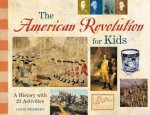
- The American Revolution for Kids : A History with 21 Activities by Janis Herbert
Cap off your Independence Day celebration with some fireworks! Here’s where to find them:
 Movie Matinees
 Travel Meetups
 Open Art Studio in the Library Loft
 Mindful Meditation
 Cat Tales – Writers Group
 Apollo 11 ~ Documentary
 The Bald Eagle
 That’s Weird!
 New Science From Mars
 Early literacy programs at public libraries have changed significantly over the years. Early literacy is everything a child knows about reading and writing before he or she can read or write, typically between the ages of 0-5. Traditionally, children’s library programs focused on the education of children. Today, these programs focus on the education of the parent or caregiver. If you attend
  You can sing in the car whenever you’re traveling and you never have to worry about other people hearing your singing voice.
 Caregivers have the most important role in developing a child’s reading skills, so it is important that you practice these techniques as often as possible. I encourage you to visit the library and check out some of the early literacy programs and resources that we have. To see our full events calendar, you can go to


 And don’t forget to sign up for our summer reading program for kids and adults :
  Legend has it “It” girl Lana Turner was “discovered” at a soda counter in 1937. Outside of perhaps Hedy Lamar, who invented some heavy military tech in WWII, most of the actors in the “glory days” of Hollywood were not known for smarts but for looking glamorous. Hollywood was the way for good-looking people from the back fields of America to break free and become wealthy and “cultured.” They had to speak well, dress well, stay thin, know their lines and marks, and obey the studio.
 who have never been considered heart-throbs (Steve Buscemi, Clint Howard, Vincent Schiavelli, Mike Smith, Linda Hunt, etc). Hollywood may have its mega-cash flow (A-listers make $15-20 million per film; Dwayne Johnson had 9 films 2016-2018), but many stars aren’t afraid to flaunt their smarts and get that college degree, knowing how fickle the acting business is. Jodie Foster has a degree from Yale, Natalie Portman from Harvard, Emma Watson from Brown, Mayim Balik has a PhD in Neuroscience, Gerard Butler a law degree, James Franco is finishing a PhD from Yale, and more.
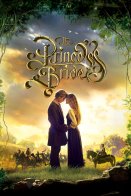
 speak and interviewing him briefly. Never heard of him? I’ll bet you have. Perhaps most famously he is known for the Inconceivable role of Vizzini in the cult classic,




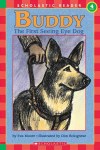
 It’s not just a snappy title – I really do have enormous faith and trust in a dog. My husband is blind and he (and I) depend every day upon the amazing skills of his guide dog Becca to help him navigate his world. I can go off to work and not worry about him, because I know he and Becca will manage perfectly well. They’re not stuck at home and are never bored. They go on long walks, golf, visit friends… at this point they actually have a much richer social life than I do! I am filled with wonder every time I see the two of them working together – she warns him of curbs, cars, and dangers both underfoot and at head height, she finds doors, counters, empty seats, and me (!) whenever needed and with great determination and enthusiasm.
 Once we were shopping at the grocery store, and a family with children walked by. The parents conscientiously cautioned their kids about not distracting Becca while she was working, telling them that she was a service dog. The littlest child wasn’t quite sure what a service dog was, but he used his own best judgement, and looked out for us for the rest of our shopping trip. He alerted everyone: “Don’t bother that dog- she’s a serious dog!” every time we crossed paths. It was adorable, but he was absolutely correct- Becca is a very serious dog when she is working.
 members of the military with their operations. Police dogs, often called K-9s, are trained specifically to assist police and other law-enforcement personnel in the line of duty. Search and rescue dogs have high energy, great stamina and focus. These highly trained animals serve in many different fields, including tracking, specialized search, avalanche rescue, and cadaver location. Therapy dogs offer emotional support to sick or injured persons, often visiting hospitals, schools, hospices, nursing homes and more. Service dogs are working dogs that have been specially trained to assist persons with disabilities.




 The Cheshire Library Blog