Today’s post comes to us from our Teen Librarian, Kelley:
 It’s not just a snappy title – I really do have enormous faith and trust in a dog. My husband is blind and he (and I) depend every day upon the amazing skills of his guide dog Becca to help him navigate his world. I can go off to work and not worry about him, because I know he and Becca will manage perfectly well. They’re not stuck at home and are never bored. They go on long walks, golf, visit friends… at this point they actually have a much richer social life than I do! I am filled with wonder every time I see the two of them working together – she warns him of curbs, cars, and dangers both underfoot and at head height, she finds doors, counters, empty seats, and me (!) whenever needed and with great determination and enthusiasm.
 Once we were shopping at the grocery store, and a family with children walked by. The parents conscientiously cautioned their kids about not distracting Becca while she was working, telling them that she was a service dog. The littlest child wasn’t quite sure what a service dog was, but he used his own best judgement, and looked out for us for the rest of our shopping trip. He alerted everyone: “Don’t bother that dog- she’s a serious dog!” every time we crossed paths. It was adorable, but he was absolutely correct- Becca is a very serious dog when she is working.
Other dogs besides our Becca do serious work that truly helps others too. These dogs all have natural talents that are carefully perfected with exhaustive training. Detection dogs have exceptional senses of smell. A detection dog is trained to sniff out a particular substance or group of substances such as currency, illegal drugs, explosives, blood, insects, and even cancer. Herding dogs work with various types of livestock, such as cattle, sheep, goats, reindeer, and even poultry. Military dogs assist members of the military with their operations. Police dogs, often called K-9s, are trained specifically to assist police and other law-enforcement personnel in the line of duty. Search and rescue dogs have high energy, great stamina and focus. These highly trained animals serve in many different fields, including tracking, specialized search, avalanche rescue, and cadaver location. Therapy dogs offer emotional support to sick or injured persons, often visiting hospitals, schools, hospices, nursing homes and more. Service dogs are working dogs that have been specially trained to assist persons with disabilities.
There are many other types of working dogs out there who have real jobs that they take very seriously, and new types of jobs for dogs are being developed all the time. You can read more about them with our doggone good list of books about inspiring dogs who love to work. Good dogs!!




- What the Dog Knows : The Science and Wonder of Working Dogs by Cat Warren
- Dogs of Courage : The Heroism and Heart of Working Dogs Around the World by Lisa Rogak
- Loyal : 38 Inspiring Tales of Bravery, Heroism, and the Devotion of Dogs by Rebecca Ascher-Walsh
- Every Dog Has a Gift : True Stories of Dogs Who Bring Hope & Healing Into Our Lives by Rachel McPherson with Deborah Mitchell
- Soldier Dogs : The Untold Story of America’s Canine Heroes by Maria Goodavage
- War Dogs : Tales of Canine Heroism, History, and Love by Rebecca Frankel
From the Children’s Room:


- Working Dogs by Josh Gregory
- Buddy, the First Seeing Eye Dog by Eva Moore
- Super Sniffers : Dog Detectives on the Job by Dorothy Hinshaw Patent
- Top Dogs : True Stories of Canines That Made History by Elizabeth MacLeod
 Financial Strategies for Successful Retirement
 Portrait Painting with Jack Montmeat
 New Movie Thursday: The Upside
 Travel Meetup
 Author Talk: How to Survive a Brazilian Betrayal
 The Popularity of Alexander Hamilton
 Passport Event
 Monday, June 17, 2019, 6:30 – 8:00pm
 Meditation – the WOW Factor
 Documentary: Hamilton: One Shot to Broadway
 Grow Small Backyard Fruits
 Hip-Hop Hamilton & The Founding Fathers
 Spring is here! As we put those tender seedlings into the ground, up sprouts the constant question: should I go Organic, or should I show up my neighbors by using Miracle Grow? Will I poison my children if I use it on my tomatoes? Is my neighbor’s cancer due to Round Up™, and did it blow over into my yard? If a lawncare company treated my grass, are my grass clippings poisoning my compost?
 strewn with mulch and recycled orange peels, when in reality it just means the land cannot have been treated with synthetic pesticides, fertilizers (including Miracle Grow), or GMOs for three years. Sounds nice, right? Except that two of the three companies licensed by the USDA to certify organic farms are for-profit (Oregon Tilth is not). The farmer wanting to be certified pays the company to license them. That’s like paying a teacher to give you a grade. The problem is worse overseas: 100 countries export “organic” produce to the USA, and though they are supposed to abide by US law, the countries inspect and license their own. And let’s not forget that a good percentage of “organic fertilizer” in many countries is
  Won’t chemical fertilizers like Miracle Grow poison me? No. Plants don’t care where the nutrients come from, horse manure or a green and yellow box. Plants use them the same way. The issues with Miracle Grow are 1) the concentration of ammonium phosphate may be too high for some plants. MG makes different formulas for roses, tomatoes, azaleas, etc. Choose the one you need. 2) The greatest issue for chemical fertilizers is that heavy rains can wash a recent fertilizing away. If twelve homes get washout, and it flows into the brook behind them, too high a concentration in water systems can cause algal blooms that suck up oxygen and kill wildlife.
 (chemical: glyphosate), and while the courts have said yes, Round Up causes cancer, the US maintains it does not. And there’s the difference: In Europe, you must prove a chemical is safe before it hits the market, and that’s hard to do. In the US, chemicals are presumed innocent and you must prove they’re harmful – which is really easy to sidestep even with math and science. In America, it is up to the manufacturer to show their product is harmful, not the government (Got that? The man making and marketing the product must show that what he’s selling is harmful.) When the people with highest exposure to Round Up were studied (ie, farm workers), they had a
 So, is organic worth it? Depends on what you’re willing to pay. The
  growing your own, organic or not, is a fun (and tasty) experiment anyone can do anywhere. Try growing some popcorn, or a yellow or brown or purple heirloom tomato. Pole beans are great for kids, because they grow incredibly fast and are very prolific, as are grape tomatoes (so why are they so expensive?).
 able Gardens : 24 no-fail plans for small organic gardens
 101 Organic Gardening Hacks : eco-friendly solutions to improve any garden



 Northeast Fruit & Vegetable Gardening : plant, grow, and eat the best edibles for Northeast gardens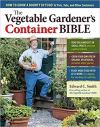
 Podcasting is rapidly becoming the newest and most easily consumable form of storytelling. As of June 2018, iTunes features more than 500,000 active podcasts, including content in more than 100 languages and over 18.5 million episodes. Now if you’re new to podcasts, this number can be overwhelming, how are you supposed to sift through a sea of seemingly endless possibilities to find the hosts, and topic, that keep you listening? To be fair, a lot of listening is trial and error. Maybe you don’t like the hosts tone, or their voice, or maybe the topic just doesn’t grab your attention, but stay vigilant, there are enough podcasts in the world for everyone, there must be one for you! I’ve compiled a list of podcasts that are easy to get into for beginners, based on (of course) your favorite books, all of which can be found at the Cheshire Public Library!





 Mars, our nearest planetary neighbor, has always fascinated science fiction writers here on planet earth. Science fiction about Mars began with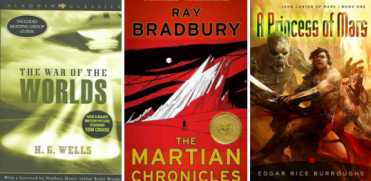
 Beginning in the 1970s, the first NASA and Russian probes and rovers obtained real scientific data about Mars. Once sci fi writers realized that there were no little green men on Mars, science fiction tackled more realistic Martian topics and focused on the challenges of human colonization on the red planet. A major sci fi theme was terraforming Mars to make it into a self-sustaining environment that was fit for life that developed on earth. Another major theme was what type of society and governmental structure might exist in a Mars colony.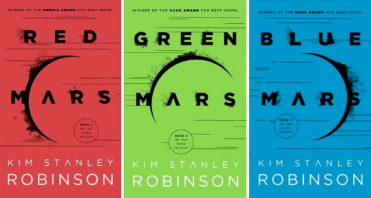
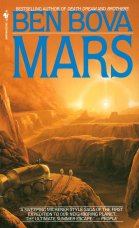 Ben Bova has written four related novels about Mars:
  The Martian
