(We originally published this list in 2014, updated here to include links to the digital versions of each title where available.)
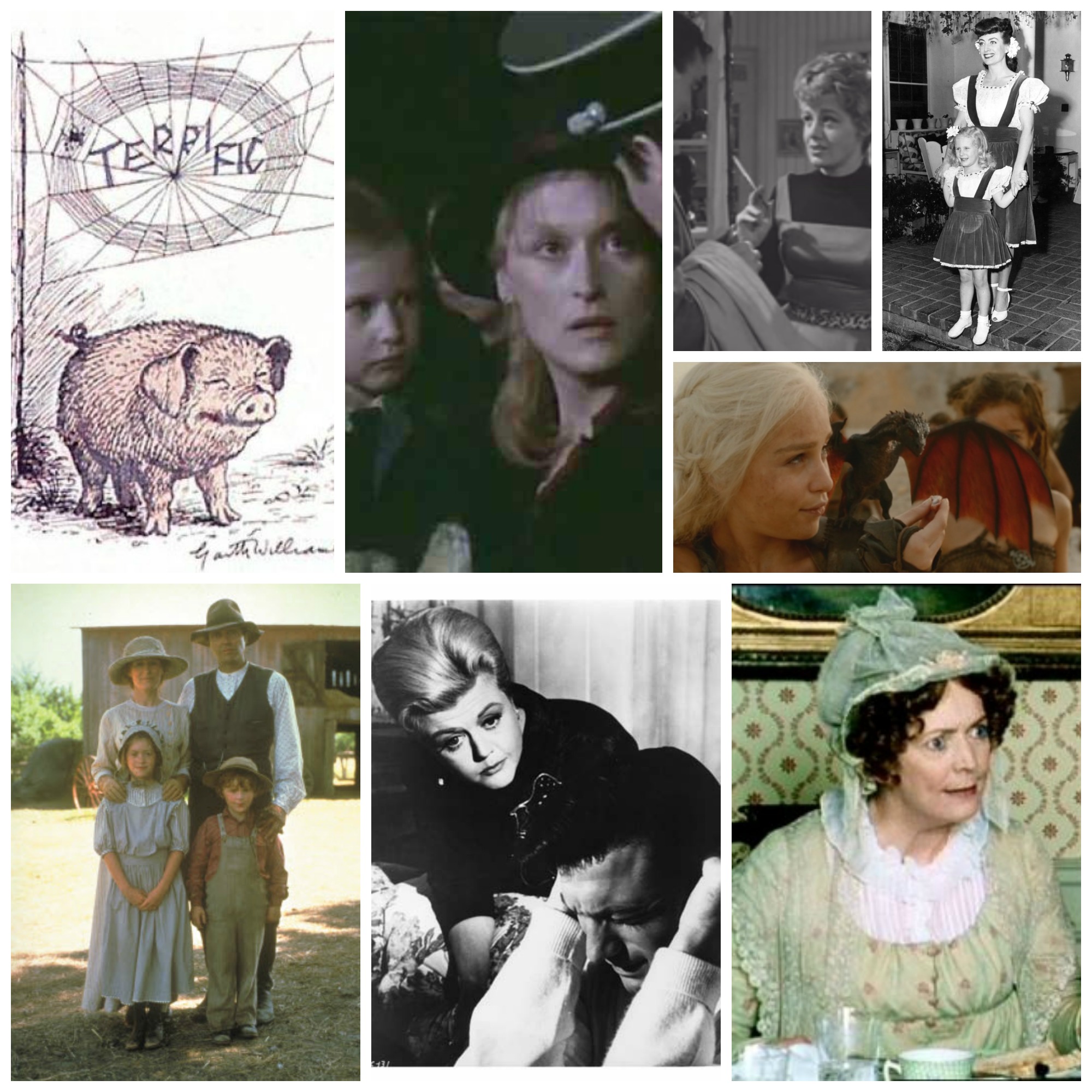
Mothers play a lot of roles in literature, as in life. They can be protectors and nurturers, oppressors and manipulators, or anything in between. One thing literary moms have in common, they are definitely memorable characters. For better or worse, here are some of literatures most memorable moms:
Sophie Zawistowski – Sophie’s Choice. Sophie, a Polish survivor of the German Nazi concentration camps, may be one of the most tragic characters in 20th century fiction. The plot ultimately centers around a tragic decision involving her children which Sophie was forced to make upon entering the concentration camp.
Mrs. Bennet – Pride and Prejudice. Poor, misguided Mrs. Bennet. With 5 daughters to marry off, she’s got a lot of worries. Her priorities may not always be in the right place, but she tries!
Charlotte Haze – Lolita. Falls squarely in the “bad” category. She invites a pedophile to live in her home, doesn’t seem to think his avid interest in her young daughter is a little weird, then gets hit by a car and leaves said daughter with the world’s most inappropriate guardian. Lolita didn’t stand a chance.
 Joan Crawford – Mommie Dearest. One of the yardsticks we measure bad mothers against, Ms. Crawford is probably known more for her poor parenting than for her lengthy film career. No Wire Hangers Ever!
 Molly Weasley – Harry Potter series. Mother of Ron, Mrs. Weasley is a desperately needed mother figure for our hero Harry. She is the center of a large and raucous family, by turns gentle nurturer and fierce defender. A mom with a magic wand is formidable indeed!
Ma – Room. In this shocking and surprisingly tender story, woman and her child are living in unspeakable circumstances. Jack’s mom, Ma, manages to make one small room feel like a whole world for her little boy, and is ultimately driven by her mother-love to try and break away from a very dangerous man.
Sarah Wheaton – Sarah, Plain and Tall. Sarah answers an ad for a mail-order bride, and travels from Maine to Kansas to meet her future husband and become and instant mother to his two children. A multiple award winner, including the 1986 Newbery Medal.
Charlotte – Charlotte’s Web.Charlotte the spider is very much a wise and loving mother figure to Wilbur the pig in this classic children’s book. She becomes his staunch defender, eventually saving his life. The end, with Charlotte’s life ending as her babies are coming into the world, is a total tearjerker.
 Daenerys Targaryen – A Song of Ice and Fire series. A rather non-traditional mom, Daenerys is the Mother of Dragons in George R. R. Martin’s wildly popular fantasy series. She’s had her hands full raising these fiery children. Whether she’s a good or bad mother has been debated, but there’s no doubt she’s her hands full raising these little monsters.
Eleanor Iselin – The Manchurian Candidate. Bad mom, no debate here. Creepy and evil, this mom is the mastermind of a sinister plot that involves controlling her brainwashed son to unwittingly act as an assassin on orders from the KGB.
 The Nutmeg Book Award is the “Children’s Choice” award for Connecticut, encouraging children across the state to read quality literature. Every year, on May 1, the new nominees for the award are announced. These nominees get grouped into four categories: Elementary (Grades 2-3), Intermediate (Grades 4-6), Middle School (Grades 7-8), and High School (Grades 9-12). Children then have a year to read the nominated titles and vote for their favorite.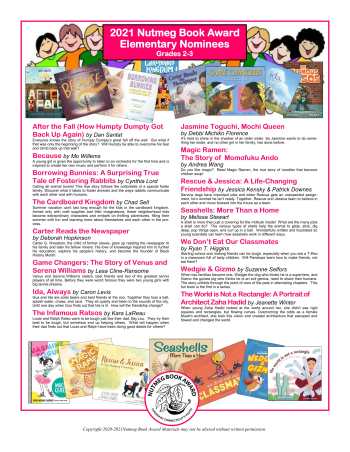


 Jackbox Games with Zoom
 Virtual Cheshire Anime Club
 Virtual Storytime
 Support Through Meditation
 Switch it up with CPL!
 Organizing Your Photos
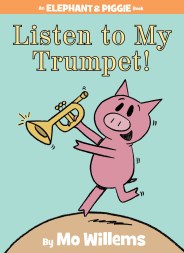 Creating Musical Readers: Listen to My Trumpet!
 Food Explorers
 Virtual Author Talk: A Fatal Finale
 Organizing & Decluttering Your Life
 Creating Musical Readers: Trombone Shorty
 Virtual Trivia
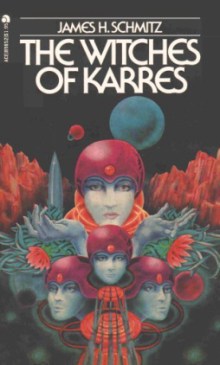 Recently I rediscovered a book that I loved long ago: The Witches of Karres by James H. Schmitz. I enjoyed it just as much, if not more than before. The book is a rarity among older science fiction, it doesn’t show its age with ridiculous predictions or stilted dialog and literally feels as if it could’ve been written yesterday. Partly, I believe that this is because it is as much a fantasy book as a science fiction book, but mostly it’s because the author’s writing is funny, imaginative, and clever, and his characters are delightfully quirky and likeable.
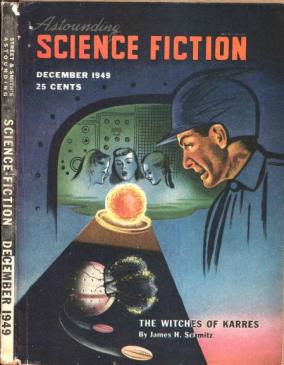 The Witches of Karres was originally a novelette published in the
  The series follows the larger than life character Joseph Allen Maldonado-Passage, also known as Joe Exotic, and his sprawling zoo, the Greater Wynnewood Exotic Animal Park. Joe has quite the history, with the law and with other big-cat owners. He twice unsuccessfully ran for public office, first for President of the United States in 2016 as an independent, and then for Governor of Oklahoma in 2018 as a Libertarian. In 2019, Maldonado-Passage was convicted on 17 federal charges of animal abuse (eight violations of the Lacey Act and nine of the Endangered Species Act) and two counts of murder for hire, for a plot to kill Big Cat Rescue CEO, Carole Baskin. He is currently serving a 22-year sentence in federal prison.