During the next week many people will celebrate the Jewish holiday of Passover (April 8-16) or the Christian holiday of Easter (April 12). Some will celebrate both, some neither. Either way, they are both prominent holidays on the calendar, and have more in common than you may have thought.
Both holidays fall on different dates every year, although they always fall in the springtime, and the dates often overlap. Do you know how the dates for each holiday are determined? Passover is a fixed date on the Jewish calendar, the 15th day in the month of Nisan. The Jewish calendar follows the cycles of the moon, while the Gregorian calendar (the most widely-used) is a solar calendar, using the Earth’s orbit around the sun as its measure of time.
This explains a little of why Passover begins on a different date on the traditional Gregorian calendar each year, but why Easter? You have to dig into histo ry a bit to understand the connection. Historically, the events of Holy Week (the week leading up to Easter Sunday) are are believed to have taken place place during Passover, a holiday which predated the birth of Christ by many centuries. Some theologians and historians have theorized that Christ was actually sharing a Passover meal with his disciples at what became known as the “last supper”.
So we know both holidays historically took place near each other on the calendar, but it wasn’t until the 4th century that things got standardized. Jewish scholars assigned Passover a fixed date – the 15th of Nisan – on their calendar, and the Christian Council of Nicaea decreed that Easter would be observed on the first Sunday following the first full moon after the vernal equinox. Then there’s Orthodox Easter, which goes by the Julian calendar (differing from the Gregorian calendar by 13 days). It can all get pretty confusing!

Need to convert dates from one calendar to another? Click here.
Whether you’re a religious observer, or just in it for the chocolate eggs, here are some fiction finds to kick back with during this holiday season:
Passover:
The Dinner Party by Brenda Janowitz. After Sylvia Gold discovers that her daughter has invited the very wealthy parents of her boyfriend for Seder, she agonizes over making the right impression, but when old memories and grievances surface, she learns the importance of acceptance.
All Other Nights by Dara Horn. How is tonight different from all other nights? For Jacob Rappaport, a Jewish soldier in the Union army, it is a question his commanders have answered for him: on Passover in 1862 he is ordered to murder his own uncle, who is plotting to assassinate President Lincoln.
Sunday the Rabbi Stayed Home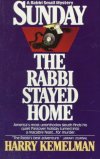 by Harry Kemelman. Rabbi David Small uncovers a Passover plot than undeniably raises more than Four Questions — threatening to ruin not only his holiday Seder but his role as leader of Bernard’s Crossing’s Jewish community.
Easter:
The Cruelest Month by Louise Penny. When the charming, seemingly idyllic town of Three Pines is rocked by a killing during an impromptu Easter séance at a local haunted house, Chief Inspector Armand Gamache is confronted by a web of baffling questions as he searches for a killer.
 Easter Bunny Murder by Leslie Meier. Spring has sprung in Tinker’s Cove, and Lucy Stone has a mile-long to-do list from painting eggs with her grandson, to preparing the perfect Easter feast, to reviving her garden after a long, cold winter. She hardly has time to search for a killer with a deadly case of spring fever.
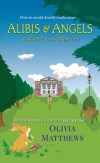 Alibis & Angels by Olivia Matthews. With the Lenten season fast approaching, Sister Louise “Lou” LaSalle looks forward to a final day of indulgence before giving up her favorite sweets. But one Briar Coast resident won’t get the chance to repent. Opal Lorrie, the mayor’s director of finance, just turned up dead in the parking lot of the Board of Ed.
 Music unites, inspires and comforts us. Songs express strength, joy and sadness. They are a common thread through our culture and our lives. Music unites us across the country. It ties us together whether we live in Connecticut, Florida or California – and these songs resonate across generations and offer hope in our troubled time.
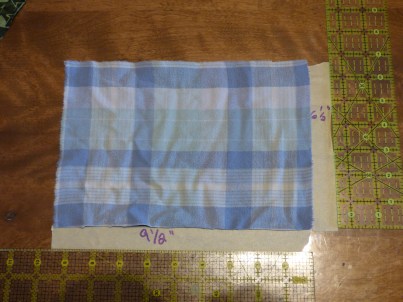
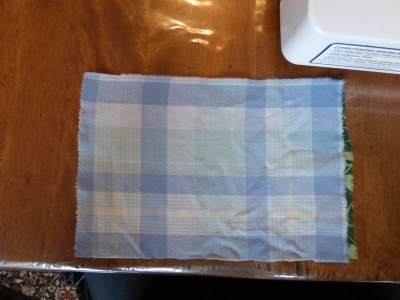
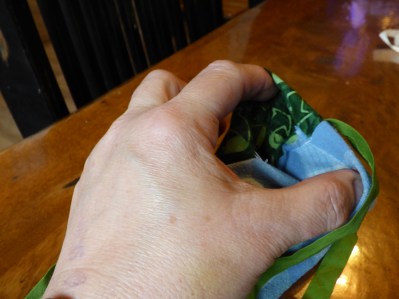
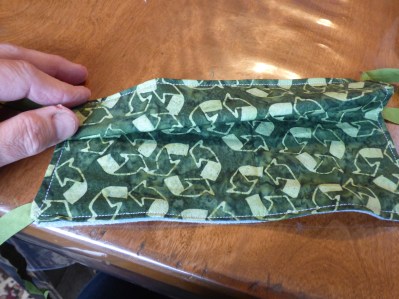
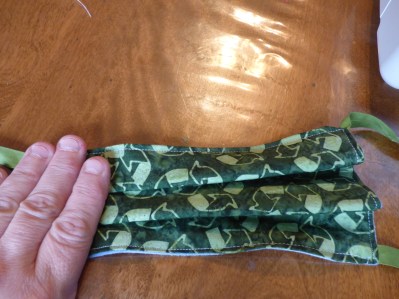
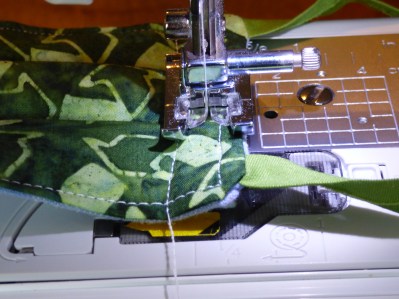
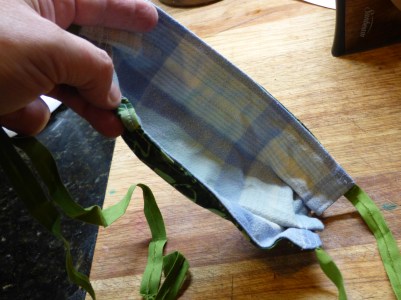
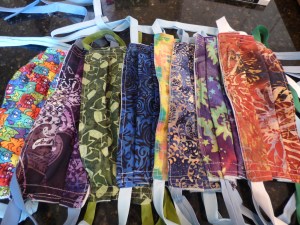 Face Masks are about to be all the rage, and there are all kinds of patterns out there. I’m an experienced seamstress with multiple awards for costuming and quilting, and *I* was having trouble decoding some of those patterns, even the simple ones. They were NOT written by pattern makers, that’s certain. So when a number of lesser-experienced people were struggling with them, I knew it was time to help out.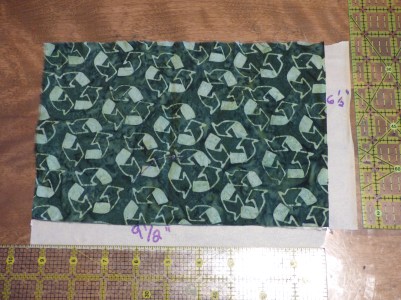













 Spring is here, and that means baby animals cavorting through backyards. Baby animals are about as heart-warming as mammals can get, and that’s a deliberate act on nature’s part. Round faces, big eyes, short noses, and large foreheads are the hallmark of babyness, and those features are deliberately meant to instill attraction and protection in
  animal all alone? They’re no less adorable than that puppy or kitty, and no one on your street has a baby squirrel or fox or raccoon, so why not keep it and raise it as your own?