Jenn Reads: The Spymistress

Female espionage in the Civil War is a new area of study, and one I am quite familiar with. My husband, Matthew, lectures frequently on four women who risked all for the sake of their country. It has been an immensely popular program, drawing crowds of more than 80 people on occasion.

The Spymistress by Jennifer Chiaverini was my pick for March for the girlfriend’s book club I run outside of the library. I had one sole purpose in selecting this book: to help me research and get ready for my own impression of a female spy in the Civil War. Matt and I have joined a reenacting group and we will be portraying a Pinkerton agent and a female detective. While this is a fictional account, I knew it would be helpful and readable for my friends.

The Spymistress tells the story of Elizabeth Van Lew, a Unionist living in Richmond during the time of the American Civil War. While not incredibly common, Unionists lived throughout the Confederacy, and Confederate sympathizers lived throughout the Union. Life was extremely difficult for these people, who had to toe a line so they

The Spymistress by Jennifer Chiaverini

wouldn’t be arrested, deemed traitors, or become social outcasts. Van Lew, 43 in 1861, lives with her mother, brother, sister-in-law, and nieces in their Richmond mansion. She’s outspoken and passionate and feels a deep need to help. But she’s not going to help the Confederacy. She’s going to help the Union.

Van Lew is able to get herself a pass for the prison holding Union soldiers and begins her work. Initially she comes bearing gifts of ginger cakes and food, medicine, and other creature comforts, but soon starts smuggling in and out information. Suspicions arise almost immediately with citizens of Richmond- why is Van Lew only helping Union prisoners? What about Confederate soldiers who have a need? Van Lew deftly uses the Bible and Christian theory, saying that Jesus taught his followers to love their enemy as themselves. And since this is a religious, church-going society, this explanation works. She also hosts a Confederate general and his family for several months in her home, puts on several lavish parties celebrating a particular regiment, and diverts suspicion.

But Van Lew’s best work comes at Libby Prison, where she is able to help Union soldiers escape. She sets up what is essentially a soldier’s underground railroad through a set of safe houses (using quilt blocks, hung outside on clotheslines). Van Lew also set up a chain of spies throughout the Confederate government and military, most notably Mary Bowser (whose real name may not have even been Mary Bowser), a freed slave who worked as a maid for Varina Davis, the first lady of the Confederacy, in the Confederate White House.

Van Lew and her chain of spies are unsung heroes of the Civil War and their stories deserve and need to be told. Van Lew truly did risk everything for her country and lived a very tragic life after the war. Imagine being a Unionist in Richmond after the war.

Chiaverini does an apt job of telling Van Lew’s story with accuracy and respect. Having already known most of Van Lew’s work and life, much in this book was not new for me. For those who are not familiar with Van Lew, I would imagine this being a welcome history and biographical lesson. Her narrative is easy to read and true to Van Lew’s character. This is not a “romantic” book, so those expecting a love story will not find one (Van Lew never married).

However, I was not wowed by this book. Perhaps because I knew too much already about Van Lew the book just fell flat. There was nothing wrong with the characterization, the narrative, or the story itself. Having listened to this book, maybe it was the reader.

Rating: 3 stars out of 5

See you in the stacks,

Jenn

May Is National Barbecue Month, National Hamburger Month and National Salad Month!

Who knew May was such a foodie month!  You can’t go wrong with barbecue or a juicy hamburger or a nice salad!  The Cheshire Library has just the books to get you started with some mouth-watering recipes!

barbecue

First, to clear up some confusion between grilling and barbecuing.  They are not the same!  Grilling involves cooking at intense heat (500 degrees or higher) for a short (an hour or less) period of time.  Barbecuing is cooking over low heat (225 degrees or less), and for a long period of time.  Below is a sampling of books the Cheshire Library has on barbecuing.

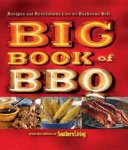
The Big Book of Barbecue: recipes and revelations from the barbecue belt.

Wicked Good Barbecue: fearless recipes from two damn Yankees who have won the biggest, baddest bbq competitions in the world.

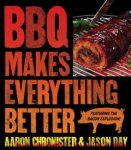
BBQ Makes Everything Better

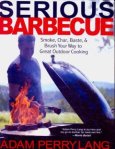
Serious Barbecue: smoke, char, baste, and brush your way to great outdoor cooking.

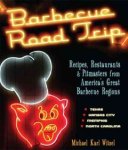
Barbecue Road Trip: recipes, restaurants, and pitmasters from America’s great barbeque

hamburger

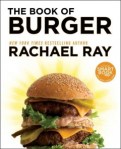
The Book of Burger

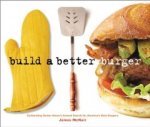
Build A Better Burger

salad

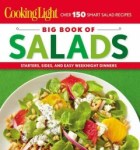
Cooking Light Big Book of Salads

Mediterranean Fresh: a compendium of one-plate salad meals and mix-and-match dressings

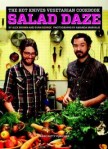
Salad Daze: the Hot Knives vegetarian

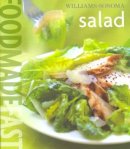
Salad (William Sonoma)

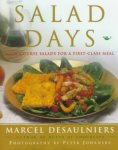
Salad Days: main course salads for a first-class meal

The Cheshire Library has all cookbooks in a separate section (641) in the Reference Department.  The books listed above, and other similar titles, are located in the 641.7 and 641.8 section.


10 Books We’re Looking Forward to in May

So many great books coming out in May, it’s hard to pick just ten!

Every month, librarians from around the country pick the top ten new books they’d most like to share with readers. The results are published on LibraryReads.org. One of the goals of LibraryReads is to highlight the important role public libraries play in building buzz for new books and new authors. Click through to read more about what new and upcoming books librarians consider buzzworthy this month. The top ten titles for May are:

  1. We Were Liars by E. Lockhart
  2. All the Light We Cannot See by Anthony Doerr
  3. The Bees by Laline Paull
  4. Delicious! by Ruth Reichl
  5. The Forgotten Seamstress by Liz Trenow
  6. Bird Box by Josh Malerman
  7. Bittersweet by Miranda Beverly-Whittemore
  8. Delancey: A Man, a Woman, a Restaurant, a Marriage by Molly Wizenberg
  9. Sixth Grave on the Edge by Darynda Jones
  10. The Blessings by Elise Juska

Not Your Typical Princess Picturebooks

My little princess is much more likely to get dirty playing in the mud than her big brother, but still enjoys the occasion frilly dress and ruffles. She is far from the typical princess, and I relish that. Like her, I was more likely to be found playing ‘boy’ games then rocking the pick dresses I was often decked out in. I love the independent nature and rough and ready style of my little girl, and want to encourage her to continue being herself and help both of my kids ignore the standard gender roles and do what makes them happy rather than conforming to the roles of pretty princess and brave knight.

In my efforts to find books that break the stereotypes, I have found a large number of books that feature princesses breaking the standard image. Some of the princess are up to saving themselves, and sometimes saving the prince as well, others are just content in being who they really are and encourage readers of all ages to do the same.

Lovabye Dragon by Barbara Joosse; illustrated by Randy Cecil. When a lonely dragon follows a trail of princess tears, a beautiful friendship is born. They march and sing, roar and whisper, hide and seek, then settle into snug companionship at bedtime.

The Pirate Princess by Sudipta Bardhan-Quallen; illustrated by Jill McElmurry. Tired of the royal life, Princess Bea boards a pirate ship and sets out for adventure on the high seas but soon finds she is not good at swabbing decks, cooking in the galley, or keeping watch from the crow’s nest.

Princess Peepers by Pam Calvert; illustrated by Tuesday Mourning. When the other princesses make fun of her for wearing glasses, Princess Peepers vows to go without, but after several mishaps–one of which is especially coincidental–she admits that she really does need them if she wants to see.

Part-Time Princess by Deborah Underwood; illustrated by Cambria Evans. A girl escapes her annoying little brother and the drudgery of school and home life when she travels to a magical kingdom each night and embarks on a series of adventures.

Princess Smartypants by Babette Cole. Not wishing to marry any of her royal suitors, Princess Smartypants devises difficult tasks at which they all fail, until the multitalented Prince Swashbuckle appears.

Thankfully books like these are becoming easier to find, books where a princess (or any girl) is measured by more than her looks and ability to be sweet and quiet. Here are some more great books about princesses that break the mold; The Barefoot Book of Princesses retold by Caitlín Matthews; illustrated by Olwyn Whelan, The Storytelling Princess by Rafe Marti; illustrated by Kimberly Bulcken Root, The Apple-Pip Princess by Jane Ray, Do Princesses Have Best Friends Forever? by Carmela LaVigna Coyle; illustrated by Mike Gordon and Carl Gordon, Not All Princesses Dress in Pink by Jane Yolen and Heidi E.Y. Stemple; illustrated by Anne-Sophie Lanquetin, Princesses are Not Quitters! by Kate Lum; illustrated by Sue Hellard, Princess Pigsty by Cornelia Funk ; illustrated by Kerstin Meyer; translated by Chantal Wright, The Paper Princess by Elisa Kleven, The Paper Bag Princess written by Robert N. Munsch; illustrated by Michael Martchenko, and Princess Hyacinth: The Surprising Tale of a Girl who Floated by Florence Parry Heide; illustrated by Lane Smith.


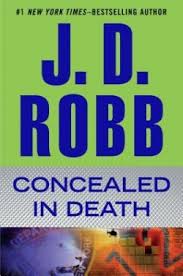
Linda Reads: Concealed In Death by J.D. Robb

conceal inI hesitated to read this book because I was very disappointed in Ms. Robb’s last ‘In Death’ title, Thankless in Death.  There have been rumors that her last few books (as J.D. Robb and Nora Roberts) were ghost written and there are arguments galore debating that topic.   But Concealed In Death was a great story.   It’s true the style of writing is a little different from earlier In Death books.  Many comments have been made about the main characters of Eve and Roarke being different.  But there have been over 50 stories written about Eve and Roarke and readers should expect that they are getting older, settling down, and wouldn’t have the same dynamic as before.

The book does lack the depth, excitement, and suspense of other In Death books.  It’s a quieter suspense, more thoughtful and introspective, with a lot more focus on the victims.  I actually found that a nice change.  There were a few twists in the story that gave the book a jolt when needed.  All in all, it was a very enjoyable read.

Summary of story:

In a decrepit, long-empty New York building, Roarke begins the demolition process by swinging a sledgehammer into a wall. When the dust clears, there are two skeletons wrapped in plastic behind it. He summons his wife, Eve Dallas immediately—and by the time she’s done with the crime scene, there are twelve murders to be solved.

The place once housed a makeshift shelter for troubled teenagers, back in the mid-2040s, and Eve tracks down the people who ran it. Between their recollections and the work of the force’s new forensic anthropologist, Eve begins to put names and faces to the remains. They are all young girls. A tattooed tough girl who dealt in illegal drugs. The runaway daughter of a pair of well-to-do doctors. They all had their stories. And they all lost their chance for a better life.

Then Eve discovers a connection between the victims and someone she knows. And she grows even more determined to reveal the secrets of the place that was called The Sanctuary—and the evil concealed in one human heart.