Linda Reads: The Collector by Nora Roberts

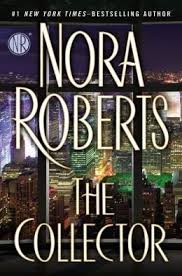
collectorAfter being disappointed in Ms. Roberts’  last book Whiskey Beach (reviewed here), I wasn’t sure what to expect from her newest, The Collector.  I’m happy to report I’m very pleased with this one.  It’s a bit different –  an intriguing mix of Ms. Roberts’ writing and J.D. Robb’s – making it an entertaining, edgy, romantic suspense thriller.

Lila Emerson is a quirky professional house-sitter and author of young adult werewolf books.  She enjoys living in other people’s homes and she takes great pleasure in scoping out her surroundings.  With the use of binoculars, she spies on the neighborhood and uses her vivid imagination to create stories about her neighbors.  Unfortunately, one evening she witnesses a murder.  The police conclude a boyfriend murdered his girlfriend and then took his own life.  However the boyfriend’s brother, Ashton, is sure they are wrong and enlists Lila’s help in finding out the truth.

Ashton is a famous artist and comes from a close, loving, somewhat dysfunctional family of considerable wealth – so different from Lila’s life.  Of course it’s predictable that they will fall in love, but that part of the story unfolds slowly, exquisitely, while the hunt for the truth leads to Faberge eggs, and murder.  There is a great supporting cast – Ashton’s best friend and Lila’s best friend turn out to have a history together and a lovely romance blossoms there.  The detectives working the case add some insight into the world of overworked cops with wit and humor.  We get a peak into the world of the rich and into the world of evil.  There are gruesome murders, ruthless assassins, touching love stories, great family interaction, art, antiques, cops, and humor all woven into an entertaining, engaging story.

It was fun to visit the life of a house-sitter, and an artist and learn about Faberge eggs.  Having no interest in those particular subjects, Ms. Roberts was able to keep me entertained, interested and engaged in the characters and story line.


Cast in Bronze – No Ordinary Ring a Ding


Everyone’s heard bells before, but have you ever heard a carillon? A carillon is a set of at least twenty-three bells in a belfry, which can be played singly or in concert with each other to make harmonies and chords. Carillons are played like a giant keyboard, with both hands and feet pressing on levers that pull wires that ring the bells. Because of their great size, carillons are considered the heaviest of all musical instruments (one low bell alone can weigh several hundred pounds!).

No one, of course, would ever think of traveling with an entire bell tower to give a concert – or, uh, would they? Enter the musical group Cast in Bronze, who do exactly that on the first carillon with a portable frame. Cast in Bronze’s carillon consists of thirty-five brass bells, with a total weight of four tons. Founded by master carillonneur Frank DellaPenna, Cast in Bronze actually tours around the country. They have played at Disney’s Epcot center, played a concert in New York for Pope John Paul II, played as part of Alice Cooper’s “Christmas Pudding” show, and played for NBC’s Today Show. I saw the bells in action myself at the New York State Renaissance Festival in Tuxedo, New York, several years ago. As a college bellringer who spent three years throwing levers in a tower, adapting music by Elvis and Journey to an octave of bells, I was enchanted.

Before you can say “Ho hum – ding, dong, ding, who cares,” Cast in Bronze is not just a churchbell ringing. The bells are just a highlight, with full orchestration and in some cases (like their fabulous rendition of O Fortuna, the same song currently on the Nutella commercial), with the backing of a choir as well. Here’s an excellent sample of their music, along with a great video of the bells in action:

Wait – what’s with the mask, you ask? DellaPenna’s philosophy is that the bellringer was never seen in the tower; all you knew was the beauty of the music, so he remains hidden beneath his phoenix mask, to draw your attention to the music, not the player.


Cheshire Public Library recently purchased two albums by Cast in Bronze – Best Day Ever, and The Voyage. My favorites to check out are of course “Tubular Bells,” the fabulous “O Fortuna,” and the ever-lovely “Carol of the Bells.” If you like music by Trans-Siberian Orchestra, David Garrett, 2 Cellos, any of the London Philharmonic playing Pink Floyd, Jethro Tull or similar pop-rock, if you like light instrumentals, bells, or even piano music, give Cast in Bronze a listen!


Lets Celebrate National Adopt a Cat Month!

Did you know that June is National Adopt a Cat Month? With that little tidbit of knowledge and the bonus of June 19 being Garfield the Cat Day, I thought I would share some great books about cats. So, I have two small lists for our feline friendly readers, one for adults and one for sharing with the youngest cat lovers.

1. Dewey: The Small-Town Library Cat Who Touched the World by Vicki Myron
2. Homer’s Odyssey by Gwen Cooper
3. Old Possum’s Book of Practical Cats by T.S. Eliot
4. A Street Cat Named Bob: How One Man and His Cat Found Hope on the Streets by James Bowen
5. Making Rounds with Oscar: The Extraordinary Gift of an Ordinary Cat by David Dosa
6. Cat Daddy: What the World’s Most Incorrigible Cat Taught Me About Life, Love, and Coming Clean by Jackson Galaxy
7. Cat Sense: How the New Feline Science Can Make You a Better Friend to your Pet by John Bradshaw
8. Dewey’s Nine Lives: the Legacy of the Small-Town Library Cat Who Inspired Millions by Vicki Myron, with Bret Witter
9. Cleo: The Cat Who Mended a Family by Helen Brown

This slideshow requires JavaScript.

Looking for cat books to share with younger readers? Well then you cannot go wrong with:

1. Millions of Cats by Wanda Gág
2. Splat the Cat by Rob Scotton
3. Skippyjon Jones by Judy Schachner
4. Puss in Boots by Charles Perrault
5. Dewey: There’s a Cat in the Library! by Vicki Myron
6. Chester by Mélanie Watt
7. Kitten’s First Full Moon by Kevin Henkes
8. Won-Ton: A Cat Tale Told in Haiku by Lee Wardlaw
9. Pete the Cat: I Love My White Shoes by Eric Litwin, James Dean

This slideshow requires JavaScript.

Jenn Reads: Brave New World

Brave New World by Aldous Huxley was our April pick for the Cheshire Cats Classics Book Club.

Before there was The Hunger Games series, Maze Runner series, Legend series there was Brave New World. Huxley was one of the first authors to write a dystopian novel and all others that follow are using him as an example. He did it first and did it best. I marketed this book as the original dystopian novel, because of how popular that genre is right now. And if you want to know where these authors have likely gotten their inspiration, you need to read this book.

A few fast facts about Huxley: he taught French at Eton and George Orwell was one of his students. When Orwell published 1984, he sent a copy to his former teacher, who

Brave New World by Aldous Huxley

basically called the book garbage. Huxley died on the same day as C. S. Lewis and JFK, and both of their deaths were overshadowed by the death of the president. And he was a friend to Igor Stravinsky.

Brave New World is a book that is so similar to our own, it is scary how real this book is.

Published in 1932, Brave New World takes place almost 600 years in the future. This is a world where your future is determined at the moment of your conception. Every single child born in this world is born of the test tube and is “raised” to be one of five classes- Alpha, being the best and highest class, or Epsilon, the lowest class. You have no mother, father, and are engineered for specific tasks. You will never grow old, you will never rise above your class, and you will have no apparent free will. Life will be full of pleasurable things however- sex, drugs, mass consumption, and more.

So what makes a dystopian novel different from an utopian novel? Dystopian novels are characterized by a horrible society headed towards oblivion, while utopian novels have an ideal society. Brave New World is a utopian novel on the surface, and to those living in that society, but it’s really dystopian. There is a huge reliance on technology, instant gratification, and lots of propaganda.

Huxley was disturbed at the path the world was taking: the world had been plunged into a great economic depression, fascism and communism were taking hold across Europe, and the Industrial Revolution was continuing to change the landscape of the world. What would happen to us as a people if all of this continued? Huxley feared that we would become a people slaved to technology, conditioned for pleasure and nothing else, and drugged to reality. If you’re thinking this sounds a lot like today’s society, you would not be that far off. However, lurking on the fringes were Savage Worlds with people who had lived a much different life.

If you read Brave New World today, there are many scenes that will likely make you think twice. One for me was the scene at what I’ll call the children’s center, where children are being conditioned for certain things. This particular set of children is taught to be afraid of loud noises. What is eerie is the level of manipulation that is going on- these children have no free will. Just like our own, the world of Brave New World is a throw-away society. Something breaks, is old, is damaged, is no longer wanted- throw it away!

Huxley had supposed it would take hundreds of years for the things he wrote about to come true, but if you look hard at the world we live in today, it is a lot like the one he envisioned. Hospice, cloning/DNA/biological engineering, helicopters, and e-books were just a few of the things he prophecized for the future.

Brave New World is easy reading, but do not be fooled by the simplicity of the language or writing. Huxley has a lot to say about how we live our lives with each other, with technology, and for the future.

Rating: 3 bookmarks out of 5

See you in the stacks,

Jenn


June is National Candy Month – Yum!

candyAmericans love their candy!  On average, we eat 25 pounds of candy per person, per year.  So, where did candy come from?

The word ‘candy’ comes from the Arabic “qandi”, meaning something made from sugar – and the principal ingredient in candy is sugar.   Before sugar was readily available, honey was the main ingredient.  Honey was used by the Egyptians, Greeks and Romans to coat fruits, flowers, and the seeds or stems of plants to preserve them as future ingredients.  During the Middle Ages, sweets were used as a medical treatment for digestive troubles and to mask the bad taste of other medicines.  Today’s cough drops and peppermint sticks are descended from this tradition.

The first candy came from Britain and France to the United States in the early eighteenth century.  Only a few colonists were proficient in sugar work, so only the rich were able to enjoy this confection.  By the 1830s, technology and the abundance of sugar opened up the candy market for all to enjoy.  In 1847, the candy press was invented which allowed for mass production.

Candy was generally sold unwrapped from carts in the street, where it was exposed to dirt and insects.  After the polio outbreak in 1916, candy was only sold in upscale candy stores in glass jars.  By 1925, wax paper, foil and cellophane were imported from France by DuPont, allowing candy to be packaged without human touch.

If you’d like to make your own candy, the Cheshire Library has a nice assortment of books located downstairs in the Reference department in the 641.853 section.  Some titles are:

The Sweet Book of Candy Making by Elizabeth LaBau

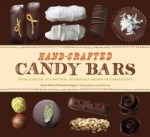
Handcrafted Candy Bars by Susie Norris

The Complete Step-by-Step guide to making sweets, candy and chocolates by Claire Ptak

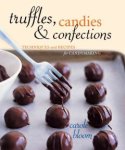
Truffles, Candies and Confections by Carole Bloom

You can also enjoy some adult mysteries with a candy theme:

Candy Cane Murder by Joanne Fluke

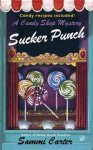
Sucker Punch (A Candy Shop Mystery) by Sammi Carter

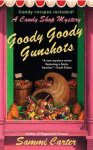
Goody Goody Gunshots (A Candy Shop Mystery) by Sammi Carter

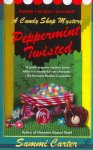
Peppermint Twisted (A Candy Shop Mystery) by Sammi Carter

Chocolate Dipped Death (A Candy Shop Mystery) by Sammi Carter

And for the children who want to learn a little bit more about candy:

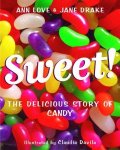
Sweet! The Delicious Story of Candy by Ann Love

The Hershey’s Milk Chocolate Fractions Book by Jerry Pallotta

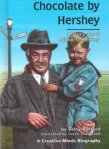
Chocolate by Hershey by Betty Buford