8 Reasons to Love Audiobooks (Or Give Them a Try)

Ever notice how your list of books to read never seems to get any shorter? For every title I cross off my list, three more appear, and at this rate it’ll take me at least 20 years to completely finish (I know because I’ve calculated it). I lose precious reading time to obligations like commuting, feeding myself, and keeping my living space somewhat clean. But I recently started listening to audiobooks, and I was able to turn those obligations into perfect opportunities to whittle down my list. I can now go through a book in one day and still get the laundry done!

We have a bunch of books on CD here at the library, but I prefer downloading audiobooks with the OverDrive app on my smartphone. I hook up my phone to my car stereo and don’t have to fumble with CDs while I’m on the highway, and I can keep listening indoors without having to drag a pile of discs with me. Another upside to downloading: no fees! Digital items disappear automatically when the loan period expires so you’ll never get hit with late charges, plus you can’t scratch them up or lose them under a car seat.

Here are some more reasons to love audio:

1) Multitask like a boss. Start up an audiobook and chores will suddenly become much more enjoyable. You can spend an afternoon reorganizing your closets while also tackling titles on your to-read list, like Graham Greene’s The End of the Affair read by Colin Firth. You may even find yourself actually seeking out more chores so you can continue listening!

2) Cut your screen time. After a long workday in front of a computer screen, do you really want to veg out in front of another glowing blue screen? Light mysteries like the books in Sue Grafton’s Kinsey Millhone series (A is for Alibi, B is for Body, etc.) offer nice background noise without disrupting your sleep.

3) A good narrator enhances your experience of the book. Mindy Kaling’s Is Everyone Hanging Out Without Me? is a funny book, but it’s even better when you hear her narration. An adept narrator enhances humor, drama, and other emotions in ways that you can’t replicate when your eyes are zooming across the page. Augusten Burroughs’ memoir Dry had me laughing hysterically one minute, then weeping the next.

4) Long drives seem shorter. It’s tough to stay alert when you’re driving alone, at night, on a really boring road (I’m thinking of you, New Jersey interstate). Picking up something long like The Book Thief by Marcus Zusak will keep your brain engaged and will make any long drive more endurable. Similarly, long workouts on the treadmill are less arduous when you have a plot to engage your mind.

5) Audiobooks are interactive. Have you been on the waitlist for the print copy of The Life-Changing Magic of Tidying Up by Marie Kondo? You can download it right now through Hoopla and experience the magic by listening to the audio – while simultaneously tidying up! I’ve also found myself talking out loud to characters in suspenseful audiobooks like Tana French’s The Secret Place.

6) Long, difficult books can be less daunting in audio. Everyone has those “I’d like to read it, but I probably will never get around to it” books. I would never realistically have finished the 917-page behemoth of Roots, but it only took me a couple weeks to reach the end of disc 24.

7) You might actually retain more. There’s a theory that you retain more information when listening because your brain doesn’t have to work as hard at creating imagery. I used to think I would have a problem remembering what happened in audiobooks, but then I remembered all the times I’d looked up from reading a printed book and realized I didn’t remember any of the last six pages. It’s just bound to happen, I think (no pun intended).

8) You’ll realize you’ve been pronouncing a word wrong your entire life. Interminable. Prerogative. Indefatigable. Cache. Aluminum has five syllables?! Oh wait, nevermind, the narrator is British.

Now here’s how to get the audiobooks mentioned:

Do you currently listen to audio books? If not, do you think you’ll give them a try?

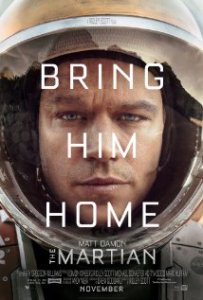
The Martian is Coming!

martiAll I can say is

WOW.

I have not read a book this gripping in ages. Oh, sure, I adore the Retribution Falls series by Chris Wooding, they are delightful and make my heart sing, but in The Martian, Andy Weir has managed to catch me in my weakest spot, a tale that feeds both my need for a good imagine-if story and lovingly nerdy details that set my non-fiction scientific brain on fire. I got to the end, and I wanted to read it all over again.

Very rarely do I seek a book out. They just happen to come to me in weird ways and tickle my interest enough that I open the cover (and covers are so VERY important. If it wasn’t for the fantastic artwork on the original Dragonlance books, I never would have entered a world that kept me trapped for more than ten years and ultimately sent to me to Lord of the Rings, which, really, is the Great-Granddaddy of the genre anyway). This time, I saw the trailer for the upcoming movie version of The Martian (release date: October 2, 2015), and was intrigued enough that when the book passed through my hands, I grabbed it.

Mark Watney is a crewman on the third manned mission to Mars. When a dust storm hits the crew on their way back to the lander, a piece of equipment snaps off and skewers his spacesuit, sending him reeling down a dune. His crew searches, but can’t locate him in the storm. His vital signs aren’t registering, and they all saw him toothpicked by that antenna. At the last possible second, they admit to themselves he’s dead and blast off to the mother ship while they can.

Only one problem.

He’s not dead.MV5BMTcwMjI2NzM2MF5BMl5BanBnXkFtZTgwNDkyNTI5NTE@._V1_SX214_AL_

The story revolves around Watney’s ability to survive the impossible, figuring things out as he goes, making everything out of the most basic substances, James T. Kirk channeling MacGyver. Because the supplies left behind were meant for six and he’s only one, he’s able to piece things along using his own ingenuity until NASA realizes he’s still alive. They try and mount a rescue mission, but NASA being NASA and twisted up in bureaucracy and safety margins, not everything is going to go by plan. The chances of Watney making it or not remain 50-50 right up until the final pages. This is a book that will make you sneak off every possible second to read just one more paragraph. From the first page, it will grab you and never let you go. By the end, you’re going to be looking around your house to see if you, too, have anything that can free oxygen or create water, and you will never look at potatoes the same way.

Knowing that in the film Matt Damon has the lead role of Watney makes you read the story in his voice. He is a brilliant piece of casting; the book seems written for him and he will be utterly convincing in the role. Check out the trailer here:  https://www.youtube.com/watch?v=Ue4PCI0NamI . Ridley Scott (Alien, Blade Runner, Thelma and Louise) is directing, and he is certainly adept at handling suspense. I’m waiting to see what they do with the soundtrack, since it’s a running joke through the book that the only music that was left behind is disco (can you imagine being stuck somewhere for months or years with nothing but a few tracks of disco to listen to? I love the Saturday Night Fever album, and I do love ABBA, but not for weeks on end!).

You don’t have to know science to enjoy the book. You don’t even have to know your Phobos from your Deimos. You just have to love a good pressure-cooker story. Don’t let this one skip your orbit.

Andy Weir, I love you.

Mars surface close to equator

Mars surface close to equator

Nonfiction Can Be Fun: 10 LOL Titles About Serious Subjects

I almost fell off my chair last week when a friend told me he never reads nonfiction because it was boring and no fun. As I madly started listing nonfiction books that I had enjoyed, he held up his hands. Although I had been, ahem, speaking vehemently, it was a gesture of appeasement, not protection. He liked to learn things, he explained, but couldn’t stand being bored by dry dissertations. He asked if I could come up with ten books that were instructional and fun.

You betcha!

Economics
BoomerangBoomerang: Travels in the New Third World by Michael Lewis
A candid and humorous look at the global financial crisis of 2002-2009. Lewis examines five cultures that were hit hard: The Icelanders, who wanted to stop fishing and become investment bankers. The Greeks, who wanted to turn their country into a piñata stuffed with cash and allow as many citizens as possible to take a whack at it. The Germans, who wanted to be even more German. The Irish, who wanted to stop being Irish. And the Americans, who were “Too Fat to Fly”.

Language
HolyHoly Shit: A Brief History of Swearing by Melissa Mohr
With humor and insight, Melissa Mohr takes readers on a journey to discover how “swearing” has come to include both testifying with your hand on the Bible and calling someone a *#$&!* when they cut you off on the highway. You will definitely learn some new words.


Grammar
eatsEats, Shoots, and Leaves: The Zero Tolerance Approach to Punctuation
by Lynne Truss
Former editor Lynne Truss, gravely concerned about our current grammatical state, boldly defends proper punctuation. Using examples from literature, history, neighborhood signage, and her own imagination, Truss shows how meaning is shaped by commas and apostrophes, and the hilarious consequences of punctuation gone awry. Think “sign fail photos” you see on Facebook.


Science
stuffStuff Matters: Exploring the Marvelous Materials that Shape Our Man-made World
by Mark Miodownik
Why is glass see-through? What makes elastic stretchy? These are the sorts of questions that renowned materials scientist Mark Miodownik constantly asks himself. Full of tales of the miracles of engineering that permeate our lives, Stuff Matters will make you see stuff in a whole new way. Investigate chapters titled “Invisible” and “Immortal” and the all-important “Delicious”.

Art
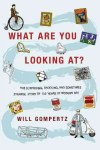
lookingWhat Are You Looking at? The Surprising, Shocking, and Sometimes Strange Story of 150 Years of Modern Art
by Will Gompertz
What is Modern Art? Who started it? Why do we love/hate it? And, most importantly, why does it cost so darn much? Will Gompertz takes the reader on a captivating tour of modern art, telling the story of the movements, the artists and the works that changed art forever. Refreshing, irreverent, and extremely accessible, this is art history with a sense of humor

Sports
peaceNow I Can Die in Peace: How ESPN’s Sports Guy Found Salvation with a Little Help from Nomar, Pedro, Shawshank, and the 2004 Red Sox
by Bill Simmons
No more worrying about living an entire life — that’s 80 years, followed by death — without seeing the Red Sox win a World Series. But then Bill Simmons began asking questions: Why didn’t he see it coming? Why didn’t it happen sooner? What was the key deal, the lucky move, the sign from above that he failed to spot? The result is a hilarious look at some of the best sportswriting in America, with sharp critical commentary and new insights from the guy who wrote it in the first place.
Philosophy
poohThe Tao of Pooh
by Benjamin Hoff
The how of Pooh? The Tao of who? The Tao of Pooh!?! In which it is revealed that one of the world’s great Taoist masters isn’t Chinese–or a venerable philosopher–but is in fact none other than that effortlessly calm, still, reflective bear. Learn the How of Pooh, the Now of Pooh and all about Cottleston Pie.


Geography
BlissThe Geography of Bliss: One Grump’s Search for the Happiest Places in the World
by Eric Weiner
Travel from America to Iceland to India in search of happiness, or, in the crabby author’s case, moments of “un-unhappiness.” The book uses a beguiling mixture of travel, psychology, science, and humor to investigate not what happiness is, but where it is. With chapter titles that assert that “Happiness is Boredom” and “Happiness is Somewhere Else” how can it miss?


History
MentalThe Mental Floss History of the United States: The (Almost) Complete and (Entirely) Entertaining Story of America
by Erik Sass with Will Pearson and Mangesh Hattikudur
Featuring episodes from history that fall under titles such as “Drunk and Illiterate” and “Time for Your Bloodbath” this book is an entertaining and educational look at America’s past. So if you are in an “Empire State of Mind” and are wondering about “Sex, Drugs, and Mocking Roles” take a smiling stroll through the pages of this offbeat, memorable book.

Travel
RoadWay Off the Road: Discovering the Peculiar Charms of Small Town America
by Bill Geist
Who wouldn’t love a travel book that has chapters like “The Church of the Holy BBQ”, “The Cow Photographer”, and “Frozen Dead Guy”?


Young Adult Spy Novels That Adults Can Enjoy Too

spystormDo you have a young adult reader that loves detective and spy novels but has moved past The Hardy Boys, Nancy Drew, and N.E.R.D.S.? Perhaps you love young adult fiction and a great spy novel. Well, whatever the case, here are some of the best spy and espionage books to be had in the young adult section of our library. Did I miss one of your favorites? Please mention it in the comments so that others can enjoy it as well!

1. Stormbreaker (Alex Rider, #1) by Anthony Horowitz
After the death of the uncle who had been his guardian, fourteen-year-old Alex Rider is coerced to continue his uncle’s dangerous work for Britain’s intelligence agency, MI6.spygallager

2. I’d Tell You I Love You, But Then I’d Have to Kill You (Gallagher Girls, #1) by Ally Carter
As a sophomore at a secret spy school and the daughter of a former CIA operative, Cammie is sheltered from “normal teenage life” until she meets a local boy while on a class surveillance mission.

3. H.I.V.E. Higher Institute of Villainous Education (H.I.V.E., #1) by Mark Walden
Swept away to a hidden academy for training budding evil geniuses, Otto, a brilliant orphan, Wing, a sensitive warrior, Laura, a shy computer specialist, and Shelby, an infamous jewel thief, plot to beat the odds and escape the prison known as H.I.V.E.

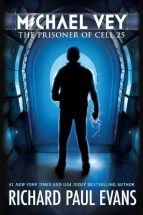
4. The Prisoner of Cell 25 (Michael Vey, #1)  by Richard Paul Evans
spycell25Michael Vey, a fourteen-year old who has Tourette’s syndrome and special electric powers, finds there are others like him, and must rely on his powers to save himself and the others from a diabolical group seeking to control them.

5. Independence Hall (I, Q, #1) by Roland Smith
Teenagers Q (Quest) and Angela go on tour with married rockers Blaze and Roger and, while in Philadelphia, become submerged in a world of danger when they discover the identity of Angela’s real mother, who is a former Secret Service agent.

6. Code Name Verity (Code Name Verity, #1) by Elizabeth Wein
In 1943, a British fighter plane crashes in Nazi-occupied France and the survivor tells a tale of friendship, war, espionage and great courage as she relates what she must do to survive while keeping secret all that she can.

spypalaceAs always, I have trouble stopping with just a few. There are just so many great books out there. So, if you have already read the books on my short list, here are some more recommendations; Palace of Spies (Palace of Spies, #1) by Sarah Zettel, Spy Camp by Stuart Gibbs, All Fall Down (Embassy Row, #1) by Ally Carter, The Lab (Agent Six of Hearts #1) by Jack Heath, The Recruit (Cherub, #1) by Robert Muchamore, Etiquette & Espionage (Finishing School, #1) by Gail Carriger, Alibi Junior High by Greg Logsted, Dancer, Daughter, Traitor, Spy (Dukovskaya #1) by Elizabeth Kiem, Two Lies and a Spy (Two Lies and a Spy, #1) by Kat Carlton, Also Known As (Also Known As, #1) by Robin Benway, A Spy in the House (The Agency, #1) by Y.S. Lee, Grave Mercy (His Fair Assassin, #1) by Robin LaFevers, Sekret (Sekret, #1) by Lindsay Smith, Fledgling (Jason Steed, #1) by Mark A. Cooper, SilverFin (Young Bond, #1)  by Charlie Higson, and Spy High Mission One by A.J. Butcher.

This slideshow requires JavaScript.

Top Picks: Outdoor Literature

mountains

“I now walk into the wild.”
― Jon Krakauer, Into the Wild

It’s summer, and everyone is busy enjoying the outdoors with friends and family. Nice weather brings swimming, hiking, camping, and picnics, and a greater appreciation for nature. With so much time outside, you may feel inspired to read some Outdoor Literature. The Cheshire Public Library has you covered!

Outdoor Literature encompasses several different subgenres of literature, including exploration literature, adventure literature, mountain literature, and nature writing. Here’s a small sample of the books we carry to get you started.

Jacket.aspx4 2


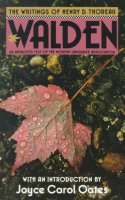
Walden by Henry David Thoreau

Originally published in 1854, Walden, or Life in the Woods, is a vivid account of the time that Henry D. Thoreau lived alone in a secluded cabin at Walden Pond. It is one of the most influential and compelling books in American literature.

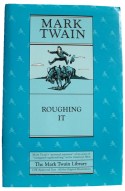
Roughing It by Mark Twain

Roughing It follows the travels of a young Mark Twain through the Wild West during the years 1861–1867. U.S. astronauts Frank Borman and Jim Lovell read Roughing It aloud to pass the time aboard NASA’s Gemini VII in 1965.

Into the Wild by Jon Krakauer

In April 1992 a young man from a well-to-do family hitchhiked to Alaska and walked alone into the wilderness. He had given $25,000 in savings to charity, abandoned his car and most of his possessions, burned all the cash in his wallet, and invented a new life for himself. Four months later, his decomposed body was found by a moose hunter. How McCandless came to die is the unforgettable story of Into the Wild.


5    63

Epic: stories of survival from the world’s highest peaks edited by Clint Willis

Epic is a collection of fifteen memorable accounts of legend-making expeditions to the world’s most famous peaks, often in the world’s worst possible conditions. Editor Clint Willis has gathered the most exciting climbing literature of the modern age into one cliff-hanging volume.

American Earth: environmental writing since Thoreau, edited by Bill McKibben; foreword by Al Gore

American Earth is an anthology of seminal American environmental writing from the past two centuries. It considers the influence on the ways in which people view the natural world and includes pieces by such figures as Henry David Thoreau, John Muir, and John James Audubon.

Wild by Cheryl Strayed

A powerful, blazingly honest, inspiring memoir: the story of a 1,100 mile solo hike on the Pacific Crest Trail that broke down a young woman reeling from catastrophe–and built her back up again.

If you care to delve deeper into the subject of Outdoor Literature, check out National Geographic’s list, Extreme Classics: The 100 Greatest Adventure Books of All Time.