The Amazing Short Stories of Ted Chiang

Our sci-fi guy, Harold, has an author recommendation for you:

If I could only recommend one science fiction author to read this year, it would be Ted Chiang. Though Chiang has written only 14 of short stories and one novella, his works have been critically acclaimed. His short story collections are Exhalation and Stories of Your Life.
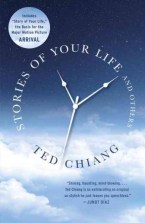
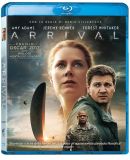
Chiang has been the recipent  of four Nebula awards, four Hugo awards, and won the John W. Campbell Award for Best New Writer (for his short story, “Babylon”).  His short story, “Story of Your Life,” was the basis of the film Arrival (2016). Exhalation was a Goodreads Choice Award in 2019. The New York Times named Exhalation one of the 10 Best Books of 2019. That’s a lot of awards that are, in my opinion, well deserved!

Chiang’s works are hard to describe since they are not conventional science fiction, per se. It’s a subtle distinction, but they are more fiction based on science than science fiction. President Obama, via Facebook, said that they are “a collection of short stories that will make you think, grapple with big questions, and feel more human. The best kind of science fiction.”

These are precisely articulated, well-crafted and thought-provoking stories. There are no rocket ships or cosmic battles. Instead, they expand upon and extend science, and technology that exists today. Two of my favorites from Exhalation are “Babylon”, a re-work of the Tower of Babel story, and “Merchant and the Alchemist’s Gate”,  about a merchant in ancient Persia who can travel through time to correct past mistakes.

Exhalation  and Stories of Your Life are available at the Cheshire Public Library as printed books.  Exhalation is also available as an ebook, and Stories of Your Life is also available as a downloadable audiobook. They are well worth reading. The film, Arrival, based on Chang’s “Story of Your Life”, is available on DVD and Blu-Ray.

Susan’s Best Reads of 2019

I don’t read as much as I wish I could; I just don’t have time at the moment. It doesn’t help that I wind up with sometimes 600 page books in my hands, and those take longer.  I never know what I’ll read next, and I read a bunch of good ones last year. Here are some of my favorites:

One of the two best books I read this year, I’ve already blogged about: Creativity, Inc, by Ed Catmull, was amazing. Not just a history of Pixar films, it’s also the best darned, most entertaining book on business and employee management you will read. Pixar is a 5-star company for a reason.

The second of my Best Reads this year is The Man from the Train: The Solving of a Century-Old Serial Killer Mystery by Bill James and Rachel McCarthy James.  From approximately 1898 to 1912, a serial killer traversed the US by train – coming through New Haven’s Union Station on the way – with an MO of bludgeoning his victims with the back of an axe. Because of communications at the time, few people were able to connect the murders. James painstakingly, with the utmost detail, traces the dozens of murders and examines them, deciding if they were likely by the same killer or not, and why. He traces the paths through the states and the seasons, chasing the trail to a man who was most likely the killer. By the time he’s done, you are convinced and amazed. I could not stop reading this book. I read it while waiting for the school bus. I read it while cooking. I would have read it in the shower if I could have. If you love a mystery, if you love history, if you love crime stories, this book is a must.

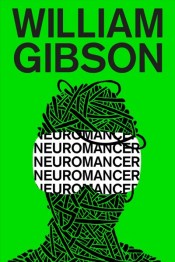
I’m only 30 years late in reading Neuromancer, the Hugo-winning cyberpunk novel by William Gibson. I can see why it is held as one of the greatest novels of our time. Gibson predicts and writes about today’s modern computers and internet and gaming – long before they existed. The scenarios he describes are both familiar and futuristic at the same time. While not only visionary, it’s written in  a flawless style and with realistic, interesting characters. If you loved Ready Player One or The Matrix (which has to have been influenced by this book), you will love Neuromancer.

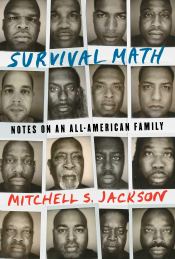
If you’re aware of social and racial issues, I strongly recommend Survival Math, by Mitchell S. Jackson. A professor of writing, in achingly beautiful prose worthy of Martin Luther King Jr., with the voice of a preacher without being preachy, Johnson breaks down the issues faced in his own family, examining how he came to where he is, how racism played into it without even being visible, and how despite all the odds, it’s possible to thrive. He covers harsh topics without flinching. The book is brilliant, spellbinding, and a superb read from a voice that soars with truth.

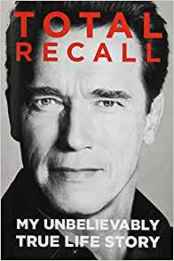
Far more than I expected, I loved Total Recall, an older door-stop of a biography on Arnold Schwarzenegger. From his birth in a tiny town in Austria (which still has only 2500 people) to his divorce from Maria Shriver, Arnold is witty and candid and down to Earth. No matter what you think of his politics or his movies or his personal life, this book may be older, but it was highly entertaining. His best friend just died in September of this year.

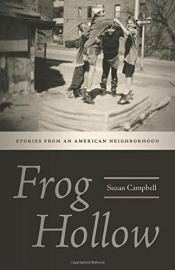
Not my favorite, but worth mentioning because of its local importance, is Frog Hollow  by Susan Campbell. Campbell, a former reporter with the Hartford Courant, digs into the history of the notorious Frog Hollow section of Hartford, and through tireless research shows the former glory of the neighborhood as not only an important area in Colonial times, but once a major manufacturing center (in 1898, Pope automotive made half the cars in the US). I was hoping for a deep sociologic dissection of the issues, but instead Campbell gives us an upbeat view from street level about the good aspects of Hartford and the people who live there, not just the doom and gloom of ad-selling news clips.

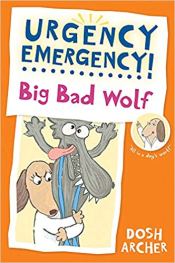
Last but not least, I’ll throw in a kid’s series you probably missed; with 18 years between my last two kids, I certainly did, but my youngest is so hooked on the British easy reader series Urgency Emergency! by Dosh Archer, I wound up buying most of them. The series is so witty and enjoyable you don’t mind reading them over and over again. Doctor Glenda, Nurse Percy, and the Pengamedics, in predictable melodrama, assist the maladies of Humpty Dumpty, The Big Bad Wolf, the Itsy Bitsy Spider, and many more. They are a delight. The library has several of the stories; be sure to read them all!

Sci-Fi at the Movies

Harold our sci-fi-guy is going to the movies in today’s blog post!

Science fiction is an extremely popular film and video genre and the Library has a sizeable collection of sci-fi movies, videos, and television programs.

If the Force is with you, you can check out a film from the most successful film series of all times: George Lucas’ Star Wars. The library has every Star Wars movie on DVD.  My favorite is: Episode V, The Empire Strikes BackThe library also has a collection of Star Wars novels that have spun off from the films.

You can share in the voyages of the Starship Enterprise with Star Trek.  The library has many of the Star Trek movies and television shows in their catalog including one of the most acclaimed Star Trek films: Star Trek II: The Wrath of Khan.  I enjoy all of them, but one of my favorites is Star Trek IV: The Voyage Home. The library also has the complete first season of the new Star Trek Discovery Series along with a great collection of Star Trek books that span all the Star Trek television series and movies.
If more contemporary science fiction movies are more your style, there are some great ones on the shelves at the Cheshire Public Library. Some favorites:

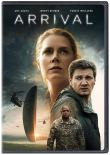
Arrival debuted in 2016. It stars Amy Adams as a linguistic professor recruited by the U.S. Army to figure out how to communicate with intelligent aliens who have landed on earth. It is based on the 1998 short story Story of Your Life” by Ted Chiang that is available from the Library as a downloadable audio book. His book of short stories, Exhalation, is also well worth reading.

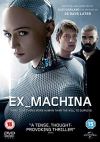
Ex Machina is a 2014 British science fiction film. IMDB.com says that it is about “A young programmer [who] is selected to participate in a ground-breaking experiment in synthetic intelligence by evaluating the human qualities of a highly advanced humanoid A.I.”

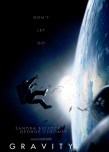
Gravity – This 2013 critically acclaimed film stars Sandra Bullock and George Clooney as American astronauts who are stranded in space because of a Shuttle accident and their attempt to return to Earth. It received 10 Oscar nominations and the Golden Globe Award for Best Director along with the 2013 Ray Bradbury Award.

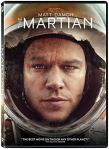
The Martian – This 2015 film one of my favorites. Directed by Ridley Scott, it is a modern-day Robinson Crusoe story about an astronaut, played by Matt Damon, who is stranded on Mars and his efforts to survive. It is based on the book by Andy Weir that is also and available in print and as an audiobook at the library.

Here are some other great science fiction movies that are available at the CPL:

If you have some favorites that I have missed that are in the library’s collection, let me know and I will add them to a future blog.


Three Outstanding Women of Science Fiction

Our sci-fi-guy, Harold Kramer, has some authors to recommend:

Ursula K. Le Guin

The world of science fiction and fantasy lost two of its best writers in recent years: Ursula K. Le Guin and Vonda McIntyre. Ursula K. Le Guin, who I consider one of the greatest science fiction and fantasy writers of the 20th century, died in 2018. She published over twenty-two novels, children’s books, and volumes of poetry and essays. Her works received many awards, including the Hugo, Nebula, and National Book Award.

Her novels centered around two main themes: gender and political systems. Her 1969 novel, The Left Hand of Darkness is about the effect of gender on culture and society,  It won both the Hugo and Nebula Awards for Best Novel.  An example of novel based on political themes is The Dispossessed: An Ambiguous Utopia, also a winner of both a Hugo and a Nebula Award.  It is about two planets orbiting next to each other – that have almost no contact between them and that have totally different economic and political systems – and the scientist who tries to unite the two worlds. I recently re-read The Dispossessed and it is still relevant today, particularly in our current political environment.
The Dispossessed is the first of six books in Le Guin’s Hainish Cycle. These novels are loosely connected by a people called the Hainish, who colonized earth and other planets hundreds of thousands of years ago. The Left Hand of Darkness is a Hainish novel along with Rocannon’s World and Planet of Exile.

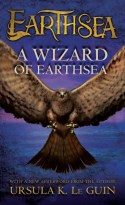
Le Guin also wrote The Books of Earthsea, a series that is decidedly more fantasy than science fiction. It full of magical events and it is the story of a young wizard – a sort of precursor to Harry Potter. The first book in the series, A Wizard of Earthsea, is still a great read. The Earthsea collection of novels and short stories won the National Book Award, a Newbery Honor, the Nebula Award, and many other honors.

Vonda McIntyre

Vonda McIntyre passed away in 2019. She was a prolific writer of science fiction novels, novelizations, screenplays and short stories and she was an acclaimed teacher of writing.  

She was well known for her Star Trek novels that include The Entropy Effect and Enterprise: The First Adventure. She also wrote the novelizations of Star Trek II: The Wrath of Khan, Star Trek III: The Search for Spock, and Star Trek IV: The Voyage Home.

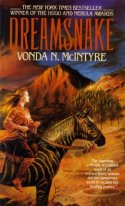
Most readers agree that Dreamsnake is McIntyre’s greatest novel and it is based on her earlier novelette, Of Mist, and Grass, and Sand. It is about Snake, a female healer who possesses miraculous powers and a magical Dreamsnake.

Octavia Butler

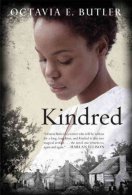
My final recommendation is Kindred by Octavia Butler. Kindred has been acknowledged as the first widely known novel by a black, woman science fiction writer. It is a time travel story about Dana, a black woman, who in 1976 is abruptly transported back and forth, from her home in California to antebellum Maryland, where she encounters her ancestors and becomes enslaved. At its core, Kindred is about white supremacy, slavery, and, ultimately, survival. Butler is also the author of Lilith’s Brood, a collection of three works: DawnAdulthood Rites, and Imago. These dystopian novels were previously published in one volume called Xenogenesis. The New York Times said thatThe complete series is about an alien species that could save humanity after nuclear apocalypse—or destroy it”—from “one of science fiction’s finest writers.

Science Fiction and the Red Planet

Today’s post is by our sci-fi-guy, Harold Kramer.

Mars, our nearest planetary neighbor, has always fascinated science fiction writers here on planet earth.  Science fiction about Mars began with Jules Verne and his 1865 novel From Earth to the Moon.  This novel, like many others by Verne, was accurate in concept, although technology in his day made many of his ideas impossible to execute.

During the first half of the 20th century, science fiction writers were obsessed with Martians. Belligerent Martians invaded earth in H. G. Wells’ novel The War of the Worlds. Orson Welles’s 1938 radio broadcast of War of the Worlds even caused a nationwide panic.  Written in 1950, The Martian Chronicles, a collection of strange and haunting short stories by Ray Bradbury were about an expedition to the red planet. Another early Mars novel was A Princess of Mars by Edgar Rice Burroughs who was a master of fast-moving adventure stories, whether in the jungle with Tarzan or on the moon with the Princess.  I have recently re-read some of these early science fiction novels and, while definitely not scientifically accurate, they still are good reads.

Beginning in the 1970s, the first NASA and Russian probes and rovers obtained real scientific data about Mars. Once sci fi writers realized that there were no little green men on Mars, science fiction tackled more realistic Martian topics and focused on the challenges of human colonization on the red planet.  A major sci fi theme was terraforming Mars to make it into a self-sustaining environment that was fit for life that developed on earth. Another major theme was what type of society and governmental structure might exist in a Mars colony.

One of the first works that explored these ideas was The Mars Trilogy by Kim Stanley Robinson. This series consists of three books:  Red Mars, Green Mars, and Blue Mars. Red Mars won the Nebula Award for Best Novel in 1993.  Blue Mars won the 1997 Hugo Award. The trilogy begins with Red Mars when the first colonists arrive on Mars and simply try to survive. Green Mars and Blue Mars and continue the story one hundred years in the future when Mars has been terraformed into a green and politically independent world. My favorite of the three is the first book, Red Mars.

Ben Bova has written four related novels about Mars: Mars, Return to Mars, Mars Inc. and Mars Life. The planet Mars is the fourth  stop on his Grand Tour – a series of related novels that take place in the 21st Century and that focus on exploration and colonization of every planet in our solar system.  I enjoy reading Ben Bova’s books because of his clear writing, scientific imagination, and expansive ideas.

The Martian by Andy Weir, written in 2011, is my favorite book about Mars.  I couldn’t put it down once I started reading it.   It won the Goodreads Choice Award for Best Science Fiction in 2014 and the Audie Award in 2015 for best science fiction audio book. The Martian is a modern-day Robinson Crusoe story about an American astronaut who is presumed dead but who is actually alive and stranded on Mars. What makes it so interesting is that the technology is highly credible, and the writing is taut. It was made into a movie in 2015 that was directed by Ridley Scott and starred Matt Damon.

​Many other great science fiction novelists have written about Mars.  These include Greg Bear’s Moving Mars and Arthur C. Clarke’s The Sands of Mars. Also notable are Larry Niven’s Rainbow Mars and Robert Heinlein’s classic, Stranger in a Strange Land.

Although this is a science-fiction blog post, I would like to mention a non-fiction book about Mars and planetary exploration and colonization. It is called The Future of Humanity: Terraforming Mars, Interstellar Travel, Immortality, and our Destiny Beyond Earth, by physicist Michio Kaku.  This scientifically based work is an extraordinary projection of the future of humanity as it moves from earth to the stars.