As Halloween quickly approaches, I find myself dipping deeper into the pool of horror films, books and media that always seems to be present, any time of year you go looking for them. I didn’t come to love horror organically, as an over anxious child and teen I was somehow drawn to true crime documentaries, sneaking peeks at the coverage of the OJ Simpson trial, and staying up late to watch E! “Murders of Hollywood”. My f irst experience with horror movies was staying up in my friends living room, her German Shepard was half blocking my view of The Ring on VHS, which was particularly ironic. So why do we seek out things that scare us, instead of those that comfort us?
The easy answer is : We like to be safe. If we expose ourselves to things that scare us in a safe environment, it’s like going on a roller coaster. Your endorphins spike, your heart rate races, but in two minutes it’s over, you’re back on solid ground. I’d rather know how horrible the world can be so I can prepared for what actually goes bump in the night.
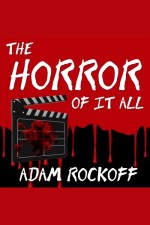
The Horror of It All is a memoir from the front lines of the industry that dissects the hugely popular genre of scary movies.
Horror movies and novels are much the same. People chose entertainment because they want to be affected. You choose a romance novel because you want to feel the giddy rush of love, you choose action because you want to feel excitement. Horror is another sensation driven genre. You want to experience the rush with none of the consequences of the situation, which lets you enjoy the sensation and adrenaline spike. Quoted from a 2004 paper in the Journal of Medical Psychology by Dr. Glen Walters “the three primary factors that make horror films alluring are tension (generated by suspense, mystery, terror, shock, and gore), relevance (that may relate to personal relevance, cultural meaningfulness, the fear of death, etc.), and (somewhat paradoxically given the second factor) unreal-ism.” – (Walters, 2004)
So if you’re like me and looking for a thrill (while at the same time being wrapped up in a blanket fort for safety) then you’ve come to the right place for some recommendations. All of the things I recommend are available for checkout at the Cheshire Public Library, so let’s tuck in to my favorite genre:
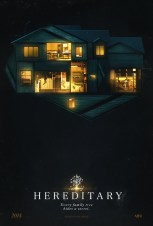 Hereditary – When Ellen, the matriarch of the Graham family, passes away, her daughter’s family begins to unravel cryptic and increasingly terrifying secrets about their ancestry. The more they discover, the more they find themselves trying to outrun the sinister fate they seem to have inherited. Making his feature debut, writer-director Ari Aster unleashes a nightmare vision of a domestic breakdown that exhibits the craft and precision of a nascent auteur, transforming a familial tragedy into something ominous and deeply disquieting, and pushing the horror movie into chilling new terrain with its shattering portrait of heritage gone to hell.
This movie is fantastic, Ari Aster is a master of portraying agony in a way I haven’t seen in any other movie thus far. His characters experience the  broadest range of emotion, and each scene is raw and beautifully acted. It’s really a treat to watch, both for the performances, and the scares. Prepare to have expectations subverted with this movie, Ari Aster is one to watch as a newcomer to the horror genre, and A24 is producing some outstanding content as well. If you haven’t seen it yet, treat yourself to Hereditary, as well as his newest film, Midsommar.
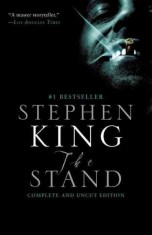 The Stand – The Stand takes place in a post-apocalyptic world triggered by the breakdown of society following the release of a biological weapon. The weapon is a virulent strain of influenza that decimates the population. It follows a few key characters across the United States, attempting to survive and make peace with the people they’ve become after the world has ended. It has elements of horror, elements of suspense, and in my opinion it’s one of the best post apocalyptic fiction novels ever written. Above all else though, it’s a thoughtful, well paced book. (One can’t have a list of horror titles and not mention King at least once, if not multiple times – The Tommyknockers, Salem’s Lot, The Shining…) The characters feel real and well flushed out, and the antagonist is ominous without becoming comic. It’s my go-to summer read, and I keep a paperback copy in my car at all times, so I can dip back in whenever the mood strikes, which is often.
 I saw Gone Girl before I had read the book (I know, the cardinal sin) and I had no context going into it. Gone girl? Sounds like a witty comedy about a girl who’s traveling cross country! I was very wrong. I had no idea about the twists (which I will keep to myself) and I had no idea what a treat I’d be in for when I read the book. They both play off each-other beautifully, and the book is written with punch and one liners that stick with you. The cool girl speech (look it up) is worth the price of the paperback alone. You should definitely treat yourself to this book, as well as Gillian Flynn’s two other titles Dark Places and Sharp Objects.
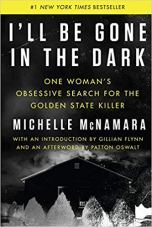 If you’re looking for something with real world ties, look no further than the masterpiece that is I’ll Be Gone in the Dark by the late Michelle McNamara. McNamara devoted a larger part of her life to sitting up in her daughters old playroom, surrounded by stuffed animals and tracking who would be come to known as the Golden State Killer. Sure she had a day job, but she also somehow convinced retired detectives from the case to send over boxes of case files. She went over phone records, emails, connected leads to perps, and made some of the most important headway the case had seen since it’s beginning in 1976. The case had been unsolved for ten years, and just recently closed with the arrest of a 73 year old Joseph Deangelo, a retired policeman. The book is well written, well researched, and fascinating if you want to know more about detective work, but never had the stomach to do it yourself. You feel yourself dissecting the facts along with Michelle, and the fact that she died before the case was solved makes the ending all the more poignant. It’s definitely worth the read, especially if you’re a fan of true crime and cases being solved.
Dipping into horror as a person with a chronically small comfort zone is more than just a little ironic. It’s taken me twenty five years to accept that strange part of myself, as a small portion of a largely complex whole. As an artist, a writer, and a creative, I find the darkness just as interesting as the light. Luckily, there are plenty of people who agree with me, and the horror genre is booming. Last summer, horror films accounted for 10% of cinema visits by moviegoers under 30-years-old. I’ll support any genre that encourages its artists and producers to push boundaries and visuals, and luckily, horror is doing just that.

 Almost Everything
  Outer Order, Inner Calm
  Let Love Have the Last Word
  Everything is F*cked
  Where the Light Enters
  Nanaville
  Brave, Not Perfect
  The Path Made Clear
  Gmorning, Gnight!
 On Being Human
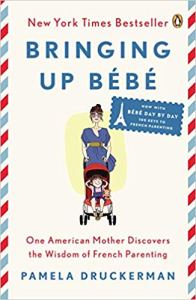
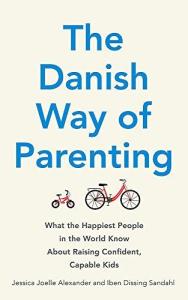
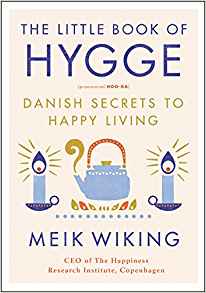
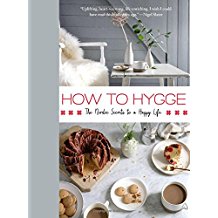
  Perhaps one of the fastest ways to pick a fight with a stranger is to comment on their parenting style. Around the country, let alone around the world, each culture or region is convinced only their way is right. Yet, American education has been in decline for years, currently ranking 27th in the world.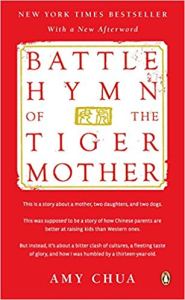


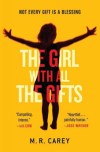 The Girl with All the Gifts




 of 2000, he admitted to being a cross-dresser while drinking in a bar. When he left the bar, five men beat him so badly that he spent nine days in a coma, and forty days in the hospital relearning how to walk, talk, and behave. He had permanent memory loss of everything before the beating, and severe post-traumatic stress. His entire life before that night had been erased. Insurance cut off his therapy after a year, and he could not afford to continue on his own.
 Instead, Hogancamp turned to fantasy art. Outside his home in New York State, he created Marwencol, a fantastically detailed Belgian town caught up in World War II, and populated it with excruciatingly detailed 1/6-scale figures (that’s Barbie-sized, if you don’t know. Before his injury, he’d painted miniature aircraft as a hobby, but now his hands shook too much) – including both himself and his attackers. In Marwencol, a safe place populated by women, grisly acts do occur (it’s WWII), but women are the heroes. Through the scenes he set up, Hogancamp worked out a lot of his rage and anger by “killing” his attackers over and over, his own form of therapy to deal with the loss of 38 years of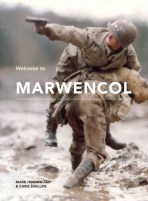
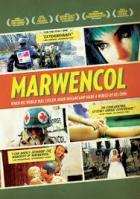
 Hogancamp’s photos are a child’s dream: proof that your dolls/action figures are having a rich life when you aren’t looking, a voyeuristic peek into a place where anyone can be the hero, the bad guys always lose, and Mom is there to save the day. His photos are eerie in their realism, down to pen-tip bullet holes and nail-polish blood, a dream gone creepy where department store mannequins have replaced people but you can’t always tell at first glance. Take a look at some of his works



 The Cheshire Library Blog