They’re Not What They Seem…

Can you figure out what these women have in common?

AlanaAlanna: The First Adventure by Tamora Pierce “I did this because I wanted to become a knight.”


Jacket.aspxShadowbridge by Gregory Frost “I did this because I needed to protect myself.”


Jacket.aspxThe Education of Bet by Lauren Baratz-Logsted “I did this because I wanted an education.”


jacketA Soldier’s Secret: The Incredible True Story of Sarah Edmonds, a Civil War Hero by Marissa Moss “I did this because I wanted to escape from my previous life and fight for a cause.”


Jacket.aspxTwelfth Night by William Shakespeare “I did this because I needed a way to live.”


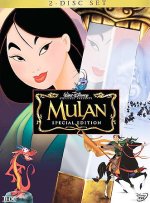
Jacket.aspxDisney’s Mulan “I did this because I needed to protect my family.”


Jacket.aspxBloody Jack by L.A. Meyer. “I did this because I wanted to sail around the world.”


Jacket.aspxSelf-Made Man by Norah Vincent “I did this because I wanted to learn about how men live.”


Jacket.aspxRowan Hood: Outlaw Girl of Sherwood Forest by Nancy Springer “I did this because I was searching for my father.”


Ouran

Ouran High School Host Club by Bisco Hatori “I did this because I was in debt.”


Did you guess? Women disguised as men. They were disguised so they could fight for themselves or their families, protect themselves when they were all alone in a man’s world, and earn an education, which they would have been denied otherwise. Each and every one of these is absolutely fascinating. Do yourself a favor and work your way through this list!

Do you have any favorite books/movies/plays with this subject that did not make this list?

Get Gardening With the Whole Family

Spring is here. This means it is a perfect time to start researching and planning what you want to grow this year. I am already dreaming about sunflowers, lavender, fresh tomatoes, and a variety of other produce and herbs. I love to garden, and have always been spoiled with the gift of family with very green thumbs. I adore fresh flowers, herbs, fruits, and vegetables and am glad to grow or have access to a wonderful supply each year.

kidgardenDuring the garden planning and planting process do not forget that everyone can take part in gardening. No matter the age, we can all dig a hole to plant a seed or young plant, pick out a plant to grow, or help chose a container to plant in. A wonderful trick to getting children (or adults) to try new foods is to have them help grow, pick, and help wash and prepare them.

kidgardens44The library has a vast gardening section in the adult nonfiction section to help with the important planning and plant choices. However, do not overlook the books in the children’s room. These books can give gardeners of all ages some ideas and inspiration to garden as a family, or to give the kids their own special little container or garden space. Here are a few of the great gardening books about involving children and getting them excited in the process.

Garden to Table: A Kid’s Guide to Planting, Growing, and Preparing Food by Katherine Hengel with Lisa Wagner
Container Gardening for Kids by Ellen Talmage
The Family Kitchen Garden: How to Plant, Grow, and Cook Together by Karen Liebreich, Jutta Wagner & Annette Wendland
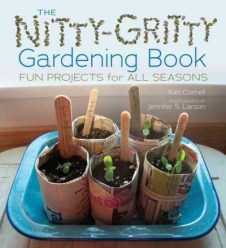
The Nitty-Gritty Gardening Book: Fun Projects for All Seasons by Kari Cornell
Gardening Projects for Kids: 101 Ways to Get Kids Outside, Dirty, and Having Fun by Whitney Cohen and John Fisher
Roots, Shoots, Buckets & Boots: Gardening Together with Children by Sharon Lovejoy
Kids’ Container Gardening: Year-Round Projects for Inside and Out by Cindy Krezel
How Does Your Garden Grow?: Great Gardening for Green-Fingered Kids by Clare Matthews
Gardening With Children by Monika Hannemann
A Kid’s Guide to How Herbs Grow by Patricia Ayers
It’s Our Garden: From Seeds to Harvest in a School Garden by George Ancona

This slideshow requires JavaScript.

Don’t Want To Ask? A Quick Guide to Tough Topics!

research question pictureThe Dewey Decimal System is a mystery to many outside the world of libraries and publishing. When you need information on something you might not want everyone to know about, sometimes it can be hard to ask for help. I saw that a Sacramento library had created a bookmarks with the Dewey Decimal numbers for some hard to ask about topics for teens, and I thought it was brilliant. It inspired me to do my part to help people find the books they need on topics they might not want everyone to know they were looking for.

Legal difficulties, mental or physical health problems, self help resourcesbullying, relationship issues, and so on are things that you might want to research but might not want to stop and ask a librarian about, or know how to find via the digital catalog. So, I have looked at some of the tough topics, and some happy ones that people might not want to go public with quite yet, to help you find the books that you need. I have linked each of the listings below to the relevant search in the catalog to make placing holds or checking availability even easier.

All of these nonfiction materials are on the lower level, and if you are looking for books on these topics for teens or children they will be shelved in the children’s room with the same call numbers. If you cannot find it, don’t be afraid to ask or to place a hold for the materials with staff, or by yourself via the catalog. We have seen it all. Seriously, we do not judge you by the books you check out and are more than happy to help you find the resources you need.

researchIf you really don’t want anyone to know what you are checking out, there are a few additional assurances I can offer you. If you use the self check out machines, we will have no idea what you have checked out. Also, we won’t tell anyone what you have checked out unless you give them your card. Anything that you check out and return with no fines leaves your record completely. There is no way for us to see, or tell anyone else, your borrowing history. Don’t be afraid to research and find the answers you need!

More importantly, if you need help more urgently than research can offer, please take a moment and reach out for it. Some important help can be found over the internet or via the phone.  There are help hotlines for just about everything, when you do not know who to talk to for help, dialing 211 can connect you to local services you might need. This includes utility assistance, food, housing, child care, after school programs, elder care, crisis intervention (including suicide and abuse) and much more. The related 211 website also offers an eLibrary with specific information on a variety of topics.

Abortion ~ 363.46

Alzheimer’s ~ 616.831

Cancer ~  616.994

Hair Loss ~ 616.546

HIV / AIDS ~ 616.9792

Infertility – 616.692 or 618.39

Miscarriage ~ 618.392

Pregnancy ~ 618.2

Puberty ~ 613.043 or 612.66

Sexual Health ~ 613 or 306.7


Bipolar Disorder ~ 616.895

Bullying ~ 303.69

Child Abuse ~ 362.76

Depression ~ 616.8527

Domestic Violence ~ 362.82

Loss of a Child ~ 155.9

Loss of a Parent ~ 306.874 or 155.9

Mental Illness ~ 616.89

Post Traumatic Stress Disorder ~ 616.8521

Sexual Abuse ~ 362.7

Substance Abuse ~ 362.29 or 616.86

Suicide ~ 362.28


Adoption ~ 362.734

Bankruptcy ~ 346.7307

Child Custody ~ 343.7301

Divorce ~ 306.89 or 346.7

Estate Planning and Living Will ~ 346.7305

Foreclosure ~ 346.73

Hospice Care ~ 362.1

Personal Finance ~ 332

Wedding Planning ~ 395.22


Exploring The Science of Science Fiction

Are you a science fiction fan curious to see how close scientists have come to understanding or recreating the theories or gadgets of your favorite book or movie? Do you think much of the gadgetry and action of science fiction stories are completely impossible and want to see what we really can do, and what we might be able to do in the future? Here are some books that will help you understand how realistic some time1ideas like time travel really are, and how theories and realities surrounding our universe and the possibilities have changed in recent years.

Time Travel and Warp Drives: a Scientific Guide to Shortcuts Through Time and Space by Allen Everett and Thomas Roman
Lays out what humans really know about time and space and how to bend it to our will, and explains just how close we are to some of the ideas of science fiction novels.time2

Physics of the Impossible: a Scientific Exploration into the World of Phasers, Force Fields, Teleportation, and Time Travel by Michio Kaku
Looks at the scientific principles behind the technology of the future, examining the theoretical basis, as well as limitations, of the laws of physics to discuss how seemingly impossible devices could become commonplace in the future.time3

Spooky Action at a Distance: the Phenomenon that Reimagines Space and Time and What it Means for Black Holes, the Big Bang, and Theories of Everything by George Musser
Presents a tour of modern physics that examines the new understanding of nonlocality–the ability of particles to affect each other across the vastness of space.

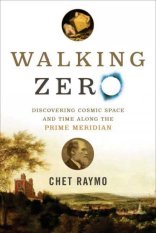
time4Walking Zero: Discovering Cosmic Space and time Along the Prime Meridian by Chet Raymo
A noted science writer and author of The Path offers an illuminating study of the interconnections among science, faith, psychology, and the arts in terms of the evolution of the human understanding of space and time as he walks along the Prime Meridian, the line of zero longitude and the standard for world maps and clocks, from Brighton to the North Sea.

time6What is Relativity?: an Intuitive Introduction to Einstein’s Ideas, and Why They Matter by Jeffrey Bennett
An astrophysicist offers an entertaining introduction to Einstein’s theories, explaining how well they have held up to rigorous testing over the years, and even describing the amazing phenomena readers would actually experience if they took a trip through a black hole.

Once you figure out hoe time travel works, or somehow or other gain a little extra time, you might want to explore further with: The Fabric of the Cosmos: Space, Time, and the Texture of Reality by Brian Greene, A Brief History of Time: From the Big Bang to Black Holes by Stephen W. Hawking, Endless Universe: Beyond the Big Bang by Paul J. Steinhardt and Neil Turok, Cosmos by Carl Sagan, The Science of Star Wars by Jeanne Cavelos, The Physics of Star Trek by Lawrence M. Krauss, or Physics of the Future: How Science Will Shape Human Destiny and our Daily Lives by the Year 2100 by Michio Kaku.

Have You Thought about Being Mortal?

Have you thought about dying? It’s such a scary topic, fraught with so much emotion. We like to think we’ll always have more time ahead of us. But what happens when something–an illness, an accident, a disease–sets a limit on our time? What happens when we are forced to confront the end of our lives?

Jacket.aspxBeing Mortal: Medicine and What Matters in the End by Atul Gawande explores this issue, an issue that we all must inevitably face.

Many folks first confront mortality when dealing with their aging parents, but illness can strike at any time of life. Then we are forced to make decisions about treatments. About living wills. About how we want to live the remainder of our lives. We want to live longer at all costs and we’d do anything to achieve that goal, right? Perhaps not. As Doctor Gawande discovered in his research on aging and dying, what most people want is not necessarily a longer life, but a quality life.

Gawande, a practicing surgeon, notes that doctors are often committed to extending life at all costs. This can mean painful and expensive procedures, even for those for whom there is no cure. Gawande questions this rationale, while admitting he himself has often advised patients to pursue treatments that he knew would not extend their lives by more than a few months or year. However, patients, he came to realize, wanted procedures that would guarantee them ten or twenty more years of life.

But medicine often cannot deliver such outcomes. The exceptions, the people who do survive for years in spite of the odds, are just that–exceptions. Gawande equates it with winning the lottery. Everyone believes they will be lucky but very few actually are. Gawande also noted that, in the case of terminal illness, the trade-offs of pursuing treatment–time, money, pain, recovery–were often not worth the small extension of life to most people.

What the mortally ill or infirm person really wants is a meaningful life, even if there is only a few months left of that life. The terminally ill desire to retain independence and control, as much as they possibly can. They desire to stay in their homes. They want their loved ones around them. They fear prolonged and painful deaths. They fear bankrupting their families.

Gawande illustrates the importance of these issues with depictions of  traditional nursing homes, which place safety and monitoring of vitals above the fulfilling lives people need and want. He counterpoints these with illustrations of models of care that take patients out of hospitals and nursing homes for a variety of assisted living facilities and hospice services.

I was especially intrigued by his description of hospice, a service I had (erroneously) believed was only for the last few weeks of life. Hospice gives the aged and terminally ill choices. Hospice workers ask what your goals are. They ask you to think about what you want. They ask you what you don’t want. They talk about your fears. And they address every issue.

And that is the gift of this wonderfully written book. It makes you ask those questions, of yourself and perhaps of those around you. For someday you may be in a position to have to make choices for a loved one, or in the position of having a loved one making choices for you.