 Perhaps one of the fastest ways to pick a fight with a stranger is to comment on their parenting style. Around the country, let alone around the world, each culture or region is convinced only their way is right. Yet, American education has been in decline for years, currently ranking 27th in the world. On the world happiness index, the US only ranks 18th. How do we, as parents, raise happy, healthy, well-adjusted and productive children? Let’s take a look at a few approaches to child-rearing from beyond our shores…
Strict Helicopter
Parenting books number nearly as high as the number of parents, but several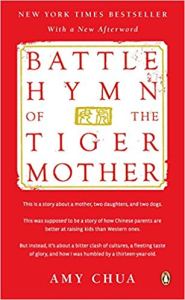 have made headlines. At one end is Battle Hymn of the Tiger Mother, by Amy Chua. China, with more than a billion people vying for jobs, education, and housing, is perhaps the most cut-throat parenting system of all: children seen with potential are removed from homes as young as three, and raised by the state to become champion athletes, mathematicians, scientists. Parents are relentless in ensuring their child’s excellence, demanding study or practice eighteen or more hours a day in a method most Americans would label sheer abuse. Imagine the pressure on an entire class where being #2 is not an option. Chua has no qualms about pushing her daughters into being virtuosos and Ivy League scholars.
Don’t Bug Me, Kid
Bringing Up Bebe by Pamela Druckerman focuses on the ways the French raise their
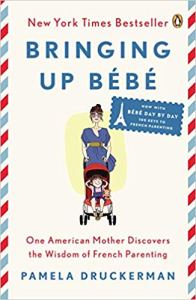 children. “The result of raising children French style, Druckerman writes, is “a fully functioning society of good little sleepers, gourmet eaters and reasonably relaxed parents.”” French parents have a me-first attitude – if the baby won’t sleep through the night by four months, let him cry. They don’t like to breastfeed, because it interferes with intimacy. They don’t speak to their infants in baby talk, treat patience and waiting as the highest virtue after social manners, and feed their infants table food, resulting in children who like to eat normal food. Are French children perfect? Bien sȗr, non, but they seem to have far fewer struggles than Americans.
One Big Happy
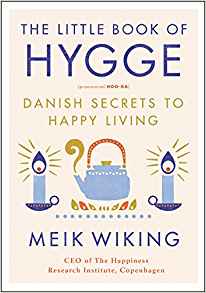
The Danish Way of Parenting, by Jessica Joelle Alexander and Iben Dissing Sandahl may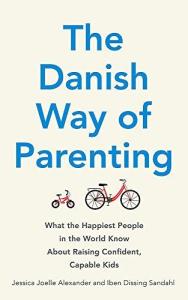 just have a little more power behind it. The Danes often score #1 on the list of Happiest Country in the World. They have high taxes, but they get free education, healthcare, paid maternity leave, and more – those things that are crushing us. To discuss Denmark (and many of the Scandinavian countries), one has to first understand the concept of Hygge, which rules everything the Danish do: Hygge (pronounced hue-guh or hoo-guh) is that warm, huggy feeling of comfort you get when you’re doing something with your family: sitting by the fire drinking cocoa, playing a board game, or maybe decorating cookies together, in one of those commercial-like scenarios where everyone is happy and the kids aren’t fighting and the dog isn’t chewing the game pieces – except, in Denmark, this is actually reality. It’s the land where Norman Rockwell must have taken notes.
The Danes rear their children with this mindset, which transforms them into happy adults. In (very) short:
- Don’t overpraise. Find something specific and praise that one thing instead. “What a nice, straight line!” Encourage growth; don’t let your child think s/he’s perfect.
- Let your child play. Play. With sticks, rocks, toys, not electronics. Play builds thinking skills, motor skills, social skills, and spatial relations a child needs for education.
- Promote togetherness. Family game nights, dinner, movies, puzzles, walks or sports or just playing in the park. Do it together, or with friends. This promotes strong social ties and models appropriate behavior. 40% of American families eat dinner together less than three times a week – 10% never do.
- Reframe negative thinking. Dwell on good things, not bad. If your child says they hate school, remind them of the things they do like.
- Practice empathy and compassion. Talk about emotions, and help your child learn to recognize them in themselves and others. Compassion for people and animals makes for a caring society.
- Let children figure things out for themselves. Don’t hover. Let preschoolers settle their own squabbles (within reason. If Agatha is beating Bjorn with a shovel, you might want to step in).
 There are no absolutes to child rearing. Some children are just darling; others seem to come out of the womb looking for trouble. But in a time when Americans are fracturing at the seams from stress, when schools are failing, children are parenting themselves, and society itself seems to be tearing apart, perhaps it’s time to look elsewhere for advice. Considering the Danes were terrorized by two World Wars and are still the happiest people on Earth, maybe we should listen.
Also try:



 In a bizarre coincidence, Thomas Jefferson and John Adams both died on July 4, 1826 — the nation’s 50th birthday. The two founding fathers and political adversaries died within five hours of each other.
  The Declaration of Independence wasn’t signed on July 4, 1776.



















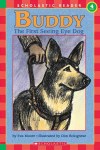
 It’s not just a snappy title – I really do have enormous faith and trust in a dog. My husband is blind and he (and I) depend every day upon the amazing skills of his guide dog Becca to help him navigate his world. I can go off to work and not worry about him, because I know he and Becca will manage perfectly well. They’re not stuck at home and are never bored. They go on long walks, golf, visit friends… at this point they actually have a much richer social life than I do! I am filled with wonder every time I see the two of them working together – she warns him of curbs, cars, and dangers both underfoot and at head height, she finds doors, counters, empty seats, and me (!) whenever needed and with great determination and enthusiasm.
 Once we were shopping at the grocery store, and a family with children walked by. The parents conscientiously cautioned their kids about not distracting Becca while she was working, telling them that she was a service dog. The littlest child wasn’t quite sure what a service dog was, but he used his own best judgement, and looked out for us for the rest of our shopping trip. He alerted everyone: “Don’t bother that dog- she’s a serious dog!” every time we crossed paths. It was adorable, but he was absolutely correct- Becca is a very serious dog when she is working.
 members of the military with their operations. Police dogs, often called K-9s, are trained specifically to assist police and other law-enforcement personnel in the line of duty. Search and rescue dogs have high energy, great stamina and focus. These highly trained animals serve in many different fields, including tracking, specialized search, avalanche rescue, and cadaver location. Therapy dogs offer emotional support to sick or injured persons, often visiting hospitals, schools, hospices, nursing homes and more. Service dogs are working dogs that have been specially trained to assist persons with disabilities.








 Spring is here! As we put those tender seedlings into the ground, up sprouts the constant question: should I go Organic, or should I show up my neighbors by using Miracle Grow? Will I poison my children if I use it on my tomatoes? Is my neighbor’s cancer due to Round Up™, and did it blow over into my yard? If a lawncare company treated my grass, are my grass clippings poisoning my compost?
 strewn with mulch and recycled orange peels, when in reality it just means the land cannot have been treated with synthetic pesticides, fertilizers (including Miracle Grow), or GMOs for three years. Sounds nice, right? Except that two of the three companies licensed by the USDA to certify organic farms are for-profit (Oregon Tilth is not). The farmer wanting to be certified pays the company to license them. That’s like paying a teacher to give you a grade. The problem is worse overseas: 100 countries export “organic” produce to the USA, and though they are supposed to abide by US law, the countries inspect and license their own. And let’s not forget that a good percentage of “organic fertilizer” in many countries is
  Won’t chemical fertilizers like Miracle Grow poison me? No. Plants don’t care where the nutrients come from, horse manure or a green and yellow box. Plants use them the same way. The issues with Miracle Grow are 1) the concentration of ammonium phosphate may be too high for some plants. MG makes different formulas for roses, tomatoes, azaleas, etc. Choose the one you need. 2) The greatest issue for chemical fertilizers is that heavy rains can wash a recent fertilizing away. If twelve homes get washout, and it flows into the brook behind them, too high a concentration in water systems can cause algal blooms that suck up oxygen and kill wildlife.
 (chemical: glyphosate), and while the courts have said yes, Round Up causes cancer, the US maintains it does not. And there’s the difference: In Europe, you must prove a chemical is safe before it hits the market, and that’s hard to do. In the US, chemicals are presumed innocent and you must prove they’re harmful – which is really easy to sidestep even with math and science. In America, it is up to the manufacturer to show their product is harmful, not the government (Got that? The man making and marketing the product must show that what he’s selling is harmful.) When the people with highest exposure to Round Up were studied (ie, farm workers), they had a
 So, is organic worth it? Depends on what you’re willing to pay. The
  growing your own, organic or not, is a fun (and tasty) experiment anyone can do anywhere. Try growing some popcorn, or a yellow or brown or purple heirloom tomato. Pole beans are great for kids, because they grow incredibly fast and are very prolific, as are grape tomatoes (so why are they so expensive?).
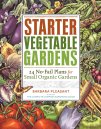 able Gardens : 24 no-fail plans for small organic gardens
 101 Organic Gardening Hacks : eco-friendly solutions to improve any garden




 Northeast Fruit & Vegetable Gardening : plant, grow, and eat the best edibles for Northeast gardens
 Podcasting is rapidly becoming the newest and most easily consumable form of storytelling. As of June 2018, iTunes features more than 500,000 active podcasts, including content in more than 100 languages and over 18.5 million episodes. Now if you’re new to podcasts, this number can be overwhelming, how are you supposed to sift through a sea of seemingly endless possibilities to find the hosts, and topic, that keep you listening? To be fair, a lot of listening is trial and error. Maybe you don’t like the hosts tone, or their voice, or maybe the topic just doesn’t grab your attention, but stay vigilant, there are enough podcasts in the world for everyone, there must be one for you! I’ve compiled a list of podcasts that are easy to get into for beginners, based on (of course) your favorite books, all of which can be found at the Cheshire Public Library!





 The Cheshire Library Blog