IndieFlix – Our New Online Video Service

Cheshire Library is proud to offer a new online service to its cardholders – IndieFlix , a streaming movie service that provides unlimited access to award-winning independent  shorts, feature films, and documentaries. With thousands of films to choose from across more than 50 countries, IndieFlix offers a viewing experience you can’t get anywhere else!

• Film-festival hits, including the best of Sundance, Cannes, Tribeca and more
• Directly support the filmmakers just by watching their films
• Available on Apple®, AndroidTM, Roku®, Xbox®, and all Internet-enabled devices!
• Advanced search tools make browsing IndieFlix simple and fast

If you are a CPL patron your membership is free.  Use your Cheshire Library Card to try it today & let us know what you think!

If you have any questions about library access please email rbdigitalsupport@recordedbooks.com.

James Gandolfini – Beyond Tony Soprano

Most people know James Gandolfini from his iconic role as Tony Soprano on the critically acclaimed HBO drama “The Sopranos“.  His untimely death on June 19 prompted me to check out some of his other roles, available on DVD at Cheshire Public Library. There are some real gems here.

Not Fade Away (2012) – This film is about a group of young kids who try to form a rock band in ’60s Jersey. Gandolfini is great as Pat, the strict father of the band’s lead singer, who wants his son to abandon his rock-star fantasies in favor of college, so that his son can have the education and opportunities he didn’t.  

Killing Them Softly (2012) – Critics were divided on this film, in which Gandolfini plays a depressed alcoholic hitman. Dubbed a “super-cynical crime caper”, the many of characters in the film are pretty despicable, but Gandofini’s turn as the soprano-esque Mickey stands out.

Down the Shore

Down the Shore (2011) – In this indie drama, Gamdolfini plays the operator of a rundown kiddie amusement park on the Jersey shore. Variety said of his performance,  “…Gandolfini’s most substantial feature role to date …  reminding audiences why he’s a genuine American acting treasure”.

Welcome to the Rileys (2010) – Gandolfini is Doug Riley, a man dealing with the tragic death of his teenage daughter.  On a business trip to New Orleans, he encounters Mallory(played by Kristen Stewart of “Twilight” fame), an angry runaway living a dangerous life as a stripper. Moved by emotions he barely understands, Riley abandons his old life to save hers.

In the Loop

In the Loop (2009) – Gandolfini showcases his comedy chops as Lieutenant General Miller, senior military assistant to the U.S. secretary of Defense, engaging in several hilarious rapid-fire verbal exchanges with various politicians in this film satire.

Lonely Hearts (2006) – In this period drama, Gandolfini teamed up with John Travolta as  homicide detectives who bring a serial killer couple to justice. (Based on the true story of Martha Beck and Raymond Fernandez, who became known as the notorious “Lonely Hearts Killers” in the 1940s.)

The Taking of Pelham 1 2 3


The Taking of Pelham 1 2 3 (2009) –
Gandolfini plays a supporting but pivotal role as the mayor of New York City in this suspense film about a hostage crisis on the subway. The all-star cast also includes John Travolta and Denzel Washington, and is a remake of the 1974 film of the same name.

The Man Who Wasn’t There (2001) – In the Coen brothers’ noir film, Gandolfini stars as a department store boss caught up in blackmail and adultery. The AV Club said of his performance, “James Gandolfini doesn’t even make it past the 30-minute mark in The Man Who Wasn’t There, yet in every respect, he looms large over Joel and Ethan Coen’s unsung masterpiece.”

Where the Wild Things Are (2009) – Gandolfini plays Carol, the “lead” Wild Thing, the gentle-giant mentor to 9-year-old Max. Even though the only thing evident was Gandolfini’s voice, (the film made use of motion-capture CGI as he acted the role) he still managed to make the character be both scary and lovable in equal measure.

Susan Picks: Foreign Films

I like foreign films as a form of foreign language practice.  The people speak at a normal rate and use conversational words as they would if you went to their country. But, like most people, if it’s a language I don’t know well, I tire of the gibberish after five minutes, and I rarely have time to sit and watch subtitles. On the other hand, I like foreign films because they aren’t the same repetitive formulaic Hollywood boredom.  They often rely heavily on character development, less on action, and are hard on irony.  The sceneries are often exotic and intriguing, ways of life (like collapsible yurts and nomadic circles) so very different – yet oddly similar – to America in all its forms. You sympathize with the main characters and feel their pain.  Here’s a weekend’s worth of films that you probably haven’t heard of and are well worth your trouble:

Since Otar Left – a Georgian film about three generations of women who haven’t heard from their bread-winning relative in ages, and imagine how well he’s doing as they wait for him to call.  Kind of like Waiting for Godot in Sochi.

Tulpan – a Kazakhstani film about a young nomadic sheepherder named Asa who returns after serving in the Russian Navy and wants a wife – but try and find one on the empty steppe. Then there are the crazy traditional courting rituals to be conquered … 

[Cover]

Combination Platter – a story about an illegal Chinese immigrant trying to live out the American promise while working like a slave in a Chinese restaurant and dodging the terror of immigration.


9th Company – a modern Russian film about their futile 1980’s war in Afghanistan, a no-holds-barred action thriller every bit as good as any American movie.  You might have hated them in 1980, but you will cheer for them now.

[Cover]Vitus – a sweet Swiss film about a little boy whose parents help push him to be a brilliant concert pianist by the age of nine – but all he really wants to be is a little boy.

Travel the world from your recliner and give one a try today!

One to Watch: After Earth

After Earth is a big-budget ($130 million) science-fiction adventure film starring Will Smith and his son Jayden as a father & son who crash-land on Earth a thousand years after man has abandoned it, and the adventure they have trying to escape the dangerous wild habitat the Earth has become. Smith himself came up with the basic story, and worked with screenwriter Gary Whitta to carry the idea further.  Due for release on May 31, 2013, it is expected to be a blockbuster.

Will Smith, acting as producer, hired director M. Night Shyamalan (Unbreakable, The Sixth Sense, Signs) for the film. This was the first time in twenty years that Shyamalan accepted a project based on someone else’s screenplay (the final screenplay was done by Stephen Gaghan). This would also be Shyamalan’s first digital film.

Science-fiction adventure stories come and go, but what makes After Earth a [Cover]unique film is the backstory. Normally, a film is scripted, filmed, and then if it is successful, writers are hired to create backstory, a “Bible” from which movie tie-ins, novels, short stories, and future scripts can draw material to make a unified vision of that world.  After Earth is the first film to flesh out its backstory before the scripting was even finished. Three expert writers were hired for that task: Peter David, Robert Greenberger, and Michael Jan Friedman, all of whom were well-versed in writing not only successful science-fiction and comics, but media tie-ins as well. All three collaborated in creating the “universe” in which the story takes place, the what, why, where, when and how, working on set with Smith, Shyamalan, and the scriptwriters to make the story as cohesive and believable as possible.

As told to me by Bob Greenberger, the three authors worked from the original Whitta script, taking tiny open references and creating minute details that would answer any questions the production team might have as to what cataclysms sent man from Earth, why Nova Prime, and what happened in the intervening years. Over a period of two years, this background encyclopedia grew to more than four hundred pages! If you’ve seen anything about the film in print, on the internet, or in film references, you can pretty much guarantee that information came from their work.

Of course, such detail and planning spawns stories on its own. Several novels centering around the movie are poised for release: After Earth, the novelization of the[Cover] film by Peter David, The Perfect Beast (After Earth: Ghost Stories) by Peter David, Robert Greenberger, and Michael Jan Friedman, and After Earth: United Ranger Corps Survival Manual by Robert Greenberger, as well as several short e-stories available for Kindle Purchase, with more to come in the ensuing months.

With a top-notch cast and writing crew like that, how can After Earth be anything but a hit? Check out these other books by these great authors, (or meet them in person at the Shoreleave Science Fiction Convention in Baltimore this August).

[Cover]   All Good Things...  [Cover]

Why Gone With the Wind Is My Favorite Book

On May 3rd, 1937, more than 76 years ago, Margaret Mitchell won the Pulitzer
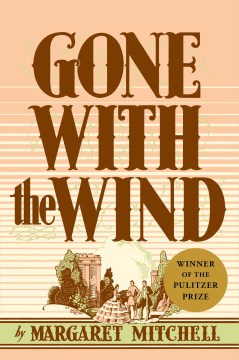
Gone With the Wind

Prize for Fiction for her epic Gone With the Wind. 76 years later, GWTW is still a powerful book, read anew by readers young and old.

My husband had recommended for a long time that I read GWTW, and it was on my to-read list for some time. We had distractedly watched the first half of the movie sometime in spring 2010, but I did not start reading the book until April 2011 for our Classics Club here at the library.

GWTW can appear to be a daunting book for those who do not typically read lengthy tomes. But from that opening page, when we are introduced to the indomitable Scarlett, on her way to a party, and we are drawn into a world we will never want to leave, or stop reading.

Oh, Scarlett, Scarlett. Some who have read the book or seen the movie, simply “can’t stand Scarlett.” Well, that’s the point. We are not meant to like Scarlett. She’s perhaps literature’s most misunderstood character. When we first meet Scarlett, she is an impetuous 16 year old lusting after Ashley and looking for excitement. Scarlett stumbles on her journey, making terrible choices, wrong decisions, and sometimes ruining the lives of others (and sometimes purposely). She can be annoying, manipulative, and deceiving. But Scarlett at her core loves her home and her family. By the end, Scarlett has realized how her foibles have affected others. She has lost everything.

My husband has rightly pointed out that Scarlett is representative of “the Old South” before the Civil War. The South had to lose everything in the war, including some of that impetuousness like Scarlett has, before they can learn from their mistakes and rebuild. Scarlett is torn down, lost everything, just like the South was during the Civil War, but together the two can start anew.

We rewatched GWTW while I was reading it for Classics Club, and I’ll never forget the ending. I had not reached that part in the book yet, and I yelled at the tv. “What! What! This is not right! This is not how it happens in the book! It can’t be!” And I ran up the stairs, grabbed the book and read the ending. Oh my. It was how the book ended. I’m still indignant over the ending. But I have two sequels to make the story complete, in my eyes.

GWTW is, in my opinion, our American novel. It speaks to our American experience in terms of struggle, triumph, and the American dream. It’s an epic novel about a society that no longer exists, a way of life that will never be again. GWTW is about more than Scarlett, it’s about a way of life that was destroyed and a people who have to find their way in an unfamiliar world.

GWTW is one of the few books I give 5 stars.