Tales of Shipwreck & Survival

Everyone knows about the Titanic since they found the wreckage and made a movie about it, but shipwreck is usually the last thing on anyone’s mind when they book a cruise. In reality, only 24 cruise ships have ever sank, and many of those had been pressed into service as warships at the time. Cruise ships, despite their top-heavy appearance, are quite safe. 

There are an estimated 3,000 shipwrecks off the coast of the Outer Banks, NC

There are an estimated three million shipwrecks under the waters, not counting small craft. Some of these date back as far as 2500 BCE, when the Mediterranean Sea was a hotbed of trade from Egypt and North Africa to the coasts of Italy, Greece, and Spain. The rate of commercial shipwrecks has been declining throughout this century, from 200 in 2000 to only 26 in 2023, and most of those are cargo ships, which are often in poor repair, overloaded, badly balanced, and cross some of the most difficult waters (releasing rubber ducks and sneakers). This does not include the fishing industry, which is nearly unregulated, especially in Asia and South America. It is estimated there are 100,000 deaths from fishing each year, due to poor industry standards and almost no oversight.

When we think about historical ships, we think back to Roman biremes, Viking longboats, and primitive rafts like Thor Heyerdahl’s Kon Tiki long before we come to the glory days of Spanish, British, French, and Portuguese galleons vying for naval power, leading to spectacular – and expensive – shipwrecks. The Bermuda Triangle, The Skeleton Coast, The Cape of Good Hope, and several rocky coastal areas around the continents were famous for wrecking ships, let alone the risk – then and now – for icebergs in the North Atlantic, and the real though rare possibility of rogue waves – lone giant waves of up to 100 feet, with no warning and no precursors, which have been implicated in a number of wrecks. There’s also the 1958 Lituya Bay, Alaska tsunami, which, due to the funneling nature of the bay, created a wave 1700 (yes, one thousand seven hundred) feet high, lifting a fishing boat, whose crew miraculously survived.

Like all natural disasters, ship disasters make for fascinating reading and occasionally a great movie. Here are some excellent works on the misfortunes of ocean-bound ships, some of which you may not have heard of, but really happened.
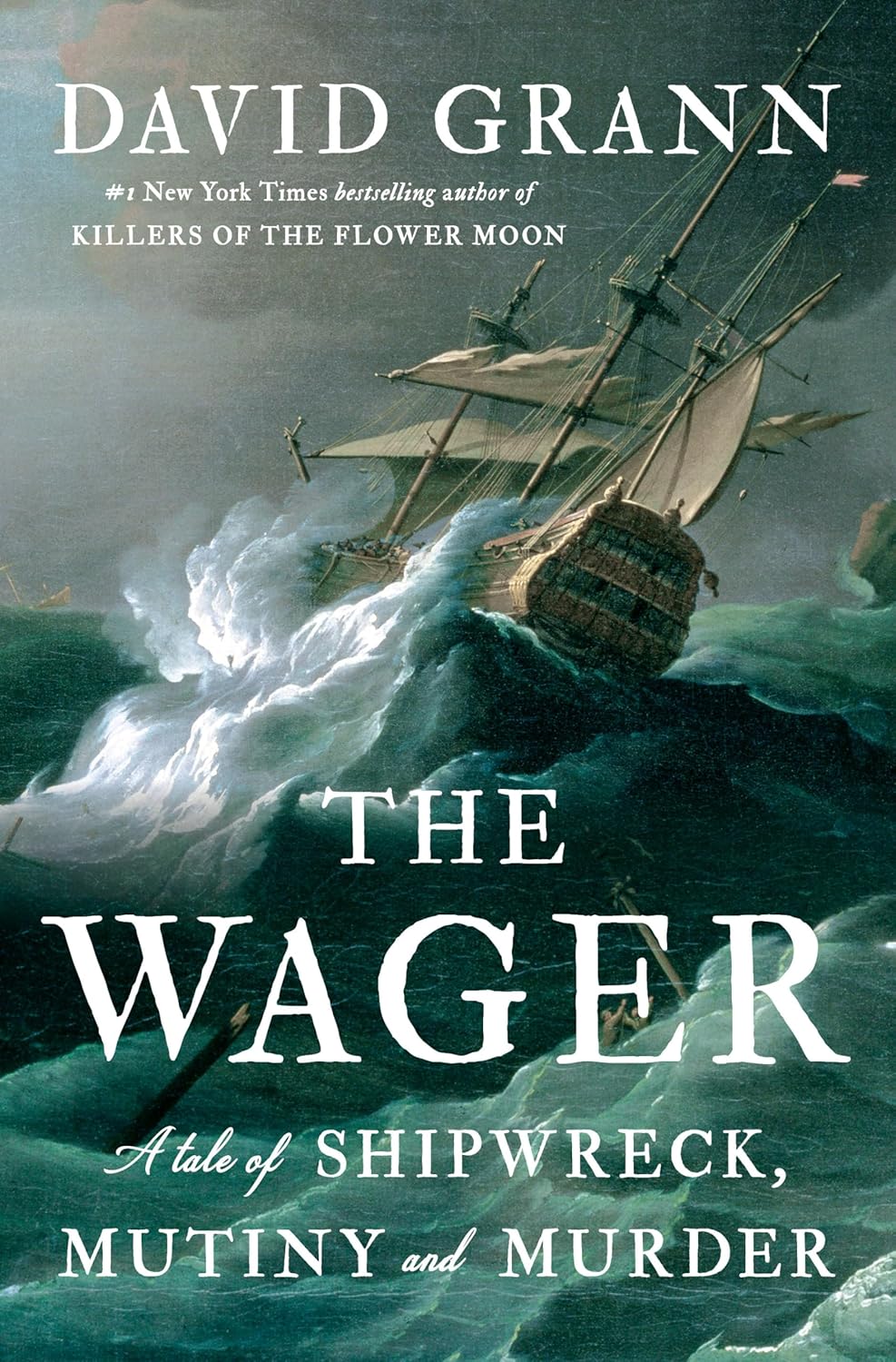
The Wager, by David Grann

If you haven’t yet read The Wager, you need to. A true tale of murder, mutiny, greed, heroism, and unbelievable survival in the harshest of conditions. Against better judgment, the Wager tries to round the dangerous Cape Horn in 1741, smashing against rocks in a gale. In a barren wasteland, with nothing to eat, the crew splits, half commit mutiny, some commit murder, and half of them will make it back to tell the riveting tale. A must read.
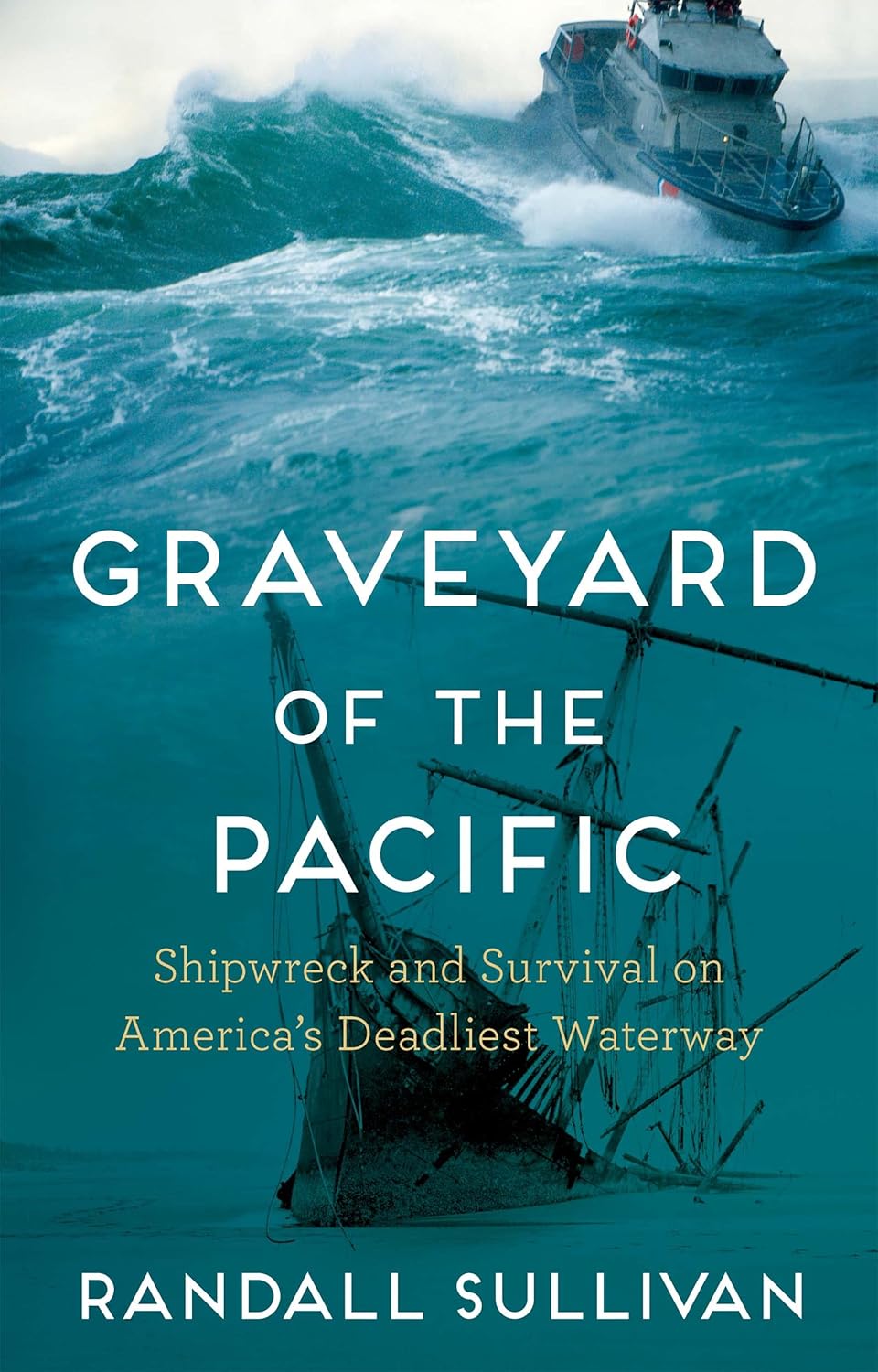
Graveyard of the Pacific, by Randall Sullivan

Who knew that more 2000 ships have been wrecked on the corner of the Oregon/Washington coast? Fierce storms, fog, reefs, sandbars, and tidal rips from the incoming flood of the Columbia river are so bad that there are specific ships and captains who must steer commercial ships through the area. While the book is partially taken up by one man’s quest to kayak through this deadly area, the rest of the book is quite fascinating.

Ghost Ship, by Brian Hicks   

There are many theories as to why the ship Mary Celeste was found abandoned at sea in 1872, with no clue as to what happened. The lifeboat was missing, and the crew abandoned ship so rapidly that food was still on the table and a sleeping child’s form was still outlined on the captain’s bed. Hicks combs through details to provide a solid, scientific reason, the best theory anyone has come up with yet, and the horrible fate of the crew.

In the Heart of the Sea, by Nathaniel Philbrick. 

The foundering of the whaleship Essex in 1820 became the inspiration for Melville’s novel Moby Dick. The Essex was sunk by a sperm whale in the Pacific, killing most of the crew. A handfull survived in a whaleboat for five months, surviving on cannibalism and rainwater. Melville allegedly met the son of survivor Owen Chase while at sea, and later met surviving Captain Pollard, who was considered bad luck after two lost ships, and no one would hire him. The combined diaries of the survivors were later made into a film.

When the Dancing Stopped, by Brian Hicks.

If Ghost Ship wasn’t enough, Hicks covers the perfect storm of disaster on the Morro Castle, a top of the line 1934 cruise ship traveling between Cuba and New York’s Pier 13. With horrific odds, the ship faced a tropical storm gaining on them, a nor’easter barreling toward them from the opposite direction, a murdered captain, an arsonist’s chemical fire underneath a ceiling filled with gunpowder, a crew that had never performed a fire or lifeboat drill, lifeboats whose launch mechanisms were painted closed, and a crew that fell apart at the first sign of trouble. How anyone survived (besides the crew, who abandoned ship without helping passengers) is a miracle. A book that reads like a novel, and is very hard to put down.

Deadliest Sea: The Untold Story Behind the Greatest Rescue in Coast Guard History, by Kalee Thompson

More fish are caught in Alaskan waters than almost everywhere else, yet many fishing boats remain virtually unregulated as to safety, and there are powerful political groups that push against it. In 2008, the Alaska Ranger meets with bad weather and too much ice, loses its rudder, and starts to sink. As in every disaster, few are trained, shortcuts were taken, lifeboats don’t work properly, wetsuits have holes, and they are more than 200 miles from the Coast Guard rescue planes. Thompson creates a tense tale of survival and aggravatingly poor working conditions as the Coast Guard rushes to save the crew. A lot of names, but hard to put down.

Futility, or, The Wreck of the Titan, by Morgan Robertson

Okay, this one is short fiction, and because it’s so old it’s hard to get a copy of (you can read it for free on Project Gutenberg, here), but it’s mentioned in so many memes as “The Titanic Foretold!” that I wanted to include it here. Published in 1898, the book, yes, involves an “unsinkable” ship called the Titan, that, in its second collision in two days, hits an iceberg and capsizes. The unlikable protagonist rescues a little girl in order to get a seat on a lifeboat, then plots to use her to extort money from her family, and most of the book is about him whining about being stuck with the kid. There is almost nothing in this novella that compares with the Titanic, beyond a name (common enough. It would have been more compelling if the name was Carpathia or something) and an iceberg (also common in those waters). It’s short, you can read it, but it’s trite, simplistic, outdated, boring, and sometimes painful to read. But, truly, it in no way predicted the wreck of the Titanic.

If you’d prefer, check out these films of ocean disasters:

In the Heart of the Sea

The Perfect Storm

Finest Hours

The Poseidon Adventure

Titanic

The Life of Pi

All is Lost

Lifeboat

Get Your Kicks with Martial Arts Films

Ever wonder how much of movie fight scenes are staged and faked, and how much is real? Today, so much is done on a green screen, even the locations are unconvincing. You can be sure, however, that martial arts films are very real.

Martial arts films have some of the best action and fight choreography you can find in film, and they often span multiple genres. Some are written specifically for comedy (most American Jackie Chan films, like Rush Hour), while others are mind-bending (The Matrix). Some are more realistic (Enter the Dragon), while others are not (John Wick 4. Thirteen consecutive hits by cars? I think not. Don’t get me wrong – the John Wick series is in my top 20 films, but this pushes credibility.) Foreign films tend to focus more on the art and less on a story line (sorry, subtitles or overdubbing, the dialogue in Jackie Chan’s Police Story is downright painful, even though the action and car chases are superb), while American films tend to have a story line that is stretched to make room for the action scenes (If John Wick can kill three men with a pencil, does that make the Joker, who kills one, also a martial artist?). Some movies are very good (Ip Man 2, which is a lot like Hong Kong Rocky) while others are cringeworthy and forced (American Kickboxer, for one).

Few martial arts movies are “pure” – there are few “karate” or “judo” or “jiu jitsu” films. Most martial arts films use mixed martial arts, as the actors are usually multiply trained. Bruce Lee, the granddaddy of martial arts stars, didn’t hold a black belt in anything, but invented his own school called Jeet Kune Do. Lee studied under the actual Ip Man, Yip Kai-Man, who invented the school of Wing Chun. The incredible Donnie Yen, whose greatest American films have been Star Wars: Rogue One and John Wick 4, has black belts in Wing Chun, Judo, a sixth-level black belt in Tae Kwon Do, and a purple belt in Jiu Jitsu. Keanu Reeves, of John Wick and Matrix fame, holds a black belt in Jiu Jitsu, as well as black belts in Judo and Karate.

What’s the difference between all the different martial arts forms? Generally, they’re very minor. Some use open hand, some used closed. Some are meant to deflect and defend, others to overpower (Krav Maga). Some emphasize hand work over kicks. Aikido deflects the energy of an attacker, rather than responding. Jiu Jitsu is about pinning and dominating an opponent. Wing Chun focuses on the center of the body and rapid-fire punching, similar to boxing. A second difference is the concept of “belts.” The “belt” level concept is Japanese in origin, while the Chinese systems don’t always use it. This is partly why some of the greatest martial artists of film – such as Bruce Lee – don’t have black belts in any denomination.  Traditionally, the forms using belt levels are karate, tae kwon do, judo, and jiu jitsu.

You might be surprised to know there are a number of western action actors who are more than proficient at various martial arts, including Iron Man actor Robert Downey Jr. (Wing Chun), Wesley Snipes (5th level black belt in karate, 2nd level black belt in Hapkido, plus jiujitsu, kickboxing, kung fu, and capoeira), and Steven Seagal, a 7th-level black belt in Aikido. Chuck Norris has a tenth-degree blackbelt in Tang Su Do. Jean-Claude Van Damme has black belts in karate and kickboxing. Sean Connery, the first James Bond, had a black belt in karate. Jason Statham has a brown belt in jiu jitsu. Even Willie Nelson is a fifth-degree black belt in Korean Gongkwon Yusul, which he has studied for more than twenty years.

On the other hand, Michelle Yeoh, who stars in many martial arts-action films, has no formal training at all, but chalks up her moves to dance training. On film, no one can tell.

Don’t skip a movie just because it’s in a foreign language. Movies like Ip Man 2 and Seven Samurai are well-worth reading captions. Whether you like your action cheesy and fun, or serious and deadly, check out these films that feature martial arts or martial artists, and be careful what you kick or punch!

8 Movie Action Pack

Big Trouble in Little China

Art of Self Defense

As Good as Dead

Big Trouble in Little China

Blade

From Russia With Love

Embattled

Everything Everywhere All At Once

Fearless

Forbidden Kingdom

Foreigner

Hero

Jiu Jitsu

John Wick 1-4

Karate Kid

Keeper

Kill Bill

The Matrix

Mulan

Rush Hour

Pistol Whipped

Red Cliff

Rogue One

Rush Hour

Sakra

Seven Samurai

Shang Chi

Spy Next Door

The Assassin

XXX Return of Xander Cage

Getting Cult-ured

We’ve all heard the term, “It’s a cult classic,” “It’s a cult film,” but what actually is a cult film? For one thing, it has zero to do with charismatic leaders or brainwashing. Cult films can be weird, but some are wildly popular.

While the definition itself is elusive, and films can theoretically lose their cult status if they become mainstream, there are several factors that help define which films can fall in that category. For one, it has to bomb at the box office. This doesn’t mean it was a bad film – Donnie Darko did lousy because the film revolved around a plane crash, and it was released just weeks after 9/11, and all the advertisers pulled out. The Princess Bride became a wildly popular film that did poorly in the theaters, mostly because the studio didn’t know how to market it – kid flick, or adult? Love story, fantasy, or comedy? With no marketing, it didn’t fare well.

A second common requirement is the movie has to be unconventional. It’s not something that will appeal to everyone. Quentin Tarantino films are widely lauded, but Pulp Fiction and Reservoir Dogs aren’t for everyone. Neither are David Lynch films. I love Eraserhead, but it’s a bizarre, trippy, nightmarish film of a man trapped in a dystopian Philadelphia, caring for his grotesquely deformed infant. It is not going to be a runaway hit. Lynch’s TV series Twin Peaks falls in this category, too.

A third is a wildly loyal fan base, who not only quote the film but can often recite most of the dialogue. Many films, of course, fall in this category, but don’t meet the other criteria. Thousands of people are rabid Star Wars fans, or Wizard of Oz fans, or Casablanca fans, but those are mainstream films that appeal to the masses. Fight Club can fall in here. Also Jim Henson’s Labyrinth and The Big Lebowski.

Some claim a cult film must be subversive – this opens the door to a host of horror (Human Centipede, Nosferatu), exploitation (Freaks), pornography, over the top documentaries (like Reefer Madness), and more, but that’s not always the case. Traditionally, cult films gained their popularity from midnight movie showings. Now thanks to streaming, any film on the internet can become a cult film.

Other films fall into the campy, grade-B (or -C) genre films under the guise of “It’s so bad, it’s good.”  Jane Fonda’s Barbarella can fall under here. Attack of the Killer Tomatoes was written specifically that way. Also Attack of the 50-foot Woman, Forbidden Planet, and Plan 9 From Outer Space – a movie credited with being the worst motion picture of all time. You have to laugh at how bad it really is.

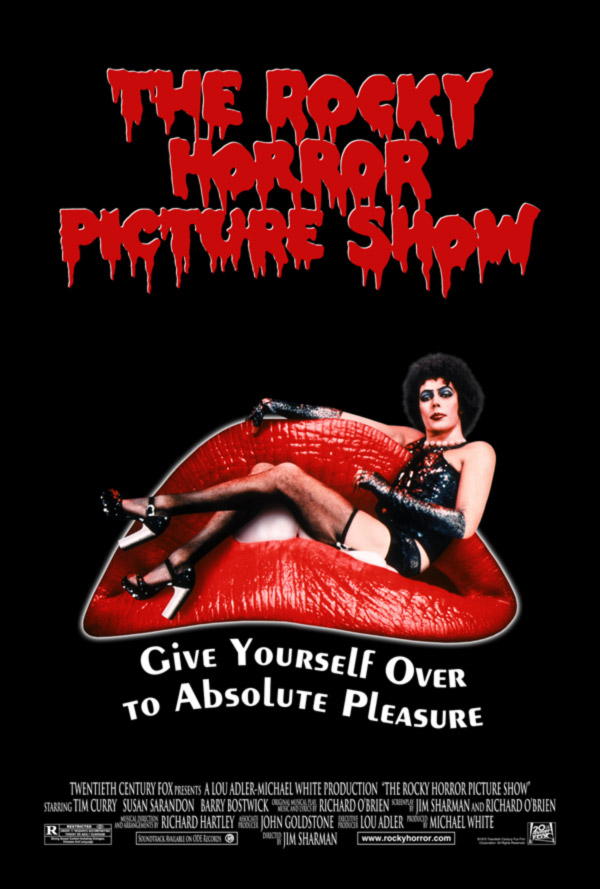
The Granddaddy of all “Cult” films, of course, is Rocky Horror Picture Show. It checks every box – subversive (open sexuality!), midnight showings, camp (Tim Curry vamping it up in leather and lace), a guilty pleasure, definitely not mainstream, and a rabidly loyal fan base who can sing and quote the entire movie from memory, while throwing toast and raising umbrellas depending on the scene. It’s a great, if strange, film with a fabulous soundtrack, but not family friendly. It struggled in theaters initially, but Rocky Horror is currently the seventh highest grossing rock film when adjusted for inflation, and at 49 years old, it is the oldest continuously released movie in history – you can still find it playing in a theater somewhere. It now on the National Registry of films as culturally important.

So much for non-mainstream and subversive.

TV shows can be cult as well.  The original Star Trek would qualify – a show with such poor ratings it was cancelled after two seasons, only to have a huge outcry from a fanbase that got it renewed for a third season … and then a mega-empire of movies and TV series. Firefly too – a show of only 14 episodes with a fan base so active it spawned a motion picture (Serenity) – as are Buffy the Vampire Slayer, Lost, Arrested Development, South Park, and The Simpsons. While both South Park and The Simpsons were wildly popular, they’ve been in production for 26 and 36 seasons, respectively, which puts them into cult status.

You probably already love a “cult” film, but give some of these a try and see if you agree!

Eraserhead

The Man Who Fell to Earth

Plan 9 from Outer Space

Princess Bride

Barbarella

Big Lebowski

Big Trouble in Little China

Boondock Saints

Brazil

A Clockwork Orange

Elephant Man

Escape from NY

(TV) Firefly

Freaks

Harold & Maude

Kill Bill

Labyrinth

Monty Python and the Holy Grail

Napoleon Dynamite

Night of the Living Dead

Pulp Fiction

Reservoir Dogs

Rocky Horror Picture Show

This is Spinal Tap

Tommy

Kung Fu/ martial arts films such as Enter the Dragon

Hocus Pocus

The Delights of Pop Culture

It’s an awesome time to be a fan of pop culture. You can listen to podcasters going episode-by-episode through the shows you binge-watched on DVD in college. You can read delightfully bizarre theories about the characters in your preschooler’s favorite TV show. You can gather with other fans at venues like ConnectiCon. And as the main orderer of nonfiction books, I know this is an excellent time to read about pop culture, too. Here are some new and recent books to both entertain you and deepen your appreciation for your show / movie / franchise du jour. 

Did Arya, Maximus, or Chandler have the biggest surge in popularity as a baby name? How many parents start off dead in Disney movies? Is Ash Ketchum a better GM or coach? Find the answers in this book, which is a fun mix of visualized data and writing which explores how mere “entertainment” affects politics, the economy, and even shark populations. Pulitzer Prize-winning author Hickley used to be the Chief Culture Writer at FiveThirtyEight, and it shows in his love of statistics. 

The Blues Brothers: An Epic Friendship, the Rise of Improv, and the Making of an American Film Classic by Daniel DeVisé (2024) 

The saga behind The Blues Brothers is epic, encompassing the colorful childhoods of Belushi and Aykroyd, the comedic revolution sparked by Harvard’s Lampoon and Chicago’s Second City, the early years of Saturday Night Live where the Blues Brothers were born, and the indelible behind-the-scenes narrative of how the film was made. Based on original research and interviews of principals from director John Landis and producer Bob Weiss to SNL creator Lorne Michaels and Aykroyd himself, The Blues Brothers vividly portrays the creative geniuses behind modern comedy. 

On Locations: Lessons Learned from My Life On Set with The Sopranos and in the Film Industry by Mark Kamine (2024) 

Married and with a child, the author takes unpaid gigs to get a foot in the door, and eventually ends up working on all seasons of The Sopranos. The show’s setting and its creator’s insistence on accuracy placed the native New Jersey author in the right place at the right time to become part of television history, and to witness the effects of sudden fame and acclaim on the show’s principal players. Includes many stories about guest stars, as well as the cast, including new tales of James Gandolfini. 

Opposable Thumbs: How Siskel & Ebert Changed Movies Forever by Matt Singer (2023) 

Award-winning editor and film critic Matt Singer eavesdrops on the iconic balcony set of Gene Siskel and Roger Ebert, detailing their rise from making a few hundred dollars a week on local Chicago PBS to securing multimillion-dollar contracts for a syndicated series. Their partnership was cut short when Gene Siskel passed away in February of 1999, but their influence on in the way we talk about (and think about) movies continues to this day. 

I Like to Watch: Arguing My Way Through the TV Revolution by Emily Nussbaum (2019) 

In this collection, New Yorker columnist and Pulitzer Prize winner Emily Nussbaum writes about her passion for television beginning with Buffy–as she writes, a show that was so much more than its critical assessment–the evolution of female protagonists over the last decade, the complex role of sexual violence on TV, and what to do about art when the artist is revealed to be a monster. And, she also explores the links between the television antihero and the rise of Trump. The book is an argument, not a collection of reviews. Through it all, Nussbaum recounts her fervent search, over fifteen years, for a new kind of criticism that resists the false hierarchy that places one kind of culture over another. It traces her own development as she has struggled to punch through stifling notions of ‘prestige television,’ searching for a wilder and freer and more varied idea of artistic ambition. 

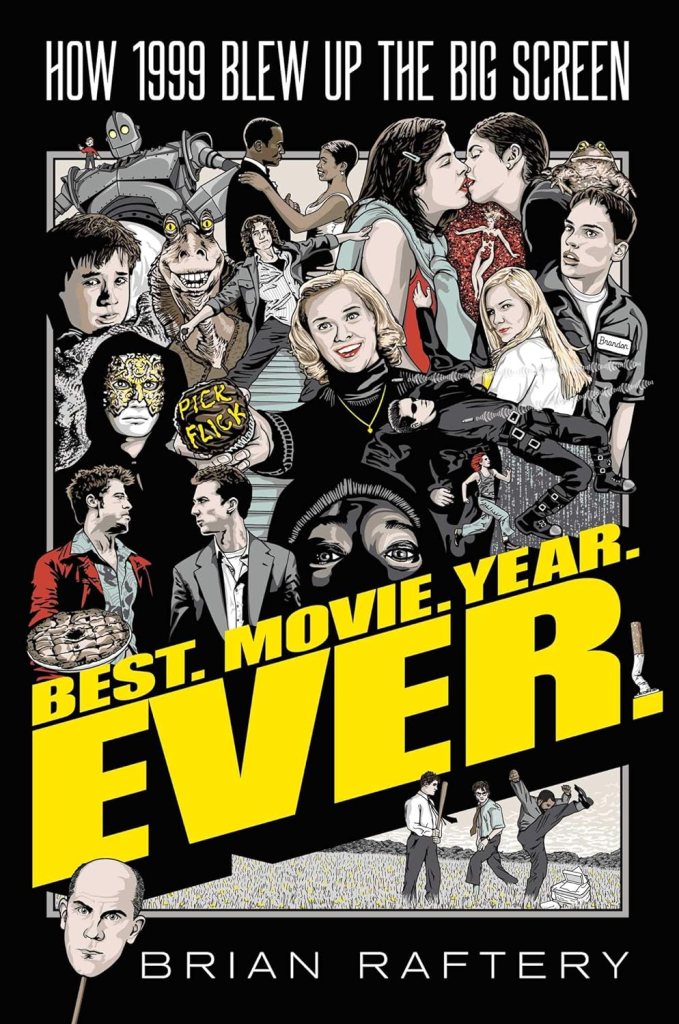
Best. Movie. Year. Ever.: How 1999 Blew Up the Big Screen by Brian Raftery (2019) 

In 1999, Hollywood as we know it exploded: Fight Club. The Matrix. Office Space. The Blair Witch Project. The Sixth Sense. Being John Malkovich. Star Wars: The Phantom Menace.  Those are just some of the landmark titles released in a dizzying movie year, one in which a group of daring filmmakers and performers pushed cinema to new limits—and took audiences along for the ride. Freed from the restraints of budget, technology (or even taste), they produced a slew of classics that took on every topic imaginable, from sex to violence to the end of the world. The result was a highly unruly, deeply influential set of films that would not only change filmmaking, but also give us our first glimpse of the coming twenty-first century. 

Surely You Can’t Be Serious: The True Story of Airplane! by David Zucker, Jim Abrahams, and Jerry Zucker (2023) (downloadable audiobook) 

An in-depth and hysterical look at the making of 1980s comedy classic Airplane! by the legendary writers and directors of the hit film. With anecdotes, behind the scenes trivia, and never-before-revealed factoids, these titans of comedy filmmaking unpack everything from how they persuaded Peter Graves to be in the movie after he thought the script was a piece of garbage, how Lorna Patterson auditioned for the stewardess role in the back seat of Jerry’s Volvo, and how Leslie Nielsen’s pranks got the entire crew into trouble, to who really wrote the jive talk. It also features testimonials and personal anecdotes from well-known faces in the film, television, and comedy sphere, proving how influential Airplane! has been from day one. 

Titles we don’t have but you can borrow from other libraries in our consortium: 

No Crying in Baseball: The Inside Story of A League of Their Own by Erin Carlson (2023) 

The Coen Brothers: This Book Really Ties the Films Together by Adam Nayman (2018) 

Movies (And Other Things): A Collection of Questions Asked, Answered, Illustrated by Shea Serrano, illustrated by Arturo Torres (2019) 

Book-to-Screen Adaptations Coming in 2023

If you love seeing your favorite books come to life on the big or small screen, 2023 is shaping up to be a great year. And if you’re a read-it-before-you-see-it person, you’ll want to take note of the screen adaptations slated for release this year, and add the following books to your reading list! (Release dates are given when known, though they are subject to change).

Dear Edward by Ann Napolitano (on Apple TV+ Feb. 3)

The Cabin at the End of the World by Paul Tremblay (in theaters Feb. 5)

The Black-Eyed Blonde by Benjamin Black (in theaters Feb. 15)

Daisy Jones & the Six by Taylor Jenkins Reid (on Amazon Prime Mar. 3)

Are You There, God? It’s Me, Margaret by Judy Blume(in theaters Apr. 28)

Text for You (movie title: Love Again)by Sofie Cramer (in theaters May 12)

Killers of the Flower Moon by David Grann (in theaters May 2023)

Harold and the Purple Crayon by Crockett Johnson (in theaters June 30)

American Prometheus by Kai Bird and Martin J. Sherwin (in theaters July 21)

Hallowe’en Party (movie title: A Haunting in Venice) by Agatha Christie (in theaters Sept. 15)

Dune (Part Two) by Frank Herbert (in theaters Nov. 3)

The Ballad of Songbirds and Snakes by Suzanne Collins (in theaters Nov. 17)

Charlie And The Chocolate Factory (movie title: Wonka) by Roald Dahl (in theaters Dec. 15)

The Color Purple by Alice Walker (in theaters Dec. 20)

Expected to premier in 2023, but no release dates available yet for:

Red, White & Royal Blue by Casey McQuiston (on Amazon Prime)

The Last Thing He Told Me by Laura Dave (on Amazon Prime)

The Power by Naomi Alderman (on Amazon Prime)

Lessons in Chemistry by Bonnie Garmus (on Apple TV+)

American Born Chinese by Gene Luen Yang (on Disney+)

Romancing Mister Bridgerton by Julia Quinn (on Netflix)

The Three-Body Problem Series by Cixin Liu (on Netflix)

Three Women by Lisa Taddeo (on Showtime)