Ten Riveting New Reads

book listA glowing tribute to George Eliot, a rich debut novel and more riveting recent releases recommended by O, The Oprah Magazine.

1.  My Life in Middlemarch by Rebecca-Mead – Rebecca Mead was a young woman in an English coastal town when she first read George Eliot’s Middlemarch.   After gaining admission to Oxford, and moving to the United States to become a journalist, through several love affairs, then marriage and family, Mead read and reread Middlemarch.  In this wise and revealing work of biography, reporting, and memoir, Rebecca Mead leads us into the life that the book made for her.

2.  The Secret of Magic by Deborah Johnson -Regina Robichard works for Thurgood Marshall, who receives an unusual letter asking the NAACP to investigate the murder of a returning black war hero. It is signed by M. P. Calhoun, the most reclusive author in the country.  Once down in Mississippi, Regina finds that nothing in the South is as it seems. She must navigate the muddy waters of racism, relationships, and her own tragic past.

3.  The Visionist by Rachel Urquhart – After 15-year-old Polly Kimball sets fire to the family farm, killing her abusive father, she and her young brother find shelter in a Massachusetts Shaker community called the City of Hope.  The City of Hope has not yet been blessed with a Visionist, but that changes when Polly arrives. As she struggles to keep her dark secrets concealed in the face of increasing scrutiny, Polly finds herself in a life-changing friendship with a young Shaker sister named Charity, a girl who will stake everything–even her faith–on Polly’s honesty and purity.

4.  I Forgot To Remember: A Memoir of Amnesiaby Su Meck -In 1988 Su Meck was twenty-two and married with two children when a ceiling fan in her kitchen fell and struck her on the head, leaving her with a traumatic brain injury.   Although her body healed rapidly, her memories never returned. Yet after just three weeks in the hospital, Su was released and once again charged with the care of two toddlers and a busy household.  In her own indelible voice, Su offers us a view from the inside of a terrible injury.   Piercing, heartbreaking, but finally uplifting, this book is the true story of a woman determined to live life on her own terms.

5.  Queen Sugarby Natalie Baszile –  Charley Bordelon’s late father left her eight hundred sprawling acres of sugarcane land in rural Louisiana.  Recognizing this as a chance to start over, Charley and her eleven-year-old daughter, Micah, say good-bye to Los Angeles.

They arrive just in time for growing season but no amount of planning can prepare Charley for a Louisiana that’s mired in the past.   As the sweltering summer unfolds, Charley must balance the overwhelming challenges of her farm with the demands of a homesick daughter, a bitter and troubled brother, and the startling desires of her own heart.

6.  This Dark Road to Mercyby Wiley Cash -After their mother’s unexpected death, twelve-year-old Easter and her six-year-old sister Ruby are adjusting to life in foster care when their errant father, Wade, suddenly appears. Since Wade signed away his legal rights, the only way he can get his daughters back is to steal them away in the night.

Brady Weller, the girls’ court-appointed guardian, begins looking for Wade, and he quickly turns up unsettling information linking Wade to a recent armored car heist, one with a whopping $14.5 million missing. But Brady Weller isn’t the only one hunting the desperate father.

7.  Glitter and Glueby Kelly Corrigan – When Kelly Corrigan was in high school, her mother neatly summarized the family dynamic as “Your father’s the glitter but I’m the glue.” This meant nothing to Kelly, and  after college,  she took off for Australia to see things and do things and Become Interesting.  In a matter of months, her savings shot, she had a choice: get a job or go home. That’s how Kelly met John Tanner, a newly widowed father of two looking for a live-in nanny.  In that house in a suburb north of Sydney,  her mother’s voice was suddenly everywhere, nudging and advising, cautioning and directing, escorting her through a terrain as foreign as any she had ever trekked. Every day she spent with the Tanner kids was a day spent reconsidering her relationship with her mother, turning it over in her hands like a shell, straining to hear whatever messages might be trapped in its spiral.

8.  Out of the Woods: A Memoir of Wayfindingby Lynn Darling -When her college-bound daughter leaves home, Lynn Darling, widowed over a decade earlier, finds herself alone. Searching for answers, she leaves New York for the solitary woods of Vermont. Removed from the familiar, cocooned in the natural world, her only companions a new dog and a compass, she hopes to develop a sense of direction—both in the woods and in her life.

9.  On Such a Full Sea by Chang-rae Lee. Set in the distant future, On Such a Full Sea chronicles the odyssey of Fan, a descendent of Chinese immigrants living in the B-Mor (formerly Baltimore), an agricultural hub that funnels customized vegetables and tank-raised fish to the Charter villages, gated communities where plutocrats cruelly dictate the fates of serfs. Interspersed among the villages and B-Mor are the counties, lawless regions where enslavement and murder are the norm. After her boyfriend, Reg, vanishes, the pregnant Fan strikes out on her own, risking physical assaults and reversals of fortune to search for him.

10. Queen’s Gambit by Elizabeth Fremantle. A tale inspired by the life of Henry VIII’s sixth wife follows her reluctant marriage to the egotistical and powerful king in spite of her love for Thomas Seymour, a situation that compels her to make careful choices in a treacherous court.

Already Missing “Downton Abbey”? Ten Books to Read While You Wait for Season Five

Ring the footman for more tissues, Downton Abbey is over for another year. <sniff!>

Now that Season 4 has drawn to a close, what will you do to fill the void until the Crawleys return? Here are 10 books that may help ease the pain:

  1. American Heiress by Daisy Goodwin. The story of vivacious Cora Cash, whose early twentieth-century marriage to England’s most eligible duke is overshadowed by his secretive nature and the traps and betrayals of London’s social scene.
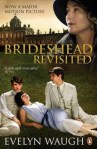
  2. Brideshead Revisited by Evelyn Waugh. The difficult loves of insular Englishman Charles Ryder, and his peculiarly intense relationship with the wealthy but dysfunctional family that inhabited Brideshead.
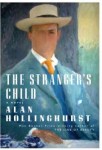
  3. The Stranger’s Child by Alan Hollinghurst. Embraced by the family of his Cambridge schoolmate, Cecil Valance writes an inspiring poem in an autograph album that becomes a staple of every English classroom after he is killed during World War I. (Man Booker Prize-winning author.)
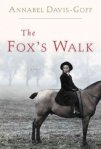
  4. The Fox’s Walk by Annabel Davis-Goff. During World War I, a ten-year-old girl sent to live with her autocratic grandmother in the country gradually discovers that her family’s privilege is purchased at great cost to many other people.
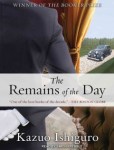
  5. The Remains of the Day by Kazuo Ishiguro. Stevens, an impeccable, quintessential English butler, embarks on a motoring trip through the West Country, on an odyssey that evokes disturbing memories of his thirty years of service to Lord Darlington and of the housekeeper, Miss Kenton.
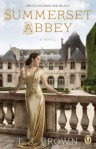
  6. Summerset Abbey by T.J. Brown. Daughters to the second son of the Earl of Summerset, Rowena and Victoria, after their father dies, move in with their uncle’s family in a much more traditional household where they learn about class division and, as war approaches, hope for a more modern future.
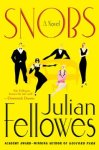
  7. Snobs by Julien Fellowes. Preparing to marry heir Charles Broughton, attractive accountant’s daughter Edith Lavery makes humorous and astute observations about contemporary England’s class system. (By the creator of Downton Abbey.)
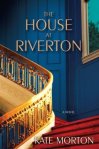
  8. The House at Riverton by Kate Morton. Living out her final days in a nursing home, ninety-eight-year-old Grace remembers the secrets surrounding the 1924 suicide of a young poet during a glittering society party hosted by Grace’s English aristocrat employers, a family that is shattered by war.
  9. A Room With a View by E.M. Forster. British social comedy examines a young heroine’s struggle against Victorian attitudes as she rejects the man her family has encouraged her to marry and chooses, instead, a socially unsuitable fellow she met on holiday in Italy.
  10. Cavendon Hall by Barbara Taylor Bradford. A tale spanning 16 years in Edwardian England finds the centuries-long relationship between the aristocratic Inghams and the Swann family who serves them tested by the outbreak of World War I.

Take heart, Anglophiles, we’ll get through this together!

Susan Reads: The Riddle of the Labyrinth by Margalit Fox

Every now and then a book comes along and all you can say is, “WOW!”

That’s my reaction to The Riddle of the Labyrinth: The Quest to Crack an Ancient Code, by Margalit Fox.

Ever hear of the minotaur, the half-man, half bull that lived in the center of the labyrinth, built by King Minos on ancient Crete?  As with most myths, this was one of those partly based on fact.  There was a palace of Knossos, on ancient Crete (which lies in the middle of the Mediterranean), and there was a King Minos, although the name seems to have been a general title, not a specific person. His palace was huge, hundreds of rooms built, well, in a maze-like fashion. For reasons unknown, the palace burned down sometime between 1450 and 1400 BCE, or about 3400 years ago, and that marked the end of the great Minoan civilization. And this we know for fact because Arthur Evans dug up the palace in Heraklion, Crete, in 1900.

And he found a storeroom.

With more than 2000 written clay tablets, baked by fire, still sitting there.

But what script was it? It wasn’t Egyptian hieroglyphics. It wasn’t Phoenician. It was too old for Ancient Greek. Unraveling the mystery would shed light on Bronze-age European civilization.  Scholars worked on it for years, including one Antiquities professor of Brooklyn College, Alice Kober. Kober, with incredible intelligence, scientific method, and a knack for languages that was almost frightening, through extreme perseverance managed to work out the basics, realizing that the mysterious language – known as Linear B – was written left to right, had different endings for masculine and feminine, and was a syllabary – a language where each symbol (read ‘letter’, if you wish) stood for a syllable of a word, not an individual letter, much like Japanese kana does. Kober poured her life into decoding the script. She came very close, but died before she could finish it.

Enter Michael Ventris, a quirky little upstart twenty years younger, a lonely child prodigy who, like Kober, mastered languages the way a sponge absorbs water (because everyone should know ancient Hittite and Etruscan). Ventris had been intrigued by Linear B since he was 14, if not outright obsessed.  Untrained (he went to a trade school to become an architect, but never took a college class at all), he corresponded with some of the greatest scholars of ancient civilizations, read Kober’s papers, put ideas together, sometimes wrong but sometimes right, and just 18 months – 18 heartbreaking months after Kober’s death, broke through the code of Linear B – a writing system native to Crete, but bent to write an ancient Greek dialect 400 years older than Greek was thought to be. The discoveries of other, similar tablets also written in Linear B on the mainland of Greece and surrounding territories corroborated the information. A whole new era in historical understanding was broken open, and the timeline for civilization had to be pushed back to accommodate it.

This book reads like a fascinating detective novel.  I could not put it down.  It’s like watching the film of Titanic – you know the ending, but you’re gripping your seat the entire time anyway. Fox’s style is extremely easy to follow and to read – she drops little hints about what’s to come and then speeds ahead, and you can’t stop reading.  If you love ancient history, if you love languages, cryptology, biographies of women in science or just a really good story, then read this book. It was truly a pleasure to read it.

The “I Survived” Series and Related Book Suggestions

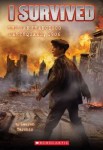
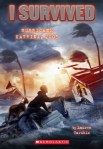
Is historical fiction or survival fiction something that intrigues you or your child? Then you have probably heard of the I Survived series of children’s chapter books by Lauren Tarshis:

This series consists of historical fiction that is plot driven and faced paced. It grabs the attention of most willing readers with stories about courage and survival. According to Scholastic the books are best suited to those reading and a second grade reading level and up, with Lexile ratings around 600 and higher. For more information on the I Survived series check out the Scholastic’s webpage dedicated to the series. The series includes:

1. The Sinking of the Titanic, 1912
2. The Shark Attacks of 1916
3. Hurricane Katrina, 2005
4. The Bombing of Pearl Harbor, 1941
5. The San Francisco Earthquake, 1906
6. The Attacks of September 11, 2001
7. The Battle of Gettysburg, 1863
8. The Japanese Tsunami, 2011
9. I Survived the Nazi Invasion,1944 will be released in late February but you can place a hold on it now!

If you have read all of the books currently available in this series or are looking for more books about courage, hope, and survival for children then I would recommend also checking out: Al Capone Does My Shirts by Gennifer Choldenko and its two sequels, Pirate Hannah Pritchard: Pirate of the Revolution! by Bonnie Pryor and its sequels, Will at the Battle of Gettysburg, 1863 by Laurie Calkhoven and the entire Boys of War series, Survival in the Storm: the Dust Bowl Diary of Grace Edwards by Katelan Janke (part of the Dear America series), The Winter of Red Snow: the Revolutionary War Diary of Abigail Jane Stewart by Kristiana Gregory (part of the Dear America series), Rex Zero by Tim Wynne-Jones and its sequels, The Journal of Jesse Smoke: a Cherokee Boy by Joseph Bruchac (part of the My Name is America series), Sophia’s War: a Tale of the Revolution by Avi, and Waiting for Anya by Michael Morpurgo.

I know that I have barely touched the surface of historical fiction that deals with children facing times of war, environmental catastrophe, and other situations with include a struggle to survive. Do you have a favorite, series or stand alone, that you would recommend?

History, Read All About It – For Book Clubs

history 2Here’s a selection of histories that should satisfy your reading club’s yearning for learning.

A People’s History of the United States: 1492 to Presentby Howard Zinn – Known for its lively, clear prose as well as its scholarly research, this is the only volume to tell America’s story from the point of view of — and in the words of — America’s women, factory workers, African-Americans, Native Americans, working poor, and immigrant laborers.

Lady Almina and the Real Downton Abbey: The Lost Legacy of Highlcere by Countess of Fiona Carnarvon –  This rich tale contrasts the splendor of Edwardian life in a great house against the backdrop of the First World War and offers an inspiring and revealing picture of the woman at the center of the history of Highclere Castle.

With the Old Breed: At Peleliu and Okinawaby E.B. Sledge – Based on notes Sledge secretly kept in a copy of the New Testament, this book captures with utter simplicity and searing honesty the experience of a soldier in the fierce Pacific Theater. Here is what saved, threatened, and changed his life. Here, too, is the story of how he learned to hate and kill—and came to love his fellow man.

Citizens of London: The Americans Who Stood with Britain in Its Darkest, Finest Hour by Lynne Olson – A behind-the-scenes story of how the United States forged its wartime alliance with Britain, told from the perspective of three key American players in London: Edward R. Murrow, the handsome, chain-smoking head of CBS News in Europe; Averell Harriman, the hard-driving millionaire who ran FDR’s Lend-Lease program in London; and John Gilbert Winant, the shy, idealistic U.S. ambassador to Britain.

Helmet for my Pillow by Robert Leckie –  From the live-for-today rowdiness of marines on leave to the terrors of jungle warfare against an enemy determined to fight to the last man, Leckie describes what war is really like when victory can only be measured inch by bloody inch.

The Lost City of Zby David Grann – In 1925, the legendary British explorer Percy Fawcett ventured into the Amazon jungle, in search of a fabled civilization. He never returned. Over the years countless perished trying to find evidence of his party and the place he called “The Lost City of Z.” Journalist David Grann interweaves the spellbinding stories of Fawcett’s quest for “Z” and his own journey into the deadly jungle, as he unravels the greatest exploration mystery of the twentieth century.

The Forgotten Man: A New History of the Great Depression by Amity Shlaes – Amity Shlaes, one of the nation’s most-respected economic commentators, offers a striking reinterpretation of the Great Depression. She traces the mounting agony of the New Dealers and the moving stories of individual citizens who through their brave perseverance helped establish the steadfast character we recognize as American today.

April 1865: The Month That Saved America by Jay Winik – A brilliant new look at the Civil War’s final days that will forever change the way we see the war’s end and the nation’s new beginning. Uniquely set within the larger sweep of history and filled with rich profiles of outsize figures, fresh iconoclastic scholarship, and a gripping narrative, this is a masterful account of the thirty most pivotal days in the life of the United States.

Here are some additional titles that might interest your club:  Team of Rivals by Doris Kearns Goodwin; The Swerve: How the World Became Modern by Stephen Greenblatt; Paris 1919: Six Months That Changed the World by Margaret MacMillan; The Eighty-Dollar Champion: Snowman, The Horse That Inspired a Nation by Elizabeth Letts; A Walk Across America by Peter Jenkins; Sin in the Second City: Madams, Ministers, Playboys, and the Battle for America’s Soul by Karen Abbott; Havana Nocturne: How the Mob Owned Cuba and Then Lost It to the Revolution by T.J. English