Happy Birthday Paperback Books!

birthday

On July 30, 1935, a new technology was born that provided knowledge, stories, entertainment (with text and pictures, no less) that was convenient and cheap.  It was light enough to carry anywhere and you could tag specific areas to penguinre-read at a later date.  An early e-reader?  Nope – the paperback book!  Penquin Publishers, in England, was the first to successfully publish respectable, quality writing without a hard cover.  (There were earlier paperback books called penny dreadfuls, yellow-backs, and dime novels that generally featured lurid stories and were printed on cheap pulp paper.)

pocketPartnering with Simon & Schuster, Robert de Graff introduced the first paperbacks in America on June 19, 1939 called Pocket Books.  The first American paperback book to be printed in the United States was The Good Earth by Pearl Buck.  The cost to purchase these new books – 25 cents versus $2.75 for a hardcover.  In order to make a profit on paperbacks, de Graff had to print 100,000 copies at a time.  He couldn’t rely on bookstores to sell that many copies so he began using magazine distributors to place Pocket Books in newsstands, subway stations, drugstores and any other outlet to reach suburban and rural populations.  He designed bold, colorful, eye-catching book covers to catch people’s eyes.  By September 1944, 100 million books were sold in more than 70,000 outlets across the United States.   By the end of the 1940’s, the paperback industry began publishing original stories.  Previously, the industry only reprinted hardcover titles.  There are now more than 20 major publishers producing high quality, original and reprinted paperbacks.


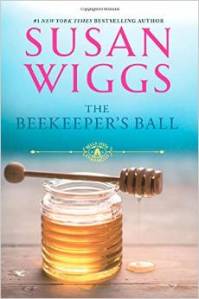
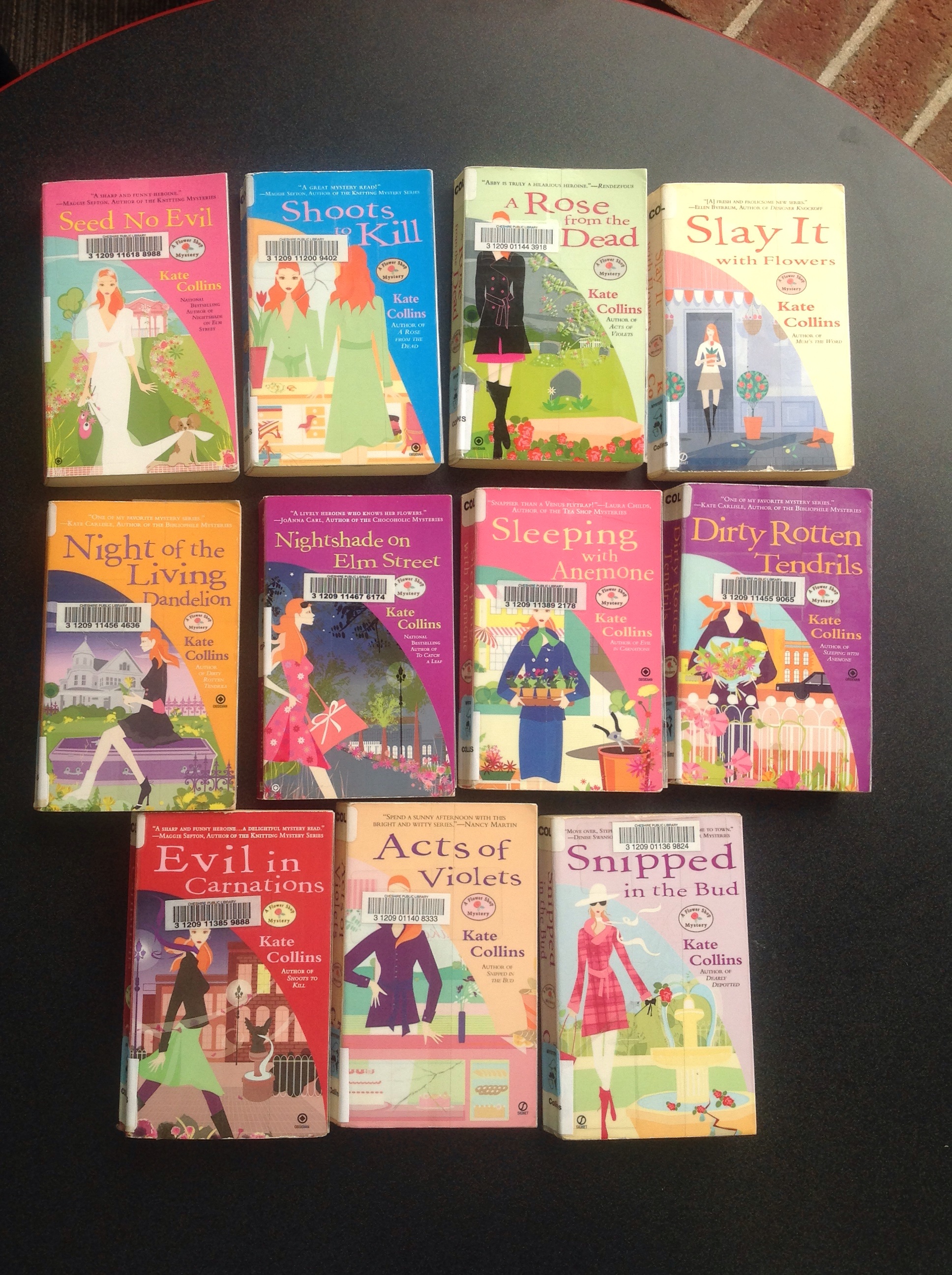
Today, there are many sizes of paperback books and all different prices, but the two major sizes are mass-market and trade.  Authors originally wrote stories for publications in magazines, but soon shifted their attention to mass-market paperbacks.  They could write longer, more in-depth, entertaining novels that boasted beautiful, bold, color covers and were prominently displayed in all types of venues.  They were affordable and easy to carry and proved to be a huge hit.  Mass-market paperback readers have a large selection of genres of original stories to choose from, in addition to best-selling hardcovers republished in paperback form.  In the beginning, Westerns were the biggest selling genre, followed by Crime and Science Fiction.   The most popular genre for mass-market today is Romance.  Within this genre you will find many sub-genres including contemporary romance, historical romance, small town romance, and paranormal romance.  The Cheshire Library has a separate section dedicated to mass-market Romance Books located towards the front of the library, near the large windows.    Another very popular genre for mass-market paperbacks are Cozy Mysteries.  The Cheshire Library has a large selection of these interfiled among the hardcovers in the Mystery section of the library.  You can also find regular Fiction, Science Fiction and Fantasy paperbacks in the library’s collection.

COZY MYSTERIES

COZY MYSTERIES

Some literary authors, critics and bookstore owners turned their noses up at mass market paperbacks.  When Doubleday’s Jason Epstein was a college student, he lamented the fact that he and his fellow students couldn’t afford hardcover editions and envisioned a line of upscale paperbacks of hardcover bestsellers and classics.  By 1953, Trade paperbacks were introduced.  These were larger, more durable, with attractive covers illustrated by fine artists with an appeal to a more intellectual market.  They sold for 65 cents to $1.25.    The library’s selection of Trade paperbacks are filed among the hardcover books.  They also come in a variety of genres, with the most popular genres being erotic romance – with Fifty Shades of Grey topping the charts – and Christian-themed books.


There were many who thought paperbacks would kill the publishing industry, but instead, the books proved to be quite the sensation.  As recently as 2010, paperbacks outsold hardcover books.  Although the ebook has taken some of the market away from paperbacks, they still continue to be a much beloved tool for readers everywhere.  The look, feel, texture, smell, size, and portability makes the paperback book very inviting.


Smart Summer Reads for Older Teens and Adults

Are you looking for a great read this summer that is not pure fluff, but not so heavy that you wonder why you are reading it for fun? Here are some books with great insights about life, different cultures, history, and society. They also happen to be fantastic reads, although not necessarily fun reads. These books would be good choices for a curious high school student, the college bound, and for adults that are just looking to expand their knowledge and reading while not afraid to cross the threshold of the teen room doors.

1. Persepolis by Marjane Satrapi. The great-granddaughter of Iran’s last emperor and the daughter of ardent Marxists describes growing up in Tehran in a country plagued by political upheaval and vast contradictions between public and private life.

2. The Absolutely True Diary of a Part-Time Indian by Sherman Alexie. Budding cartoonist Junior leaves his troubled school on the Spokane Indian Reservation to attend an all-white farm town school where the only other Indian is the school mascot.

3.  The Devil in the White City: Murder, Magic, and Madness at the Fair that Changed America by Erik Larson. An account of the Chicago World’s Fair of 1893 relates the stories of two men who shaped the history of the event–architect Daniel H. Burnham, who coordinated its construction, and serial killer Herman Mudgett.

4. American Born Chinese by Gene Luen Yang. In an action-packed modern fable about the problems young Chinese Americans face when trying to participate in American popular culture, the lives of three apparently unrelated characters–Jin Wang, Monkey King, and Chin-Kee–come together with an unexpected twist.

5. The Worst Hard Time: The Untold Story of Those Who Survived the Great American Dust Bowl by Timothy Egan. Presents an oral history of the dust storms that devastated the Great Plains during the Depression, following several families and their communities in their struggle to persevere despite the devastation.

Looking for even more books that are smart and fascinating read? Here are a few more reading suggestions. If I missed one you would like to recommend please leave a comment and let us know so other readers can add it to their list as well!  Sammy & Juliana in Hollywood by Benjamin Alire Sáenz, The Kite Runner by Khaled Hosseini, Maus and  Maus II  by Art Spiegelman, The Diary of a Young Girl by Anne Frank, The Color Purple by Alice Walker, The Magical Life of Long Tack Sam by Ann Marie Fleming, Walden by Henry David Thoreau, I, Rigoberta Menchu: An Indian Woman in Guatemala by Rigoberta Menchú, Is Everyone Hanging Out Without Me? by Mindy Kaling, Persepolis 2: the Story of a Return by Marjane Satrapi, First They Killed My Father: A Daughter of Cambodia Remembers by Loung Ung, Hyperbole and a Half: Unfortunate Situations, Flawed
Coping Mechanisms, Mayhem, and Other Things That Happened
by Allie Brosh, or The Spirit Catches You and You Fall Down: A Hmong Child, Her American Doctors, and the Collision of Two Cultures  by Anne Fadiman.

Tooth Fairy Books for First Time Donors

Do you have a child that has lost their first tooth, is celebrating their first wiggly tooth, or has questions about the Tooth Fairy and other related mythology? Parents of all generations have faced the dilemma of how to deal with it, and just what stories to share in their families. Well, here are a selection of picturebooks for you and your child to peruse to see what best fits your family.

1. Throw Your Tooth on the Roof: Tooth Traditions From Around the World by Selby B. Beeler; illustrated by G. Brian Karas. Consists of brief statements relating what children from around the world do with a tooth that has fallen out. Includes facts about teeth.

2. Tooth Tales From Around the World by Marlene Targ Brill; illustrated by Katya Krenina. Explores how different cultures have viewed losing teeth and how the idea of the Tooth Fairy originated.

3. The Tooth Mouse by Susan Hood; illustrated by Janice Nadeau. Introduces readers to the Tooth Mouse, France’s version of the tooth fairy, and to Sophie, a sweet young mouse who must prove she is brave, honest and wise enough to take over this important job.

4. Madlenka by Peter Sis
Madlenka, whose New York City neighbors include the French baker, the Indian news vendor, the Italian ice-cream man, the South American grocer, and the Chinese shopkeeper, goes around the block to show her friends her loose tooth and finds that it is like taking a trip around the world.

5. Amanda Pig and the Wiggly Tooth by Jean Van Leeuwen; pictures by Ann Schweninger.
Amanda Pig has her first ever wiggly tooth and she can not wait for the Tooth Fairy to come. But her loose tooth will not fall out. Father offers to pull it out for her, but Amanda thinks that might hurt too much. Instead, she decides to ignore it and one day discovers that her tooth has fallen out on its own. But where is it. Will the Tooth Fairy still come if Amanda has lost her tooth.

6. Tabitha’s Terrifically Tough Tooth by Charlotte Middleton. A young girl tries everything she can think of to make her loose tooth fall out in time to leave it for the Tooth Fairy.

There are plenty of other books that feature both new and well-known characters dealing with the first loose tooth. Here are some more books you might want to check out: Dear Tooth Fairy by Karen Gray Ruelle,  Silverlicious  by Victoria Kann, I Want My Tooth by Tony Ross, Franklin and the Tooth Fairy by Paulette Bourgeois, Fancy Nancy and the Too-Loose Tooth by Jane O’Connor, The Berenstain Bears and the Tooth Fairy by Jan & Mike Berenstain, The Very Beary Tooth Fairy by Arthur A. Levine; illustrated by Sarah S. Brannen, A Visit from the Tooth Fairy by Sarah Albee; illustrated by Karen Craig,
I Lost my Tooth! by Hans Wilhelm, Bear’s Loose Tooth by Karma Wilson; illustrations by Jane Chapman, and Gilbert and the Lost Tooth by Diane deGroat.

Susan Reads: Nothing to Envy

Rarely have I come across a book so haunting.

If you Google Earth for North Korea at night, you will see South Korea as brightly lit as a coast of the US. Above it is a greatC0044096-Korea_at_night,_satellite_image-SPL big blackness. This is North Korea. It is not black because they block out satellites, or by treaty.

It’s because there is no electricity.

In an entire country.

Author Barbara Dimick’s book, Nothing to Envy: Ordinary Lives in North Korea won the 2010 Samuel Booker prize, with good reason. Dimick has seen the “official” places of North Korea, but moreso spent years tracking down people who managed to escape the deadly iron fist of North Korea and interviewing them extensively. She follows several families, some of them die-hard party loyalists, through their unwavering patriotism, their questioning, their suffering, to their desperate do or die escape.

indexDimick traces some of the history, from World War II, when things started to go flaky, through the Korean conflict, when things got really wacky, to the insane tyranny of Kim Jong Il, and now Kim Jong Un. North Korea, until the 1960’s, actually had a better standard of living than South Korea, but began to fall apart in the 70’s. But, unlike Russian Communism, instead of saving itself, North Korea became even more hard-nosed, more dictatorial, more insane. By the 90’s, there were no jobs, no wages, no food, no manufacturing. People began starving to death in great masses, with children so stunted by malnutrition they barely topped 4’7” as adults. Trees died, because people stripped the bark to eat.  As many as three million people died, and there were many reports of cannibalism.

Imagine a place where radios and televisions are set by the government to one single official channel. Where the government doles out the very food you are allowed to eat, and the quantity, and the clothes you wear. Where everything is in black and white except the propaganda posters, which are in red, the only color people can look to with cheer. Where every home must display a photo of the dictator, and clean it daily with a special cloth, where the picture can be inspected at any time and you can be sent to the Gulag for disrespect. North Koreans are so isolated, so indoctrinated, so starved, so cowed, that they are not only  utterly brainwashed against the outside world, but cannot imagine what the outside world is like. After three generations of this, they’ve never known anything else.

Perhaps the saddest, most poignant moment is when the once-loyal mother makes a desperate swim across the river into China,article-north-korea-hunger crawls to the first house she sees, starved, frozen, exhausted, desperate, pushes open the garden gate, and discovers a bowl of meat and rice and  vegetables set outside waiting for her, and she is utterly amazed, not having seen meat or even rice in months. Then the family’s dog comes around the corner of the house, and the woman realizes that in China, even dogs eat better than North Koreans.

Read this. Really, read this book. It’s short. It will painlessly explain so much of the insanity, the politics, the danger that is North Korea, and will help you separate the Korean government from the Korean people, who have as much control over their situation as an ant has over an elephant. You will not forget it.

Jenn Reads: The Spymistress

Female espionage in the Civil War is a new area of study, and one I am quite familiar with. My husband, Matthew, lectures frequently on four women who risked all for the sake of their country. It has been an immensely popular program, drawing crowds of more than 80 people on occasion.

The Spymistress by Jennifer Chiaverini was my pick for March for the girlfriend’s book club I run outside of the library. I had one sole purpose in selecting this book: to help me research and get ready for my own impression of a female spy in the Civil War. Matt and I have joined a reenacting group and we will be portraying a Pinkerton agent and a female detective. While this is a fictional account, I knew it would be helpful and readable for my friends.

The Spymistress tells the story of Elizabeth Van Lew, a Unionist living in Richmond during the time of the American Civil War. While not incredibly common, Unionists lived throughout the Confederacy, and Confederate sympathizers lived throughout the Union. Life was extremely difficult for these people, who had to toe a line so they

The Spymistress by Jennifer Chiaverini

wouldn’t be arrested, deemed traitors, or become social outcasts. Van Lew, 43 in 1861, lives with her mother, brother, sister-in-law, and nieces in their Richmond mansion. She’s outspoken and passionate and feels a deep need to help. But she’s not going to help the Confederacy. She’s going to help the Union.

Van Lew is able to get herself a pass for the prison holding Union soldiers and begins her work. Initially she comes bearing gifts of ginger cakes and food, medicine, and other creature comforts, but soon starts smuggling in and out information. Suspicions arise almost immediately with citizens of Richmond- why is Van Lew only helping Union prisoners? What about Confederate soldiers who have a need? Van Lew deftly uses the Bible and Christian theory, saying that Jesus taught his followers to love their enemy as themselves. And since this is a religious, church-going society, this explanation works. She also hosts a Confederate general and his family for several months in her home, puts on several lavish parties celebrating a particular regiment, and diverts suspicion.

But Van Lew’s best work comes at Libby Prison, where she is able to help Union soldiers escape. She sets up what is essentially a soldier’s underground railroad through a set of safe houses (using quilt blocks, hung outside on clotheslines). Van Lew also set up a chain of spies throughout the Confederate government and military, most notably Mary Bowser (whose real name may not have even been Mary Bowser), a freed slave who worked as a maid for Varina Davis, the first lady of the Confederacy, in the Confederate White House.

Van Lew and her chain of spies are unsung heroes of the Civil War and their stories deserve and need to be told. Van Lew truly did risk everything for her country and lived a very tragic life after the war. Imagine being a Unionist in Richmond after the war.

Chiaverini does an apt job of telling Van Lew’s story with accuracy and respect. Having already known most of Van Lew’s work and life, much in this book was not new for me. For those who are not familiar with Van Lew, I would imagine this being a welcome history and biographical lesson. Her narrative is easy to read and true to Van Lew’s character. This is not a “romantic” book, so those expecting a love story will not find one (Van Lew never married).

However, I was not wowed by this book. Perhaps because I knew too much already about Van Lew the book just fell flat. There was nothing wrong with the characterization, the narrative, or the story itself. Having listened to this book, maybe it was the reader.

Rating: 3 stars out of 5

See you in the stacks,

Jenn