The “I Survived” Series and Related Book Suggestions

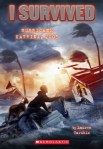
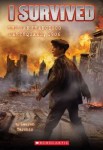
Is historical fiction or survival fiction something that intrigues you or your child? Then you have probably heard of the I Survived series of children’s chapter books by Lauren Tarshis:

This series consists of historical fiction that is plot driven and faced paced. It grabs the attention of most willing readers with stories about courage and survival. According to Scholastic the books are best suited to those reading and a second grade reading level and up, with Lexile ratings around 600 and higher. For more information on the I Survived series check out the Scholastic’s webpage dedicated to the series. The series includes:

1. The Sinking of the Titanic, 1912
2. The Shark Attacks of 1916
3. Hurricane Katrina, 2005
4. The Bombing of Pearl Harbor, 1941
5. The San Francisco Earthquake, 1906
6. The Attacks of September 11, 2001
7. The Battle of Gettysburg, 1863
8. The Japanese Tsunami, 2011
9. I Survived the Nazi Invasion,1944 will be released in late February but you can place a hold on it now!

If you have read all of the books currently available in this series or are looking for more books about courage, hope, and survival for children then I would recommend also checking out: Al Capone Does My Shirts by Gennifer Choldenko and its two sequels, Pirate Hannah Pritchard: Pirate of the Revolution! by Bonnie Pryor and its sequels, Will at the Battle of Gettysburg, 1863 by Laurie Calkhoven and the entire Boys of War series, Survival in the Storm: the Dust Bowl Diary of Grace Edwards by Katelan Janke (part of the Dear America series), The Winter of Red Snow: the Revolutionary War Diary of Abigail Jane Stewart by Kristiana Gregory (part of the Dear America series), Rex Zero by Tim Wynne-Jones and its sequels, The Journal of Jesse Smoke: a Cherokee Boy by Joseph Bruchac (part of the My Name is America series), Sophia’s War: a Tale of the Revolution by Avi, and Waiting for Anya by Michael Morpurgo.

I know that I have barely touched the surface of historical fiction that deals with children facing times of war, environmental catastrophe, and other situations with include a struggle to survive. Do you have a favorite, series or stand alone, that you would recommend?

History, Read All About It – For Book Clubs

history 2Here’s a selection of histories that should satisfy your reading club’s yearning for learning.

A People’s History of the United States: 1492 to Presentby Howard Zinn – Known for its lively, clear prose as well as its scholarly research, this is the only volume to tell America’s story from the point of view of — and in the words of — America’s women, factory workers, African-Americans, Native Americans, working poor, and immigrant laborers.

Lady Almina and the Real Downton Abbey: The Lost Legacy of Highlcere by Countess of Fiona Carnarvon –  This rich tale contrasts the splendor of Edwardian life in a great house against the backdrop of the First World War and offers an inspiring and revealing picture of the woman at the center of the history of Highclere Castle.

With the Old Breed: At Peleliu and Okinawaby E.B. Sledge – Based on notes Sledge secretly kept in a copy of the New Testament, this book captures with utter simplicity and searing honesty the experience of a soldier in the fierce Pacific Theater. Here is what saved, threatened, and changed his life. Here, too, is the story of how he learned to hate and kill—and came to love his fellow man.

Citizens of London: The Americans Who Stood with Britain in Its Darkest, Finest Hour by Lynne Olson – A behind-the-scenes story of how the United States forged its wartime alliance with Britain, told from the perspective of three key American players in London: Edward R. Murrow, the handsome, chain-smoking head of CBS News in Europe; Averell Harriman, the hard-driving millionaire who ran FDR’s Lend-Lease program in London; and John Gilbert Winant, the shy, idealistic U.S. ambassador to Britain.

Helmet for my Pillow by Robert Leckie –  From the live-for-today rowdiness of marines on leave to the terrors of jungle warfare against an enemy determined to fight to the last man, Leckie describes what war is really like when victory can only be measured inch by bloody inch.

The Lost City of Zby David Grann – In 1925, the legendary British explorer Percy Fawcett ventured into the Amazon jungle, in search of a fabled civilization. He never returned. Over the years countless perished trying to find evidence of his party and the place he called “The Lost City of Z.” Journalist David Grann interweaves the spellbinding stories of Fawcett’s quest for “Z” and his own journey into the deadly jungle, as he unravels the greatest exploration mystery of the twentieth century.

The Forgotten Man: A New History of the Great Depression by Amity Shlaes – Amity Shlaes, one of the nation’s most-respected economic commentators, offers a striking reinterpretation of the Great Depression. She traces the mounting agony of the New Dealers and the moving stories of individual citizens who through their brave perseverance helped establish the steadfast character we recognize as American today.

April 1865: The Month That Saved America by Jay Winik – A brilliant new look at the Civil War’s final days that will forever change the way we see the war’s end and the nation’s new beginning. Uniquely set within the larger sweep of history and filled with rich profiles of outsize figures, fresh iconoclastic scholarship, and a gripping narrative, this is a masterful account of the thirty most pivotal days in the life of the United States.

Here are some additional titles that might interest your club:  Team of Rivals by Doris Kearns Goodwin; The Swerve: How the World Became Modern by Stephen Greenblatt; Paris 1919: Six Months That Changed the World by Margaret MacMillan; The Eighty-Dollar Champion: Snowman, The Horse That Inspired a Nation by Elizabeth Letts; A Walk Across America by Peter Jenkins; Sin in the Second City: Madams, Ministers, Playboys, and the Battle for America’s Soul by Karen Abbott; Havana Nocturne: How the Mob Owned Cuba and Then Lost It to the Revolution by T.J. English

Entertainment Weekly Picks Top 10 Nonfiction Books of the Year

enter2Entertainment Weekly has issued it’s Top Ten Best Of list for 2013.  Here are their choices for best nonfiction books.

Five Days at Memorial by Sheri Fink – Pulitzer Prize winner Sheri Fink’s landmark investigation of patient deaths at a New Orleans hospital ravaged by Hurricane Katrina – and her suspenseful portrayal of the quest for truth and justice.

Fosse by Sam Wasson – An intensively researched biography of choreographer Bob Fosse.

With or Without You by Domenica Ruta – A haunting, unforgettable mother-daughter story for a new generation—the debut of a blazing new lyrical voice.

The Last Train to Zona Verde by Paul Theroux – An ode to the last African journey of the world’s most celebrated travel writer.

The Good Nurse by Charles Graeber – This book more than chronicles nurse Cullen’s deadly career and the breathless efforts to stop him; it paints an incredibly vivid portrait of madness and offers a penetrating look inside America’s medical system.

The Telling Room by Michael Paterniti – In the picturesque village of Guzmán, Spain, in a cave dug into a hillside on the edge of town, an ancient door leads to a cramped limestone chamber known as “the telling room.” Containing nothing but a wooden table and two benches, this is where villagers have gathered for centuries to share their stories and secrets—usually accompanied by copious amounts of wine.

Frozen in Time by Mitchell Zuckoff – A breathtaking blend of mystery and adventure and is a poignant reminder of the sacrifices of our military personnel and a tribute to the everyday heroism of the US Coast Guard.

The Cooked Seed by Anchee Min – An immigrant story that takes the author from the shocking deprivations of her homeland to the sudden bounty of the promised land of America, without language, money, or a clear path.

Book of Ages by Jill Lepore – A revelatory portrait of Benjamin Franklin’s youngest sister and a history of history itself. Like her brother, Jane Franklin was a passionate reader, a gifted writer, and an astonishingly shrewd political commentator. Unlike him, she was a mother of twelve.

Going Clear by Lawrence Wright – An investigation into The Church of Scientology.

For the Top 10 list for movies, TV, albums and songs, see the December 13, 2013 issue of Entertainment Weekly.

Gentle Reads for Young Adults

Young adult books seem to be getting closer and closer to that new adult genre. Some of the books marked to teens now have more sexual situations or violence than parents or teachers might be comfortable with. While our world is changing and our young adults are too, some authors are still handling tough topics, and universal conflicts, without crossing the lines that might make adults uncomfortable recommending a book for someone else’s teen or younger advanced reader. Here are some ‘gentle reads’ that you can recommend without blushing that are well written and far from dull reads.

Fever, 1793 by Laurie Halse Anderson
In 1793 Philadelphia, sixteen-year-old Matilda Cook, separated from her sick mother, learns about perseverance and self-reliance when she is forced to cope with the horrors of a yellow fever epidemic.

Stormbreaker by Anthony Horowitz
After the death of the uncle who had been his guardian, fourteen-year-old Alex Rider is coerced to continue his uncle’s dangerous work for Britain’s intelligence agency, MI6.

Walk Two Moons by Sharon Creech
After her mother leaves home suddenly, thirteen-year-old Sal and her grandparents take a car trip retracing her mother’s route. Along the way, Sal recounts the story of her friend Phoebe, whose mother also left.

All these Things I’ve Done by Gabrielle Zevin
In a future where chocolate and caffeine are contraband, teenage cellphone use is illegal, and water and paper are carefully rationed, sixteen-year-old Anya Balanchine finds herself thrust unwillingly into the spotlight as heir apparent to an important New York City crime family.

Ten Miles Past Normal by Francis O’Roark Dowell
Because living with “modern-hippy” parents on a goat farm means fourteen-year-old Janie Gorman cannot have a normal high school life, she tries joining Jam Band, making friends with Monster, and spending time with elderly former civil rights workers.

The Wednesday Wars by Gary D. Schmidt
During the 1967 school year, on Wednesday afternoons when all his classmates go to either Catechism or Hebrew school, seventh-grader Holling Hoodhood stays in Mrs. Baker’s classrooom, where they read the plays of William Shakespeare and Holling learns much of value about the world he lives in

Have you read all of these or just want more suggestions? In that case, these books might be of interest as well; Flipped by Wendelin Van Draanen, Uglies by Scott Westerfeld, Anne of Green Gables by L.M. Montgomery, A Long Way from Chicago by Richard Peck, The Lightning Thief by Rick Riordan, The Princess Diaries by Meg Cabot, Beauty by Robin McKinley, A Mango Shaped Space by Wendy Maas, The Secret of the Old Clock by Carolyn Keene, Alanna: The First Adventure by Tamora Pierce, Airborn (Matt Cruse, #1) by Kenneth Oppel, or All-American Girl by Meg Cabot.

Library Journal Reviewers List Their Top 10 Books of 2013

Librarians rely on a lot of resources when deciding which books to purchase for their libraries. At the top of the list is Library Journal’s Book Review, which provides prepublication reviews for hundreds of books each month. When you read books for a living, so many will blur together, but every year there are standouts. Here are LJ’s picks for the best books of 2013:

Claire of the Sea Light by Edwidge Danticat (fiction). Claire Limyè Lanmè (“Claire of the Sea Light”) goes missing on her seventh birthday, soon after her destitute fisherman father makes the wrenching decision to give her away so that she can have a better life. As townsfolk search for her, painful secrets, haunting memories, and startling truths are unearthed among the community.

The Panopticon by Jenni Fagan (fiction). Anais Hendricks, 15, is in the back of a police car. She is headed for the Panopticon, a home for chronic young offenders. She can’t remember what’s happened, but across town a policewoman lies in a coma and Anais’s school uniform is covered in blood.  Raised in foster care from birth, Anais has been let down by just about every adult she has ever met. Now a counter-culture outlaw, she knows that she can only rely on herself. And yet despite the parade of horrors visited upon her early life, she greets the world with the witty, fierce insight of a survivor.

Five Days at Memorial: Life and Death in a Storm-Ravaged Hospital by Sheri Fink (non-fiction). Pulitzer Prize winner Sheri Fink’s landmark investigation of patient deaths at a New Orleans hospital ravaged by Hurricane Katrina — and her suspenseful portrayal of the quest for truth and justice.

The Searchers: The Making of an American Legend by Glenn Frankel (non-fiction). Explores the true-story-become-legend underpinning John Ford’s film, and the making of the film itself.

NOS4A2 by Joe Hill (fiction). Charles Talent Manx has a way with children. He likes to take them for rides in his 1938 Rolls-Royce Wraith with the NOS4A2 vanity plate. With his old car, he can slip right out of the everyday world, and onto the hidden roads that transport them to an astonishing–and terrifying–playground of amusements he calls “Christmasland.” Now Vic McQueen, the only kid to ever escape Manx’s unmitigated evil, is all grown up and desperate to forget. But Charlie Manx never forgot. He’s on the road again and he’s picked up a new passenger: Vic’s own son.

A Constellation of Vital Phenomena by Anthony Marra (fiction). In a rural village in December 2004 Chechnya, a failed doctor Akhmed harbors the traumatized 8-year-old daughter of a father abducted by Russian forces and treats a series of wounded rebels and refugees while exploring the shared past that binds him to the child.

How To Create the Perfect Wife by Wendy Moore (non-fiction). Go back before the Regency and the romances it still inspires. Enter the Enlightenment, but don’t assume its adherents were all enlightened as we’d understand the term. Meet Thomas Day, an 18th-century aristocrat free to study and practice Enlightenment philosophies. Watch him go to an orphanage and adopt a girl for long-term training to be his wife. Twice.

Cooked: A Natural History of Transformation by Michael Pollan (non-fiction). Pollan’s latest details his adventures exploring the four elements of food preparation: fire, water, air, and earth. In the course of his journey, he discovers that the cook occupies a special place in the world, standing squarely between nature and culture.

Bleeding Edge by Thomas Pynchon (fiction). New York City, 2001. Fraud investigator Maxine Tarnow starts looking into the finances of a computer-security firm and its billionaire geek CEO and discovers there’s no shortage of swindlers looking to grab a piece of what’s left of the tech bubble.

The Woman Who Lost Her Soul by Bob Shacochis (fiction). When the humanitarian lawyer Tom Harrington travels to Haiti to investigate the murder of a beautiful, seductive photojournalist, he is confronted with a dangerous landscape of poverty, corruption, and voodoo.