Book Review: March by E. L. Doctorow

[Cover]

March by E. L. Doctorow

This month’s selection for “When Johnny Comes Marching Home: A Civil War Book  Discussion” was March by E. L. Doctorow, not to be confused with Geraldine Brooks’ March.

I selected this book because of the accolades it has received: Pen/Faulkner Award and National Book Critics Circle Award. It was also a New York Times Bestseller. I had given the audiobook version to my husband to listen to, and he could not get past the first three discs. This did not bode well for my own listening of this book.

March tells the story of Sherman’s imfamous march through Georgia, South Carolina, and North Carolina during 1864 and into 1865. There is a rather large, colorful, and diverse cast of characters, led by William Tecumsah Sherman himself. Doctorow does an excellent job incorporating people from all “walks of life” into this story: freed slaves, Southern women, Confederate and Union soldiers, and even a British journalist. However, there were almost too many characters. At some point I lost track of who was where when and what happened to them. Some people stayed behind on different parts of the march and we never heard from them again. After a time, you wondered, “Hey, what happened to…?” and you never found out.

This book is not for the queasy or faint at heart, as there are graphic war scenes, including mass rape, killing of prisoners of war, drowning of freed slaves, and the burning of entire cities. If you’re expecting a nice, wholesome story, you won’t find it here. This is a realistic account of what actually happened during Sherman’s march to the sea. You’ll learn a lot and gain insight into a much maligned man.

Whether you love or hate Sherman and can or can’t justify his actions during the Civil War, one has to admit that he greatly helped end the Civil War and saved thousands of lives who would have been lost if the war had continued. March shows a softer side of Sherman, a man who, while following orders, often found himself at the mercy of his men, who got carried away with the spoils of war.

While I found this book to be interesting and the reader, Joe Morton, engaging, I did not love it. The language and style were easy to read and understand. I’m not sure what Doctorow could have done to take my rating from an “ok” to “great”.

Rating: 3 stars

Today’s Romance Novels

Today’s romance novels are not the bodice ripping, sex saturated, moaning and groaning, air head woman vs. chest beating man, empty stories of the 70’s and 80’s.  Today’s romances have evolved to complex plots, with smart, savvy heartsheroines and sensitive, flawed heroes.  The old romance books had the domineering man “rescuing” the passive woman.  Today you’ll find strong, independent women who sometimes do the “rescuing”.  While most of today’s books have the “happily ever after ending”, some stories end up “happy for now”, or “satisfied with my live as is”.  Most romances today don’t center around just the two main characters.  You learn about their families and friends, the town they live in, the world around them.  Today’s romance reader is smart, educated, thoughtful, and complex.  Today’s romances run the gambit from historical England, to the wild American West, to the military, to small town life.  They can be inspirational, suspenseful, other worldly and a whole host of subgenres – so many that everyone will be able to find the right fit for their reading pleasure.  It is a bit deceiving to label a book “romance”, when it fits quite nicely as a “literary” novel.  Below is a list of just a few of the romance subgenres.

  1. Medieval
  2. Historical (England, Scotland)
  3. American Historical
  4. Western (Contemporary)
  5. Western (Historical)
  6. Contemporary (Serious)
  7. Contemporary (Humorous)
  8. Suspense
  9. Thriller
  10. Military
  11. Paranormal(Vampires, werewolves, shapeshifters)
  12. Paranormal(Ghosts, witches)
  13. Futuristic/Fantasy
  14. Regency Romances
  15. Victorian Romances
  16. Inspirational(Historical)
  17. Inspirational(Contemporary)
  18. Erotic
  19. Chick Lit
  20. Romantic Mysteries

The Library has an excellent selection of mass market romance paperbacks located on the main level near the front windows.

Which is your favorite genre?

Historical Fiction for Middle School Students

As someone that has spent time in the children’s room, I have witnessed more than one panicked student, or parent, as a reading assignment for a particular kind of book comes due. Sometimes it is biographies, or sports fiction, or realistic fiction. It can be hard to know what to choose when assigned a book far outside your normal reading preferences, or when the student in question does not read much on their own anyway.  Here are some options for Middle School age students assigned to read historical fiction, and have no idea where to start.

[Cover]

Nobody’s Princess

Nobody’s Princess by Esther Friesner is likely appeal more to girls because it is about the Spartan princess Helen as she disguises herself as a boy. She learns to fight and has adventures to prove that she should be able to make decisions about her own life. On one level, the story is about a  spoiled princess using her mind and status to get her own way, but larger issues of women’s rights, slavery, choice, and individual destiny play their part as well. The era is well portrayed and the book is entertaining while leaving the reader looking for more. Thankfully, if this book sparks interest, there is a sequel, Nobody’s Prize, in which Helen manages to join the quest for the Golden Fleece on the Argo.

Fever 1793

Fever 1793

Fever 1793 by Laurie Halse Anderson takes place as Philadelphia becomes overwhelmed with mosquitoes and rumors of fever.  Many have taken ill near the docks, and the number of deaths is growing. Mattie Cook is just 14, and has just lost a friend to the fever, but she has no time to mourn. New patrons overrun her family’s coffee shop and Mattie’s fears about the fever are all but overshadowed by dreams of business success. However, the fever begins to strike closer to home and Mattie’s work to build a new life must give way to a new fight-the fight to stay alive. An accurate and compelling look at the times, and the lives of young people of the era.

[Cover]

City of Orphans

City of Orphans, written by Avi and illustrated by Greg Ruth takes place on the streets of New York City in 1893. Newsboys like thirteen-year- old Maks Geless need to watch out for gang leaders like Bruno,  and tier plots to take control of all the newsies on the lower East Side. While on the run Maks meets Willa, a strange girl who lives alone in an alley but has spunk and skills. Maks must find a way to free his sister Emma from the city jail where she has been imprisoned after being accused of stealing a watch. Bartleby Donck, an eccentric lawyer guides Maks and Willa in the the search for the truth. The novel offers readers action, mystery, a look at historic New York,  and a story about the love of family.

This is just a sampling of the available titles that might fit the bill. If these books appeal to you and your young readers I also suggest browsing our books by Markus Zusak, Henry Aubin, Ross Collins, Margaret Peterson Haddix, Susan Fletcher, Julius Lester, Lois Lowry, Gill Harvey, and Christopher Paul Curtis. Do not forget that our librarians are always available to help you find these books, or to make further suggestions.

New Book Club: When Johnny Comes Marching Home

[Cover]

The March by E. L. Doctorow

Book clubs, to me, offer a great opportunity for people who are already interested or want to learn more about a particular genre or topic. I’m constantly amazed at the breadth of knowledge some of my members bring to book discussions. Learning from each other allows us to form, or even change, our own opinions.

I am pleased to offer “When Johnny Comes Marching Home: A Civil War Book Discussion” starting on Monday April 1st, in honor of the ongoing 150th anniversary of the American Civil War. When I ran this book group in spring 2011, I was pleased at the interest and enthusiasm of those who attended. I am offering it again as part of my spring 2013 Civil War programming. The April 1st meeting will kick-off the spring events.

Unlike last time, we will be reading fiction exclusively. While there is a plethora of excellent n0nfiction titles on the Civil War, I previously found members had a difficult time completing the books and even getting into them. We are lucky that the Civil War still inspires fiction authors to write splendid works that will provide much conversation.

Our schedule for this “mini” book group is:

  • April 1st, 7PM: March by E. L. Doctorow
  • May 6th, 7PM: Widow of the South by Robert Hicks
  • June 3rd, 7PM: Rebel by Bernard Cornwell
  • July 1st, 7PM: Gods and Generals by Jeff Shaara

Copies of these books are available in our lobby for checkout. I look forward to seeing you and discussing one of my favorite topics!

Oscar Contenders – They were books first!

argo  lesmis  pi  lincoln  silverlinings

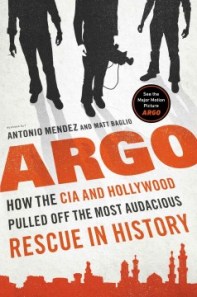
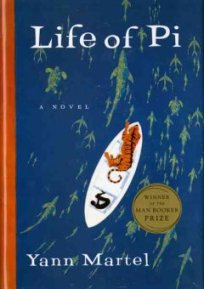
Many of the best picture nominees this year are based on books –  from serious non-fiction (Argo: How the CIA and Hollywood Pulled Off the Most Audacious Rescue in History by Antonio Mendez and Matt Baglio) to the classics (Victor Hugo’s Les Miserables) to literary fiction (Life of Pi by Yann Martel) to history (Spielberg’s Lincoln had roots in Doris Kearns Goodwin’s Team of Rivals) and to a well-reviewed quiet novel (Silver Linings Playbook by Matthew Quick).

How many have you read? How do the movies compare to the books?