Jenn Reads: The Spymistress

Female espionage in the Civil War is a new area of study, and one I am quite familiar with. My husband, Matthew, lectures frequently on four women who risked all for the sake of their country. It has been an immensely popular program, drawing crowds of more than 80 people on occasion.

The Spymistress by Jennifer Chiaverini was my pick for March for the girlfriend’s book club I run outside of the library. I had one sole purpose in selecting this book: to help me research and get ready for my own impression of a female spy in the Civil War. Matt and I have joined a reenacting group and we will be portraying a Pinkerton agent and a female detective. While this is a fictional account, I knew it would be helpful and readable for my friends.

The Spymistress tells the story of Elizabeth Van Lew, a Unionist living in Richmond during the time of the American Civil War. While not incredibly common, Unionists lived throughout the Confederacy, and Confederate sympathizers lived throughout the Union. Life was extremely difficult for these people, who had to toe a line so they

The Spymistress by Jennifer Chiaverini

wouldn’t be arrested, deemed traitors, or become social outcasts. Van Lew, 43 in 1861, lives with her mother, brother, sister-in-law, and nieces in their Richmond mansion. She’s outspoken and passionate and feels a deep need to help. But she’s not going to help the Confederacy. She’s going to help the Union.

Van Lew is able to get herself a pass for the prison holding Union soldiers and begins her work. Initially she comes bearing gifts of ginger cakes and food, medicine, and other creature comforts, but soon starts smuggling in and out information. Suspicions arise almost immediately with citizens of Richmond- why is Van Lew only helping Union prisoners? What about Confederate soldiers who have a need? Van Lew deftly uses the Bible and Christian theory, saying that Jesus taught his followers to love their enemy as themselves. And since this is a religious, church-going society, this explanation works. She also hosts a Confederate general and his family for several months in her home, puts on several lavish parties celebrating a particular regiment, and diverts suspicion.

But Van Lew’s best work comes at Libby Prison, where she is able to help Union soldiers escape. She sets up what is essentially a soldier’s underground railroad through a set of safe houses (using quilt blocks, hung outside on clotheslines). Van Lew also set up a chain of spies throughout the Confederate government and military, most notably Mary Bowser (whose real name may not have even been Mary Bowser), a freed slave who worked as a maid for Varina Davis, the first lady of the Confederacy, in the Confederate White House.

Van Lew and her chain of spies are unsung heroes of the Civil War and their stories deserve and need to be told. Van Lew truly did risk everything for her country and lived a very tragic life after the war. Imagine being a Unionist in Richmond after the war.

Chiaverini does an apt job of telling Van Lew’s story with accuracy and respect. Having already known most of Van Lew’s work and life, much in this book was not new for me. For those who are not familiar with Van Lew, I would imagine this being a welcome history and biographical lesson. Her narrative is easy to read and true to Van Lew’s character. This is not a “romantic” book, so those expecting a love story will not find one (Van Lew never married).

However, I was not wowed by this book. Perhaps because I knew too much already about Van Lew the book just fell flat. There was nothing wrong with the characterization, the narrative, or the story itself. Having listened to this book, maybe it was the reader.

Rating: 3 stars out of 5

See you in the stacks,

Jenn

Jenn Reads: Shinju by Laura Joh Rowland

I’m a voracious reader, but my reading skills lately have been the pits. This cold winter weather getting anyone else down in the dumps?

I finally finished a book last night, from the stack of books that have yet to be finished. This particular one, Shinju, by Laura Joh Rowland, was supposed to be done for mystery book club two weeks ago. Ooops.

195979Shinju follows beginning investigating police office (of sorts, his official title is yoriki) Sano Ichiro in 17th century feudal Japan. Sano, a samurai/school teacher by trade, has been given this position by his supporter, a position he is initially unsuited for. He’s not bad at what he does- no, it’s that he’s a little too good at what he does, especially when things should be better left untouched, as his boss requests.

Sano is supposed to write a closing report on a shinju, or a double romantic suicide. Typically shinjus are when two people of different classes fall in love. Knowing their love will never survive and their families will not accept the relationship, the lovers commit suicide. This shinju looks like a suicide, but Sano is hesitant to close this case- and for good reason. Sano will risk everything: his job, his name, his parent’s reputation, and the lives of others, to solve this case.

The back cover of the book has a quote saying how “exotic” it is, and I suppose for some who are not familiar with the time period, it could be. My senior thesis for my history major in college was on a facet of Japanese history, so this particular era was familiar. For me, reading this book brought me back to my studies and I was thrilled to be immersed in 17th century Edo (now Tokyo). This is a world that is much different than ours, and much different than even 17th century Europe. Led by the Tokugawa regime, the government is a military dictatorship with strict rules. Religion, philosophy, and culture, for the new reader, may seem odd or strange. For several of our book clubbers, how Sano struggles throughout the book to justify his need for revenge and thirst to solve the mystery with his filial piety (extreme devotion to one’s elders, especially parents) and what is expected of him, was weird and unnecessary. But this is something a man of his time would have struggled with, and is realistic.

Many commented that the writing style was a bit elementary, but this is Rowland’s first published work, and will develop further in the series. Is this a masterpiece of mystery writing? No, but it was enjoyable for

what it was. More important to me than the mystery was the setting and time period, which I felt Rowland was spot on with.

Rating: 3 of out 5 stars. Enjoyable, but unnecessarily dense in some places where the plot line could have moved faster. Loved the time period and setting.

See you in the stacks,

Jenn

Jenn Reads: A Tale of Two Cities

In general, I have a rule when it comes to selecting items for our Cheshire Cats Classics Club to read: it has to be something I have never read before.

There are a couple of reasons for this. First, I like to read something fresh and new along with my clubbers. If I selected something that I’ve read in the past, I likely would not take the time to reread it. Second, the classics I have read are likely those my clubbers have already read, and one of my goals is to introduce

A Tale of Two Cities by Charles Dickens

them to titles and authors they may have never read before. It’s a formula that has worked for 3 1/2 years.

For our March pick, I broke that rule.

A Tale of Two Cities by Charles Dickens is a book I was *supposed* to have read as a senior in high school. Let’s rewind 10 years: It’s April, senior year. I’m in my AP English class and we’ve already read at least 10 books this year. The end of this high school experience is near, and simply say to Charles Dickens: “Nah.” Totally not in my nature as a student to do this, but alas, I had had enough (sorry Mr. M.). So I Sparknoted it.

When I put together the set for the first quarter in 2014 for the Classics Club, I looked back at Tale and thought I should give it another shot. At least this time, I could truly say that I read it and if I didn’t like it, well, then I didn’t like it.

A Tale of Two Cities, written in 1859, was serialized from April to November of that year. Dickens was a master at serialization and was one of the few authors of his time to make money off his books in his lifetime. In general, the story deals with the French Revolution through the eyes of both British and French citizens. Just about everyone, even though who have never read the book before, can quote you the opening line, “It was the worst of times, it was the best of times…” Dickens’ friend and biographer, John Forster, wrote that Tale had the least humor and least remarkable characters of all his novels. Well, at least he was honest.

Writing about the French Revolution during Victorian England was a topic writers used often, and readers were likely sick of it by the time Dickens wrote Tale. Dickens specifically chose the French Revolution for the background of his story because  it fit with the overall message he was trying to convey about social justice in England. His initial inspiration came from (or was stolen from, however you see it) his acting experience in friend and fellow author Wilkie Collin’s play The Frozen Deep, which is about two men, one of whom sacrifices his life so the other can be with the woman they both love. Sound familiar?

There are many parallels to Dickens’ own personal life throughout Tale, including the inspiration for Lucie Manet/Darnay. At the time of writing Tale Dickens had begun an affair with actress Nelly Tiernan, who has a strong resemblance to Lucie. As well, it has been hinted that Charles Darnay and Sidney Carton, who are almost the physically the same person, are Dickens himself.

So what did I think about A Tale of Two Cities? I’m glad I finally slogged through it. In typically Victorian fashion, there is too much time spent on the minutiae, with loooonnnnggg descriptions. In the first half there is little movement or action, and dare I say, no character development. When Lucie and Charles get married, the storyline starts to pick up. However, at that point, we’re almost halfway through the novel.

There was a lot I liked about the book: the end (no spoilers here), the villains (loved to hate them), and the setting. This is a book that takes lots of time to get where it’s going, so it’s something that a reader needs to stay with. Dickens writes with purpose, meaning he is one of those authors who inserts definite themes- he wants you to pick them out.

If you get a chance, check out the new movie which highlights this time in Dickens’ life and his affair with Tiernan called The Invisible Woman.

Rating: 3 stars out of 5 (it’s a hearty 3)

See you in the stacks,
Jenn

Sharon Reads: Will in Scarlet by Matthew Cody

Will in Scarlet by Matthew Cody is a new look at the time of Robin Hood, from a completely new angle. Thirteen year old Will Shakley is the son of a lord, and has led a fairly charmed life. However, when his father is off at war fighting beside King Richard the winds change and treason is in the air. Will ends up in the forest struggling to survive. It is there that we all met up with a group of bandits. Through their trials and adventures young Will is a part of Robin Hood’s rise to power and fame.

This is an exciting tale that will keep boys and girls from around 9 through high school interested. The story follows a thirteen year old struggling with his own identity and values. He faces challenges many of us cannot directly relate too, like fights with wolves, crazy chases through the woods, facing off with a bandit leader, and quite the fire. However the story also brings up things anyone today could face, such as dealing with an over protective mother, coping with an absentee father, and trying to live up with the exceptions others have for him. The adventures of Will and the unlikely crew of comrades he acquires has moments that made me want to hold my breath to see how things turned out, while others just had me reading faster so that I discover how everything would turn out in the end. Cody certainly offered a fan of the Robin Hood legends a fresh look at Rob, Little John, Sir Guy, the Sheriff, and the rest. I also appreciated the addition of Much, who really pulled through and saved the day on more than one occasion. I think readers new to the legend might find this a great motivator to take a look at other versions of the story.

I highly recommend Will in Scarlet to all middle grade readers. The book had serious elements, excitement, and humor. Above all else, Cody does not dumb anything down just because he is writing for children and young adults. It is intelligently written, with a authentic feel in the dialogue. The details and politics of the day are well described, because they are central to the plot, but in a way that might inspire further research or reading more historical fiction rather than feeling educational. I gave this book four stars on Goodreads.  (This review was originally published on Sharon the Librarian.)

Already Missing “Downton Abbey”? Ten Books to Read While You Wait for Season Five

Ring the footman for more tissues, Downton Abbey is over for another year. <sniff!>

Now that Season 4 has drawn to a close, what will you do to fill the void until the Crawleys return? Here are 10 books that may help ease the pain:

  1. American Heiress by Daisy Goodwin. The story of vivacious Cora Cash, whose early twentieth-century marriage to England’s most eligible duke is overshadowed by his secretive nature and the traps and betrayals of London’s social scene.
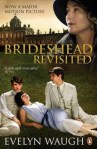
  2. Brideshead Revisited by Evelyn Waugh. The difficult loves of insular Englishman Charles Ryder, and his peculiarly intense relationship with the wealthy but dysfunctional family that inhabited Brideshead.
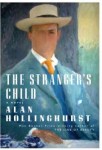
  3. The Stranger’s Child by Alan Hollinghurst. Embraced by the family of his Cambridge schoolmate, Cecil Valance writes an inspiring poem in an autograph album that becomes a staple of every English classroom after he is killed during World War I. (Man Booker Prize-winning author.)
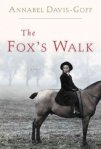
  4. The Fox’s Walk by Annabel Davis-Goff. During World War I, a ten-year-old girl sent to live with her autocratic grandmother in the country gradually discovers that her family’s privilege is purchased at great cost to many other people.
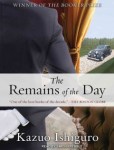
  5. The Remains of the Day by Kazuo Ishiguro. Stevens, an impeccable, quintessential English butler, embarks on a motoring trip through the West Country, on an odyssey that evokes disturbing memories of his thirty years of service to Lord Darlington and of the housekeeper, Miss Kenton.
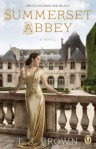
  6. Summerset Abbey by T.J. Brown. Daughters to the second son of the Earl of Summerset, Rowena and Victoria, after their father dies, move in with their uncle’s family in a much more traditional household where they learn about class division and, as war approaches, hope for a more modern future.
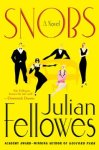
  7. Snobs by Julien Fellowes. Preparing to marry heir Charles Broughton, attractive accountant’s daughter Edith Lavery makes humorous and astute observations about contemporary England’s class system. (By the creator of Downton Abbey.)
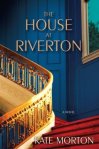
  8. The House at Riverton by Kate Morton. Living out her final days in a nursing home, ninety-eight-year-old Grace remembers the secrets surrounding the 1924 suicide of a young poet during a glittering society party hosted by Grace’s English aristocrat employers, a family that is shattered by war.
  9. A Room With a View by E.M. Forster. British social comedy examines a young heroine’s struggle against Victorian attitudes as she rejects the man her family has encouraged her to marry and chooses, instead, a socially unsuitable fellow she met on holiday in Italy.
  10. Cavendon Hall by Barbara Taylor Bradford. A tale spanning 16 years in Edwardian England finds the centuries-long relationship between the aristocratic Inghams and the Swann family who serves them tested by the outbreak of World War I.

Take heart, Anglophiles, we’ll get through this together!