Some of Your Favorite Authors Have New Books Coming Out This Month!

September’s got some great new releases heading to our shelves. Here are eight that we’ve been eagerly anticipating, put your name on the hold list for your favs, if you haven’t already!

The Night She Disappeared by Lisa Jewell. From the New York Times bestselling author of Then She Was Gone and The Family Upstairs comes another riveting work of psychological suspense. One year after a young woman and her boyfriend disappear on a massive country estate, a writer stumbles upon a mysterious note that could be the key to finding out what happened to the missing young couple.

Apples Never Fall by Liane Moriarty. A family of tennis stars debate whether or not to report their mother as missing because it would implicate their father in this new novel by the New York Times bestselling author of Big Little Lies and Nine Perfect Strangers.

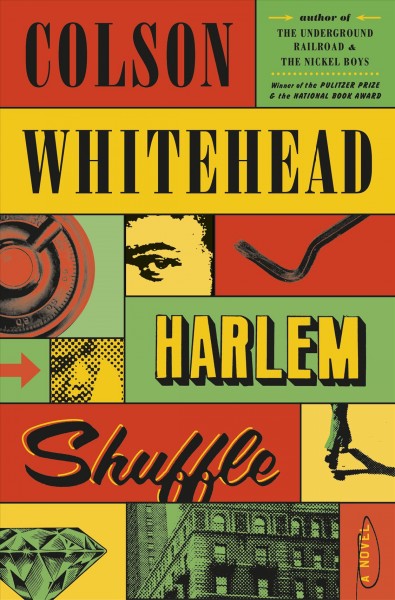
Harlem Shuffle by Colson Whitehead. A furniture salesman in 1960s Harlem becomes a fence for shady cops, local gangsters and low-life pornographers after his cousin involves him in a failed heist, in the new novel from the two-time Pulitzer Prize-winning author of The Underground Railroad and The Nickel Boys.

Bewilderment by Richard Powers. A widowed astrobiologist and single father to a troubled son contemplates an experimental neurofeedback treatment that trains the boy on the recorded patterns of his mother’s brain in the new novel from the Pulitzer Prize–winning author of The Overstory.

The Wish by Nicholas Sparks. From the author of The Longest Ride and The Return comes the story of successful travel photographer Maggie Dawes, struggling to come to terms with a sobering medical diagnosis, who is unexpectedly grounded over Christmas with her young assistant and begins to tell him the story of the love that set her on a course she never could have imagined.

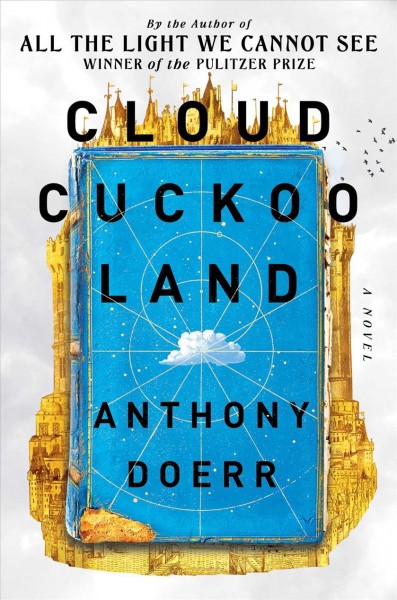
Cloud Cuckoo Land by Anthony Doerr. The novel follows four young dreamers and outcasts through time and space, from 1453 Constantinople to the future, as they discover resourcefulness and hope amidst peril in the new novel by the Pulitzer Prize–winning author of All the Light We Cannot See.

Matrix by Lauren Groff. Lauren Groff returns with her exhilarating first new novel since the groundbreaking Fates and Furies. Cast out of the royal court, 17-year-old Marie de France, born the last in a long line of women warriors, is sent to England to be the new prioress of an impoverished abbey where she vows to chart a bold new course for the women she now leads and protects.

Fuzz by Mary Roach. Join New York Times bestselling science author Mary Roach as she tags along with animal-attack forensics investigators, human-elephant conflict specialists, bear managers, and more. Combining little-known forensic science and conservation genetics with a motley cast of laser scarecrows, langur impersonators, and mugging macaques, Fuzz offers hope for compassionate coexistence in our ever-expanding human habitat.

Teen Book Reviews: Six of Crows and One of Us is Lying

Teens: did you know that you can earn community service credit for writing a book review and submitting it to us? Today, we’ll hear from two teens who did just that. Find out more about how to earn community service hours from home at cheshirelibrary.org/teens/.

Six of Crows by Leigh Bardugo, reviewed by Matti L.

Six of Crows is one book that’s part of a much larger fictional universe created by Leigh Bardugo, called the Grishaverse. In chronological order, the Grishaverse is made up of the Shadow & Bone trilogy, the Six of Crows duology, the King of Scars duology, and 3 supplemental books that really focus on fairy tales that only occur inside the Grishaverse. Even though the first book I read in the series was Six of Crows, I didn’t have much trouble understanding the characters even though I skipped the Shadow & Bone trilogy. I originally figured that I would be more confused, as if I had skipped the 5 books in Percy Jackson & the Olympians and started with The Lost Hero, but this didn’t happen.

There was a lot of time to meet the characters, learn their backgrounds and initial interactions with each other when they were all on a ship together, traveling to Fjerda. I did need to be patient about understanding the different types of Grisha and the different countries’ relations with each other. I’d say that there are two main reasons that made this book a great book; the first reason is that the plot picks up very quickly, which I enjoy in a book that is 450+ pages long. The book began with a demonstration of a healer abusing her powers and taking control of a ship, and luckily Bardugo revisited that scene fairly early in the book, to show what Kaz Brekker and his crew need to prevent from happening again. Many books don’t have an exciting plot completely set out until around page 150, but Bardugo had her plot taking off by around page 50.

The second reason that I liked this is because it felt like the author laid the story out very similar to a TV show, so it imitated a lot of the techniques to create interest or suspense. For example, a character might go out by themselves at night, and right then is when Bardugo would explain the backstory for the character. Another example is how she never split the group of 6 into more than 3 groups because it can be hard to follow in shows and literature. Also, Leigh never did any form of filler scenes or chapters, where a character would just describe the environment, or go into vivid description of the plan. A lot of this is because Kaz Brekker, the witty main character doesn’t let others know his plans so it always comes as a surprise. This fosters lots of suspense when Kaz makes unexpected decisions all to support his ‘big picture’ plans. In total, I’d say this book was really great because I never lost interest, there was a lot of suspense, and a satisfying ending that left room for interest in the sequel and other books in the Grishaverse.

5 stars.

One of Us is Lying by Karen M. McManus, reviewed by Hida A.

After a somber year-and-a-half in solitude, there are few things that have excited me. Following the same mundane routing while simultaneously worrying about the lingering public health crisis is no good for the mind. I’ve read my fair share of books over this time, but few are as gripping, as thrilling, as fist-clenching and teeth-grinding, as One of Us is Lying. This, simply put, is one of those books you can’t help but finish in one sitting. If you have the willpower to resist, I commend you for having such an iron-will. But I’m sure there are few people who can actually do so. If you’re looking for a book that excites you, that keeps you rooting for the underdogs, despising the jerks, and predicting the plot like there’s no tomorrow, then look no further: One of Us is Lying is a thriller you can’t miss out on.

From the very beginning, the book captures your attention and proceeds to hold it throughout. It all begins with a seemingly ordinary high school detention. Five students: Simon (The Outcast), Bronwyn (The Brain), Nate (The Criminal), Copper (The Athlete), and Addy (The Beauty), share detention despite their individual protests. Yet, the unthinkable happens–Simon winds up dead. Anaphylaxis. No Epi-Pen. A failed emergency response. From that point forward, the town of Bayview is thrown into chaos as the media swarms and accusations fly. Each student in the room is suspected of murder, of triggering Simon’s allergic reaction by exposing him to his allergen–peanut oil. The police beat down on the “Bayview Four” and try to crack down on the case, but the investigation seems to be leading nowhere. There are so many plot twists and turns as new information is collected, keeping you on the edge of your seat. The fact that Simon prided himself in creating a schoolwide gossip app to expose fellow students made the case even more compelling. Tons of people have a reason to hate Simon. But who had the guts to kill him?

Not only was the plot worthwhile, but the author’s style and perspective were also noteworthy. Chapters alternate between each of the four protagonists, offering the reader great insight into the case as well as any deeper motives. You gain a great new perspective into the plot and realize it’s much more complex than it seems on the surface. That’s what I love about this book, you’re not lulled into a predictable, boring plot. I spent a lot of time thinking Simon’s murder case over and over, and when I reached the end, I was absolutely shocked–in a good way though! The puzzle pieces began to fit perfectly in my head and I realized what a masterpiece One of Us is Lying is! Great read!

The only reason I deducted a star was because it ended so quickly and I wanted to keep reading more and more! Read this carefully–the killer may not be as orthodox as you may initially think…

4 stars.

Darkly Dahl

Roald Dahl is an author of controversy. He’s lauded for being a brilliant writer; he’s shunned because of his 1920’s upbringing and racist and antisemitic writings and comments. His children’s books are considered classics of literature; his children’s books are ignored by some who complain they are too dark for children’s literature.

Too dark? Let’s look at this.

Little Red Riding Hood’s grandmother was eaten by a predatory wolf, Cinderella’s stepmother made her into a slave, Hansel and Gretl were abandoned (twice!) by their parents and taken in by a cannibalistic hag; the Little Match Girl freezes to death all alone. Is Charlie and the Chocolate Factory or Matilda darker than that? Not quite.  

There is some truth to it – in many of Dahl’s stories, parents, if not most adults, are seen as evil, or cruel, or incompetent providers – mean teachers, poor and ever-working parents, buffoonish adults who cannot see the plight of the child (Wonka is most definitely – well, Wonky). There are elements of racial bigotry (the tiny black (yes, they were black in the book) oompa loompas living on grubs; Germans always being fat gluttons, etc). But is this so far from other children’s stories? Not so much. Lemony Snicket’s Series of Unfortunate Events is also darkly humorous, and few are crying foul. Dr. Doolittle bleaches a man’s skin, rather than let a black man marry a white woman. Peter Pan’s stereotypical depiction of Native Americans is downright painful and offensive on many levels. Bigotry and stereotyping is nothing new, only that fact that we now call it what it is. 

One point to remember is that parents, quite frankly, are a pain in the neck to children. They love them, while at the same time resent them for setting limits, saying no, and dragging children kicking and screaming through the process of growing up. For Dahl – and millions of others – who grew up in British boarding schools, at the mercy of bullies they couldn’t escape and teachers who were allowed to whip children, the experience left a more lasting impression (Pink Floyd, anyone?). For those in Britain who grew up in World War II, who as children hid during the Blitz or were shipped out to board with strangers, it lends another level of abandonment and trust issues to children’s literature. There’s a reason behind a lot of the dark – and for British children, it’s a shared cultural memory. Is Fantastic Mr. Fox an allegory for the war? Possibly. 

Another point to consider is children are the hero of their own story. It’s fine if Daddy vanquishes the dragon, but children would much rather be the ones doing it. Tween and Pre-tween children desperately want to be seen as competent, able to impress grown ups with their abilities. Children want to be the hero, and they can’t do that if Mummy and Daddy are with them telling them no – hence the number of orphan stories, or children alone. They can’t rely on the adults with them, or the story won’t work. A story about a child who tried and failed, who gave up and lived with their perceived oppression, isn’t a story a child wants to read about. There’s no role model there, no hero, no inspiration, no one to pretend to be. So of course Matilda has to shine, and the Peach must kill James’s wicked aunts, even if he has to find kinship with a bunch of insects, and even wacky Mr. Wonka can’t miss the good that dwells in Charlie. 

Darkness, shmarkness. The world is a dark place, and childhood a relatively new invention. In too many places, children are still locked in war-torn places, famines, camps, drug violence, and abusive situations. Our lauded fairy tales of yore – right down to Mother Goose and Aesop’s Fables – hark back to far darker times.

 Let them read. If nothing else, darker literature provides the perfect chance to discuss empathy, fantasy vs. reality, and handling tough situations – including some of the tough times we’ve been through in the past year.

The Magic Finger

Danny the Champion of the World

Charlie and the Chocolate Factory

The Witches

The BFG

Matilda

James and the Giant Peach

Fantastic Mr. Fox

Passing the Bechdel Test

Have you given anything a Bechdel test? Have you ever heard of the Bechdel Test?
I’d never heard of it either (and I went to a women’s college!) until it popped up on an internet group I belong to, and I had to look it up.

The Bechdel test (or Bechdel-Wallace test) is a measure of representation of women in fiction. It first appeared in Allison Bechdel’s 1985 cartoon strip, Dykes to Watch Out For (I didn’t name it) commenting on films, brought on by a quote from Virginia Woolf, in that women in fiction might sometimes be mother and daughter, but rarely are two women friends in literature. Almost always, women were viewed by their relationship to men – wanting a man, chasing a man, depending on a man, chasing off a man, etc. (Hence Jane Austen, “It is a truth universally acknowledged, that a single man in possession of a good fortune, must be in want of a wife.”). Real women in real life talk to other women about more than just men (even if it’s only about their cat or dog).

Therefore, Bechdel gave three commandments for films to be considered women-friendly (and by default, TV and books):

  1. It must have at least two women in it (preferably with names)
  2. Who talk to each other (preferably for at least 60 seconds)
  3. About something besides a man

And the off-hand comment in a sarcastic lesbian cartoon strip surged until it’s become an almost a standard metric for the industry.

Seems pretty simple, right?

Various groups have researched more than 8000 films, and concluded that 42-50% of films cannot pass the test, and half of those that do pass do so only because two women are discussing marriage or babies. Being a female-oriented show about women does not mean the film or program can pass the test. Even female-cast TV shows such as Sex in the City don’t pass, because almost all the discussion is about men. Big-budget female-lead action films such as Lucy or Atomic Blonde or Salt fail, because the secondary characters are almost always men – there are no other women. Star Trek, which broke many TV taboos, can’t pass the test – there are many women, and they talk quite a bit, but almost never to each other. Lost in Space had three women trapped in a tin can together, and they almost never spoke to each other for more than one or two lines, occasionally. Firefly, for its very brief run, hits the mark more often than not. Okay, I Love Lucy wins for most realistic female friends ever, as does Gone With the Wind, thanks to Miss Melly, so time period is not a decisive factor. We haven’t necessarily gotten better with age, despite feminism.

Various groups have researched more than 8000 films, and concluded that 42-50% of films cannot pass the test, and half of those that do pass do so only because two women are discussing marriage or babies. Being a female-oriented show about women does not mean the film or program can pass the test. Even female-cast TV shows such as Sex in the City don’t pass, because almost all the discussion is about men. Big-budget female-lead action films such as Lucy or Atomic Blonde or Salt fail, because the secondary characters are almost always men – there are no other women. Star Trek, which broke many TV taboos, can’t pass the test – there are many women, and they talk quite a bit, but almost never to each other. Lost in Space had three women trapped in a tin can together, and they almost never spoke to each other for more than one or two lines, occasionally. Firefly, for its very brief run, hits the mark more often than not. Okay, I Love Lucy wins for most realistic female friends ever, as does Gone With the Wind, thanks to Miss Melly, so time period is not a decisive factor. We haven’t necessarily gotten better with age, despite feminism.

Not passing the Bechdel test does NOT make a film bad, nor does it make it not worth watching. Not every movie is going to center around women – Dunkirk, for example, a splendid movie about a specific battle in World War II. Women were just not involved in that. Stand By Me – a magnificent story of four young boys on a quest. Girls aren’t in the story, and if you skip this movie because of that, then you’re missing one of the best American movies. Nor is every film required to pass the Bechdel test. Casino passes two of the three qualifications, but women are mistreated throughout the film. Inclusion is just that – inclusion, not a judgment of how women are treated by the story, not a judgment of female competence, not a judgment of feminism (Gravity, with a female astronaut who saves the day, can’t pass the test, though The Martian, with a male lead, does). A woman may love a movie that can’t pass the test, and a man can certainly love a film that does. Movies of every genre pass or fail; there is no specific type of film to look for.

All the Bechdel test does, really, is point out films in which women – a full 50% of the population – are a larger focus of the story, and even if they aren’t, they’re portrayed as real, well-rounded people who speak to each other about real subjects, even if it’s about burning a roast, not just love-starved buttercups who are nothing without a man. So, if you’re on the lookout for films that show women – important or background characters – in a more realistic light, here are 15 various films that do pass the Bechdel test:

The Finest Hours

Little Miss Sunshine

Wonder Woman

Mad Max: Fury Road

The Last Jedi

Girl, Interrupted

Hidden Figures

Kill Bill

Thelma and Louise

The Exorcist

Chicago

Frozen

Birds of Prey

Bill and Ted Face the Music

Knives Out