The Founding Fathers’ Families in Fiction

As Independence Day nears, we are all reminded of our nation’s founding fathers, and the way they shaped our nation. These men have become icons, but they were just human beings, often quite complicated human beings, with wives, mistresses, and children (both legitimate and illegitimate).

Historical fiction can flesh out the characters we know from our history books and give us a look at what life may have been like in those tumultuous times. Here are five novels featuring the men who were there at our nation’s beginnings, and the women who were at their sides.

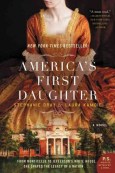
America’s First Daughter America's First Daughter by Stephanie Dray and Laura Kamoie by Stephanie Dray & Laura Kamoie.  This carefully researched tale  imagines the experiences of Thomas Jefferson’s daughter Patsy, who while accompanying her father to Paris struggles with his past affair with a slave and falls in love with his protégé against a backdrop of a growing revolution.
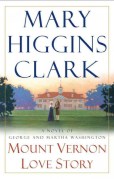
Mount Vernon Love Story Mount Vernon Love Story by Mary Higgins Clark by Mary Higgins Clark. In researching George Washington’s life, Mary Higgins Clark was surprised to find the engaging man behind the pious legend. Her novel tells the story of a rare marriage between  Washington and Martha Dandridge Custisand, and brings to life the human side of the man who became known as the father of our country.
Benjamin Franklin’s BastardBenjamin Franklin's Bastard by Sally Cabot by Sally Cabot. This work of literary historical fiction that brings to life a little-known chapter of the American Revolution — the story of Benjamin Franklin and his bastard son, William (a steadfast loyalist), and the women who loved them both.

Patriot Hearts Patriot Hearts: A Novel of the Founding Mothers by Barbara Hambly by Barbara Hambly. The triumphs and turmoil of early America are revealed through fictional portraits of four women–Martha Washington, Abigail Adams, Sally Hemings, and Dolley Madison–who played key roles during four presidential administrations.

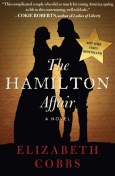
The Hamilton Affair The Hamilton Affair by Elizabeth Cobbs by Elizabeth Cobbs. A tale inspired by the true romance between Alexander Hamilton and Elizabeth Schuyler traces Hamilton’s rise to one of America’s most unlikely heroes and Schuyler’s establishment of New York’s first orphanage.


Travel the World: Novels Set in Other Countries

I’ll admit that I’m an arm chair traveler. I open a book and I’m instantly in another place. I love a story that really immerses the reader in the details of the setting: the water, the mountains, the sounds and smells. I’ve traveled the world via books.

Here are a few titles where the setting is an integral part of the story. So settle into  your favorite chair and escape…

The Rocks by Peters Nichols
Majorca, Spain
This story is set against dramatic Mediterranean Sea views and lush olive groves. What was the mysterious, catastrophic event that drove two honeymooners apart so absolutely in 1948 that they never spoke again despite living on the same island for sixty more years? And how did their history shape the Romeo and Juliet like romance of their (unrelated) children decades later? Centered around a popular seaside resort club and its community, this double love story  begins with a mystery, then moves backward in time, era by era, to unravel what really happened decades earlier.

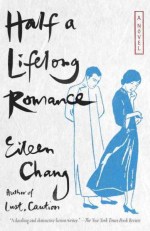
 Half a Lifelong Romance by Eileen Chang ; translated by Karen S. Kingsbury
Shanghai, China
Shen Shijun, a young engineer, has fallen in love with his colleague, the beautiful Gu Manzhen. He is determined to resist his family’s efforts to match him with his wealthy cousin so that he can marry the woman he truly loves. But dark circumstance force the two young lovers apart. A glamorous, wrenching tale set against the glittering backdrop of an extraordinary city.

 Bruno, Chief of Police by Martin Walker
Dordogne, France
Benoît Courrèges, aka Bruno, is a policeman in a small village in the South of France who loves the pleasures and slow rhythms of country life. He has a gun but never wears it; he has the power to arrest but never uses it. But then the murder of an elderly North African who fought in the French army changes all that. Now Bruno must balance his beloved routines—living in his restored shepherd’s cottage, shopping at the local market, drinking wine, strolling the countryside—with a politically delicate investigation.

 The Shipping News by Annie Proulx
Newfoundland, Canada
Quoyle, a third-rate newspaper hack, is wrenched violently out of his workaday life when his two-timing wife dies. An aunt convinces Quoyle and his two emotionally disturbed daughters to return with her to the starkly beautiful coastal landscape of their ancestral home in Newfoundland. Here, on desolate Quoyle’s Point, in a house empty except for a few mementos of the family’s unsavory past, the battered members of three generations try to cobble up new lives.

A Reading List for Pride Month

Pride Month (also known as LGBT Pride Month) is celebrated each year in the month of June to honor the 1969 Stonewall riots in Manhattan. The Stonewall riots were a tipping point for the Gay Liberation Movement in the United States. In June of 1969, patrons and supporters of the Stonewall Inn staged an uprising to protest the police harassment and persecution to which LGBT Americans were commonly subjected. This began of a movement to outlaw discriminatory laws and practices against LGBT Americans.

The American Library Association has also named June GLBT Book Month, celebrating the authors and writings that reflect the lives and experiences of the gay, lesbian, bisexual, and transgender community. Whether you are a part of the LGBT community or not, finding your self in one of these books or going outside your comfort zone, these books about the LGBT experience can help to foster a greater understanding of the diverse world we live in.

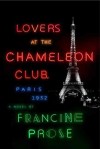
Lovers at the Chameleon Club, Paris 1932Lovers at the Chameleon Club by Francine Prose  by  Francine Prose. At the Chameleon Club in Paris, Lou Villars, a star athlete and scandalous cross-dressing lesbian, finds refuge among its patrons, and as time passes, she experiences a transformation that warps her earnest desire for love and approval into something dangerous.

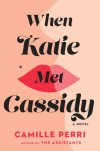
When Katie met Cassidy When Katie Met Cassidy by Camille Perriby Camille Perri. A romantic comedy about gender and sexuality follows the experiences of a traditionally minded Midwesterner who, in the aftermath of an ended engagement, finds herself in a transformative relationship with a self-assured New York businesswoman.

MiddlesexMiddlesex by Jeffrey Eugenides by Jeffrey Eugenides. In the spring of 1974, Calliope Stephanides, a student at a girls’ school in Grosse Pointe, Michigan, finds herself drawn to a chain-smoking strawberry blond classmate with a gift for acting. The passion that furtively develops between them – along with Callie’s failure to develop – leads Callie to suspect that she is not like other girls. In fact, she is not really a girl at all.

The Danish Girl  The Danish Girl by David Ebershoffby David Ebershoff. Set in 1920s Copenhagen, this tender tale of love and marriage in the midst of fundamental crisis introduces a man who discovers he’s a woman and the woman who will do anything for him.

The Lauras by Sara Taylor. A thirteen-year-old girl on the run with her mother from her father revisits her mother’s former foster care homes to repay old debts and keep promises, learning astonishing truths along the way, in a novel that strikes at the heart of a mother-child bond and the exploration of gender identity.

If I was Your Girl by Meredith Russo. Amanda Hardy only wants to fit in at her new school, but she is keeping a big secret, so when she falls for Grant, guarded Amanda finds herself yearning to share with him everything about herself, including her previous life as Andrew.

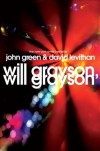
Will Grayson, Will Grayson  by John Green & David Levithan. When two teens, one gay and one straight, meet and discover that they share the same name, their lives become intertwined as one begins dating the other’s best friend, who produces a play revealing his relationship with them both.

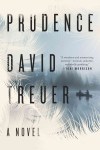
Prudence by David Treuer. A haunting and unforgettable novel about love, loss, race, and desire in World War II–era America, about the secrets we choose to keep, the ones we can’t help but tell, and who—and how—we’re allowed to love.

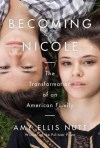
Becoming Nicole : the Transformation of an American Family by Amy Ellis Nutt. The true story of a transgender girl, her identical twin brother, and an ordinary American family’s extraordinary journey to understand, nurture, and celebrate the uniqueness in us all.

Believe Me : a Memoir of Love, Death, and Jazz Chickens by Eddie Izzard, with Laura Zigman. Writing with the same candor and insight evident in his comedy, Eddie Izzard reflects on a childhood marked by the loss of his mother, boarding school, and alternative sexuality, as well as a life in comedy, film, politics, running and philanthropy.


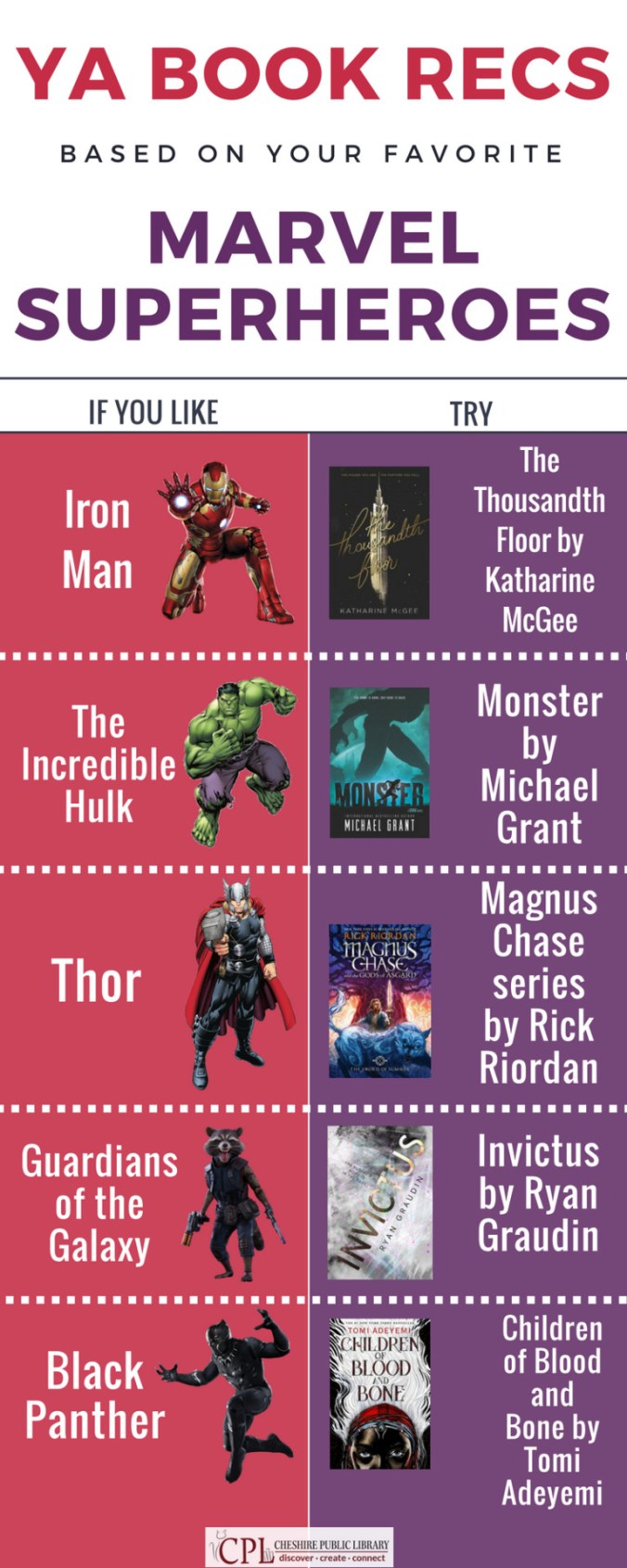
Book Recommendations Based on Your Favorite Marvel Superheroes

The Marvel Universe has never been more popular, with more movie and television adaptations being produced every year. But in between movies and TV seasons, what’s a superhero superfan to do? These YA books can help to fill the void your hero has left behind:

If you’re an Iron Man fan, try The Thousandth Floor by Katherine McGee. A tale set in a luxury tower 100 years in the future follows the experiences of an addicted perfectionist, a betrayed teen, a financially strapped girl, a socialite with an illegal A.I., and a genetically perfect girl. In this world, the higher you go, the farther there is to fall.

If The Incredible Hulk is your guy,  Monster by Michael Grant is also pretty incredible. When  meteorite strikes introduce an alien virus that gives humans unique superpowers, it triggers an epic battle between teen hero defenders and out-of-control supermonsters.

Need more like Thor? Try the Magnus Chase series by Rick Riordan. After the death of his mother, Magnus finds out that he is the son of a Norse god and must track down a lost ancient sword to stop a war being waged by mythical monsters.

If you love Guardians of the Galaxy, give Invictus by Ryan Graudin a try. Born outside of time as the son of a time-traveler from the 24th century and a first-century gladiator, Farway takes a position commanding a ship that smuggles valuables from different eras before meeting a mysterious girl with knowledge that places his existence in question.

If you can’t wait for the next Black Panther movie,  try Children of Blood and Bone by Tomi Adeyemi in the meantime. Zâelie, her brother Tzain, and princess Amari fight to restore magic to the land and activate a new generation of magi, but they are pursued by the crown prince, who believes the return of magic will mean the end of the monarchy.


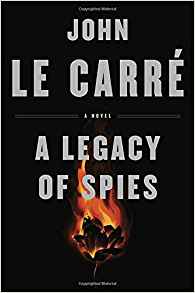
A Legacy of Spies

The other year, in preparation for a novel I hoped would have more intrigue and action than I was used to writing, I decided to break with my comfort zone and read a few spy novels to deconstruct the genre and see how the action was set up and paced. I’d read a James Bond novel once and was less than impressed; the movies I loved so much were horribly dull novels, and the book-Bond looked much more like Truman Capote than any pretty-boy actor.

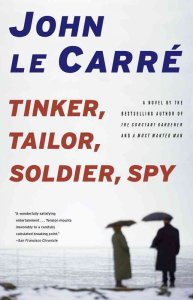
I didn’t want to waste time, so I Googled “best spy novels”, and one of the top two on almost every list was John LeCarré’s 1974 novel Tinker, Tailor, Soldier, Spy, so that was the one I read first.

The lists were right. The book was brilliant, and I couldn’t put it down. After that I rushed out to watch the 2012 BBC film version, an incredible cast including Toby Jones, Gary Oldman, Benedict Cumberbatch, John Hurt, Tom Hardy, and more – which was still excellent, though some people prefer the 1979 mini-series adaption with Alec Guinness (that’s Obi Wan Kenobi to some of you). The strangest part was that, while reading the book, I had already cast Toby Jones in one of the roles in my head  –  but as Peter Guillam, though, not Percy Alleline as he was in the film.

Why so good? Well, see – like Ian Fleming, John LeCarré (real name: David Cornwell; spies aren’t allowed to use their real names to publish novels) was an actual British spy in World War II, so he knows the ins and outs and tiny little details of how the game is played, layers upon layers of secrets and trades and double-dealings. He’s lived it first hand, and that makes all the believable difference. He began writing novels in 1961 (Call for the Dead), but it wasn’t until his third novel in 1963, The Spy Who Came In From the Cold, that he hit the best-seller list and wound up quitting MI6 (the British Secret Intelligence Service) to pursue writing full time.

While all of us sit here and think, why would you quit being an awesome spy to write books?

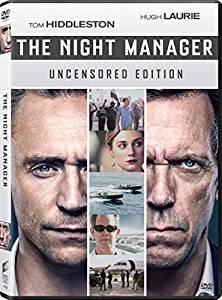
But LeCarré certainly is good at it, with more than 24 novels to his name, almost all of them best-sellers. Several have been made into successful film adaptions, including The Constant Gardener (2005), starring Ralph Fiennes and Rachel Weisz, The Spy Who Came in From the Cold (1965) starring Richard Burton, and the recent delicious adaption of The Night Manager (2016), starring Tom Hiddleston and Hugh Laurie, a book that reads more like a James Bond adaption than a Bond novel does.

Unable to sit still in retirement, LeCarré, now 86, has pumped out yet another novel last year, A Legacy of Spies, a conclusion of sorts for George Smiley’s people, his ex-agent who keeps coming back. Pulling his best-loved characters from so many of his novels, LeCarré manages to weave them together with new characters in present-day, finding new depths and bringing new truths to light, even after 50 years. LeCarré shows that time has not diminished him nor his characters, and if you think you know how it will end, like all of his works, it’s pretty well guaranteed you don’t.

Give le Carré a try. If you like mystery, espionage, intrigue, and unraveling puzzles with characters who won’t let you go, then you’ll love his work. If you haven’t tried him, he’s a wonderful place to begin to explore the genre. For modern novels, he’s rather clean, without a lot of graphic violence or sex or language, perhaps making the stories even more remarkable. Start with Legacy of Spies and work backward, or start at the beginning and work forward. If you prefer to watch rather than read, there are more than ten films, five television adaptions, and four radio plays to keep you entertained. You’ll be so glad you did.