Winter is Here, Jon Snow

Some people love winter, love the brisk air, the blinding glare, the crystal-clear night skies, soft fluffy snow and cups of steaming hot chocolate. Other people hate the freezing cold, the knifing winds, the treacherous roads, bare trees, and endless brown mud and slush clinging to shoes, cars, and pet feet tracking through the house.

For me, winter is a romantic time, curled by a fireplace (wood, gas, or electric) before a window with long velvet drapes (one of my favorite possessions), reading a book in a favorite chair while snow swirls outside the window and an animal lounges at my feet. It means a stew bubbling on the stove, fresh bread in the oven, or perhaps fresh shortbread cookies and a cup of Earl Gray tea by that fire. Perhaps it’s a holiday, with candles and lights and decorations, waiting for company to make it through the snow. Yeah, yeah, there’s no groundsman to shovel the walks when it’s over, I have to do it myself, but for a few hours I’m lost in an old English fantasy, there’s a mystery in the air, a challenge ahead, but love and fortune win in the end (note: I have never achieved this fantasy, but I keep hoping).

English Tales of Winter

Which made me think: why are all those images we cling to English fantasies? Sure, that period of literature is within what’s called the Little Ice Age, which ran from the 1300’s to the 1890’s, killing off the Vikings in Greenland and creating all those iconic Currier and Ives scenes, but it also put those chunks of ice in Washington Crossing the Delaware, and in 1816, with the dust of the exploded volcano Mount Tambora in the air, summer never arrived, and temperatures were still below freezing in June. Where is the American winter tale? American stories tend to be about blizzards, hardship, starvation, and ghosts. Nathaniel Hawthorne, Edgar Allen Poe, and Washington Irving are hardly on par with Jane Eyre or Wuthering Heights. Reading about the Donner party probably isn’t a good idea before eating stew.

American Tales of Winter

The only American “winter” tales I know well are children’s literature: The Long Winter by Laura Ingalls Wilder, Left By Themselves by Charles Paul May, the semi-historical Seven Alone by Honore Morrow, and the absolutely timeless endearing tale of Mandy, by Julie Andrews Edwards (Yes, Mary Poppins herself. Adults will love this, too!). But where are the adult books? Problem is, not much adult American literature of that period gives off that type of security.

That period of literature we think of is called the Romantic movement and includes Gothic literature, dealing with mystery, spiritualism, ghosts, hauntings, and torturous love – Frankenstein, Les Miserables, Dorian Gray, Hunchback of Notre Dame, A Christmas Carol, Oliver Twist – some of our most famous classics, running from about 1760 through the Victorian age, around 1890.  America in 1776 was not only new and still forming, it was mostly unsettled, and people in the colds of Fort Duquesne, Fort Niagara, and Fort Cumberland were more concerned with staying alive than writing literature. Of course you still had authors, but not to the degree England – a stable civilization for 1200 years – did. While Heathcliff was brooding the lonely moors, Americans were exploring and giving us stories like Last of the Mohicans, Legend of Sleepy Hollow, Moby Dick, and The Scarlet Letter. Not the same, and certainly not the same as being snowed in and wringing one’s hands on the family estate. The American experience is uniquely American in that regard.

Just because our snow stories don’t go back to King Wenceslas (ok, Wenceslas was Bohemian/ Czechoslovakian, but the song, 900 years later, is English) doesn’t mean American literature isn’t good, it just means it’s different. Maybe you’ll have to settle for cotton twill drapes and a medium double-latte with a space heater and a Snuggie. If you love gothic literature, delve into a classic or something newer; there are hundreds of books (and films!) to choose from. If you love reading about snowy days while curled in a chair listening to the winds howl, try some of these modern tales (and films):

Office Girl by Joe Meno

The Lazarus Project by Aleksandar Hemon

Then We Came to the End by Joshua Ferris

 Snow by Orhan Panuk

 

  Snow Country by Yasunari Kawabata

The Snow Child  by Eowyn Ivey

Wolf Winter by Celia Ekback

Winter Solstice  by Rosamunde Pilcher

The Book Thief by  Markus Zusak

Snow Falling on Cedars by David Guterson

 The Shining  Stephen King

Smilla’s Sense of Snow by Peter Høeg, 

Winter’s Tale by Mark Helprin

Game of Thrones by George R. R. Martin

Return Ticket for the Orient Express

  Sometimes a literary character – and an author – just doesn’t quit, staying popular generation after generation. Sometimes we call that a classic – Scarlett O’Hara, Oliver Twist, Jane Eyre, Robin Hood and Maid Marian. Sometimes we call that Hercule Poirot.

Agatha Christie is the modern world’s most successful author (yes, even more than J.K. Rowling and Nora Roberts), third only to The Bible and Shakespeare, and has sold over two BILLION copies of her works (that’s 165 stories). Rowling only ranks ninth or so, with an estimated 500 million in sales. Sure, you can use the Gone With the Wind excuse that Rowling only hit big in 1997, while Christie’s first novel was published in 1920, so it has had a lot more years to gather sales (GWTW remains the highest-grossing film of all time, adjusted for inflation, due to its 1939 release date. Yes, more than Star Wars). Either way, there’s a reason for that.

Christie’s first and most popular detective is Hercule Poirot (the other being Miss Marple), a retired Belgian police officer with peculiarly meticulous habits and a brilliant mind for solving crimes, well-known for his thick black curling mustache – the only fictional character to ever have an obituary on the front of the New York Times. Poirot first appears in The Mysterious Affair at Styles (1920)and goes on for more than 33 novels, 50 short stories, and a stage play. You may have heard of his most famous case: Murder on the Orient Express.

Originally published in 1934, Orient Express tells the story of a murder (obviously) that occurs on a train going from Istanbul to Calais, France, which Poirot, a passenger on the train, slowly unravels. The Orient Express is a real train service that began in 1883 and ran from Turkey to France, ending its official run in 2009 – operating in three centuries!

Numerous film and television adaptions of both Orient Express and Poirot’s mysteries have been made over the years, most notably the 1974 film adaption of Orient Express starring Albert Finney – the only actor to receive an Oscar Nomination for playing Poirot, though he didn’t win (Ingrid Bergman won as Supporting Actress for the role of Greta Ohlsson). The library has many volumes of television adaptions of Poirot’s mysteries. If comedy and spoofs are more your style, check out 1976’s Murder by Death, with James Coco as Milo Perrier (Poirot), Elsa Lanchester as Jessica Marbles (Miss Marple) and a host of top-name stars poking fun at all the famous detectives.

Low and behold, Murder on the Orient Express is once again returning to the big screen on November 10, 2017, with a – dare I say it? – killer cast. Kenneth Branagh, British superstar of myriad films including Henry V, Harry Potter and the Chamber of Secrets, Dunkirk, Jack Ryan: Shadow Recruit and so many more, takes the lead as Poirot – not as short as Poirot is supposed to be, but ever since Hollywood ridiculously cast 5’6” Tom Cruise as 6’5” Jack Reacher, all rules are off. Add in Penelope Cruz, Dame Judy Dench, Willem Dafoe, Derek Jacobi, Johnny Depp, Leslie Odom Jr., Michelle Pfeiffer and more, and it’s worth the price of admission just for the cast and the gorgeous period costumes and vehicles. Of course there’s already a furor raging among the purists about his mustache.

Kenneth Branagh is a superb actor but an even superior director, and with him in the director’s seat  and the blessings of Agatha Christie’s estate, the film promises to be everything we want it to be. So prepare by reading a couple of Poirot’s mysteries, or check out a couple of other adaptions, and then watch the film. Or, give the movie a shot and then follow up with a binge of Poirot stories. When you run out, there’s always Miss Marple.

Childhood Horrors

Sometime ago in the mists of the last century, there were only three TV networks. On holidays, you usually had the choice of a football game, a different football game, or the longest movies the network could find – usually Chitty Chitty Bang Bang and The Sound of Music.  Chitty, an overly technicolor musical, scared the daylights out of me. As soon as that Childcatcher came prowling, I was behind the sofa holding my breath. Today’s kids would just send his photo to Instagram and beat him up.

Children see things differently. Some are easily spooked, some are skeptical from birth. Kids misunderstand and misinterpret things, and that alone can create unfounded horror.

Obviously, most children’s films try to avoid horror, but what’s marketed to kids is not always Barney and Big Bird – few Grimm’s Fairy Tales end happily ever after. Poltergeist –  ghosts, demons, peeling faces, and evil clowns in child-swallowing glowing closets – was only rated PG. PG, because PG-13 hadn’t been invented yet.

Young Sherlock Holmes (the food nightmare) scarred one of my children; to this day she won’t eat cream puffs. Tim Burton’s Mars Attacks! and its disembodied heads was another. Another didn’t trust Nazgûl (nor should you), and was terrified by Matilda. The 1971 Alastair Sim animated A Christmas Carol, with its writhing starving waifs and the faceless, voiceless Ghost of Christmas Future taints every incarnation I’ve seen since.

If your child likes spooky things and wants to be a part of the Addams family, here’s a list of kid’s films – honest! – that just might give your kid the shivers. If you have a child with a more sensitive nature, you might want to wait a few years on these:

Toy Story – Oh, doll-headed spider and hook-bodied Barbie, how we hate you! You may be Pixar, but you’re scary!

Coraline – Creepy button-eyed fake parents trying to steal a child?  Hmm….

Labyrinth – Sure, we adore Bowie, but these are Muppets who steal babies, chase girls with drill bits with intent to kill, and drop people into pits lined with talking disembodied hands. ‘Nuff said.

Something Wicked This Way Comes – Disney likes to whistle and pretend this isn’t theirs, but Ray Bradbury didn’t edit the scariness out of his novel of two boys and an evil carnival run by Mr. Dark, complete with electrocutions and freakshow.

Who Framed Roger RabbitBut this is a comedy! you cry – and it is, until crying Toons get faced with The Dip. Be prepared for a talk on death.

Return to Oz – if the flying monkeys didn’t scare you, perhaps Dorothy’s electroshock treatments will.

Jumanji – sure, it’s a game, but a deadly one. Floors that swallow people are just some of the issues; the intensity and situations may be too much entirely for young viewers.

Harry Potter series – yes, the first one is a charming tale of an orphan boy who learns he’s a wizard, but the stories get darker, and major beloved characters start dying. By the third film, Voldemort is embodied evil and believably out to get Muggles. Like your child.

The Dark CrystalFraggle Rock it’s not. It’s a dark Muppet film with lots of dark themes. Preteens maybe, but there’s no Elmo to lighten it for the little kids.

Gremlins – another movie made before PG-13, so it was stuck with PG. Gremlins are cute little things until you feed them, and then they become psychopathic demons out to harm and kill.  If preteen horror films was a separate genre, this would be one of their cornerstones, along with perhaps The Witches, Watcher in the Woods, and Jaws (which is also only PG).

Willy Wonka and the Chocolate Factory – let’s face it, Roald Dahl is almost never nice to children. Here alone, he sucks them up pipes, dumps them down garbage chutes, and has them cornered by very scary men in dark alleys asking them to sell their souls for money. But the crowning touch cited by many critics is the boat ride  scene, all psychedelic and threatening – but that’s the way it is in the book, too – a disorienting journey where everyone believes Wonka’s looney.

Every parent knows their child best. Some kids like a scary movie, some kids will wind up sleeping in your bed for a week with all the lights on. If your kid shows interest in scary movies, these might be a gentler introduction over, say, The Exorcist. Just be aware that even a seemingly wholesome, kid-marketed movie can have some really scary moments when you least expect it.

Pirates: Books, Movies, and Pirate Language Lessons

September 19th is Talk Like a Pirate Day.  There are many ways to celebrate. Dress like a pirate, talk like a pirate, watch a pirate movie, and, of course, read about pirates.

What’s your pleasure, matey?

How to Talk Like a Pirate: Take Pirate language lessons from Mango Languages. Available online from the Cheshire Library’s eResources page. Click on the Languages button and login to Mango to learn the proper way to talk on the high seas.

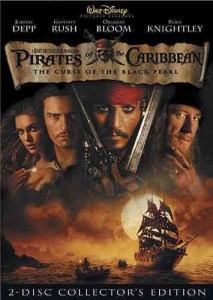
Pirate Movies. We’ve not only got all the Pirates of the Caribbean movies, but  several other pirate films and TV series, too.
The Pirates! Band of Misfits (DVD – Animation)
After years of failed attempts to win the Pirate of the Year Award, Pirate Captain and his oddball crew go on a race to pillage the most booty.

Pirates: Dead Men Tell Their Tales (Downloadable)
Step back in time and discover the magic of the real Pirates of the Caribbean investigating the stories of Blackbeard, Sir Henry Morgan, Captain Kidd,  Anne Bonny and Mary Read.

 Treasure Planet (DVD – Animation)
Young Jim is given a map that charts the course to Treasure Planet, a distant world where hundreds of space pirates have stashed their loot.

Black Sails: The Complete First Season (DVD)
In 1715 New Providence Island is controlled by notorious pirate captains, and the most feared is Captain Flint. As the British Navy returns to exterminate Flint and his crew, Flint allies himself with Eleanor Guthrie, daughter of the local kingpin.

Cutthroat Island (DVD)
Morgan Adams, the female captain of a pirate ship, is on a treasure hunt for millions of pounds of gold buried on Cutthroat Island. She and her uncles each hold sections of the map to the treasure, but her Uncle Dawg would rather kill everyone in his way, including his niece.

Captain Blood (DVD)
A swashbuckling classic. After he treats wounded English rebels, physician Peter Blood (Errol Flynn) is arrested and sentenced to slavery in Jamaica. But Blood leads fellow slaves in an escape and strikes terror into the Jamaicans as the pirate Captain Blood.

Books about pirates.

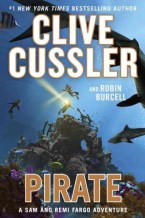
Pirate by Clive Cussler (Fiction)
Confronted by a determined adversary, husband-and-wife treasure hunters Sam and Remi Fargo embark on an international quest involving an eight-hundred-year-old relic and a brutal murder. Also available as an eBook.


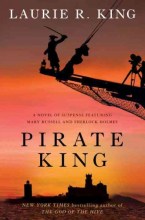
Pirate King by Laurie R. King (Fiction)
Mary Russell, wife to Sherlock Holmes, is traveling undercover along with a film crew that is ready to shoot a pirate movie. When the crew embarks for their Morocco location, Russell feels a building storm of trouble:  a film crew with secrets, decks awash with romance, and now the the real buccaneers the studio has recruited to provide authenticity are ignoring the movie studio owner and answering only to their dangerous outlaw leader. Also available as an audiobook.

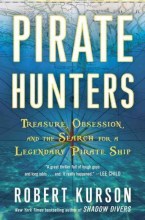
Pirate Hunters: Treasure, Obsession, and the Search for a Legendary Pirate Ship by Robert Kurson (Non-fiction)
Pirate Hunters’ is a gripping account of two courageous divers’ quest to uncover the shipwrecked vessel of Joseph Bannister, one of history’s most infamous pirates. Also available as an audiobook.


Daughter of the Pirate King by Tricia Levenseller (Young Adult Fiction)
Sent on a mission to retrieve an ancient hidden map, pirate captain Alosa deliberately allows herself to be captured by her enemies. Now the only thing standing between her and the map: her captor, the unexpectedly clever and unfairly attractive first mate Riden. Her power to enchant with song makes her a formidable foe– Alosa is only half-human, the daughter of a pirate king and a siren.

How to Cut the Cord

Say “Goodbye!” to the Cable Guy!

What does it mean to “cut the cord” and why is everyone doing it? Should you cut your cord, too, assuming you know what it means?

The answer depends.

Cutting the cord means dropping traditional cable television subscriptions in favor of inexpensive streaming services. With cable bills rising to over $100 per month on many providers, more people are choosing to say goodbye to cable.

What do you need to cut the cord?

1.  Wifi
Wifi is wireless high-speed internet access. Most streaming devices connect with wifi, although some may still have a traditional ethernet port for plugging in a cord. You will need high-speed internet access to play streaming content, and it will probably need to be wireless unless you have a cable modem and an ethernet cord close to your streaming device.

2.  A streaming content device
Streaming content devices vary widely in price, size, and functionality. The most popular streaming content devices are Roku, AppleTV, and the Amazon Fire Stick. Smart TVs also have the ability to stream from a variety of content providers, but their interfaces are not as user-friendly, so I recommend getting a dedicated streaming device. Many video gaming systems like Xbox and Playstation can also play streaming content. You don’t have to spend much money to get started: the base model Roku retails for only $30.

3.  A streaming content Service Provider
There are a variety of streaming content service providers. Here are the most popular:

Netflix
On-demand movies, TV shows, documentaries, and Netflix-only content.
Netflix has a variety of “Netflix-only” series like Orange is the New Black and House of Cards. Netflix also has a giant collection of movies and many seasons of popular TV shows. Be aware, current TV shows are usually 1 season behind, so if you want to see the latest episode of Chopped or This Is Us, you’ll need to look elsewhere.
Cost: $9.99/month to watch on 2 streaming devices at once, or $11.99/month for 4 devices.

Hulu
On-demand Movies, TV shows, Documentaries, and Hulu-only content.
Taking a page from the Netflix playbook, Hulu now offers many “Hulu-only” series like The Handmaid’s Tale and 11.22.63. Unlike Netflix, Hulu focuses on the latest TV shows, typically airing new episodes a day after they air on cable TV. If you like to discuss the latest episodes of your favorite cable TV shows, Hulu is for you. Hulu also has a “commercial free” option, meaning you can watch Guy’s Grocery Games all day long without a single commercial. Hurray!
Cost: $7.99/month to watch on 1 device, or $11.99/month for commercial free.
Hulu is also now experimenting with providing Live TV, offering a Live TV beta for $39.99/month. Expect this to become more popular and widespread as content service providers try to knock the expensive cable TV companies out of the market altogether.

Amazon Prime Video
On-demand Movies, TV shows, Documentaries, and Amazon-only content.
Amazon Prime video is similar to Netflix, although some might argue it doesn’t offer as much quality content. Like both Netflix and Hulu, Amazon has “Amazon-only” series like Transparent, Sneaky Pete, and The Man in the High Castle.
Cost: Amazon Prime Video is free with your Amazon Prime account ($99/year) or you can purchase a monthly membership for $8.99/month if you do not wish to purchase a year of Prime membership.

Other options exist for getting your favorite shows:

HBO Now – For $15/month, you can watch every series that ever aired on HBO, including the latest releases merely minutes after they air Live. HBO Now also has a backlog of many popular movies, comedy specials, and documentaries. If you need your Game of Thrones fix, this is for you.

Showtime Anytime – Showtime has a similar service to HBO offering the latest in Showtime series and movies for $11/month.

YouTube Live TV – For $35/month, you can now watch Live TV streaming from ABC, CBS, FOX, NBC, and popular cable networks on up to 6 devices at a time. This is a new service from YouTube and one to keep your eye on.

iTunes – With an Apple TV, iOS device, or computer, you can purchase TV shows and Movies directly from the iTunes store. Hate monthly subscription fees? Just buy the shows and movies you want to watch or rent them for 24 hours at a lower price.

Amazon Video – Without Amazon Prime Video, you can purchase or rent the shows and movies you’d like to watch through Amazon Video.

Sling TV – Sling TV is a new service to the streaming industry. It offers streaming Live TV, not on-demand. There are mixed reviews about its quality and reliability, but this is sure to be a service to keep your eye on in the coming months. It can only improve, and the demand for this type of Live TV service is very high.

We have walls and walls of DVDs and Blurays!

Your Public Library – Last but never least, keep in mind the many movies, TV shows, documentaries, musicals, foreign films and more that are available from your local public library. Cheshire Public Library has a wide selection of popular “Quik Fliks” if you’re looking for the latest movies, not to mention a huuuge collection of DVDs, Blurays, and downloadable and streaming content. Best of all? They’re all FREE to borrow, and nothing beats free! 🙂


Technology Help – Need device advice? Come to Drop-in Tech Help. No appointment necessary. We provide help with smartphones, laptops, tablets, ereaders, email, Facebook, social media, cutting the cord questions and more! Check out the calendar for our next session.