Like Romance Novels but Hate the Covers? Here’s one solution.

I’m going to come clean – I’m a romance reader. There, I’ve said it. There can be some  stigma about the genre, though. Smart women don’t read romance. Romance is poorly-written schlock. It’s paperback porn. And the covers – oh the covers! – don’t exactly help overcome these assumptions about the quality of romance books.

Well, I’m a smart woman. I’m not a fan of bad writing. And the porn argument is pretty sexist. One thing I can’t argue with, though, are the covers; so many of them are just awful.

Like every genre, they’re not ALL gems, but these cheesy covers dumb the books down considerably. So what’s a romance-loving, cover-cringing reader to do?

E-books! We can read the books we like without flashing the eyebrow-raising covers around. Until the publishers figure out that romance readers don’t need a disembodied torso on the cover to sell copies, I will do most of my reading with a digital book.

These are just a few books I’ve loved in which the cover (and sometimes even the title!) had little or nothing to do with the actual story. If I were going by the covers, I probably wouldn’t have picked up these books, and would have missed some great reads:


Lucky for me, the library has digital copies of these titles, plus a LOT more. Cheshire Library has a large collection of all types of ebooks (including romance) available to download with your CPL card to your device of choice.  Our OverDrive platform has over 1500 romance ebooks available to check out, while our hoopla platform has over 1000. Enough to keep the most voracious reader supplied with happy endings.    

Sorting White Trash

indexIt was a hard call, but I’d say White Trash by Nancy Isenberg was my Number 2 Must Read of 2016 (after Chasing the Scream), but oh, have I put off writing about it because it played so much into last year’s politics it seemed as if it were written for it – but it couldn’t, because it was written before last year’s one-of-a-kind election year.

“White Trash” is a term that began just before the Civil War and became entrenched afterward, a term for the poorest white people who were absolutely uneducated, dirty, poorer than slaves – and had no desire to change their ways. They considered themselves perfectly fine and above anyone else. Rich people were to be sneered at, since they considered themselves better. Educated people were sneered at, because they considered themselves better. Yet as a class they were so despised for their lack of morals and work ethic, even slaves considered themselves above Poor White Trash.

Isenberg feels the concept goes back further than that. Who did England send over to1400306193764-cached America to pad out their colonies? Who would not be missed from the overcrowded prisons and cities? Not the landed gentry, but those persons who for whatever reason did not fit into society and were unsuccessful at supporting themselves. The Virginia Colony had to go so far as to set a death sentence for people who did not work and did not attend church on Sundays. Starvation was so bad that people resorted to cannibalism. The people sent over refused to work, preferring to run off to unsettled land (which was “owned” by others) and fend for themselves. Getting people to do the hard labor of setting up a colony was quite difficult.

Further, Isenberg says that as the country expanded, the first to move west were… the folk who refused to work for others, could not function in a society, and would rather starve than work. Each time, the ones who pushed west first were the dregs, seeking escape from prisons, debt collectors, tax men, and others who “infringed” upon them. The wild west was wild because the people who colonized it couldn’t get along with anyone.

“White Trash” has many names, depending on geography – Crackers, Okies, Rednecks, Hillbillies, Trailer Trash, Mud Eaters – all people who shun government, distrust education, live in abject poverty, and have a very flexible moral code. I don’t mean “flexible” as a pejorative but as a term to describe a juxtaposition of ideals: your baby out of wedlock is a sin, but it’s okay for me. Never take charity, but taking free stuff from this agency over here isn’t charity, it’s just free stuff. They have quite the knack for making things acceptable for them but a sin for anyone else.

Isenberg digs into both politics and popularism, citing Andrew Jack110932-004-3f4811e2son (the first person running for President who lost despite getting the most popular votes the first time he ran) as an uneducated, crass boor who appealed to the lowest masses and yet was elected President, and how he loved to flaunt that boorishness, to the distress of the American Gentry. She cites the 1970’s as a time when White Trash became hip – from Smokey and the Bandit, to the Dukes of Hazzard, to Tammy Faye Bakker and the  whole Televangelist craze. Today’s exploitainment shows like Duck Dynasty, Honey Boo Boo, and 16 and Pregnant continue to flaunt poverty, lawlessness, and lack of education as something chic and desirable.

Of course race and politics play into it. Much of the divide still stems from the Civil War, with Southern States blaming Northern States for the outcomes, and the Northern States holding the South in utter contempt. Isenberg shows how that all translates into votes, and political forums, and how those in turn affect our elections – including the recent one.

indexIsenberg is not alone in her observations. Numerous authors have also written similar observations, making her research more plausible. One is Deer Hunting With Jesus, by Joe Bageant, in which he talks about going home to rural Virginia, and why such places are becoming  a permanent underclass.  Lee Smith touches on a little of it in her dreamy autobiography Dimestore, about growing up in rural Appalachia.  Hillbilly Elegy by J.D. Vance does a fantastic job presenting the issues from the first-hand experience of growing up in 1980’s Kentucky.

No matter what your political leanings, White Trash815bv15ciol will open your eyes to why current politics are playing out the way they are and how people are being exploited in the process, why you can’t seem to educate people out of poverty, and how that poverty persists generation after generation – and no, it’s not due to Welfare. How do we change it? How do we shape it? Or should we allow an uneducated underclass to dictate policies it knows nothing about – and chooses not to learn?  There’s no easy answer to be had, but this book is a must read and will open your eyes to a lot of things you never learned in school.

Tossing and Turning? Try an Audiobook!

I think we all have nights when sleep eludes us. Our brains start whirling and it’s hard to quiet our thoughts enough to fall asleep. Some people take a pill. I take a book, an audiobook, that is.

I have found that listening to audiobooks in bed at night is the best way to redirect my thoughts away from all the stuff that’s keeping me awake. I discovered this by accident when my children were young and would wake up from a nightmare. They would inevitably be too keyed up to fall back to sleep, and I would stay up with them, usually telling them a story to get their mind off the bad dream until they could drift back off to sleep.

Years later, I had trouble sleeping myself and decided to adapt the storytelling method that had worked with my kids. I started listening to audiobooks at bedtime. What a help they were! I would inevitably fall asleep faster with the audiobook than without, and I found a way to squeeze a little extra “reading” time in!

Now, not all audiobooks are suitable for relaxing bedtime listening. A gruesome crime novel or horror story kind of defeats the purpose – I reserve grittier fare for print reading. Likewise, I find most mysteries require too much attention to detail, so are not the best for my “bedtime stories”. Romance, humor, fantasy, and classics have become my nighttime listening go-tos.

Here are a few suggestions if you want to give my insomnia-cure a try (great for daytime listening, too!):

The Rosie Project by Graeme Simsion, read by Dan O’Grady. A perfect match of book and narrator, this quirky Aussie love story is a delight.

The Martian by Andy Weir, read by R.C. Bray. Terrific narration by Bray gets character Mark Watney’s nerdy genius and dry humor just right.

A Man Called Ove by Frederik Bachman, read by George Newbern. You’ll quickly embrace the prickly Ove, and the neighbors who invade his formerly well-ordered life.

The Harry Potter audiobooks by J.K. Rowling, read by Jim Dale. Jim Dale is a perfect example of how the right narrator can elevate even the best books. He’s won many awards for his narration of the Harry Potter series, and all the accolades are deserved.

The His Dark Materials audiobooks by Philip Pullman, performed by a full cast. Another series that absolutely blooms to life in audio, with this full cast performance pulled together by Pullman’s narration. It’s stunning.

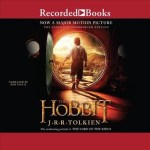
The Hobbit by J.R.R. Tolkien, read by Rob Inglis. Even if you’ve read the book, you’ll get something new out of the audiobook. If you like Inglis’s narration of The Hobbit, you can listen to him read the Lord of the Rings trilogy as well.

The Outlander audiobooks by Diana Gabaldon, read by Davina Porter. Again, even if you’ve read the Outlander series before, you will find new things to love about it in Davina Porter’s skilled narration. And it’s nice to hear all the Gaelic words pronounced correctly!

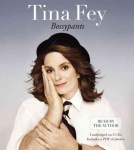
Bossypants by Tina Fey, read by the author. This book is, quite frankly, hysterical, and Tina Fey’s narration will have you chuckling into your pillow.

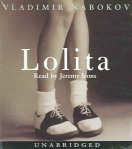
Lolita by Vladimir Nabokov, read by Jeremy Irons. Sure, it’s the story of a middle-aged man’s unhealthy obsession with a teenager, but the prose is practically poetry and Jeremy Iron’s narration is mesmerizing.

Dealing with Anxiety

face-sad-sweatingAngst, anxiety, stress,–whichever way you describe it, it’s a feeling everyone has experienced and the last few months have raised anxiety and stress levels higher than ever.
While everyone feels the occasional need to crawl into a blanket fort, most of us don’t have that luxury. Yet some days soldiering on can be painful, if not impossible.

If you are looking for a little ease or a way to calm your inner alarms, check out some of the materials we have on the subject of anxiety.

Books

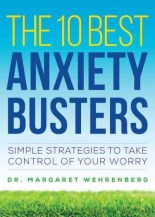
jacket-aspxThe 10 best anxiety busters : simple strategies to take control of your worry / Dr. Margaret Wehrenberg
Learn ten simple techniques from breathing exercises and relaxation practices to thought-stopping techniques and strategies that put an end to catastrophizing once and for all.

My age of anxiety : fear, hope, dread, and the search for peace of mind / Scott Stossel
The author recounts his lifelong battle with anxiety, showing the many manifestations of the disorder as well as the treatments that have been developed to counteract it.

The anxiety toolkit : strategies for fine-tuning your mind and moving past your stuck points / Alice Boyes
While reducing your anxiety level to zero isn’t possible or useful (anxiety can actually be helpful!), you can learn to successfully manage symptoms  with tips and tricks you can employ in everyday life. You’ll discover how anxiety works and learn strategies to help you cope with common anxiety ‘stuck’ points.

Seeking serenity : the 10 new rules for health and happiness in the age of anxiety / Amanda Enayati
Seeking Serenity presents ten revolutionary principles developed from the emerging science of stress and reinforced by literature, philosophy and age-old spiritual wisdom that help us to differentiate between destructive and constructive stress, and to master stress in everyday life.

eBooks

jacket-aspxThe stress solution: using empathy and cognitive behavioral therapy to reduce anxiety and develop resilience / Arthur P. Ciaramicoli, EdD, PhD
“We work too much, sleep too little, love with half a heart, and wonder why we are unhappy and unhealthy,” writes clinical psychologist Arthur Ciaramicoli. Learn simple, realistic, powerful techniques for using empathy and cognitive behavioral therapy to perceive situations accurately and correct distorted thinking.

Anxiety Attacks : Conquering Your Insecurities, Anxieties and Fears / Atcheson, Lucy.
Discover how and why your doubts make you feel trapped and insecure and how you can acknowledge them in a healthy way and break free of their negative influence.

10 steps to take charge of your emotional life overcoming anxiety, distress, and depression through whole-person healing / Eve A. Wood
Dr. Wood makes healing a simple process that anyone can understand. She walks you through ten steps that encompass examples, stories, exercises, and guidance. You’ll take stock of where you are and discover what you can do to transform your life.

Downloadable Audiobooks

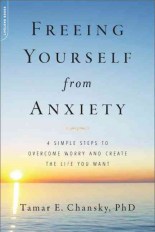
jacket-aspxFreeing yourself from anxiety : 4 simple steps to overcome worry and create the life you want / Tamar E. Chansky
This book explains that the solution is not positive thinking but possible thinking. Armed with these strategies, listeners can achieve accurate perceptions of their lives that can liberate them from fear and perfectionism.

The mindful way through anxiety / Susan M. Orsillo, PhD
A powerful new alternative that can help you break free of anxiety by fundamentally changing how you relate to it.

Stopping the noise in your head: the new way to overcome anxiety and worry / Reid Wilson, PhD
Learn how to confront anxiety head-on. Drawing on a range of sources, from firefighters and fitness instructors to Sir Isaac Newton and Muhammad Ali, this book demonstrates the importance of shifting your perspective and stepping toward your challenges in order to regain control of your life.

Save

Save

Save

The X Factor

imagesIndiana Jones and the Temple of Doom created an uproar in the movie industry. While it didn’t meet the criteria for an R rating, the intensity of the violence and its unrelenting action and danger freaked out so many kids and parents and caused so many complaints that the PG-13 rating was born – probably the same people that brought their six year old grandchildren to see Deadpool and didn’t think twice. Before that, there were just four ratings by the Motion Picture Association of America: G (general audience), PG (parental guidance suggested), R (no one under 17 without guardian), and X (now NC-17, meaning No One Under 17 Admitted, no way, no how, this will scar you for life).
Of course, as a kid, you can’t help but wonder, what’s in an X movie? What could be more violent than people beating each other up? What could be grosser than people naked?  How many more swear words are there? And then the internet was born and we’ve never wondered since.

Surprisingly, though, some of our favorite movies DID have an X rating at the start. Film makers want to be cutting-edge and push envelopes, but an X/NC17 rating c51q55v7qvblan sink an otherwise profitable film because it cuts out the teen crowd that hangs out at theaters every week and also makes some adult film-goers leery. After repeated trips back to the editing room, most of the movies do achieve their golden R rating.

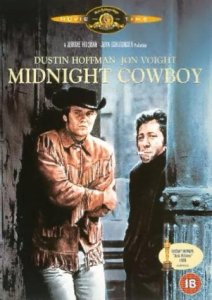
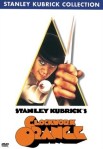
Some, however, never do. Three movies were nominated for Oscars despite their X rating: Midnight Cowboy, A Clockwork Orange, and Last Tango in Paris. Midnight Cowboy actually won the Best Picture Oscar for 1970. When rereleased in 1971, it carried only an R rating, even though not a single edit had been made. It had been given the X rating for “homosexual suggestions,” and that was no longer a criteria. Times were already changing.

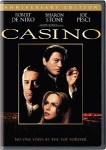
Two things are usually to blame for an X rating: extreme violence/gore, or explicit nudity/sexual content. It’s hard to believe, but for all the outcry against The Exorcist (some vi51kp0kgvmdlewers were taken away by ambulance), it only garnered an R rating. (So, in 1969, homosexuality would get you a deadly X rating, but by 1973, demonic possession, gore, blasphemy, and violent sexual situations involving children would not. Go figure.) Sometimes the fix was something so banal as toning down the brightness of the blood (Taxi Driver), which makes you wonder who is actually doing the judging and rating of the films. Others, like Cliffhanger, needed adjustments to almost every single scene. Although Casino cranks in at more than 420 utterances of the Fornication word (that’s almost 2.5 for every minute of film49), it was the violence that created its problems.

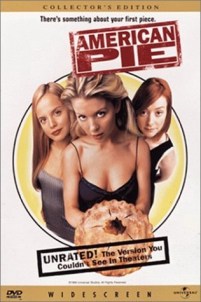
Here is a list of popular films you’ve probably heard of, and probably have seen, that were originally rated X before being edited yet again (American Pie needed four tries) to win the magic R. Some of these are very good films that just happen to be a little more graphic than others. Some of them you knew were headed for trouble just by the title (Freddy Got Fingered), but others, especially twenty years later when there sometimes doesn’t seem to be a limit on sex or violence in movies or on television (Boogie Nights drew trouble for a 10-second shot of a prosthetic penis, yet Life of Brian and Trainspotting didn’t for showing a real one), make you scratch your head at what the fuss was.