December 16th is Chocolate Covered Anything Day!

Did you know that there is a day to celebrate covering foods with chocolate? This year December 16th is chocolatetopChocolate Covered Anything Day! Now, with whispers of a chocolate shortage have been present in the news lately it is even more important to celebrate this day with some fantastic treats. Chocolate covered fruit such as strawberries, banana, and pineapple are well known and loves and less obvious treats like chocolate covered pretzels and more savory treats have become more popular in recent years, a day like today is just the inspiration you might need to explore other less obvious pairings, like chocolate and bacon.

chocolate1So, in honor of today cover your food in chocolate or simply make something tasty with it. Like all good things chocolate is better when shared so, in spirit of the holiday season, share some of your chocolate treats with your friends and family. Here are some books to give you chocolate related inspiration:

1. Chocolate: From Simple Cookies to Extravagant Showstoppers by Nick Malgieri

2. Chocolate: 90 Sinful and Sumptuous Indulgences by Elisabeth Johansson

3. The Complete Step-by-Step Guide to Making Sweets, Candy & Chocolates by Claire Ptak

4. The Essence of Chocolate: Recipes for Baking and Cooking with Fine Chocolate by John Scharffenberger and Robert Steinberg with Ann Krueger Spivack and Susie Heller

5. Chocolate and the Art of Low-Fat Desserts by Alice Medrichchocolate3

6. Maida Heatter’s Book of Great Chocolate desserts by Maida Heatter

7. The Ghirardelli Chocolate Cookbook: Recipes and History from America’s Premier Chocolate Maker photography by Leigh Beisch

8. Chocolate Lover’s: From Hot Fudge Soufflé to Chilled Biscuit Cake by Chris and James Tannerchocolate4

9. Bittersweet: Recipes and Tales from a Life in Chocolate by Alice Medrich

10. Seriously Bitter Sweet: The Ultimate Dessert Maker’s Guide to Chocolate by Alice Medrich

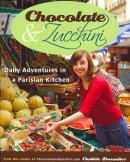
For even more chocolatey goodness and inspiration check out: Chocolate from the Cake Mix Doctor by Anne Byrn, chocolate5Chocolate: A Sweet History by Sandra Markle, Chocolate: a Love Story: 65 Chocolate Dessert Recipes from Max Brenner’s Private Collection by Max Brenner, Pure Chocolate: Divine Desserts and Sweets from the Creator of Fran’s Chocolates by Fran Bigelow with Helene Siegel, Chocolate & Zucchini: Daily adventures in a Parisian Kitchen by Clotilde Dusoulier, 1000 Chocolate Baking & Dessert Recipes produced by theChocolate6 Bridgewater Book Company, Ltd, or Sweet Christmas: Homemade Peppermints, Sugar Cake, Chocolate-Almond Toffee, Eggnog Fudge, and other Sweet Treats and Decorations by Sharon Bowers.
Make Your Party a Success with Help from the Library

worldpartyRecently, a friend of mine threw her annual summer party. Every year it’s something different and this year’s theme was Around the World.

No, she didn’t mean Around the World in 80 Days, the famous story of Phileas Fogg the most punctual man in the world. She provided a culinary and artistic world tour for her lucky guests. And she told me she could not have done it without the library.

There was tea and sushi in a Japanese garden. A German Biergarten. Shrimp on the barbie ala our mates in Australia. Indian cuisine. Asian. Every continent was represented. She even had a table of cookies with a red and white striped pole nearby labeled North Pole.

And the music! Depending on where you wandered in her house and yard, you could hear everything from Celtic harp to Caribbean steel drums.thai

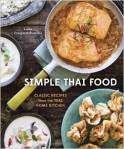
How was the library involved? All of the recipes she used came from cookbooks she borrowed from the library. Wonderful titles such as My Paris Kitchen, It’s All Greek to Me, and Simple Thai Food stood proudly on each table. Guests could thumb through the books for interesting international recipes.

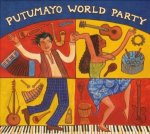
The music was all from Putumayo, a company devoted to world music. The background music consisted of World Party, Vintage France, Italian Café, Celtic Tides and many, many others.

My friend told me she got the idea for the party from the wide range of international cookbooks she saw on display at the library. When she confided her project to me, I had mentioned that she could also get a variety of world music at the library, too.

It was a memorable, multicultural evening. a world tour that never left town. I can hardly wait to see what next year’s party brings.

And, in case you were wondering, on the table that held the cookies from the North Pole, all the recipes cards simply said Mrs. Claus.
Check out our Putumayo collection and our cookbook collection:

worldgroove                kitchen


Happy Birthday Paperback Books!

birthday

On July 30, 1935, a new technology was born that provided knowledge, stories, entertainment (with text and pictures, no less) that was convenient and cheap.  It was light enough to carry anywhere and you could tag specific areas to penguinre-read at a later date.  An early e-reader?  Nope – the paperback book!  Penquin Publishers, in England, was the first to successfully publish respectable, quality writing without a hard cover.  (There were earlier paperback books called penny dreadfuls, yellow-backs, and dime novels that generally featured lurid stories and were printed on cheap pulp paper.)
pocketPartnering with Simon & Schuster, Robert de Graff introduced the first paperbacks in America on June 19, 1939 called Pocket Books.  The first American paperback book to be printed in the United States was The Good Earth by Pearl Buck.  The cost to purchase these new books – 25 cents versus $2.75 for a hardcover.  In order to make a profit on paperbacks, de Graff had to print 100,000 copies at a time.  He couldn’t rely on bookstores to sell that many copies so he began using magazine distributors to place Pocket Books in newsstands, subway stations, drugstores and any other outlet to reach suburban and rural populations.  He designed bold, colorful, eye-catching book covers to catch people’s eyes.  By September 1944, 100 million books were sold in more than 70,000 outlets across the United States.   By the end of the 1940’s, the paperback industry began publishing original stories.  Previously, the industry only reprinted hardcover titles.  There are now more than 20 major publishers producing high quality, original and reprinted paperbacks.


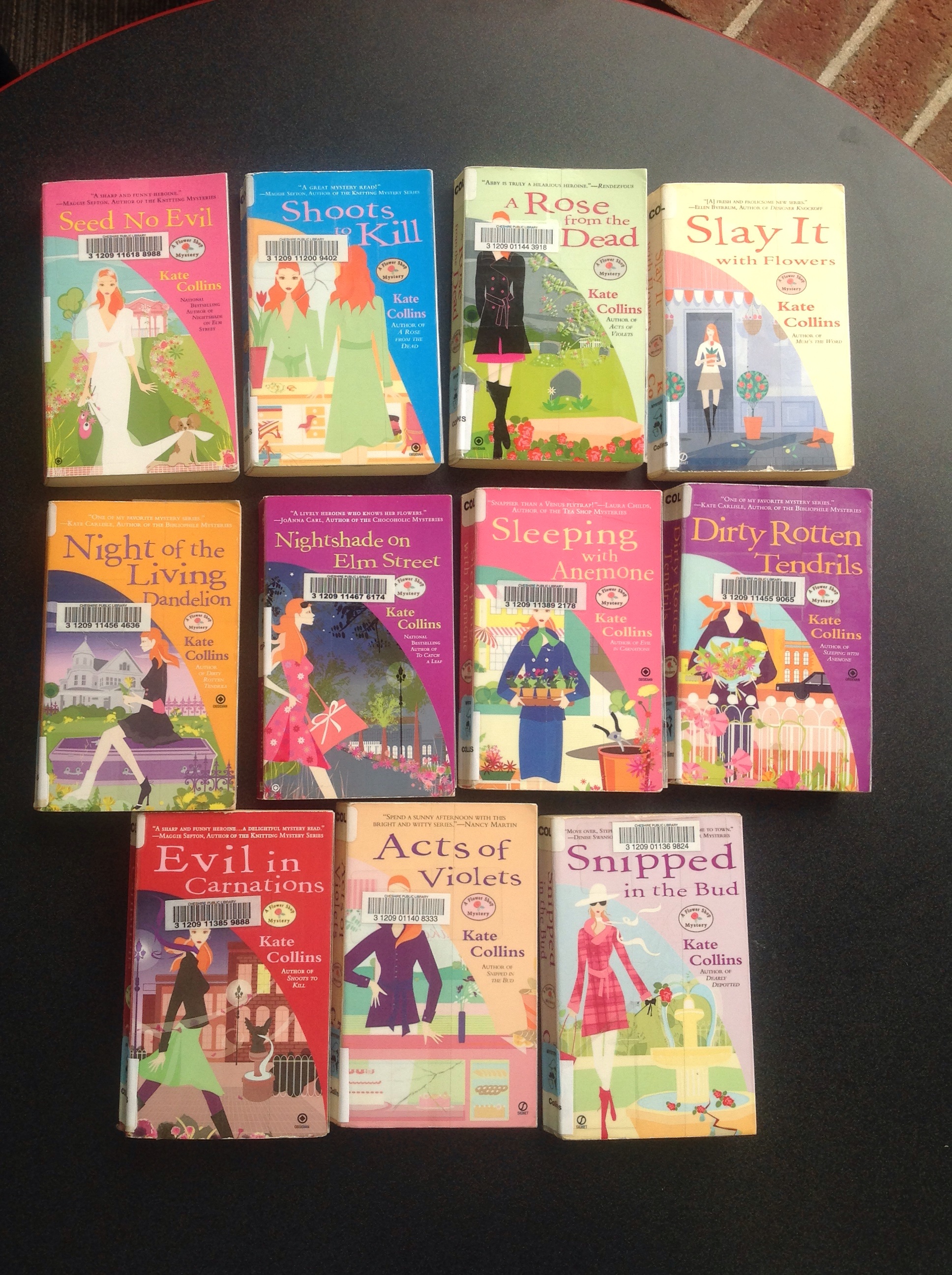
Today, there are many sizes of paperback books and all different prices, but the two major sizes are mass-market and trade.  Authors originally wrote stories for publications in magazines, but soon shifted their attention to mass-market paperbacks.  They could write longer, more in-depth, entertaining novels that boasted beautiful, bold, color covers and were prominently displayed in all types of venues.  They were affordable and easy to carry and proved to be a huge hit.  Mass-market paperback readers have a large selection of genres of original stories to choose from, in addition to best-selling hardcovers republished in paperback form.  In the beginning, Westerns were the biggest selling genre, followed by Crime and Science Fiction.   The most popular genre for mass-market today is Romance.  Within this genre you will find many sub-genres including contemporary romance, historical romance, small town romance, and paranormal romance.  The Cheshire Library has a separate section dedicated to mass-market Romance Books located towards the front of the library, near the large windows.    Another very popular genre for mass-market paperbacks are Cozy Mysteries.  The Cheshire Library has a large selection of these interfiled among the hardcovers in the Mystery section of the library.  You can also find regular Fiction, Science Fiction and Fantasy paperbacks in the library’s collection.

COZY MYSTERIES

COZY MYSTERIES

Some literary authors, critics and bookstore owners turned their noses up at mass market paperbacks.  When Doubleday’s Jason Epstein was a college student, he lamented the fact that he and his fellow students couldn’t afford hardcover editions and envisioned a line of upscale paperbacks of hardcover bestsellers and classics.  By 1953, Trade paperbacks were introduced.  These were larger, more durable, with attractive covers illustrated by fine artists with an appeal to a more intellectual market.  They sold for 65 cents to $1.25.    The library’s selection of Trade paperbacks are filed among the hardcover books.  They also come in a variety of genres, with the most popular genres being erotic romance – with Fifty Shades of Grey topping the charts – and Christian-themed books.


There were many who thought paperbacks would kill the publishing industry, but instead, the books proved to be quite the sensation.  As recently as 2010, paperbacks outsold hardcover books.  Although the ebook has taken some of the market away from paperbacks, they still continue to be a much beloved tool for readers everywhere.  The look, feel, texture, smell, size, and portability makes the paperback book very inviting.


June is National Candy Month – Yum!

candyAmericans love their candy!  On average, we eat 25 pounds of candy per person, per year.  So, where did candy come from?

The word ‘candy’ comes from the Arabic “qandi”, meaning something made from sugar – and the principal ingredient in candy is sugar.   Before sugar was readily available, honey was the main ingredient.  Honey was used by the Egyptians, Greeks and Romans to coat fruits, flowers, and the seeds or stems of plants to preserve them as future ingredients.  During the Middle Ages, sweets were used as a medical treatment for digestive troubles and to mask the bad taste of other medicines.  Today’s cough drops and peppermint sticks are descended from this tradition.

The first candy came from Britain and France to the United States in the early eighteenth century.  Only a few colonists were proficient in sugar work, so only the rich were able to enjoy this confection.  By the 1830s, technology and the abundance of sugar opened up the candy market for all to enjoy.  In 1847, the candy press was invented which allowed for mass production.

Candy was generally sold unwrapped from carts in the street, where it was exposed to dirt and insects.  After the polio outbreak in 1916, candy was only sold in upscale candy stores in glass jars.  By 1925, wax paper, foil and cellophane were imported from France by DuPont, allowing candy to be packaged without human touch.

If you’d like to make your own candy, the Cheshire Library has a nice assortment of books located downstairs in the Reference department in the 641.853 section.  Some titles are:

The Sweet Book of Candy Making by Elizabeth LaBau

Handcrafted Candy Bars by Susie Norris

The Complete Step-by-Step guide to making sweets, candy and chocolates by Claire Ptak

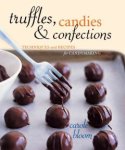
Truffles, Candies and Confections by Carole Bloom

You can also enjoy some adult mysteries with a candy theme:

Candy Cane Murder by Joanne Fluke

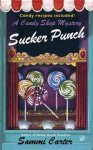
Sucker Punch (A Candy Shop Mystery) by Sammi Carter

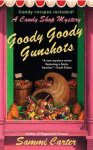
Goody Goody Gunshots (A Candy Shop Mystery) by Sammi Carter

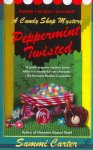
Peppermint Twisted (A Candy Shop Mystery) by Sammi Carter

Chocolate Dipped Death (A Candy Shop Mystery) by Sammi Carter

And for the children who want to learn a little bit more about candy:

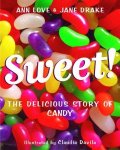
Sweet! The Delicious Story of Candy by Ann Love

The Hershey’s Milk Chocolate Fractions Book by Jerry Pallotta

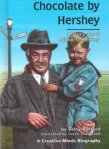
Chocolate by Hershey by Betty Buford

May Is National Barbecue Month, National Hamburger Month and National Salad Month!

Who knew May was such a foodie month!  You can’t go wrong with barbecue or a juicy hamburger or a nice salad!  The Cheshire Library has just the books to get you started with some mouth-watering recipes!

barbecue

First, to clear up some confusion between grilling and barbecuing.  They are not the same!  Grilling involves cooking at intense heat (500 degrees or higher) for a short (an hour or less) period of time.  Barbecuing is cooking over low heat (225 degrees or less), and for a long period of time.  Below is a sampling of books the Cheshire Library has on barbecuing.

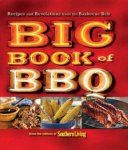
The Big Book of Barbecue: recipes and revelations from the barbecue belt.

Wicked Good Barbecue: fearless recipes from two damn Yankees who have won the biggest, baddest bbq competitions in the world.

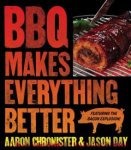
BBQ Makes Everything Better

Serious Barbecue: smoke, char, baste, and brush your way to great outdoor cooking.

Barbecue Road Trip: recipes, restaurants, and pitmasters from America’s great barbeque

hamburger

The Book of Burger

Build A Better Burger

salad

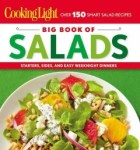
Cooking Light Big Book of Salads

Mediterranean Fresh: a compendium of one-plate salad meals and mix-and-match dressings

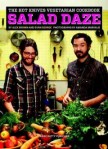
Salad Daze: the Hot Knives vegetarian

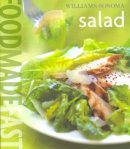
Salad (William Sonoma)

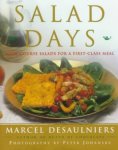
Salad Days: main course salads for a first-class meal

The Cheshire Library has all cookbooks in a separate section (641) in the Reference Department.  The books listed above, and other similar titles, are located in the 641.7 and 641.8 section.