Not every book becomes a movie; not every movie started out as a book, but the two feed off each other like peanut butter and chocolate. Many of the top Oscar-winning films started out as books (The Godfather, Lord of the Rings, One Flew Over the Cuckoo’s Nest, No Country for Old Men, Schindler’s List, and more). Some movies were better films than their book (in my opinion, Planet of the Apes, Poseidon Adventure, and Casino Royale are three). Some people want to read a book before they see a film adaption, while others see a great film and want to read the book to see if any good bits were left out.
If you’re of the group that prefers to read the book first, better get started! A whole new wave of book adaptions is readying for the coming year. Here’s a peek at some of them:
Old Possum’s Book of Practical Cats – that’s the collection of T.S. Elliott’s poem collection  that became the musical CATS. Whether this is a filmed “stage” production or a cohesive musical film remains to be seen, but it stars Judi Dench and Ian McKellan, no theater slouches. Look for it at Christmas.
Death on the Nile – Kenneth Brannaugh’s second attempt to capture Agatha Christie’s Hercule Poirot in a mystery due out in October of 2020. It also stars Gal Godot of Wonder Woman fame.
Doctor Sleep – Stephen King’s sequel to The Shining stars  Ewan McGregor as the adult Danny Torrence, due out in November 2019.
Dune – Yet another attempt to harness Frank Herbert’s cornerstone classic, most assuredly without the winged underwear. Although it bears an all-star cast, I loved the deep details of the novel, and I have a special affinity for the admitted mess of the 1984 Lynch adaption. Like Batman, all the reboots get tedious after a while. Sometimes you can’t capture greatness.
The Goldfinch – Donna Tartt’s Pulitzer-Prize winning novel hits theaters in September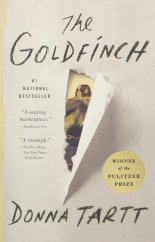 of 2019. It has promised to be faithful to the book, a coming of age story of a boy whose life changes in an instant.
The Turning – A modern adaption of Henry James’s Turn of the Screw, it’s produced by Stephen Spielberg. Spielberg’s track record isn’t perfect, but still one of the best in Hollywood. The story is the one of the classic horrors of literature. Due out in January of 2020.
Little Women – The long-time classic of girl literature by Louisa May Alcott, it was first adapted for film in 1933, and most recently in 1994. A very strong cast (Saoirse Ronan, Emma Watson, Timothée Chalamet, Laura Dern, Meryl Streep, the list goes on) has given this move a lot of buzz. Now’s the time to catch up on the classic story you may have missed (it’s not as bad as you fear). Look for it at Christmas, 2019.
The Good Liar – Nicholas Searle’s novel will star Helen Mirren and Ian McKellan as a con man trying to steal from a widow who has more than one trick up her sleeve. Look for it in November of 2019.
The Woman in the Window – A.J. Finn’s #1 thriller of a woman who witnesses a crime will star Amy Adams, Julianne Moore, and Gary Oldman. Since Disney acquired 20th Century Fox, it’s technically a Disney film (with no princesses, no mermaids, and no singing), due out in October of 2019.
Bond 25: Ian Fleming wrote only 12 Bond novels, and two collections of short stories. The films have now exceeded the original material. The movie has been through a long list of issues from a revolving door of writers and directors to explosions on set, and the working title of Bond 25 gives away no details about the story, but you can get your fill on the original novels. The movie, purportedly the last for Daniel Craig, is set for April of 2020.
Deadpool 3, Black Panther 2, Black Widow, Wonder Woman 1984 : 2020’s crop of Comic-book Hero films, from Marvel and DC. Most of them still have current story lines, or track down the older versions online or in graphic novel compilations.
Motherless Brooklyn – Jonathan Lethem’s novel of a detective with Tourette’s Syndrome searching for the killer of his best friend won multiple awards for fiction and crime fiction. The all-star cast is headed by Ed Norton, who stars, directed, produced, and wrote the script. During filming, a set caught fire and a fireman died during the response, fueling accusations and lawsuits. It’s due out in November of 2019.
 Many people are aware that
  the era. The need was great, her products worked, and she went on to become an American philanthropist.
 century has shown remarkable gains, with not only



 January began as one of the last months of year, not the first. The start of the Roman calendar (and the astrological one) was March. Back then there were only ten months to the year, totaling 304 days. Between was a miasmic 66 monthless days of “winter.” According to legend, Numa Pompilius, the second King of Rome (after Romulus himself), added January and February to codify that winter term (along with a catch-up month every other year of 22 days).
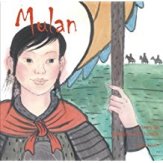
 to have lived somewhere between 386 CE and 620 CE (if you’re not up on your history, Common Era has replaced the Anno Domini). She takes her aging father’s place in the army, and serves for twelve years without her fellow soldiers realizing she’s a woman. Depending on the source, her name might be
 The steel-driving

 under control of the Habsburgs, a magistrate put his hat on a pole and demanded all citizens bow before it, or be imprisoned. While in town with his son, Tell refused to bow, was arrested and sentenced to death – though, since he was such a marksman, the Magistrate would let him go if he could shoot an apple off his son’s head. Tell did so, was arrested anyway, escaped, and the people rose up in rebellion, in an act considered the founding of the Swiss Confederacy, around 1307. Some historians believe Tell is merely a new twist on an old Danish fable.





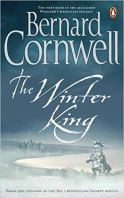

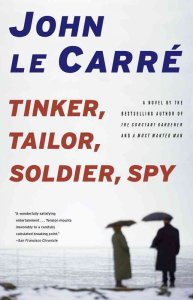

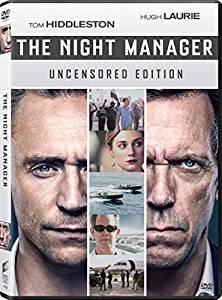
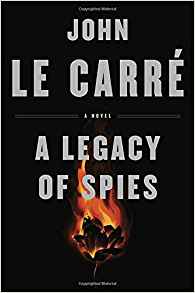
 Some people love winter, love the brisk air, the blinding glare, the crystal-clear night skies, soft fluffy snow and cups of steaming hot chocolate. Other people hate the freezing cold, the knifing winds, the treacherous roads, bare trees, and endless brown mud and slush clinging to shoes, cars, and pet feet tracking through the house.
 drapes (one of my favorite possessions), reading a book in a favorite chair while snow swirls outside the window and an animal lounges at my feet. It means a stew bubbling on the stove, fresh bread in the oven, or perhaps fresh shortbread cookies and a cup of Earl Gray tea by that fire. Perhaps it’s a holiday, with candles and lights and decorations, waiting for company to make it through the snow. Yeah, yeah, there’s no groundsman to shovel the walks when it’s over, I have to do it myself, but for a few hours I’m lost in an old English fantasy, there’s a mystery in the air, a challenge ahead, but love and fortune win in the end (note: I have never achieved this fantasy, but I keep hoping).
 English Tales of Winter
 historical
  Just because our snow stories don’t go back to King Wenceslas (ok, Wenceslas was Bohemian/ Czechoslovakian, but the song, 900 years later, is English) doesn’t mean American literature isn’t good, it just means it’s different. Maybe you’ll have to settle for cotton twill drapes and a medium double-latte with a space heater and a Snuggie. If you love gothic literature, delve into a classic or something newer; there are hundreds of books (and films!) to choose from. If you love reading about snowy days while curled in a chair listening to the winds howl, try some of these modern tales (and films):