Recent Award Winners in Children’s Books

Winners of the Children’s and Teen Choice Book Awards were announced in May at the seventh Children’s Book Week Gala in New York. Rush Limbaugh won author of the year for Rush Revere and the Brave Pilgrims: Time-Travel Adventures with Exceptional Americans, while Grace Lee won illustrator of the year for Sofia the First: The Floating Palace. Former Reading Rainbow host LeVar Burton was also awarded with the Impact Award for his efforts to instill “a lifelong love of reading in children.”

The winner of Book of the Year, kindergarten through second grade was The Day the Crayons Quit by Drew Daywalt, illustrated by Oliver Jeffers (also a nominee for the 2015 Nutmeg award).

Book of the Year winner for third through fourth grade was Bugs in My Hair! by David Shannon.

Book of the Year winner for fifth through sixth grade was National Geographic Kids Myths Busted! by Emily Krieger, illustrated by Tom Nick Cocotos.

Book of the Year winner for teens was Winner: Allegiant by Veronica Roth.

Children’s book author and illustrator Peter Brown is the recipient of the 2014 Bull-Bransom Award, announced the National Museum of Wildlife Art in Jackson Hole, Wyoming. Brown was selected for the award, given annually for excellence in children’s book illustration with a wildlife and nature focus, for his 2013 picture book Mr. Tiger Goes Wild.

The Nutmeg Steering Committee has also announced the 2014 Nutmeg Book Award Winners! Almost 20,000 students voted from across the state of Connecticut and here are the books that they voted for:

Out of My Mind by Sharon M. Draper is the winner of the Intermediate Award (Grades 4-6)

Divergent by Veronica Roth is the winner of the Teen Award (Grades 7-8)

Paper Towns by John Green is the winner of the first ever High School (Grades 9-12)


Cast in Bronze – No Ordinary Ring a Ding


Everyone’s heard bells before, but have you ever heard a carillon? A carillon is a set of at least twenty-three bells in a belfry, which can be played singly or in concert with each other to make harmonies and chords. Carillons are played like a giant keyboard, with both hands and feet pressing on levers that pull wires that ring the bells. Because of their great size, carillons are considered the heaviest of all musical instruments (one low bell alone can weigh several hundred pounds!).

No one, of course, would ever think of traveling with an entire bell tower to give a concert – or, uh, would they? Enter the musical group Cast in Bronze, who do exactly that on the first carillon with a portable frame. Cast in Bronze’s carillon consists of thirty-five brass bells, with a total weight of four tons. Founded by master carillonneur Frank DellaPenna, Cast in Bronze actually tours around the country. They have played at Disney’s Epcot center, played a concert in New York for Pope John Paul II, played as part of Alice Cooper’s “Christmas Pudding” show, and played for NBC’s Today Show. I saw the bells in action myself at the New York State Renaissance Festival in Tuxedo, New York, several years ago. As a college bellringer who spent three years throwing levers in a tower, adapting music by Elvis and Journey to an octave of bells, I was enchanted.

Before you can say “Ho hum – ding, dong, ding, who cares,” Cast in Bronze is not just a churchbell ringing. The bells are just a highlight, with full orchestration and in some cases (like their fabulous rendition of O Fortuna, the same song currently on the Nutella commercial), with the backing of a choir as well. Here’s an excellent sample of their music, along with a great video of the bells in action:

Wait – what’s with the mask, you ask? DellaPenna’s philosophy is that the bellringer was never seen in the tower; all you knew was the beauty of the music, so he remains hidden beneath his phoenix mask, to draw your attention to the music, not the player.


Cheshire Public Library recently purchased two albums by Cast in Bronze – Best Day Ever, and The Voyage. My favorites to check out are of course “Tubular Bells,” the fabulous “O Fortuna,” and the ever-lovely “Carol of the Bells.” If you like music by Trans-Siberian Orchestra, David Garrett, 2 Cellos, any of the London Philharmonic playing Pink Floyd, Jethro Tull or similar pop-rock, if you like light instrumentals, bells, or even piano music, give Cast in Bronze a listen!


Lets Celebrate National Adopt a Cat Month!

Did you know that June is National Adopt a Cat Month? With that little tidbit of knowledge and the bonus of June 19 being Garfield the Cat Day, I thought I would share some great books about cats. So, I have two small lists for our feline friendly readers, one for adults and one for sharing with the youngest cat lovers.

1. Dewey: The Small-Town Library Cat Who Touched the World by Vicki Myron
2. Homer’s Odyssey by Gwen Cooper
3. Old Possum’s Book of Practical Cats by T.S. Eliot
4. A Street Cat Named Bob: How One Man and His Cat Found Hope on the Streets by James Bowen
5. Making Rounds with Oscar: The Extraordinary Gift of an Ordinary Cat by David Dosa
6. Cat Daddy: What the World’s Most Incorrigible Cat Taught Me About Life, Love, and Coming Clean by Jackson Galaxy
7. Cat Sense: How the New Feline Science Can Make You a Better Friend to your Pet by John Bradshaw
8. Dewey’s Nine Lives: the Legacy of the Small-Town Library Cat Who Inspired Millions by Vicki Myron, with Bret Witter
9. Cleo: The Cat Who Mended a Family by Helen Brown

This slideshow requires JavaScript.

Looking for cat books to share with younger readers? Well then you cannot go wrong with:

1. Millions of Cats by Wanda Gág
2. Splat the Cat by Rob Scotton
3. Skippyjon Jones by Judy Schachner
4. Puss in Boots by Charles Perrault
5. Dewey: There’s a Cat in the Library! by Vicki Myron
6. Chester by Mélanie Watt
7. Kitten’s First Full Moon by Kevin Henkes
8. Won-Ton: A Cat Tale Told in Haiku by Lee Wardlaw
9. Pete the Cat: I Love My White Shoes by Eric Litwin, James Dean

This slideshow requires JavaScript.

June is National Candy Month – Yum!

candyAmericans love their candy!  On average, we eat 25 pounds of candy per person, per year.  So, where did candy come from?

The word ‘candy’ comes from the Arabic “qandi”, meaning something made from sugar – and the principal ingredient in candy is sugar.   Before sugar was readily available, honey was the main ingredient.  Honey was used by the Egyptians, Greeks and Romans to coat fruits, flowers, and the seeds or stems of plants to preserve them as future ingredients.  During the Middle Ages, sweets were used as a medical treatment for digestive troubles and to mask the bad taste of other medicines.  Today’s cough drops and peppermint sticks are descended from this tradition.

The first candy came from Britain and France to the United States in the early eighteenth century.  Only a few colonists were proficient in sugar work, so only the rich were able to enjoy this confection.  By the 1830s, technology and the abundance of sugar opened up the candy market for all to enjoy.  In 1847, the candy press was invented which allowed for mass production.

Candy was generally sold unwrapped from carts in the street, where it was exposed to dirt and insects.  After the polio outbreak in 1916, candy was only sold in upscale candy stores in glass jars.  By 1925, wax paper, foil and cellophane were imported from France by DuPont, allowing candy to be packaged without human touch.

If you’d like to make your own candy, the Cheshire Library has a nice assortment of books located downstairs in the Reference department in the 641.853 section.  Some titles are:

The Sweet Book of Candy Making by Elizabeth LaBau

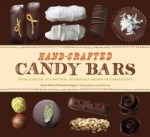
Handcrafted Candy Bars by Susie Norris

The Complete Step-by-Step guide to making sweets, candy and chocolates by Claire Ptak

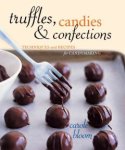
Truffles, Candies and Confections by Carole Bloom

You can also enjoy some adult mysteries with a candy theme:

Candy Cane Murder by Joanne Fluke

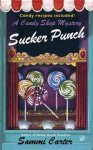
Sucker Punch (A Candy Shop Mystery) by Sammi Carter

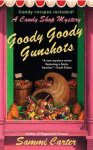
Goody Goody Gunshots (A Candy Shop Mystery) by Sammi Carter

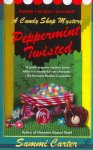
Peppermint Twisted (A Candy Shop Mystery) by Sammi Carter

Chocolate Dipped Death (A Candy Shop Mystery) by Sammi Carter

And for the children who want to learn a little bit more about candy:

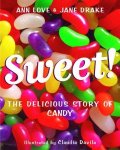
Sweet! The Delicious Story of Candy by Ann Love

The Hershey’s Milk Chocolate Fractions Book by Jerry Pallotta

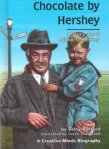
Chocolate by Hershey by Betty Buford

Memoirs, Humor, and More About Fatherhood

In honor of Father’s Day, let’s take a look at some dad related humor, memoirs, and related collections of letters that can be great reads for dads new to the wonders of parenthood, those that are not quite as new to its wonders, and just about anyone.

Too Good to be True: a Memoir by Benjamin Anastas. When he was three, Anastas found himself in his mother’s fringe-therapy group in Massachusetts, a sign around his neck: Too Good to Be True. The phrase haunted him through his life. This is his deeply moving memoir of fathers and sons, crushing debt and infidelity– and the first, cautious steps taken toward piecing a life back together.

A Father First: How my Life Became Bigger than Basketball by Dwyane Wade.
NBA star Dwyane Wade discusses the rewarding responsibilities of being a single dad to his two sons, Zaire and Zion and highlights of his basketball career.

The Ticking is the Bomb: a Memoir by Nick Flynn. A dazzling, searing, and inventive memoir about becoming a father in the age of terror.

Fatherhood by Bill Cosby. A collection of ruminations, anecdotes, and vignettes based on Cosby’s experiences as a son and father.

Manhood for Amateurs by Michael Chabon. An entertaining omnibus of opinionated essays previously published mostly in Details magazine spotlights novelist Chabon’s (The Yiddish Policemen’s Union) model of being an attentive, honest father and a fairly observant Jew.

Lamentations of the Father by Ian Frazier. More serious than a “gag” writer and funnier than most essayists, Frazier has a classical originality. This collection, a companion to his previous humor collections “Dating Your Mom” and “Coyote v. Acme,” contains 33 pieces gathered from the last 13 years.

Don’t Make Me Stop this Car!: Adventures in Fatherhood by Al Roker. Al provides an unprecedented, intimate look into his experiences with infertility treatments, adoption, and the normal fears and wonders of an expecting parent. As Al manages the needs of his daughters from two marriages and the demands of a high-profile career, he is like millions of others who fantasize about the newest sport utility vehicle, struggle with a GapKids addiction, and bask in the golden moments of first steps and special Father’s Day meals. Along the way, Al comes to a deeper understanding of his parents’ love for him and a whole new appreciation of them as grandparents.

Raising Cubby: a Father and Son’s Adventures with Asperger’s, Trains, Tractors, and High Explosives  John Elder Robison. The comic memoir of an Aspergian father raising his Aspergian son, by the bestselling author of Look Me in the Eye.

As usual, I found too many great books to stop, so if you are looking for even more you might want to check out; Dad is Fat by Jim Gaffigan, The Council of Dads: My Daughters, My Illness, and the Men Who Could be Me by Bruce S. Feiler, Sh*t My Dad Says by Justin Halpern, Wisdom of our Fathers: Lessons and Letters from Daughters and Sons by Tim Russer, No Wonder my Parents Drank: Tales from a Stand-up Dad by Jay Mohr, A Promise to Ourselves: a Journey Through Fatherhood and Divorce by Alec Baldwin, The Bastard on the Couch: 27 Men Try Really Hard to Explain their Feelings about Love, Loss, Fatherhood, and Freedom edited by Daniel Jones, and Big Russ and Me: Father and Son by Tim Russert.